1. Why Keto Friendly Greens Are Trickier to Shop for Than They Look
Leafy greens are supposed to be the easy part of keto. You grab a bag of spinach, toss it in a pan, and move on. But anyone who has stood in a produce aisle with a phone calculator knows it isn’t that simple. One bagged salad kit is basically lettuce. The one beside it comes with candied pecans, dried cranberries, and a sweet vinaigrette that can push a side salad past 15 grams of net carbs. If you’ve felt frustrated, or quietly blamed yourself for a stalled week that a ‘healthy salad’ derailed, you’re not alone. The packaging is doing a lot of the misleading.
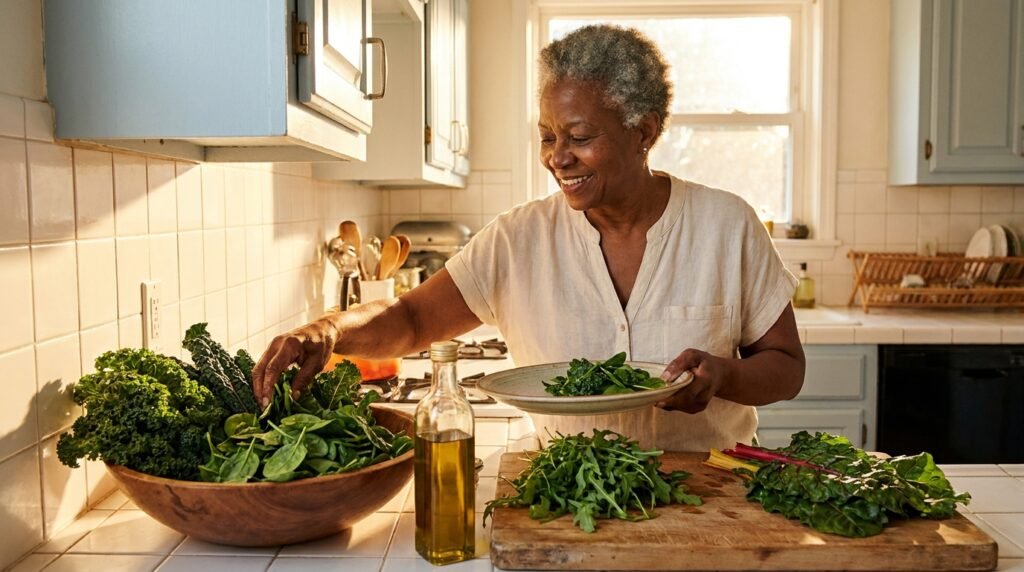
The good news is that the greens themselves are generous to keto eaters. Per raw cup, these are consistently among the lowest in net carbs:
- Spinach and arugula: well under 1 gram of net carbs per cup, with a mild peppery or earthy flavor.
- Romaine, butter lettuce, and leaf lettuce: about 1 gram of net carbs per cup, with crunch that works as a wrap.
- Bok choy and watercress: very low in carbs, quick-cooking, and good in stir-fries and soups.
- Kale and Swiss chard: slightly higher, at roughly 1 to 3 grams per cup depending on variety and preparation, but dense in minerals.
- Collard greens and mustard greens: sturdy, with moderate net carbs, ideal for braising in bacon fat or butter.
Clinical context matters here too. Spinach and chard are high in oxalates, which is worth discussing with your clinician if you have a history of kidney stones. Greens rich in vitamin K, such as kale and collards, matter if you take warfarin, because consistency in intake is key. A keto plan should fit your health history, not override it.
The trouble starts when greens become ‘products’: pre-dressed kits, frozen creamed spinach, green powders, and bottled sauces. The World Health Organization Guidelines on Healthy Diets & Saturated Fats encourage plenty of vegetables, and the greens aisle deserves that kind of confidence. What it needs is a way to see past the front-of-pack claims. Research such as PubMed Research on Ultra-Processed Foods & Gut Microbiome Disruption is a good reminder that the more a food is formulated rather than simply grown, the more closely its ingredient list deserves a look.
Scan Any Label for Hidden Additives and Allergens — Free
Never second-guess confusing grocery labels again. Download Food Scan Genius to uncover hidden additives, toxic dyes, and allergens for the whole household before you buy.


2. Where Hidden Carbs and Additives Sneak Into Your Greens
Fresh, whole greens have no label to decode. The complications begin once they are bagged, blended, sauced, or powdered. Here are the most common places carbs and unwanted ingredients hide in keto friendly greens products:
- Bottled dressings and vinaigrettes: Sugar, honey, fruit juice concentrate, and corn syrup are common, especially in ‘light’ or ‘raspberry’ styles. Many also use soybean or canola oil, which matters if you avoid seed oils.
- Salad kit toppings: Candied nuts, dried cranberries, crispy onions, and croutons can add more carbs than the greens by a wide margin. Wheat-based toppings also matter if you are gluten-free.
- Creamed or sauced frozen greens: Creamed spinach often relies on flour, modified starch, or maltodextrin as thickeners, which are rarely obvious on the front of the box.
- Green powders and ‘superfood’ blends: Some contain maltodextrin, dried fruit powders, or sweeteners. Proprietary blends can also hide ingredient amounts.
- Pesto and prepared sauces: Potato flakes, sugar, and sunflower or vegetable oil can replace olive oil and basil. Pesto also commonly contains tree nuts and milk, both major allergens under the FDA Food Allergen Labeling & Consumer Protection Act (FALCPA).
- Fermented greens such as kimchi and some sauerkraut: Sugar is often added to speed fermentation or balance flavor, and some versions include rice flour or fish sauce.
Additives deserve context rather than panic. The European Food Safety Authority (EFSA) Additive Safety Regulations show that additives are individually assessed, and many are well tolerated. Still, you may have personal reasons to avoid certain gums, colors, or preservatives, and you deserve to see them clearly.
Four Simple Recipes to Put Your Greens to Work
1. Garlic-butter wilted spinach (5 minutes). Melt 2 tablespoons of butter, add 2 minced garlic cloves, and stir in 5 packed cups of spinach until just wilted. Finish with salt, pepper, and a squeeze of lemon.
2. Arugula, avocado, and parmesan salad. Toss 3 cups of arugula with sliced avocado, shaved parmesan, olive oil, and lemon juice. Skip the bottled dressing entirely.
3. Bacon-braised collards. Render chopped bacon, add collards and a splash of chicken broth plus a little apple cider vinegar, and simmer for 20 to 30 minutes until tender.
4. Romaine ‘boat’ tuna salad. Mix tuna with mayonnaise, diced celery, and mustard, then spoon it into romaine leaves. This one is great for lunches and needs no cooking.
3. Food Scan Genius vs. Other Ways to Check Your Greens
| Dimension | Food Scan Genius | Fig | Spoonful | Manual Label Reading |
|---|---|---|---|---|
| Cost | 100% free core features, zero paywalls | About $59/yr for full access | Limited scans | Free, but time-consuming |
| Ingredient depth | NutriGraph Database: 5,000,000+ verified barcodes with recursive sub-ingredient parsing | Ingredient-based screening | Ingredient-based screening | Depends on your own expertise; nested ingredients are easy to miss |
| Custom sensitivities | 39 dietary profiles plus custom entries such as seed oils, dyes, or specific additives | Preset profile approach | Preset profile approach | Fully manual and memory-dependent |
| Family screening | Multi-household profiles; one scan with named results like ‘Fails for Sri (Gluten)’ | Primarily individual profiles | Primarily individual profiles | One person at a time, by hand |
| Context and language | ScanGenius AI Insight, NOVA 1-4, Nutri-Score, and 11 languages with real-time translation | Pass/fail style results | Pass/fail style results | Limited by what you can read and translate |
The reason it’s hard to audit a bag of salad or a jar of pesto is that ingredient lists are nested. ‘Seasoning blend’ or ‘dressing’ can contain its own sub-ingredients, and one of them may be the starch or sweetener you are trying to avoid. Food Scan Genius is powered by the NutriGraph Database, which covers more than 5,000,000 verified UPC/EAN barcodes. Its recursive parsing opens those nested layers so a hidden maltodextrin or seed oil is flagged instead of buried. You can add a custom sensitivity, such as soybean oil or a particular gum, and the scan reflects your rules, not a generic checklist. Because the core features are completely free, you can check every dressing, kit, and frozen bag without worrying about a scan counter or subscription. Household profiles are screened in the same scan, and the app can name who a product fails for, such as ‘Fails for Sri (Gluten)’. The app also works in 11 languages with real-time translation, which helps with imported kimchi, sauces, or labels in a language you don’t read.
A score alone can also be unhelpful or even stressful, so ScanGenius AI Insight offers nuance instead of simple moralizing. It explains why a product was flagged, whether it’s a sweetener in a vinaigrette or a thickener in creamed spinach, and shows a NOVA 1-4 classification and Nutri-Score so you can judge how processed the item is. A pesto with olive oil and basil will read very differently from one built on starch and vegetable oil, and you stay in charge of the decision. The aim is informed choices that fit your goals, not guilt over a product that may still suit your plate.
4. Related Food Safety & Dietary Guides
- Best Food Allergy Scanner App – Scan Food Labels Instantly — Food Allergy & Sensitivity Scanner Hub
- The 7 Best Free Food Scanner Apps of 2026 — best free food scanner apps
- Choosing the Best Barcode Scan App for Your Health — guide to choosing a barcode scanner app
- Food Scan Genius: World’s #1 Food Ingredient Scanner App — Food Scan Genius scanner app
5. Scientific & Health Authority References
- FDA Food Allergen Labeling & Consumer Protection Act (FALCPA)
- European Food Safety Authority (EFSA) Additive Safety Regulations
- PubMed Research on Ultra-Processed Foods & Gut Microbiome Disruption
- World Health Organization Guidelines on Healthy Diets & Saturated Fats
6. How to Scan in 3 Simple Steps
- Download Food Scan Genius free on iOS or Android. There are no paywalls and no scan limits on the core features.
- Set up your profile for keto by choosing from 39 dietary profiles, then add custom sensitivities such as seed oils, added sugars, maltodextrin, or specific gums. Add family members if you shop for a household with different needs.
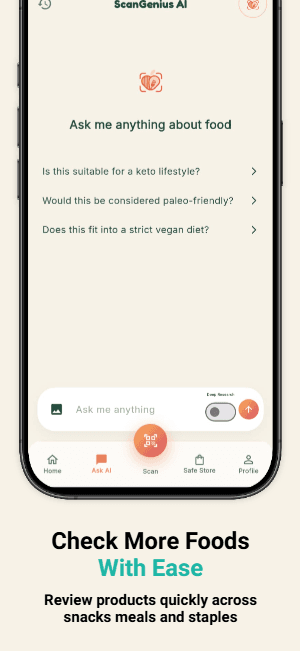
- Scan the barcode on any bagged salad, dressing, frozen greens, or pesto. In about 2 seconds you get an instant audit trail with flagged sub-ingredients, ScanGenius AI Insight, NOVA 1-4 classification, and Nutri-Score.
Instant Keto & Sugar Audit Trail
7. Frequently Asked Questions (FAQ)
Which keto friendly greens have the lowest net carbs?
Spinach, arugula, watercress, bok choy, and romaine are generally among the lowest, usually around 1 gram of net carbs per raw cup or less. Kale, Swiss chard, and collards are still keto compatible but run slightly higher per serving. Exact numbers vary by variety, serving size, and preparation. For packaged greens, scan the barcode in Food Scan Genius to see the full ingredient breakdown and catch added sugars or starches that raise the real carb count.
Are bagged salad kits and bottled dressings keto friendly?
It depends on the specific product. Plain bagged greens are usually fine, but kits often include sweetened dressings, candied nuts, dried fruit, or croutons. Many dressings also use sugar, corn syrup, or seed oils. Food Scan Genius parses nested sub-ingredients through the NutriGraph Database, so a scan shows what is inside the dressing packet, and you can add custom sensitivities, such as seed oils, to tailor the result.
Can I eat spinach and kale every day on keto?
Many people do, and both fit well within keto carb limits. There are health-specific considerations. Spinach and chard are high in oxalates, which matters for those prone to kidney stones, and kale and collards are rich in vitamin K, which matters for people taking warfarin. Talk with your clinician or dietitian about the right amounts for you. Food Scan Genius can help you check packaged versions, but it does not replace personalized medical advice.
How can I check frozen or canned greens for hidden ingredients quickly?
Scan the barcode with Food Scan Genius, which is free on iOS and Android. Within about 2 seconds, you see whether the product contains thickeners such as flour or modified starch, added sugars, seed oils, or allergens. ScanGenius AI Insight explains each flag in plain language, alongside the NOVA 1-4 classification and Nutri-Score. If you shop for a family, multi-household profiles show who a product fails for in the same scan, and the app’s 11 languages with real-time translation help with imported products.
Know What’s In Your Food Before You Buy — Scan Free Today
Never second-guess confusing grocery labels again. Download Food Scan Genius to uncover hidden additives, toxic dyes, and allergens for the whole household before you buy.