
1. Why Choosing Lactose Free Ice Cream Is Harder Than It Looks in 2026
If you have ever stood in the freezer aisle with a pint in each hand, trying to work out whether either one will leave you comfortable by bedtime, you are not being overcautious. You are dealing with a category where the front-of-pack claim tells you very little. Lactose intolerance is common worldwide. It happens when the body makes too little lactase, the enzyme that breaks down lactose, so symptoms like bloating, cramping, gas, and urgent trips to the bathroom can follow a single scoop. Many shoppers say the emotional toll is real too: giving up a childhood favorite, or being the one at the birthday party who has to ask what is in dessert.
The aisle is more complicated than one claim suggests. Broadly, there are two families of products. The first is lactase-treated dairy ice cream, made from real milk and cream with lactase added to break down the lactose. Brands such as Lactaid and Breyers’ lactose-free line are well-known examples. These usually taste closest to traditional ice cream, with a slightly sweeter profile because lactose is split into glucose and galactose, which taste sweeter. The second family is plant-based frozen desserts made from oat, almond, coconut, cashew, soy, or avocado bases. Their taste ranges from remarkably creamy to icy or distinctly nutty, and their ingredient lists tend to be longer because gums, oils, and sweeteners replace the structure that milk fat normally provides. Recipes and availability change often, so treat any brand named here as a starting point and check the pint in your hand.
Safety is where the two families part ways most. Lactose free does not mean milk free. A lactase-treated ice cream still contains milk proteins like casein and whey, so it is unsuitable for anyone with a true milk allergy. The FDA Food Allergen Labeling & Consumer Protection Act (FALCPA) requires milk to be declared as a major allergen. It does not, however, standardize how a brand uses terms like ‘lactose free,’ ‘dairy free,’ or ‘non-dairy’ in marketing, and some ‘non-dairy’ products still contain milk derivatives.
There is also a broader nutrition question. Many frozen desserts, dairy or plant-based, sit in the ultra-processed range. Published work such as this PubMed Research on Ultra-Processed Foods & Gut Microbiome Disruption reflects a growing scientific interest in how heavily processed eating patterns affect appetite, intake, and digestive health. That does not make a scoop of ice cream a failure. It does mean that if you already have a sensitive gut, the ingredient list matters as much as the lactose claim. This guide is educational, not medical advice, so please check with your clinician or dietitian about your own tolerance.
Scan Any Label for Hidden Additives and Allergens — Free
Never second-guess confusing grocery labels again. Download Food Scan Genius to uncover hidden additives, toxic dyes, and allergens for the whole household before you buy.


2. Sneaky Ingredients and Labeling Loopholes in Lactose Free Ice Cream
Most people who buy lactose free ice cream are trying to avoid digestive distress, yet several common ingredients can trigger similar symptoms. Here are the issues we see most often when auditing labels, and why a quick glance at the front of the box can mislead you:
- Residual milk proteins in ‘lactose free’ dairy. Lactase removes the sugar, not the protein. Casein, whey, and milk solids remain, which matters enormously for milk-allergic households. Always read the allergen statement, not just the claim.
- Sugar alcohols (polyols). Reduced-sugar and ‘light’ pints often use erythritol, sorbitol, maltitol, or xylitol. These are poorly absorbed and can cause bloating and a laxative effect, so a product can be lactose free and still upset your stomach.
- Prebiotic fibers such as inulin and chicory root. Added for body and fiber claims, these are high-FODMAP ingredients that commonly cause gas in sensitive people, which can look like lactose intolerance when it is not.
- Gums and emulsifiers. Guar gum, locust bean gum, carrageenan, polysorbate 80, and mono- and diglycerides help plant-based desserts feel creamy. Many are permitted additives, and the European Food Safety Authority (EFSA) Additive Safety Regulations show how rigorously they are re-evaluated. Individual tolerance still varies, and some shoppers prefer to avoid specific ones.
- Saturated fat from coconut oil and cocoa butter. Dairy-free pints are often assumed to be lighter, but coconut-based versions can rival premium dairy ice cream in saturated fat. The World Health Organization Guidelines on Healthy Diets & Saturated Fats recommend keeping saturated fat to a modest share of daily energy, so context matters for regular eaters.
- Shared-line and ‘may contain’ statements. Precautionary labels such as ‘made on equipment that processes tree nuts or milk’ are voluntary and inconsistent. A plant-based pint from a facility that also handles dairy and nuts may be fine for lactose intolerance and risky for allergy.
These points explain why ‘best lactose free ice cream’ lists based only on flavor can leave you disappointed. Taste is subjective, but ingredients are checkable. Lactase-treated dairy pints tend to have shorter, more familiar ingredient lists. Plant-based options give you the only route to a truly milk-free dessert, but you pay for it with more stabilizers and more variation between brands. Neither is automatically better. The right choice depends on whether your issue is lactose, milk allergy, FODMAPs, or something else entirely.
3. Head-to-Head: How Food Scan Genius Compares for Checking Lactose Free Ice Cream
| Feature | Food Scan Genius | Fig | Spoonful | Manual Label Reading |
|---|---|---|---|---|
| Cost | 100% free core features, zero paywalls | $59/year | Limited scans | Free, but time-consuming |
| Database & parsing | NutriGraph: 5,000,000+ verified UPC/EAN barcodes with recursive sub-ingredient parsing | Ingredient-based analysis | Barcode-based analysis | Only what you can read and recognize |
| Dietary profiles | 39 profiles plus custom sensitivities (polyols, gums, dyes, seed oils) | Preset-focused profiles | Preset-focused profiles | Depends entirely on your memory |
| Family screening | Multi-household profiles, one scan, named results (e.g., ‘Fails for Sri (Gluten)’) | Individual-centered | Individual-centered | Manual cross-checking per person |
| Context & languages | ScanGenius AI Insight, NOVA 1-4, Nutri-Score, 11 languages with real-time translation | Pass/fail style results | Pass/fail style results | No classification; foreign labels are a barrier |
The hardest part of choosing lactose free ice cream is that the real risks hide in the layers of an ingredient list. ‘Natural flavors,’ a compound chocolate coating, or a swirl made from a sub-recipe can each carry milk derivatives, polyols, or additives you never see on the front panel. Food Scan Genius is powered by the NutriGraph Database, which holds more than 5,000,000 verified UPC/EAN barcodes and uses deep, recursive sub-ingredient parsing to unpack those nested components. You can set your profile to lactose or milk, add one of 39 dietary profiles, or create a custom sensitivity for erythritol, inulin, carrageenan, a specific dye, or seed oils. For families, multi-household profiles screen everyone at once and name who is affected, so the answer reads ‘Fails for Sri (Gluten)’ rather than a vague warning. And the core experience is free, with no scan caps.
We also believe a single moralizing score does more harm than good. A pint that is perfect for your lactose intolerance may still be an occasional treat nutritionally, and both facts can be true. ScanGenius AI Insight gives nuanced context instead of a good/bad verdict. It explains why an ingredient flagged for your profile, adds a NOVA 1-4 processing classification and a Nutri-Score, and leaves the decision to you. With 11 supported languages and real-time in-app translation, it also helps when you are traveling, shopping imported brands, or sharing the app with relatives who read a different language. It is a decision-support tool, not a substitute for medical guidance.
4. Related Food Safety & Dietary Guides
- Best Food Allergy Scanner App – Scan Food Labels Instantly — Food Allergy & Sensitivity Scanner Hub
- The 7 Best Free Food Scanner Apps of 2026 — best free food scanner apps
- Choosing the Best Barcode Scan App for Your Health — guide to choosing a barcode scanner app
- Food Scan Genius: World’s #1 Food Ingredient Scanner App — Food Scan Genius scanner app
5. Scientific & Health Authority References
- FDA Food Allergen Labeling & Consumer Protection Act (FALCPA)
- European Food Safety Authority (EFSA) Additive Safety Regulations
- PubMed Research on Ultra-Processed Foods & Gut Microbiome Disruption
- World Health Organization Guidelines on Healthy Diets & Saturated Fats
6. How to Scan in 3 Simple Steps
- Download Food Scan Genius free on iOS or Android. There are no paywalls on core features, so you can scan every pint you consider without hitting a limit.
- Set up your profile: choose Lactose Intolerance or Milk Allergy from the 39 dietary profiles, then use ‘Add Your Own Custom Sensitivity’ for polyols like sorbitol or erythritol, inulin, carrageenan, or any additive you prefer to avoid. Add family members under your household if you shop for more than one person.
- Scan the barcode in about 2 seconds. You get an instant audit trail showing which ingredient triggered each result, the named person it affects, plus ScanGenius AI Insight, NOVA 1-4 classification, and Nutri-Score so you can compare pints side by side.
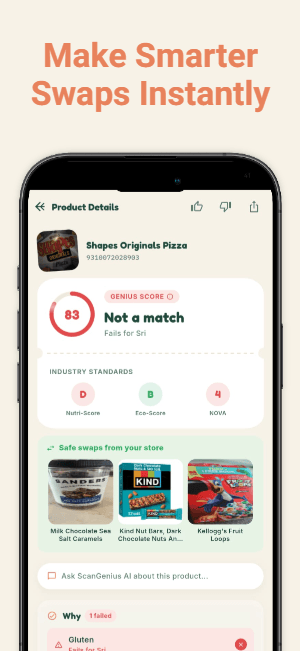
Instant Lactose-Free Audit Trail
7. Frequently Asked Questions (FAQ)
Is lactose free ice cream safe for someone with a milk allergy?
Not necessarily. Lactose-free dairy ice cream is made from real milk with lactase added, so it still contains milk proteins like casein and whey. Those proteins are what trigger a milk allergy. Only products that are genuinely milk-free, such as many oat, almond, or coconut desserts, may be appropriate, and you should still check the allergen statement and any shared-equipment warnings. In Food Scan Genius, choose the Milk Allergy profile and scan the barcode. The NutriGraph Database parses sub-ingredients to flag milk derivatives even when they are not obvious, but always confirm with your allergist.
Why does lactose free ice cream still upset my stomach sometimes?
Several non-lactose ingredients can cause similar symptoms. Sugar alcohols like sorbitol, maltitol, and erythritol, prebiotic fibers like inulin and chicory root, and large amounts of fat can all contribute to bloating or loose stools in sensitive people. Some shoppers also react to specific gums or emulsifiers. With Food Scan Genius you can add custom sensitivities for these ingredients, so your scan results reflect your actual triggers, not just lactose. If symptoms persist, a clinician can help rule out other conditions.
Which tastes better: lactase-treated dairy or plant-based lactose free ice cream?
Taste is personal, but there are consistent patterns. Lactase-treated dairy pints usually come closest to classic ice cream in texture and flavor, with a slightly sweeter profile because lactose is broken into simpler sugars. Plant-based options vary more: oat and cashew bases tend to be creamy, almond can be lighter or icier, and coconut brings a noticeable flavor and often more saturated fat. Because formulations change, scan the pint you are considering. Food Scan Genius shows the ingredient detail, NOVA classification, and Nutri-Score alongside your personal flags so you can balance taste and ingredients.
Can I check lactose free ice cream for my whole family in one scan?
Yes. Food Scan Genius supports multi-household family profiles, so you can include everyone with different needs, such as one person avoiding lactose, another avoiding gluten, and a child with a nut allergy. One barcode scan screens the product against all profiles and names who is affected, for example ‘Fails for Sri (Gluten).’ The app is free at its core, works in 11 languages with real-time translation, and gives you ScanGenius AI Insight to explain each flag rather than a simplistic pass/fail score.
Know What’s In Your Food Before You Buy — Scan Free Today
Never second-guess confusing grocery labels again. Download Food Scan Genius to uncover hidden additives, toxic dyes, and allergens for the whole household before you buy.