The 7 Best Apple Crisp Apples (And 3 You Should Never Use)
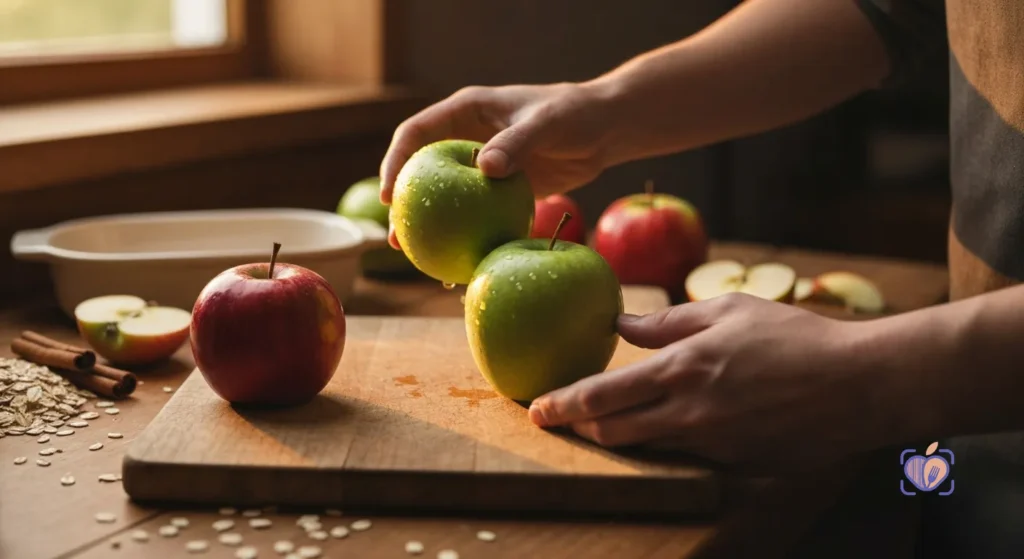
The absolute best apple crisp apples are Granny Smith, Honeycrisp, Braeburn, Jonagold, Pink Lady, Cortland, and Mutsu. These seven varieties possess the dense cellular structure and high natural pectin required to withstand baking temperatures without turning to mush, while offering the perfect sweet-tart balance. Conversely, you should never use Red Delicious, McIntosh, or Gala as apple crisp apples, because their low acidity and frail tissue structure cause them to disintegrate into a watery puree when exposed to prolonged oven heat.
Baking is not a time for compromises. It is an unspoken contract between you and everyone sitting around your table. When you pull a dessert from the oven, you are selling comfort, nostalgia, and an uncompromising standard of quality. Choose the wrong ingredients, and the entire pitch falls flat.
As the CMO of Food Scan Genius, I spend my life looking at what goes into our food. A perfect dessert starts with whole, uncompromising ingredients. Let’s cut through the culinary noise and look at exactly which apple crisp apples command the room, and which ones should be laughed out of the kitchen.
The 7 Best Apple Crisp Apples
A world-class apple crisp requires fruit that fights back. You need acidity to cut through the heavy butter and sugar of your oat topping, and you need a structural integrity that survives 375 degrees. Here are the seven you should be buying.
1. Granny Smith: The Undisputed Executive
If you want certainty, you hire a Granny Smith. It is the gold standard of apple crisp apples. Its aggressive tartness provides the necessary friction against a sweet brown-sugar topping, and its firm flesh refuses to break down under heat. To understand why, you have to look at the fruit’s cellular composition. Research indexed in PubMed on the thermal degradation of plant tissues highlights that high-pectin, low-moisture apples maintain their firmness significantly better during baking.
2. Honeycrisp: The Premium Asset
Honeycrisps are expensive, but they justify their retainer. They bring a larger, explosive cellular structure that holds onto its juices during baking. A Honeycrisp delivers a brighter, more floral sweetness than a Granny Smith, making it an incredible standalone apple crisp apple, or a perfect blending partner to soften the bite of a tarter variety.
3. Braeburn: The Reliable Workhorse
Braeburns don’t ask for the spotlight; they just do the heavy lifting. They offer a deeply concentrated, almost spiced apple flavor that feels tailor-made for cinnamon and nutmeg. More importantly, they bake down into tender chunks that yield to a fork without losing their distinct shape.
4. Jonagold: The Perfect Merger
A cross between a Jonathan and a Golden Delicious, the Jonagold is a masterclass in synergy. You get the honeyed sweetness of the Golden Delicious and the sharp, acidic snap of the Jonathan. Because of their size, peeling and coring them is highly efficient.
5. Pink Lady: The Sharp Closer
Also known as Cripps Pink, this apple has a tight, dense flesh and a high acidic profile that finishes with a clean, fizzy sweetness. It takes slightly longer to bake down than a Jonagold, making it an ideal candidate if you prefer your apple crisp apples to have a distinct, toothsome bite.
6. Cortland: The Anti-Oxidant Player
Cortlands are a brilliant, often overlooked choice. Their defining characteristic is that their snow-white flesh is highly resistant to browning once cut. This buys you time while you prepare your crisp topping. They are softer than a Granny Smith but retain just enough structure to perform beautifully under an oat streusel.
7. Mutsu (Crispin): The Sturdy Giant
Originating in Japan, the Mutsu is a large, yellow-green apple with a sweet, cider-like flavor. It is remarkably firm. If you are baking for a crowd and need an apple crisp apple that can handle being left in the oven a few minutes too long without catastrophic failure, the Mutsu is your insurance policy.
3 Apples You Should Never Use in a Crisp
Not every apple is built for the heat. Using the wrong variety is a rookie mistake that results in a soupy, unappetizing mess.
1. Red Delicious
The Red Delicious is a triumph of marketing over substance. It was bred for transportability and shelf-appeal, not flavor or baking mechanics. Under heat, its mealy flesh completely collapses, and its notoriously thick, bitter skin detaches, leaving you with a watery, flavorless mush.
2. McIntosh
McIntosh apples are phenomenal for fresh eating or making homemade applesauce. But as apple crisp apples, they are a disaster. Their cellular walls surrender almost immediately when exposed to oven temperatures. If you put them in a crisp, you will end up with a pan of hot applesauce hiding underneath a soggy oat topping.
3. Gala
Galas are incredibly sweet, which makes them a lunchbox staple, but they lack the necessary acidity and firm structure for baking. Without that acidic bite, your dessert will become cloyingly, one-dimensionally sweet, and the apple slices will turn limp and stringy.
The Unseen Ingredients in Your Apple Crisp
Selecting the perfect apple is only half the battle. If you’re relying on pre-packaged crisp mixes or store-bought oat blends for your topping, you might be introducing a host of unwanted additives or hidden allergens to your table.
This is where clarity matters. Food Scan Genius doesn’t just look at the bold print; our technology parses 200+ specific edge-case hidden labels. Whether it’s cross-contaminated oats—which FARE warns is a critical issue for those with celiac disease or wheat allergies—or synthetic texturizers hiding in your brown sugar blends, we reveal what the food industry tries to obscure.
Even with fresh produce, knowledge is power. The FDA sets clear guidelines on washing commercial produce to remove food-grade waxes and surface pathogens. With Food Scan Genius, you don’t just know what kind of apple you’re buying; you understand the entire supply chain footprint of your ingredients.
Apple Crisp Apples FAQ
Do I need to peel apple crisp apples?
Yes. While the Mayo Clinic correctly points out that an apple’s skin is packed with beneficial insoluble fiber, baking changes the texture. Unpeeled apples leave tough, stringy pieces of skin in your crisp that separate from the flesh, ruining the luxurious, melt-in-your-mouth texture of the dessert.
Should I mix different apple crisp apples together?
Absolutely. The secret to a bakery-tier dessert is dimension. Blending a sharp, structural apple (like Granny Smith) with a sweeter, juicier apple (like Honeycrisp or Jonagold) creates a complex flavor profile and a beautifully varied texture that a single variety cannot achieve on its own.
How do I keep my apple crisp from getting watery?
First, only use the best apple crisp apples listed above—avoiding watery varieties like Gala or McIntosh is your first line of defense. Second, toss your sliced apples with a thickening agent before baking. One to two tablespoons of all-purpose flour, cornstarch, or tapioca starch will bind with the natural juices as the fruit releases them, creating a rich, glossy syrup rather than a puddle.