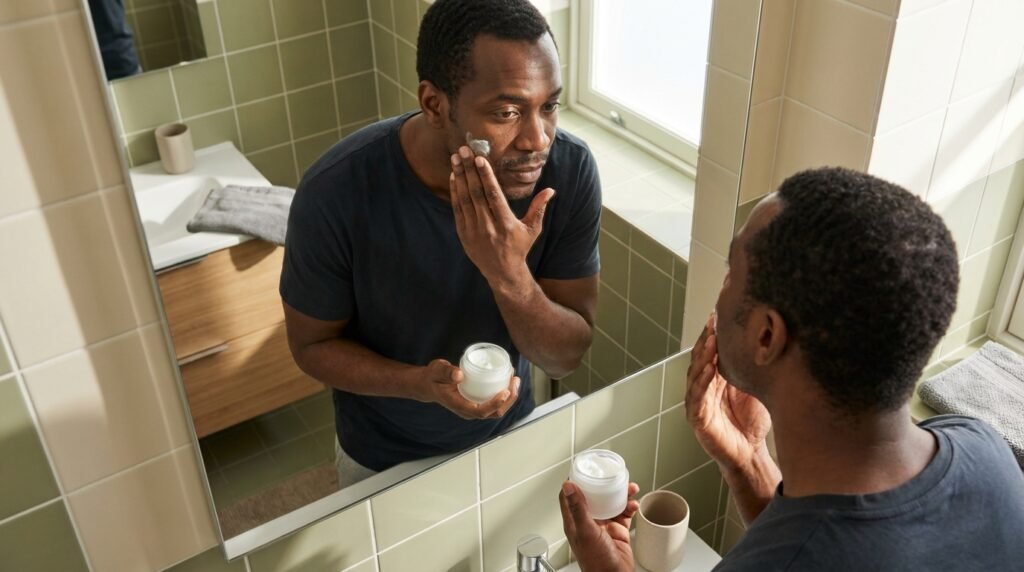
You look in the mirror and see it. Another breakout. That familiar, frustrating redness. The dull, congested texture you’ve spent a fortune trying to fix. You followed the rules, you bought the ‘dermatologist-recommended’ products, yet the cycle of irritation and disappointment continues. It’s a feeling of betrayal—by the brands you trusted, by your own skin. The truth is, the answer might be hiding in plain sight, in an ingredient so common it’s in almost everything: dimethicone. But the confusion ends now. You deserve clarity, not chemical cocktails. That’s why we built Skin Scan Genius. Our revolutionary app, launching soon, will finally give you the power to know exactly what you’re putting on your skin. Stop the guesswork and reclaim control. Visit https://skin.scangeni.us/ right now to join our exclusive waitlist and be the first to experience the future of skincare intelligence.
The Great Debate: What the Authorities Say About Dimethicone
In the glossy world of cosmetics, dimethicone is a star player. It’s the ingredient that gives your primer that velvety glide, your moisturizer that instant smoothness, and your foundation that flawless, pore-blurring finish. It’s a form of silicone, a synthetic polymer, and its primary function is to act as an emollient and occlusive agent. It forms a silky, water-resistant film on the skin, which helps to lock in moisture and create a smooth canvas.
On the surface, this sounds wonderful. And if you ask many regulatory bodies, they’ll tell you it’s perfectly safe. The Cosmetic Ingredient Review (CIR) Expert Panel has assessed it as safe for use in cosmetics. Even the notoriously cautious Environmental Working Group (EWG) Skin Deep® database gives dimethicone a low hazard score, noting minimal concerns for toxicity or allergies for the general population.
But here’s where the conversation changes. Safety is not the same as suitability. A wool sweater is ‘safe,’ but for someone with a sensitivity, it’s an instrument of torture. The official verdict on dimethicone often fails to account for individual skin conditions, long-term effects on skin function, and the specific needs of those battling acne, rosacea, perioral dermatitis, or fungal sensitivities. The ‘low allergen’ profile doesn’t mean ‘zero allergen’ profile, and for the millions struggling with reactive skin, that distinction is everything. The official story is just the prologue. The real story is written on your skin, and it’s time we started reading it closely.
The Granular Breakdown: Deconstructing Dimethicone’s Real Impact
To truly understand if dimethicone is bad for your skin, we have to move beyond broad safety ratings and look at the mechanics of how it interacts with your unique biology. It’s not about fear-mongering; it’s about deep, evidence-based understanding. Let’s pull back the curtain.
Dimethicone and Your Pores: The Truth About Comedogenicity and Acne
The most heated debate surrounding dimethicone is its potential to clog pores and cause breakouts. The industry line is that the dimethicone molecule is too large to penetrate the pore lining, and therefore it is ‘non-comedogenic.’ While this is technically true from a molecular standpoint, it’s a dangerously simplistic view of skin physiology.
Think of dimethicone as a layer of flexible, breathable plastic wrap on your skin. While it may prevent water from escaping, it also creates a barrier over your pores. Underneath this film, things are still happening. Your skin is still producing sebum (oil), shedding dead skin cells, and housing bacteria (like P. acnes). By creating an occlusive seal, dimethicone can effectively trap all of this debris inside the pore. For someone with naturally oily or acne-prone skin, this is a recipe for disaster. It creates the perfect anaerobic environment for bacteria to thrive, leading to inflammation, blackheads, and those deep, painful cysts.
This is why you might use a product labeled ‘oil-free’ and ‘non-comedogenic’ that is loaded with dimethicone, only to find yourself breaking out in closed comedones—those stubborn, flesh-colored bumps that give skin a rough, uneven texture. The product isn’t adding oil, but it’s preventing your skin’s natural oils and waste from escaping properly. It’s not clogging the pore from the inside; it’s sealing it from the outside.
The Occlusive Effect: Does Dimethicone Suffocate Your Skin and Block Nutrients?
Beyond trapping debris, that same occlusive barrier raises another critical question: is it preventing the good stuff from getting in? You invest heavily in your skincare. You buy potent Vitamin C serums, hydrating hyaluronic acid, and restorative peptide creams. You meticulously layer these products, hoping for absorption and results.
Now, consider the role of a dimethicone-heavy primer or moisturizer applied on top. That silky film, so effective at locking moisture in, can be equally effective at locking expensive treatments out. If your active ingredients are applied before a heavy silicone product, their absorption may be slowed. If they are part of a formula that also contains a high concentration of dimethicone, the silicone can form a film that prioritizes surface feel over deep penetration of the other ingredients.
This creates a frustrating paradox: a product that feels incredibly hydrating and effective on the surface may be little more than a cosmetic veil. It provides a temporary smoothing effect without allowing the truly beneficial, skin-rebuilding ingredients to do their work on a cellular level. Your skin feels soft to the touch, but underneath it may be starved of the very nutrients you’re trying to provide. It’s the illusion of health, not the reality of it.
Dimethicone’s Impact on the Skin Barrier: Friend or Long-Term Foe?
Your skin barrier (the stratum corneum) is a brilliant, self-regulating system. It works tirelessly to maintain hydration, produce its own natural moisturizing factors (NMFs), and protect you from environmental aggressors. A healthy barrier is resilient and balanced. But what happens when we constantly coat it in a synthetic film?
In the short term, dimethicone can be a lifeline for compromised skin. By forming a protective barrier, it can prevent trans-epidermal water loss (TEWL) and give damaged skin a chance to heal. This is why it’s often found in medical-grade barrier creams.
However, the concern lies in the long-term, daily use. Some dermatological theories suggest that by constantly providing an artificial barrier, we may be sending a signal to our skin that it doesn’t need to do its own job as efficiently. The skin’s natural processes of repair, lipid production, and cell turnover could potentially slow down, creating a dependency on the very product meant to help it. You stop using the dimethicone-heavy cream, and your skin feels tight, dry, and exposed, because its own barrier-forming functions have become sluggish. It’s a cycle of dependency that keeps you reaching for that silky cream, believing your skin can’t live without it, when in fact, the cream itself may be perpetuating the problem.
Environmental Concerns and Bioaccumulation: The Unseen Cost of ‘Silky Smooth’
For the conscious consumer, the story of an ingredient doesn’t end at their face. It ends when it’s washed down the drain. Silicones like dimethicone are synthetic polymers derived from silica. They are not biodegradable. When you wash your face or shower, these molecules enter our water systems.
Because they are so persistent, they can accumulate in the environment, a process known as bioaccumulation. Studies have found concentrations of various silicones in aquatic sediment and wildlife. While the full ecological impact is still being researched, the fact remains that we are introducing a massive quantity of a persistent, man-made substance into our ecosystem every single day. For those who champion a ‘clean beauty’ ethos that extends to planetary health, the widespread use of non-biodegradable silicones presents a significant ethical and environmental conflict. The temporary cosmetic benefit comes at a long-term environmental cost, a price that is becoming increasingly difficult to ignore.
The Hidden Dangers: Where Dimethicone Is Hiding In Your Bathroom
The first step to taking control is knowing your enemy. Dimethicone and its silicone cousins (look for ingredients ending in ‘-cone,’ ‘-conol,’ or ‘-siloxane’) are masters of disguise, hiding in products you’d never expect. Here are some of the most common traps:
- ‘Oil-Free’ Foundations & Primers: This is the most common hiding place. It’s used to provide ‘slip’ and a matte, pore-filling effect without using traditional oils. The label promises no oil, but delivers a pore-sealing film instead.
- Hair Conditioners & Serums: It’s what gives hair that slippery, detangled, shiny feel. But it can build up on the hair shaft (requiring harsh sulfates to remove) and, more importantly, run down your face and back in the shower, contributing to breakouts on the face, neck, and ‘bacne.’
- ‘Clean-Washing’ Moisturizers: Many brands that market themselves as ‘natural’ or ‘clean’ still rely on dimethicone as a cheap and effective texturizer. They’ll highlight their botanical extracts on the front, while hiding the synthetic polymer deep in the ingredient list.
- Matte Lipsticks: That long-lasting, non-transferable finish is often thanks to a film-forming silicone that can be incredibly drying to the lips over time.
- Anti-Chafing Gels and Creams: The primary ingredient in these products is almost always a high concentration of dimethicone, designed to create a friction-reducing barrier.
- Scar Gels: Medical-grade silicone sheeting is proven to help with scar healing, and many over-the-counter scar gels use dimethicone to replicate this occlusive effect.
The System Is Broken. We Are the Solution.
The problem isn’t just dimethicone. It’s a symptom of a much larger issue. The United States cosmetic industry operates with a staggering lack of regulation, allowing over 10,000 chemicals to be used in personal care products, many with little to no safety data. Brands hide behind confusing chemical names and marketing loopholes, leaving you, the consumer, to navigate a minefield of potential irritants, allergens, endocrine disruptors, and carcinogens. It’s an impossible task. You shouldn’t need a chemistry degree to buy a moisturizer.
This is why we created Skin Scan Genius. We believe in radical transparency. We believe you have a right to know exactly what you’re putting on your body. Our powerful mobile app is designed to be your personal cosmetic chemist. Simply scan the barcode of any product, and in an instant, our algorithm analyzes the entire ingredient list. We cross-reference every chemical against a massive database of scientific studies and regulatory warnings to flag potential endocrine disruptors, carcinogens, allergens, and ingredients, like dimethicone, that may be unsuitable for your specific skin concerns. We cut through the marketing noise and give you the simple, unvarnished truth.
Your Skin Can’t Wait. The Answer Is In Your Hands.
You’ve felt the frustration. You’ve spent the money. You’ve been let down by promises of ‘perfect skin’ in a bottle. The cycle of confusion, reaction, and disappointment has to stop. The power to change your skin’s destiny isn’t in another miracle cream; it’s in knowledge. It’s in knowing, with absolute certainty, that the products you choose are truly right for you.
Dimethicone may be the question today, but a new, confusing ingredient will be the question tomorrow. You need more than an article; you need a permanent ally in your fight for healthy skin. Skin Scan Genius is that ally. We are on the verge of launching a revolution in skincare, and we want you at the forefront.
Don’t spend another day guessing what’s hidden in your products. Don’t let the industry’s secrets dictate your skin’s health. It’s time to demand the truth. Visit https://skin.scangeni.us/ right now and sign up for the exclusive launch waitlist. Be the first to know, the first to scan, and the first to finally take back control. Your skin will thank you.
Frequently Asked Questions
Can dimethicone in moisturizers cause closed comedones?
Yes, for some individuals, particularly those with oily or acne-prone skin, dimethicone can contribute to the formation of closed comedones. While the molecule itself is considered non-comedogenic because it’s too large to enter pores, it forms an occlusive film on the skin’s surface. This film can trap sebum, dead skin cells, and bacteria that are already in the pore, preventing them from exiting naturally. This blockage creates an ideal environment for comedones and inflammatory acne to develop.
Does dimethicone prevent absorption of vitamin C serum?
Dimethicone can potentially interfere with the absorption of other skincare ingredients, including Vitamin C serum. Because it is designed to form a barrier on the skin, if a dimethicone-heavy product (like a primer or moisturizer) is applied over a serum, it can slow down or reduce the penetration of the active ingredients into the deeper layers of the skin. For maximum efficacy, it is generally recommended to apply water-based serums first and allow them to fully absorb before applying products with a high silicone content.
Is dimethicone an irritant for fungal acne prone skin?
Dimethicone is not a direct food source for the Malassezia yeast that causes fungal acne (pityrosporum folliculitis). However, it can still be problematic. The occlusive layer it creates can trap sweat and sebum, creating the warm, moist environment in which the yeast thrives. Therefore, while not a direct trigger, it can exacerbate the conditions that lead to a fungal acne flare-up for those who are susceptible.
What are the long-term effects of dimethicone on skin barrier function?
While dimethicone can offer short-term protection for a compromised skin barrier by preventing water loss, there are concerns about its long-term effects. Some dermatological experts theorize that the constant presence of an artificial barrier may signal the skin to down-regulate its own natural moisturizing and repair processes. This could potentially lead to a state of dependency, where the skin feels dry, tight, and vulnerable without the silicone product, as its intrinsic ability to maintain its own barrier has become less efficient.
Scan any product in two seconds
Check allergens, additives and 39 diets before you buy. Free on both stores.


Every scan is answered by NutriGraphAPI, our own catalogue of over 5 million barcode-indexed packaged products with allergen, additive and dietary data. Building a food or grocery app yourself? The same data is available as an API.