
1. The Hidden Animal Derivative Trap in Packaged Groceries
Adopting a vegan or plant-based lifestyle is one of the most powerful ethical, environmental, and health commitments a person can make. Yet, stepping into a supermarket often feels like navigating an obstacle course of deceptive food chemistry.
You pick up a bag of dark chocolate chips, a package of plant-based burger buns, or a carton of orange juice with added vitamins. The front label looks completely vegan-friendly, but a careful audit of the back panel reveals ambiguous chemical codes: E120, E471, Shellac Glaze, Whey Solids, Vitamin D3, Natural Flavor.
Modern food manufacturing routinely extracts slaughterhouse byproducts and insect secretions to use as cheap processing aids, glazing agents, emulsifiers, and colorants. For committed vegans, accidentally purchasing food containing crushed insects or sheep wool lanolin is deeply frustrating. You shouldn’t have to carry an index of 400 chemical additive codes just to shop ethically.
Scan Any Food for Hidden Animal Derivatives & E-Numbers Free
Never second-guess confusing grocery labels again. Download Food Scan Genius to uncover hidden additives, toxic dyes, and allergens for the whole household before you buy.


2. The Sneakiest Non-Vegan E-Numbers & Ingredients Exposed
Food corporations rarely print “Crushed Beetles” or “Boiled Pig Bones” on ingredient statements. Instead, they use technical E-numbers and euphemisms:
- E120 (Carmine / Cochineal): A bright red dye made by drying and crushing female scale insects. Found in fruit candies, berry jams, vegan-looking strawberry smoothies, and plant-based cosmetic lip balms.
- E904 (Shellac) & E901 (Beeswax): A resin secreted by female lac bugs used to give shiny glazes to jelly beans, sprinkles, coated chocolates, and citrus fruit skins.
- E441 (Gelatin): Derived by boiling skin, tendons, and bones of cows and pigs. Sneaks into gummy candies, marshmallows, frosted toaster pastries, and capsule supplements.
- Isinglass & Gelatin Fining in Beverages: A collagen extracted from fish bladders used as a clarifier in commercial beer and wine brewing.
- Vitamin D3 (Cholecalciferol): Almost universally harvested from sheep’s lanolin (wool grease) unless specifically labeled as Vegan D3 from Lichen.
- L-Cysteine (E920): A dough enhancer in commercial bagels, pizza dough, and buns sourced from poultry feathers.
3. Why Mainstream Food Apps Miss Animal Derivatives
Generic calorie trackers and rating apps fail vegan shoppers because they focus solely on macros (protein, carbs, calories) or universal scores. An app might rate a confectionery product “88/100 Healthy” because it is low in sugar, completely ignoring that its glossy coating is insect shellac (E904).
Food Scan Genius enforces deterministic plant-based compliance: if an ingredient is animal-derived, the scan immediately triggers a fail verdict and names the exact offending additive.
Stacking Vegan Screening with Gluten-Free, Eco-Score & Safe Swaps
Plant-based eaters frequently navigate dual requirements—like Vegan + Gluten-Free or seeking products with superior Eco-Score ratings and zero animal testing.
🌱 100% Free Vegan Filter
Flags whey powder, casein, shellac, carmine, isinglass, and vitamin D3 from sheep’s lanolin instantly.
🔄 Vegan Safe Swaps
When an item contains hidden animal derivatives, discover verified plant-based alternative brands on the spot.
🌍 Eco-Score & Sustainability
View carbon footprint and packaging recyclability data alongside your plant-based ingredient scan.
4. How to Scan for Vegan Compliance in 3 Simple Steps
- Download Food Scan Genius: Free on the Apple App Store and Google Play Store.
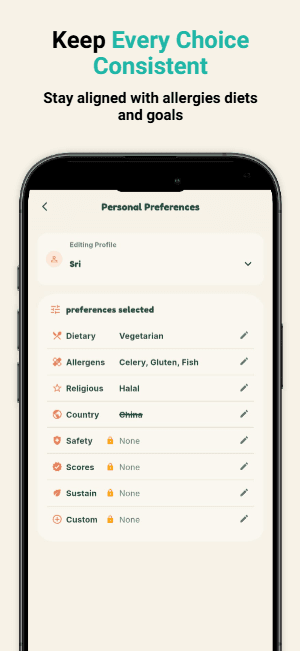
- Activate the Vegan Filter: Select Vegan alongside any secondary preferences (such as Gluten-Free, Organic, or Eco-Score priorities).
- Scan in the Aisle: Receive an instant ingredient breakdown that verifies plant origin and flags hidden animal enzymes in under 2 seconds.
Instant Vegan Audit Trail
5. Frequently Asked Questions (FAQ)
What hidden animal ingredients are disguised as E-numbers?
Common animal-derived additives include E120 (Carmine insect dye), E904 (Shellac insect glaze), E901 (Beeswax), E441 (Gelatin), E542 (Edible bone phosphate), E920 (L-Cysteine from feathers/hair), and E471 when sourced from animal tallow.
Why do some ‘dairy-free’ products still contain animal ingredients?
Products labeled ‘non-dairy’ frequently contain sodium caseinate (a milk protein derivative) or vitamin D3 derived from sheep’s wool lanolin, which makes them unsuitable for strict vegans.
Can Food Scan Genius detect isinglass in beer and wine?
Yes! When processing aids and fining agents like isinglass (fish bladder) or albumin (egg white) are declared in product databases, Food Scan Genius flags them for vegan shoppers.
Is the vegan barcode scanner free on Food Scan Genius?
Yes! Full plant-based and vegan ingredient screening across all 5,000,000+ products is 100% free with zero paywalls.
Shop 100% Plant-Based With Complete Certainty Today
Never second-guess confusing grocery labels again. Download Food Scan Genius to uncover hidden additives, toxic dyes, and allergens for the whole household before you buy.