1. Yellow 5 Explained: Definition, Names, and Why Shoppers Are Asking
Yellow 5 = tartrazine = FD&C Yellow No. 5 = E102: a synthetic, petroleum-derived, lemon-yellow azo dye used to color foods, drinks, medicines, and cosmetics. It is one of the most widely used color additives in the world. It is valued because it is cheap, stable in light and heat, and dissolves easily in water. Manufacturers use it alone for bright yellow shades and in blends to make green, orange, and brown.
If you are asking this question, you probably have a reason. Maybe a child seems more restless after neon-colored snacks. Maybe you get hives and can’t find the trigger. Maybe you read that Europe handles this dye differently from the United States. These are reasonable concerns, and you don’t need a chemistry degree to deal with them. One point matters up front: under the FDA Food Allergen Labeling & Consumer Protection Act (FALCPA), Yellow 5 is not one of the major allergens. It does not get a bold “Contains” statement. In the US it must be declared by name in the ingredient list, so you have to know what to look for.
Yellow 5 is also a marker for a certain kind of food. Bright, uniform, artificially vivid color tends to show up in heavily formulated products, the category researchers call ultra-processed. The World Health Organization Guidelines on Healthy Diets & Saturated Fats stress diets built on whole and minimally processed foods. Separately, the PubMed Research on Ultra-Processed Foods & Gut Microbiome Disruption reflects growing scientific interest in how formulated foods affect the body. Yellow 5 itself is one ingredient among many, so a dye alone does not make a food “bad.” Still, spotting it is a quick signal that deserves a closer look.
Regulation is also changing. Red 3 was banned in the US food supply in 2025. The FDA and HHS have since announced a push to phase out petroleum-based dyes, mostly through voluntary industry commitments. California has passed a law restricting several dyes, including Yellow 5, in school foods starting in late 2027. Reformulation is already underway, but many products still contain the dye today. Reading the label remains your best protection.
Scan Any Label for Hidden Additives and Allergens — Free
Never second-guess confusing grocery labels again. Download Food Scan Genius to uncover hidden additives, toxic dyes, and allergens for the whole household before you buy.


2. What the Science Says and Where Yellow 5 Hides
The evidence on Yellow 5 is mixed, and it is best to describe it that way. Regulators including the FDA, the Joint FAO/WHO Expert Committee on Food Additives (JECFA), and the European Food Safety Authority consider it safe at established intake levels. In its 2009 re-evaluation, EFSA kept an acceptable daily intake of 10 mg per kg of body weight. You can read more in the European Food Safety Authority (EFSA) Additive Safety Regulations hub. At the same time, a small number of people have allergic-type reactions such as hives, itching, or swelling. A 2007 UK study, often called the Southampton study, linked certain dye-and-preservative mixes to increased hyperactivity in some children. Because of that research, the EU requires foods containing E102 to carry the warning “may have an adverse effect on activity and attention in children.” California’s health assessment agency reached a similar conclusion in 2021: some children appear sensitive to synthetic dyes. Effects look small on average but larger for certain individuals, and nobody can yet predict who those children are.
The harder problem is finding Yellow 5 in the first place. These are the most common ways it slips past shoppers:
- Multiple names: It appears as Yellow 5, FD&C Yellow No. 5, tartrazine, E102, CI 19140, or Acid Yellow 23, depending on the country and the product type.
- Lake versions: “FD&C Yellow No. 5 Aluminum Lake” is the same dye bound to aluminum for use in coatings, sprinkles, and tablets. It is easy to miss when you only scan for “Yellow 5.”
- Color blends: Green foods often get their shade from Yellow 5 plus Blue 1. Orange and brown products can be blends, so the dye turns up in items that don’t look yellow.
- Sub-ingredients: A frosting packet in a baking kit, a seasoning coating on chips, or a pickle in a meal kit may carry the dye in a component list nested inside the main ingredient list.
- Medicines and supplements: Gummies, capsules, tablets, and liquid medications often list dyes in “inactive ingredients,” and the format differs from food labels.
- Regional label differences: A product sold abroad may say “E102,” and EU labeling rules differ from US rules, so travelers and importers are easily confused.
The old claim that tartrazine commonly triggers reactions in people with aspirin sensitivity has not held up well in later research, so be careful with sources that state it as fact. If you suspect a dye reaction, talk to an allergist or pediatrician. Keeping a food diary and checking labels carefully will give them useful information.
3. Food Scan Genius vs. Other Ways to Spot Yellow 5
| Feature | Food Scan Genius | Fig | Spoonful | Manual Label Reading |
|---|---|---|---|---|
| Cost | 100% free core features, no paywalls | Premium about $59/yr | Limited scans | Free, but slow |
| Catches alias names and sub-ingredients | Yes, recursive parsing of nested ingredients across 5M+ barcodes | Varies | Varies | Depends on your memory |
| Custom dye or additive alerts | 39 dietary profiles plus custom sensitivities | Preset profiles | Preset profiles | Not available |
| Whole-family screening | Multi-household profiles with named fail attribution | Limited | Limited | Repeat the check for each person |
| Languages | 11 global languages, real-time in-app translation | Limited | Limited | You need to read the language |
Spotting Yellow 5 reliably means recognizing every alias, such as tartrazine, E102, CI 19140, and the aluminum lake form. It also means reading ingredients nested inside other ingredients. Food Scan Genius is powered by the NutriGraph Database, which holds more than 5,000,000 verified UPC/EAN barcodes. Its recursive AST parsing opens each ingredient into its sub-ingredients, so a dye hidden in a seasoning coating or a frosting packet still triggers your alert. You can build a custom sensitivity for Yellow 5 or any dye, seed oil, or additive you want to avoid, on top of 39 supported dietary profiles.
Once the dye is found, you still need context. ScanGenius AI Insight explains what was detected and what the evidence says, and it shows a NOVA 1-4 classification and a Nutri-Score. It does not give the product a simplistic moral grade. If you shop for a household, family profiles check everyone in one scan and name who is affected, for example “Fails for Sri (Yellow 5).” Real-time translation in 11 languages helps with imported products and shared households. All of this is free.
4. Related Food Safety & Dietary Guides
- Sulphite Sensitivity & Preservative Checker — Sulphite Sensitivity Scanner Guide
- Sugar Sensitivity & Sweetener Guide — Sugar Sensitivity Scanner Guide
- FSG Labels Defined: Nutri-Score, NOVA & Additive Safety Guide — Food Label Definitions & Nutri-Score Guide
- Spanish Yellow & Tartrazine Allergy Dangers — tartrazine (Yellow 5) allergy risks
5. Scientific & Health Authority References
- FDA Food Allergen Labeling & Consumer Protection Act (FALCPA)
- European Food Safety Authority (EFSA) Additive Safety Regulations
- PubMed Research on Ultra-Processed Foods & Gut Microbiome Disruption
- World Health Organization Guidelines on Healthy Diets & Saturated Fats
6. How to Scan in 3 Simple Steps
- Download Food Scan Genius free on iOS or Android. There are no paywalls on the core features, and you don’t need a credit card.
- Set up your profile: pick from 39 dietary profiles, then use ‘Add Your Own Custom Sensitivity’ to flag Yellow 5, tartrazine, E102, and any other dyes you want to avoid. Add each family member’s profile if you shop for a household.
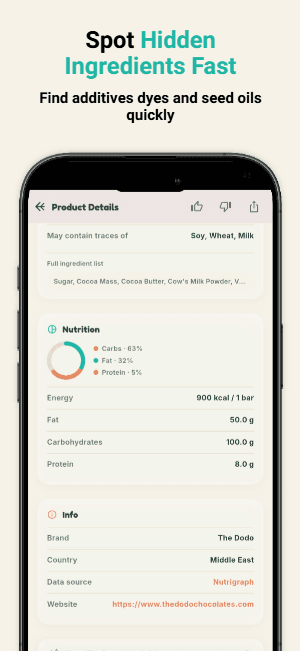
- Scan any barcode in about 2 seconds. You get an instant audit trail showing where Yellow 5 or its aliases were found, including inside sub-ingredients. You also get ScanGenius AI Insight, a NOVA group, a Nutri-Score, and named fail attribution for each family member.
Personalized Match & AI Insight
7. Frequently Asked Questions (FAQ)
What is Yellow 5 and is it the same as tartrazine?
Yes. Yellow 5 is the common US name for tartrazine, also written FD&C Yellow No. 5, E102 in Europe, or CI 19140. It is a synthetic azo dye made from petroleum-derived compounds. Food Scan Genius recognizes all of these names and flags them whichever one a manufacturer uses.
Is Yellow 5 safe to eat?
Regulators including the FDA, JECFA, and EFSA consider it safe at established intake levels, and EFSA’s acceptable daily intake is 10 mg per kg of body weight. A small number of people report hives or itching. Some studies suggest certain children are more prone to behavioral effects, which is why the EU requires a warning on foods containing E102. If you or your child react, speak with a doctor. Food Scan Genius lets you set a custom sensitivity so you can avoid it.
Which foods and products commonly contain Yellow 5?
Common sources include soft drinks, sports drinks, candy, cereals, chips, gelatin desserts, baked goods and mixes, icings, sprinkles, pickles, mustard, and flavored yogurts. It also appears in medications, vitamin gummies, and cosmetics. It can be in green, orange, or brown products too, since it is used in color blends. Scanning with Food Scan Genius checks sub-ingredients that are easy to overlook.
Does the US require Yellow 5 to be listed on food labels, and is it an allergen?
In the US, Yellow 5 must be declared by name on food labels, though not in a bold allergen statement, because it is not a major allergen under FALCPA. Medicines and supplements list it under inactive ingredients. Food Scan Genius reads the full ingredient list for you, with real-time translation in 11 languages for imported products.
Know What’s In Your Food Before You Buy — Scan Free Today
Never second-guess confusing grocery labels again. Download Food Scan Genius to uncover hidden additives, toxic dyes, and allergens for the whole household before you buy.