The Ultimate Guide to Scanner Of Barcode for Allergy Management
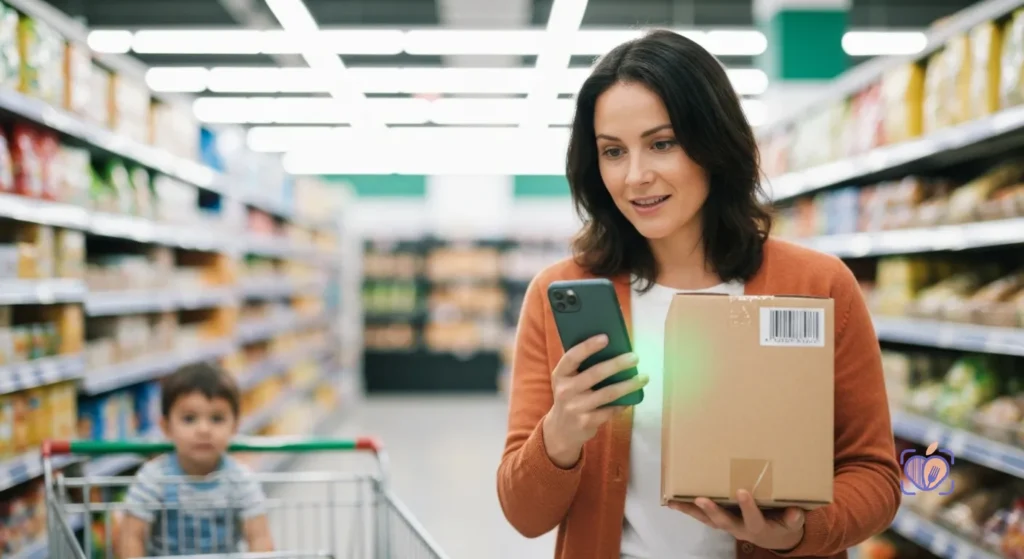
A scanner of barcode is a digital tool or mobile application that utilizes a smartphone camera to read the Universal Product Code (UPC) on food packaging, instantly translating the visual barcode into a comprehensive breakdown of ingredients, hidden allergens, and nutritional data. For individuals managing food allergies, a reliable scanner of barcode cross-references physical products with vast, real-time databases to prevent accidental exposure to dangerous allergens before a purchase is ever made.
Grocery shopping used to be an act of simple provisioning. Today, for millions of families, it is a daily exercise in risk management. You stand in aisle four, holding a box of crackers, squinting at eight-point font, wondering if a harmless-sounding additive is actually a derivative of soy, dairy, or gluten.
You shouldn’t need an advanced degree in biochemistry to feed your children safely. Food manufacturers deal in ambiguity; they sell you convenience wrapped in complex nomenclature. What you need is clarity. What you need is control.
Welcome to the new era of dietary defense.
Why a Scanner Of Barcode is Your Ultimate Safety Net
Human error is inevitable. Fatigue, poor lighting in the grocery store, and crying toddlers can easily distract you from catching a newly added allergen on a brand you’ve trusted for years. Labels change without warning.
According to statistics from Food Allergy Research & Education (FARE), over 32 million Americans are currently living with potentially life-threatening food allergies. The stakes are simply too high to rely on a cursory glance at the back of a box.
A dedicated scanner of barcode removes the human element of fatigue from the equation. It does not blink. It does not get distracted. It reads the UPC, queries the supply chain data, and delivers a binary verdict: safe or unsafe.
The Anatomy of Modern Food Labeling (And Its Failures)
The Regulatory Loopholes
We like to believe that federal oversight catches everything. But the reality of consumer goods is far more complicated. While the U.S. Food and Drug Administration (FDA) strictly regulates the disclosure of the top nine major food allergens, the system remains deeply flawed. Advisory labels—such as “made in a facility that also processes peanuts”—are entirely voluntary. Furthermore, highly refined oils and complex chemical derivatives often escape mandatory allergen warnings altogether.
The Clinical Reality of Accidental Exposure
The danger of misinterpreting a label is not theoretical. A comprehensive clinical review published in PubMed highlights that a staggering percentage of food-allergic adults report severe, unexpected reactions directly linked to misread, misleading, or legally ambiguous food labels. The medical consensus is unforgiving; the Mayo Clinic stresses that even microscopic, trace amounts of a severe allergen can trigger a rapid, full-blown anaphylactic response.
When your life, or the life of your child, depends on absolute accuracy, relying on FDA minimum requirements is a gamble you cannot afford to take.
Enter Food Scan Genius: Not Just Another Scanner Of Barcode
Most applications on the market are little more than digital parrots. If you use a basic scanner of barcode on a product, it simply regurgitates the exact text printed on the label. If the manufacturer wrote “maltodextrin,” the app says “maltodextrin.”
That is not innovation. That is just reading the label for you.
Food Scan Genius was engineered differently. We understand that the real threat doesn’t lie in what is clearly printed; it lies in what is legally hidden. Our proprietary engine parses 200+ specific edge-case hidden labels. We decode the industry’s secrets. Whether it is casein masquerading in a “dairy-free” creamer, undisclosed albumin in your pasta, or ambiguous texturizers derived from wheat, our architecture aggressively cross-references the UPC against the deepest matrix of manufacturing data available.
You aren’t just buying software. You are buying certainty.
How to Evaluate a Dietary Barcode Tool
When choosing a scanner of barcode to protect your household, demand excellence in these three categories:
1. Real-Time Database Updating
Food formulations change rapidly. A static database is a dangerous database. Your scanner of barcode must pull from active, dynamically updated consumer packaged goods (CPG) registries to catch silent recipe alterations.
2. Deep Allergen Customization
No two immune systems are identical. A superior tool allows you to build a hyper-specific, customized profile—alerting you not just to peanuts or shellfish, but to nightshades, specific preservatives, or those 200+ edge-case derivatives we track at Food Scan Genius.
3. Millisecond Processing Speed
You are shopping, not running a laboratory experiment. The application must process the UPC code, query the database, and return a definitive safety green-light or red-light in the time it takes to place the item in your cart.
Frequently Asked Questions (FAQ)
Does a scanner of barcode work without an internet connection?
Most advanced scanners require an active cellular or Wi-Fi connection because they must ping real-time cloud databases to ensure you are seeing the absolute latest ingredient formulations. However, premium apps like Food Scan Genius utilize intelligent caching for your most frequently purchased items, bridging the gap when grocery store Wi-Fi drops.
Can a scanner of barcode detect cross-contamination?
A scanner of barcode evaluates the data tied to the UPC. While it cannot physically test the food inside the box for rogue particles, advanced scanners will flag products from manufacturers that have logged shared-facility warnings, voluntary cross-contamination statements, or historical recall data related to cross-contact.
Is a scanner of barcode accurate for international food products?
This depends entirely on the application’s database scope. Basic domestic scanners fail on imported goods. Food Scan Genius utilizes global CPG registries, mapping international UPCs and EANs (European Article Numbers) to translate foreign labeling standards and proprietary chemical names into your localized allergen profile.
How does Food Scan Genius handle edge-case ingredients?
Where legacy apps stop at the FDA top nine, Food Scan Genius goes microscopic. Because our algorithm parses 200+ specific edge-case hidden labels, a quick scan immediately flags complex sub-ingredients, processing aids, and chemical synonyms that traditionally slip past standard digital filters. We do the heavy analytical lifting so you don’t have to.
Scan any product in two seconds
Check allergens, additives and 39 diets before you buy. Free on both stores.


Every scan is answered by NutriGraphAPI, our own catalogue of over 5 million barcode-indexed packaged products with allergen, additive and dietary data. Building a food or grocery app yourself? The same data is available as an API.