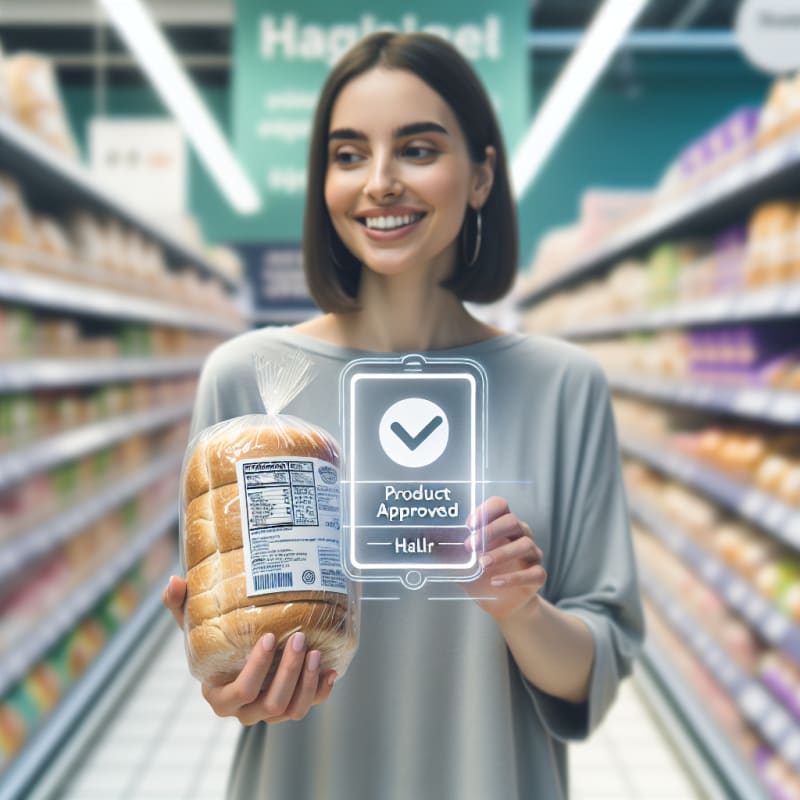
1. The Frustration of Supermarket Shopping for Halal Eaters
If you follow a strict Halal diet, grocery shopping in non-Muslim majority countries can quickly become an exhausting, anxiety-inducing ordeal. You pick up a package of gummy candies, a loaf of sandwich bread, or a bag of sour cream and onion chips, only to be confronted by a wall of confusing chemical codes: E471, E120, E422, Natural Flavors, Whey Powder, Protease Enzymes.
You find yourself standing in the middle of a crowded supermarket aisle, squinting at tiny font sizes, pulling out your phone to search obscure internet forums, wondering: Is this emulsifier derived from pork fat or vegetable palm? Was the enzyme in this cheese coagulated using animal rennet or microbial cultures? Is the vanilla flavoring carried on an alcohol base?
This constant second-guessing turns a routine 20-minute grocery run into an hour-long research session. As highlighted in research on global dietary compliance, consumers seeking religious alignment remain one of the most underserved segments in retail packaging. You shouldn’t have to carry a chemistry degree or memorize 300 European additive numbers just to feed your family with peace of mind.
Scan Any Barcode for Halal Compliance in 2 Seconds
Never second-guess confusing grocery labels again. Download Food Scan Genius to uncover hidden additives, toxic dyes, and allergens for the whole household before you buy.


2. Sneaky Haram & Ambiguous Ingredients Hiding in Everyday Foods
Many Muslim consumers know to avoid obvious pork products and pork gelatin, but modern food engineering introduces dozens of hidden animal derivatives into everyday vegetarian-sounding snacks:
- E120 (Carmine / Cochineal / Crimson Lake): A brilliant red food dye extracted from crushed female scale insects (cochineal). Frequently found in strawberry yogurts, red candy, cherry sodas, and berry ice creams. Regarded as haram by major Islamic jurisprudential bodies.
- E471 (Mono- and Diglycerides of Fatty Acids): A widespread emulsifier in bread, peanut butters, pastries, and ice creams. Unless explicitly labeled as 100% plant-based or vegetable-derived, it is frequently manufactured from cheap slaughterhouse tallow or lard.
- E441 & E428 (Gelatin): Used to give gummy bears, marshmallows, frosted cereal coatings, and pharmaceutical capsules their chewiness. In the US and Europe, commercial gelatin is predominantly sourced from porcine (pig) skin and non-dhabiha cattle bones.
- L-Cysteine (E920 / E921): A dough conditioner added to pizza crusts, bagels, and commercial bread loaves to make them elastic. It is commercially derived from duck feathers and human hair.
- Animal Rennet & Pepsin in Cheese: Hard cheeses like Parmesan, Pecorino, and traditional Cheddar are traditionally curdled using stomach enzymes from unslaughtered calves.
- Alcohol-Based Carriers in Flavorings: Concentrated extracts (like natural vanilla, almond, or citrus flavoring) often use ethyl alcohol as a solvent base, which can compromise strict non-intoxicant preferences.
3. Why Generic Food Apps Fail Muslim Shoppers
Popular mainstream food rating apps fail completely when it comes to religious dietary observance. Here is why:
- They Rely on Universal Health Scores: An app might give a candy bar a “Healthy 85/100” score because it is low in sugar, completely oblivious to the fact that it contains pork gelatin or insect carmine.
- They Lock Allergen & Halal Profiles Behind Paywalls: Apps like Fig charge up to $59.99 per year to filter multiple ingredients, exploiting shoppers who just want to know if their food is safe to consume.
- They Ignore Multi-Layer Ingredient Trees: When a label says “Seasoning (Maltodextrin, Natural Flavor, Emulsifier)”, shallow scanner tools stop at the word “Seasoning” and miss the pork-derived emulsifier hidden inside.
Solve Multiple Diets Simultaneously: Halal + Celiac + Dairy-Free
Real life is rarely one-dimensional. In many modern households, one person observes a Halal diet, their spouse has Celiac disease (Gluten-Free), and a child has a severe peanut or dairy allergy. Mainstream scanner apps force you to pick a single setting or pay expensive $59/yr upgrades.
🧬 Multi-Filter Stacking
Activate Halal + Gluten-Free + Nut-Free together. If an item is halal but contains barley malt, you get an immediate alert.
🧠 ScanGenius AI Insight
Get an instant, structured product brief with plain-language safety context, NOVA processing levels, and nutrition snapshots.
👨👩👧👦 Household Profiles
Screen for the entire family in a single scan. The app explicitly names who it failed for: “Fails for Sri (Gluten)”.
4. Food Scanner Comparison Matrix: Halal & Ingredient Screening
| Feature / Capability | Food Scan Genius | Yuka App | Fig App | Open Food Facts |
|---|---|---|---|---|
| E-Number Haram Screening | Full Deterministic Screening | None | Basic ($59/yr) | Community Tagged |
| Core Safety Cost | 100% Free Core Features | Paid for Allergens | $59.99/yr Paywall | Free |
| Multi-Language Translation | 11 Locales (Arabic, Hindi, etc.) | English / French Only | English Only | Variable |
| Fail Attribution Audit Trail | Explicit Why List (“Fails for Halal”) | Generic Score | Basic Tag | Raw Data |
5. How Food Scan Genius Simplifies Halal Grocery Shopping
Food Scan Genius puts you in complete control of your shopping basket without overwhelming you with jargon. Here is how our 3-step engine empowers you:
- Enable the Halal & Religious Filter: In your profile settings, check the Halal filter alongside any other preferences (like Gluten-Free, Vegan, or Low-FODMAP). Learn more in our User Guide.
- Point & Scan in Under 2 Seconds: Aim your smartphone camera at the barcode. The app resolves the product against our 5M+ NutriGraph catalog.
- Instant Verdict with Audit Trail: Receive a clear, fail-dominant match. If an ingredient contains doubtful animal enzymes or E120, the app explicitly highlights the exact offending additive in the Why List as defined in our Labels Defined Guide.
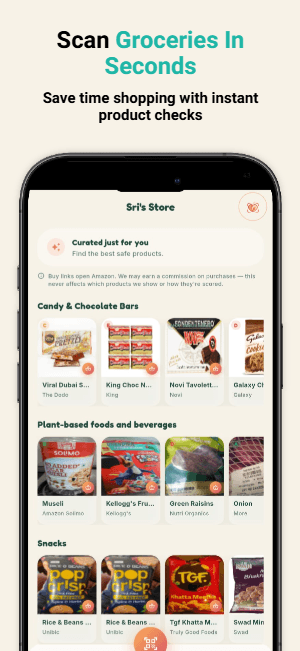
Instant Halal & Allergen Audit Trail
6. Frequently Asked Questions (FAQ)
What E-numbers are strictly haram or doubtful in packaged food?
Common haram or doubtful additives include E120 (Carmine/Cochineal insect dye), E441 (Gelatin, often pork-derived), E471 (Mono- and diglycerides of fatty acids, which can come from pork tallow or vegetable oil), E542 (Bone phosphate), and E904 (Shellac). Food Scan Genius screens these E-numbers automatically.
Can Food Scan Genius tell if E471 or E472 is plant or animal derived?
Yes. When manufacturers declare plant origins (such as soy or palm) in their sub-ingredient data, our 5-million NutriGraph database identifies it as plant-based. If the origin is ambiguous, the app flags it with an ‘Uncertain / Verify Source’ warning rather than assuming it is safe.
Can I scan for both Halal and Gluten-Free (or Allergens) at the same time?
Yes! Food Scan Genius allows you to stack Halal with Gluten-Free, Dairy-Free, Nut-Free, or any of the 39 supported diets in your profile simultaneously 100% free.
Is the Halal scanner in Food Scan Genius free to use?
Yes! Unlike apps that lock religious dietary filters behind paid subscriptions, Food Scan Genius includes full Halal, Haram E-number, and alcohol screening 100% free with zero paywalls.
Stop Second-Guessing E-Numbers — Scan Free Today
Never second-guess confusing grocery labels again. Download Food Scan Genius to uncover hidden additives, toxic dyes, and allergens for the whole household before you buy.