


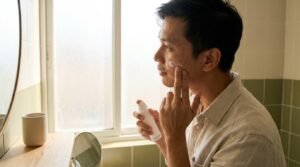






Can You Mix Retinol and AHA (Glycolic Acid)? Why It Overloads Your Skin Barrier & Safe Skin Cycling Guide

CRITICAL COLLISION
Quick Clinical Verdict: Absolute Contraindication: Never Layer In The Same Evening Routine.

Layering alpha-hydroxy acids (such as Glycolic, Lactic, or Mandelic Acid) simultaneously with topical retinoids causes severe hyper-desquamation. AHAs break down surface corneocyte adhesion while Retinol accelerates basal cell division, completely stripping intercellular barrier ceramides and inducing acute chemical burns, severe erythema, and prolonged barrier compromise.

When curating an advanced anti-aging or hyperpigmentation skincare regimen, it is easy to see why consumers gravitate toward combining Alpha Hydroxy Acids (AHAs) and Retinoids. On paper, they appear to be the ultimate power duo: Glycolic Acid dissolves dull surface keratinocytes to reveal instantaneous radiance, while Retinol penetrates deep into dermal fibroblasts to accelerate cellular turnover and stimulate new collagen architecture.

However, applying an AHA exfoliating toner or serum and layering a Retinol treatment directly on top is one of the most frequent catalysts for clinical skin emergencies. Dermatologists and aesthetic nurses frequently treat patients who attempted this exact combination, presenting with symptoms indistinguishable from partial-thickness chemical burns: diffuse facial erythema, intense burning when applying plain water, severe micro-fissuring, and reactive breakouts.

In this comprehensive clinical guide, we dissect the cellular biophysics of why mixing Retinol and AHAs overloads your moisture barrier, how molecular weights dictate exfoliation depth, and the exact clinical protocols required to harness both powerhouse ingredients safely through Skin Cycling.

✨ Free Dermatology-Aligned Routine Scanner
Audit Your Entire Routine for Active Collisions

Don’t let hidden pH mismatches, ingredient oxidation, or barrier collapse cancel out your anti-aging results. Skin Scan Genius cross-references your AM & PM shelfie against 2,800+ cosmetic actives in seconds.

Instant Collision Audit
🛡️ Skin Barrier Defense
🔬 2,800+ Actives Scanned

✓ 100% Free · No App Download Required · Zero Chemophobia · Independent Science

The Biological Collision: Dual Desquamation Overload

To comprehend why layering AHAs and Retinol triggers acute cutaneous distress, one must understand how human epidermal renewal functions under normal physiological conditions compared to chemically forced acceleration.

1. How AHAs Work: Top-Down Desmosome Dissolution

Alpha Hydroxy Acids—including Glycolic Acid, Lactic Acid, Mandelic Acid, Malic Acid, and Citric Acid—are water-soluble organic carboxylic acids. Their primary mechanism of action occurs in the upper stratum corneum:

  • Calcium Ion Chelation: AHAs chelate divalent calcium ions required to maintain the structural integrity of corneodesmosomes—the specialized protein complexes that physically anchor dead corneocytes together.
  • Accelerated Surface Shedding: By dissolving these cellular rivets, AHAs promote immediate, uncohesive shedding of the outermost epidermal stratum, lowering surface thickness and scattering light to deliver an immediate brightening effect.
  • Molecular Penetration Velocity: Glycolic Acid possesses the smallest molecular structure of any AHA (molecular weight: 76.05 g/mol). Its diminutive size enables hyper-rapid, uneven penetration through microscopic cracks in the lipid bilayer, creating significant localized inflammation.

2. How Retinoids Work: Bottom-Up Keratinocyte Proliferation

Unlike AHAs, Retinol is not a chemical exfoliant in the traditional sense. It does not dissolve protein bonds on the surface. Instead, it operates as a biological gene-signaling molecule:

  • Receptor Activation: Once converted intracellularly to all-trans retinoic acid, it binds to nuclear Retinoic Acid Receptors (RAR) and Retinoid X Receptors (RXR) located inside basal keratinocytes.
  • Basal Mitosis Acceleration: This triggers upregulated transcription of genes governing cellular proliferation. New epidermal cells are generated at an accelerated rate in the stratum basale, pushing mature cells upward toward the surface.
  • Shedding as a Secondary Effect: The “peeling” commonly associated with retinoids is not surface exfoliation, but rather the rapid displacement of cellular layers from beneath.

3. The Double-Exfoliation Catastrophe

When you combine an AHA and Retinol in the same evening routine, you subject your skin to simultaneous, uncoordinated mechanical stresses:

The AHA strips away the protective superficial corneocytes from the top down, artificially thinning the stratum corneum barrier within minutes. When the Retinol is applied immediately afterward onto this compromised, unshielded tissue, its percutaneous absorption rate surges uncontrollably. Instead of a slow, regulated transdermal diffusion, the retinoid floods the viable epidermis all at once.

This massive retinoid influx overwhelms intracellular binding proteins (CRABP-II), inducing acute retinoid dermatitis superimposed on an acid-induced barrier breakdown. Intercellular lipids—specifically ceramides, cholesterol, and free fatty acids—are flushed away, triggering catastrophic Transepidermal Water Loss (TEWL) as detailed by the National Institutes of Health (NIH) barrier function studies.

Molecular & Clinical Comparison: AHAs vs. Retinol

Clinical Parameter Alpha Hydroxy Acids (AHA) Retinoids (Retinol / Tretinoin)
Site of Primary Action Stratum Corneum (Superficial surface dead cells) Stratum Basale & Dermis (Deep cellular nuclei)
Cellular Mechanism Enzymatic & chemical dissolution of corneodesmosomes Nuclear receptor RAR/RXR gene transcription modulation
Physiological pH Required 3.0 – 3.8 (Acidic for free acid bioavailability) 5.5 – 6.5 (Neutral for enzymatic conversion)
Onset of Visible Action Immediate (Hours to 1 day post-application) Cumulative (4 to 12 weeks of continuous cellular renewal)
Photosensitivity Risk High (Thins UV-protective stratum corneum) High (Photolabile molecule; accelerated cell exposure)
Concurrent Mixing Verdict CONTRAINDICATED: Simultaneous application causes severe stratum corneum stripping, profound TEWL, and chemical burn symptoms.

Clinical Signs Your Barrier Has Been Stripped

If you have inadvertently layered an AHA with your retinoid, your skin will exhibit unmistakable signs of acute distress. The DermNet NZ clinical repository on irritant contact dermatitis classifies this pathology as chemical barrier disruption:

  1. The “Glass Skin” Glaze with Burning: Your skin appears unnaturally shiny, tight, and polished—not from healthy hydration, but because the microscopic stratum corneum texture has been sheared off entirely.
  2. Immediate Stinging with Inert Products: Even benign, fragrance-free moisturizers, plain thermal spring water, or basic ceramide lotions cause intense stinging or burning sensations upon contact.
  3. Reactive Flaking & Peeling: Within 48 hours, sheet-like desquamation occurs around the nasolabial folds, chin, and lower cheeks.
  4. Paradoxical Inflammatory Breakouts: Because the barrier cannot prevent bacterial entry, opportunistic Cutibacterium acnes penetrates hair follicles, generating clusters of small, itchy inflammatory pustules.

Understanding which cosmetic excipients soothe or aggravate this state is vital. Check our clinical guides on safe non-comedogenic emollients for barrier repair and how dimethicone creates a breathable protective shield over wounded skin.

✨ Free Dermatology-Aligned Routine Scanner
Audit Your Entire Routine for Active Collisions

Don’t let hidden pH mismatches, ingredient oxidation, or barrier collapse cancel out your anti-aging results. Skin Scan Genius cross-references your AM & PM shelfie against 2,800+ cosmetic actives in seconds.

Instant Collision Audit
🛡️ Skin Barrier Defense
🔬 2,800+ Actives Scanned

✓ 100% Free · No App Download Required · Zero Chemophobia · Independent Science

The Dermatologist-Approved Solution: The 4-Night Skin Cycling Protocol

You do not need to discard your AHA or your Retinol. Cosmetic dermatologists utilize the proven Skin Cycling Protocol—pioneered to allow patients to harness the synergistic benefits of chemical exfoliation and retinoid signaling without ever overlapping active stress on the same evening.

Night 1: Exfoliation Night (AHA)

  • Cleanse: Wash face with a gentle, non-stripping cleanser. Pat completely dry.
  • Exfoliate: Apply your AHA serum or toner (e.g., 5% to 7% Glycolic Acid or 5% to 10% Lactic Acid). Allow 2 to 3 minutes to settle.
  • Hydrate: Follow with a soothing, fragrance-free moisturizer rich in glycerin, panthenol, and squalane.
  • Clinical Purpose: Dissolves cohesive surface corneocytes, preparing a completely uniform epidermal slate for subsequent nights.

Night 2: Retinoid Night (Cellular Turnover)

  • Cleanse: Cleanse gently and pat completely dry. Ensure skin is 100% dry—never apply retinoids to damp skin.
  • Buffer (Optional): For sensitive skin types, apply a thin layer of light moisturizer around the eyes and corners of the mouth first.
  • Retinol: Apply a single pea-sized amount of Retinol across the entire face.
  • Moisturize: Seal with a ceramide-dominant barrier cream.
  • Clinical Purpose: Because dead surface cellular debris was cleared on Night 1, the retinoid diffuses smoothly into the epidermis without causing clustered localized irritation.

Night 3: Barrier Recovery Night (Zero Actives)

  • Cleanse: Gentle wash.
  • Hydrate: Apply humectant serums containing hyaluronic acid, beta-glucan, or ectoin onto damp skin.
  • Repair: Layer a rich lipid-recovery cream containing physiological 3:1:1:1 ratios of ceramides, cholesterol, and fatty acids.
  • Clinical Purpose: Halts all cellular acceleration, allowing keratinocyte lipids to replenish and maintaining acid mantle homeostasis.

Night 4: Deep Recovery & Consolidation Night

  • Cleanse: Gentle wash.
  • Soothe: Repeat barrier repair nourishing routine. Inspect skin for any localized erythema, tightness, or sensitivity.
  • Clinical Decision: If skin feels calm and comfortable, repeat the 4-night cycle starting with Night 1. If any redness persists, take an additional recovery night before reintroducing acids.

For individuals also balancing daytime antioxidants, review our clinical protocols on how to safely schedule Retinol and Vitamin C in the morning.

Choosing the Right AHA for Retinol Users

Not all AHAs carry the same risk profile when alternating with retinoids. Your choice of alpha-hydroxy acid should match your barrier tolerance:

  • Glycolic Acid (Smallest Molecule, 76 Da): Highest potency, deepest penetration, but highest irritation index. Best reserved for resilient, oily, or heavily photoaged skin.
  • Lactic Acid (Medium Molecule, 90 Da): Possesses an intrinsic humectant property that binds moisture into the stratum corneum as it exfoliates. Ideal for normal to dry skin types.
  • Mandelic Acid (Large Molecule, 152 Da): Derived from bitter almonds, its large molecular footprint forces slow, uniform diffusion across the superficial epidermis. Clinical studies in the Journal of the American Academy of Dermatology (JAAD) highlight Mandelic acid as the safest AHA for sensitive skin, darker Fitzpatrick phototypes prone to post-inflammatory hyperpigmentation, and active retinoid users.
  • Polyhydroxy Acids (Gluconolactone, Lactobionic Acid): “Next-generation” AHAs featuring multiple hydroxyl groups. PHAs provide ultra-gentle superficial desquamation with virtually zero stinging, making them ideal companions during retinoid adaptation phases.

Emergency Barrier First-Aid Protocol

If you have already applied AHA and Retinol together and are experiencing acute cutaneous burning:

  1. Immediate Neutralization: Rinse thoroughly with lukewarm tap water for 60 seconds to wash away unabsorbed residue. Do not use hot water.
  2. Zero Active Moratorium: Stop all retinoids, AHAs, BHAs, Vitamin C, and physical scrubs for a minimum of 10 to 14 days.
  3. Occlusive Therapy: Apply pure petrolatum (Vaseline), Aquaphor, or a specialized zinc oxide barrier cream over clean, damp skin twice daily.
  4. Sun Defense: Your unshielded skin is extremely vulnerable to UV damage. Apply a mineral (zinc oxide/titanium dioxide) sunscreen daily, which causes far less stinging than chemical organic filters on broken skin. Learn more about evaluating product formulations in our guide to ingredient safety screening.

Frequently Asked Clinical Questions (FAQ)

Can I use an AHA toner in the morning and Retinol at night?

While separating them by AM and PM prevents chemical neutralization on the skin, it still poses high barrier stress for many individuals because AHAs significantly increase solar sensitivity throughout the day. If your skin is seasoned and resilient, AM AHA and PM Retinol is possible, provided an SPF 50+ is diligently reapplied every two hours.

Can I combine Salicylic Acid (BHA) instead of AHA with Retinol?

BHA is lipid-soluble and penetrates inside pores, while AHAs exfoliate water-rich surface corneocytes. However, concurrent layering of BHA with Retinol carries similar risks of severe follicular irritation and peeling. Alternating nights remains the gold standard.

What about products that formulate AHA and Retinol together in one bottle?

Some cosmetic formulators have engineered micro-encapsulated retinoids blended with low-dose lactic acid at carefully buffered pH levels. While these stabilized laboratory formulations are designed to minimize irritation, manually layering separate high-strength AHA and Retinol serums at home remains strictly contraindicated.

How does AHA collision compare to Benzoyl Peroxide collision?

AHAs and Retinol cause additive desquamative trauma (too much shedding). In contrast, Benzoyl Peroxide chemically destroys the Retinol molecule through free-radical oxidation. Read our complete guide to the Retinol and Benzoyl Peroxide oxidation reaction.

Eliminate Skincare Collision Risks Instantly

Modern skincare routines often consist of 5, 7, or even 10 different products applied across morning and evening rituals. Keeping track of active collisions, molecular weights, and barrier stress thresholds shouldn’t require a dermatology degree. The Skin Scan Genius routine auditor scans your entire product lineup in seconds, identifies hazardous active collisions, and constructs a balanced, barrier-safe schedule tailored to your skin type.

Spread the love

Discover the Food Scan Genius app for quick, reliable food insights. Instantly scan barcodes to check allergen compatibility, nutritional content, and ingredient details tailored to your dietary needs. Say goodbye to ingredient guesswork—eat confidently with Food Scan Genius! Download Now

Previous Post
Next Post

Food Scan Genius Editor

Writer & Blogger

Leave a Reply

About us

Food Scan Genius is an offering from ScanGeni Ventures Pvt Ltd, an ‘AI first’ company driving value for the next generation of consumers. Get in touch with us to learn more:

© 2025 All rights reserved by ScanGeni Ventures Private Limited

Scroll to Top