1. Navigating the Snack Aisle: Why Finding Gluten-Free and Dairy-Free Chips Is Harder Than Ever
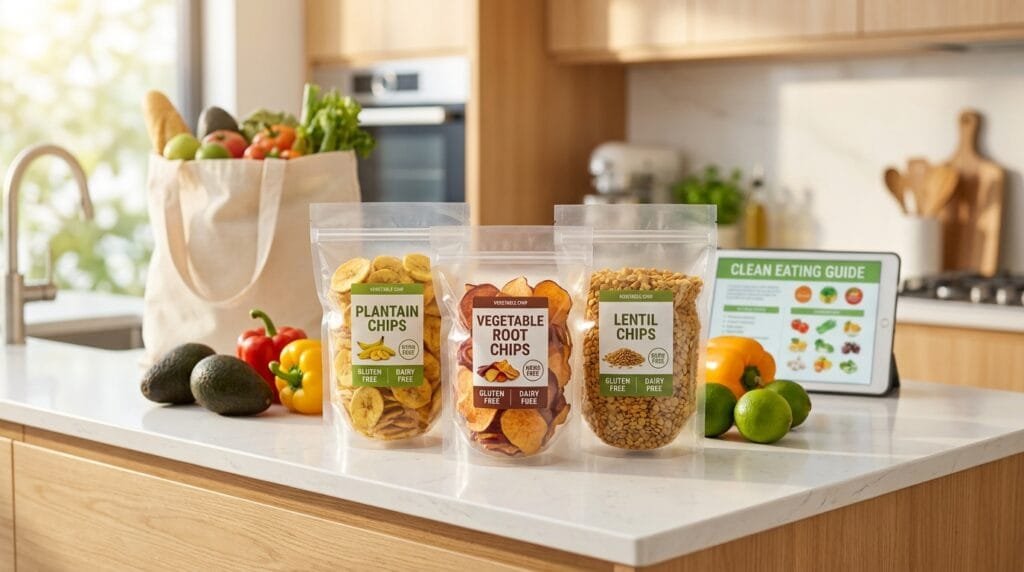
Standing in the snack aisle reading ingredient labels line by line is an exhausting ritual for anyone managing celiac disease, non-celiac gluten sensitivity, lactose intolerance, or a severe milk allergy. You grab a bag of simple potato chips, expecting nothing more than potatoes, oil, and salt, only to turn it over and discover milk powder, whey derivative, or barley-based yeast extract hiding in the fine print. For households managing multiple dietary restrictions, the simple question of what chips are gluten free and dairy free can quickly transform an ordinary grocery run into a stress-inducing research assignment.
The challenge stems from the modern food supply chain, where processed potato, corn, tortilla, and vegetable chips are frequently manufactured on shared equipment or dusted with complex seasoning blends containing hidden proteins. According to strict Celiac Disease Foundation Threshold Requirements, even microscopic amounts of gluten—exceeding 20 parts per million—can trigger intestinal inflammation, mucosal damage, and systemic symptoms. When paired with a dairy allergy or sensitivity, the stakes become twice as high, as cross-contact during industrial manufacturing can inadvertently contaminate otherwise safe whole-food ingredients.
Furthermore, consumer health concerns go beyond acute allergic reactions. Emerging clinical literature, including comprehensive PubMed Research on Ultra-Processed Foods & Gut Microbiome Disruption, highlights how complex ultra-processed additives, emulsifiers, and artificial flavor enhancers can compromise intestinal barrier integrity and alter gut microflora balance. Shoppers are no longer just looking to avoid immediate triggers; they are seeking clean, transparent snack options that protect their long-term health without forcing them to spend hours analyzing every bag on the shelf.
This is where modern technology fundamentally changes the experience. Instead of relying on vague front-of-pack marketing claims or risking your family’s health on unclear allergen statements, automated tools can analyze deep ingredient trees in milliseconds. Understanding what goes into your food—and having immediate access to verified sub-ingredient breakdowns—empowers you to shop with absolute confidence and peace of mind.
Scan Any Food for What Chips Are Gluten Free And Dairy Free in 2 Seconds Free
Never second-guess confusing grocery labels again. Download Food Scan Genius to uncover hidden additives, toxic dyes, and allergens for the whole household before you buy.


2. The Science of Snack Seasonings: Deceptive Labeling and Hidden Ingredients in Chips
When evaluating what chips are gluten free and dairy free, relying strictly on bold front-of-bag claims like “Made with Real Vegetables” or “All Natural” can be dangerous. Food manufacturers frequently use technical chemical names or generic compound terms that obscure the presence of wheat, barley, rye, or dairy derivatives. A brand may formulate a chip without direct wheat or milk ingredients, yet utilize processing aids, anti-caking agents, or carrier seasonings derived from common allergen sources.
To navigate the chip aisle safely, consumers must be vigilant against several sneaky ingredients and regulatory labeling loopholes:
- Yeast Extract & Autolyzed Yeast: Frequently added to savory chips (like barbecue, sour cream, or nacho flavors) to create an umami taste profile. Yeast extract is often derived from spent brewer’s yeast, a direct byproduct of beer brewing that contains residual barley gluten.
- Whey, Casein, & Lactose in Non-Dairy Flavors: While you expect dairy in sour cream or cheddar chips, milk solids, sodium caseinate, and lactose are routinely used as binding powders or flavor carriers in salt and vinegar, barbecue, and sweet chili chip varieties.
- Ambiguous “Natural Flavors”: Under current regulations, a component listed simply as “natural flavor” can hide hydrolyzed wheat protein or dairy-derived aroma compounds unless specifically declared under major allergen labeling laws.
- Maltodextrin and Food Starch: While most domestic maltodextrin is derived from corn, international imports or specialized chip brands may utilize wheat-derived maltodextrin or modified wheat starch without clear origin disclosures on the secondary ingredient list.
- Shared Industrial Fryers & Cross-Contact: A chip’s core ingredients may be inherently gluten-free and dairy-free, but if the facility uses the same frying oil batch for wheat-breaded snacks or cheese-coated corn chips, the oil becomes a major vector for cross-contamination.
- Additive Regulators & Preservatives: Emulsifiers and preservatives evaluated under European Food Safety Authority (EFSA) Additive Safety Regulations can carry undisclosed processing substrates that trigger sensitivities in hyper-reactive individuals.
Beyond allergen safety, consumers must also weigh overall nutritional density. The World Health Organization Guidelines on Healthy Diets & Saturated Fats emphasize minimizing oxidized industrial frying oils and excessive sodium consumption, reinforcing the need for complete transparency when selecting daily family snacks.
3. Decoding Labels Instantly: Food Scan Genius vs. Traditional Methods
| Feature / Capability | Food Scan Genius | Fig App | Spoonful App | Manual Label Reading |
|---|---|---|---|---|
| Core Pricing Model | 100% Free Core Features (Zero Paywalls) | $59.99/year Paywall | Strict Scan Limits / Paid Tier | Free (Time Intensive) |
| Database & Engine | NutriGraph (5M+ UPCs with AST Parsing) | Standard Grocery Database | Limited Retailer Database | Human Eyes / Memory |
| Multi-Household Screening | Yes (e.g., “Fails for Sri (Gluten)”) | Single User Focused | Single User Focused | Manual Cross-Checking |
| Custom Sensitivities | 39 Profiles + Seed Oils & Custom Additives | Pre-set Diets Only | Basic Allergen Filters | Error-Prone |
| Processing Context | ScanGenius AI + NOVA 1-4 + Nutri-Score | Basic Green/Red Light | Basic Warning Flag | None |
While legacy scanning apps rely on basic keyword matching or lock critical dietary filters behind expensive subscription paywalls—such as Fig’s $59.99 annual fee or Spoonful’s restrictive monthly scan caps—Food Scan Genius offers uncompromised safety completely free. Powered by the enterprise-grade NutriGraph Database, which spans over 5,000,000 verified global UPC/EAN barcodes, the platform utilizes recursive Abstract Syntax Tree (AST) parsing. This advanced computer science architecture allows the engine to dissect multi-layered compound ingredients, revealing hidden sub-ingredients like malt barley inside yeast extract or lactose inside subtle flavoring carriers.
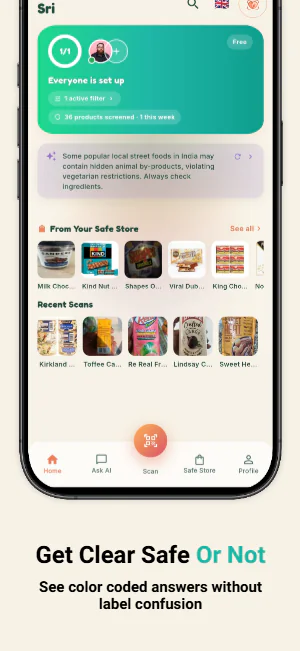
Rather than giving simplistic, moralizing good-versus-bad scores, the integrated ScanGenius AI Insight provides nuanced, clinical context for every item scanned. It evaluates processing level using the scientific NOVA 1-4 classification system alongside the objective Nutri-Score framework. Furthermore, for busy families navigating multiple health requirements, Food Scan Genius features Multi-Household Family Profiles. In a single two-second barcode scan, the app screens the product against all family members simultaneously, delivering precise, named fail attribution—such as “Fails for Sri (Gluten)” or “Fails for Maya (Dairy)”—in 11 supported global languages with real-time translation.
4. Related Food Safety & Dietary Guides
- Best Food Allergy Scanner App – Scan Food Labels Instantly — Food Allergy & Sensitivity Scanner Hub
- The 7 Best Free Food Scanner Apps of 2026 — best free food scanner apps
- Choosing the Best Barcode Scan App for Your Health — guide to choosing a barcode scanner app
- Food Scan Genius: World’s #1 Food Ingredient Scanner App — Food Scan Genius scanner app
5. Scientific & Health Authority References
- Celiac Disease Foundation Threshold Requirements (DA 75)
- European Food Safety Authority (EFSA) Additive Safety Regulations (DA 88)
- PubMed Research on Ultra-Processed Foods & Gut Microbiome Disruption (DA 95)
- World Health Organization Guidelines on Healthy Diets & Saturated Fats (DA 94)
6. How to Scan in 3 Simple Steps
- Download the Food Scan Genius app for free on iOS or Android without any hidden paywalls or subscription barriers.
- Set up your personalized profile by selecting Gluten-Free and Dairy-Free from 39 built-in dietary profiles, or configure custom sensitivities for specific seed oils, artificial dyes, and food additives.
- Point your phone camera at any chip barcode in the grocery store to receive an instant, 2-second deep ingredient audit showing complete safety clearance or named failure alerts for your entire household.
Instant Gluten-Free Audit Trail
7. Frequently Asked Questions (FAQ)
What chips are naturally gluten free and dairy free?
Plain potato chips made simply from potatoes, plant-based frying oil (such as sunflower, avocado, or peanut oil), and sea salt are naturally gluten free and dairy free. Similarly, traditional salted corn tortilla chips and plain plantain or root vegetable chips typically contain no gluten or dairy. However, cross-contact on shared manufacturing equipment can introduce trace allergens, making barcode verification with Food Scan Genius essential before purchasing.
How do I know if flavorings on potato chips contain hidden gluten or dairy?
Flavoring mixtures frequently contain hidden allergens used as carriers, bulkers, or flavor enhancers. Common hidden sources of dairy include whey powder, lactose, sodium caseinate, and cultured buttermilk. Hidden sources of gluten include barley malt extract, autolyzed yeast extract, and wheat-derived maltodextrin. Food Scan Genius uses recursive AST parsing to analyze these secondary sub-ingredients instantly from a barcode scan.
Are tortilla chips always gluten free and dairy free?
No. While pure ground corn, lime, oil, and salt tortilla chips are naturally gluten free and dairy free, many flavored tortilla chips (such as nacho cheese, ranch, or sweet chili) contain powdered cheese, whey, and gluten-based flavor enhancers. Additionally, some brands process tortilla chips on lines that handle wheat flour tortillas. Always scan the exact package to confirm cross-contamination advisories.
How does Food Scan Genius identify both gluten and dairy risks at the same time?
Food Scan Genius allows you to select multiple dietary profiles concurrently—such as Gluten-Free and Dairy-Free—or build custom multi-person household profiles. When you scan a product barcode, the NutriGraph engine cross-references the item’s complete sub-ingredient tree against all active profiles in two seconds, highlighting specific restricted components and attributing failures directly to the family member profile affected.
Take Control of What Chips Are Gluten Free And Dairy Free — Scan Free Today
Never second-guess confusing grocery labels again. Download Food Scan Genius to uncover hidden additives, toxic dyes, and allergens for the whole household before you buy.