Top 10 Vegan Snacks in Italy: The Ultimate Plant-Based Guide for Conscious Eaters
When we think of buying or consuming food, whether wandering through a bustling neighborhood market in Rome or scanning supermarket aisles in Milan, the choices we make are driven by flavor, convenience, and increasingly, ingredient transparency. Across Europe, and notably in Italy, where the retail market for plant-based foods reached a robust €669 million, consumer interest in healthier, sustainable lifestyles is reshaping how food is produced and packaged. Yet, navigating food labels—especially when trying to avoid hidden animal derivatives, unexpected allergens, or ultra-processed additives—presents a daily challenge for modern shoppers.
Whether you follow a strict vegan lifestyle, identify as “plant-curious,” or manage specific food sensitivities, understanding food ingredients is vital. In this comprehensive guide, we explore the top 10 vegan snacks in Italy, analyze market shifts backed by organizations like the Good Food Institute Europe, look at scientific insights regarding plant-based nutrition, and reveal how modern tools like Food Scan Genius can simplify your shopping experience.
The Evolution of Snacking and Plant-Based Eating in Italy
Italy’s relationship with food is deeply rooted in culinary tradition, yet the country’s food culture is evolving rapidly. According to market data highlighted by the Italian Food Union and research groups, the number of Italians incorporating plant-based alternatives into their daily routines has expanded significantly, driven largely by health consciousness, environmental awareness, and a desire to diversify diets. Over 73% of Italian consumers view plant-based options as healthy, recognizing them as valuable sources of fiber, micronutrients, and clean energy.
However, modern snacking culture introduces a paradox. While consumers demand on-the-go convenience, ingredient labels are frequently filled with complex chemical names, ambiguous additives, and hidden allergens. Knowing what is inside your food has never been more critical for long-term health and dietary compliance.
Top 10 Vegan Snacks in Italy
If you are exploring the Italian snack aisle or looking for quick, authentic plant-based bites that honor Mediterranean flavors without compromising ethics or health, here are the top 10 vegan snacks widely available across Italy:
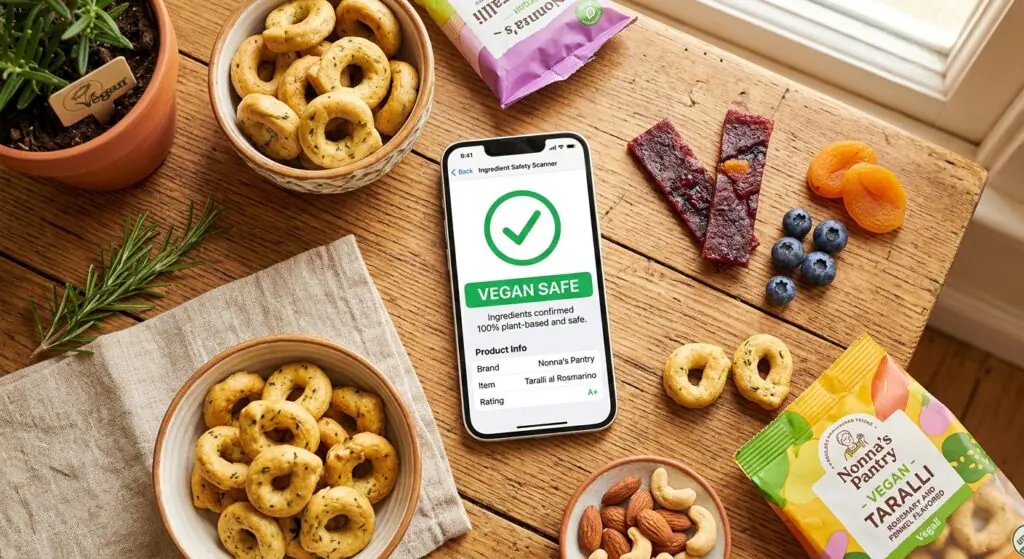
- 1. Taralli all’Olio Extra Vergine di Oliva: Traditional ring-shaped crackers from Southern Italy made simply with wheat flour, white wine, extra virgin olive oil, and salt. Naturally vegan and endlessly crunchy.
- 2. Farinata di Ceci: A classic Ligurian chickpea pancake baked in copper pans. Rich in plant protein and iron, it is naturally grain-free and vegan, offering a savory snack on the go.
- 3. Lupini Beans (Lupini): Pickled and brined lupini beans are a staple Italian pub snack. Packed with protein and fiber, they require just a quick squeeze out of their skins to eat.
- 4. Bruschetta with Tomato and Basil on Altamura Bread: Simple, rustic, and bursting with local flavor. Sourdough bread topped with fresh vine tomatoes, garlic, and basil.
- 5. Frisa or Friselle with Olive Oil and Oregano: Twice-baked hard bread rings from Puglia that are moistened with water and topped with chopped tomatoes and extra virgin olive oil.
- 6. Roasted Castagne (Chestnuts): A seasonal favorite found at street corners across Italian cities during autumn and winter, offering a naturally sweet, fat-free energy boost.
- 7. Dark Chocolate-Covered Almonds (Mandorle Ricoperte di Cioccolato Fondente): High-cocoa dark chocolate paired with Sicilian almonds provides antioxidants and healthy fats. Always check labels to ensure milk solids are absent.
- 8. Rice and Corn Galettes (Gallette di Riso/Mais): Lightweight, crispy puffed grain cakes favored for light snacking, often enhanced with sea salt or rosemary.
- 9. Dried Fig and Walnut Salami (Fichi e Noci): Pressed blocks of Mediterranean figs and walnuts shaped into a log. It’s a naturally sweet, nutrient-dense treat with zero artificial additives.
- 10. Organic Fruit Leather and Vegetable Chips: Dehydrated apple, pear, or beetroot slices capturing pure fruit and vegetable essence without added sugars or preservatives.
Nutritional Perspectives and Scientific Insights
Shifting toward plant-centric snacks offers measurable health benefits, but nutritional balance remains essential. According to a comprehensive nutritional study published in peer-reviewed literature, well-planned plant-based diets support cardiovascular health and metabolic wellness by reducing saturated fat intake while boosting dietary fiber and antioxidant profiles.
Furthermore, research highlighted in public health analyses confirms that increasing consumption of whole-food plant proteins—such as legumes, nuts, and seeds—correlates positively with long-term longevity and lower systemic inflammation.
However, transitioning to packaged vegan snacks can sometimes expose consumers to highly processed formulations loaded with sodium or modified starches. Evaluating ingredient lists with a discerning eye is therefore a fundamental skill for health-conscious consumers.
Frequently Asked Questions About Vegan Snacks in Italy
Are all traditional Italian snacks naturally vegan?
Not necessarily. While many traditional breads, vegetable dishes, and legume-based items are plant-based by default, many baked goods, pastries, and savory snacks may contain hidden butter, lard (strutto), eggs, milk derivatives, or animal-derived emulsifiers.
How can I easily identify vegan products in Italian supermarkets?
Look for certified vegan labels such as the V-Label or “VeganOK” symbols on packaging. Additionally, scanning ingredient lists for allergens and unfamiliar additives using digital tools can instantly clarify product suitability.
What are the primary challenges when shopping for plant-based foods in Italy?
Aside from navigating regional language variations on packaging, consumers often face complex ingredient terminology, cross-contamination risks, and misleading marketing terms that obscure the true nutritional quality of a product.
The Broader Issue: Ingredient Literacy and Food Transparency
The challenges faced by vegan consumers in Italy reflect a larger, global issue regarding food transparency. Modern food manufacturing relies heavily on complex supply chains, synthetic enhancers, and proprietary blends that make it difficult for the average shopper to know precisely what they are putting into their bodies. Whether you are managing celiac disease, avoiding dairy, tracking sugar content, or strictly adhering to a plant-based diet, decoding food labels is a universal struggle.
Misleading health claims on front-of-package displays frequently mask ultra-processed formulations on the back. Empowering yourself with ingredient literacy bridges the gap between marketing presentation and biological reality, ensuring that your food choices genuinely support your health and ethical goals.
How Food Scan Genius Resolves the Challenge
Overcoming the maze of food labels requires more than guesswork—it calls for instant, reliable intelligence right at the grocery shelf. This is where Food Scan Genius transforms the shopping experience. Designed for individuals with food sensitivities, allergies, or specific dietary preferences like veganism, the app allows users to scan barcodes and instantly dissect ingredient lists for hidden animal products, allergens, and unwanted additives.
“As someone juggling a busy work schedule while trying to maintain a strict vegan lifestyle in Italy, reading tiny Italian ingredient labels on every single snack was exhausting. Since I started using Food Scan Genius, I simply scan the barcode and instantly know if a product aligns with my dietary needs. It has completely eliminated grocery store anxiety and saved me so much time!”
— Elena R., Milan, Italy
Ready to take control of what you eat with absolute confidence? Download Food Scan Genius today and make every snacking decision clear, safe, and aligned with your lifestyle.