Does Maggi Contain Allergens? A Comprehensive Guide to Ingredients, Hidden Risks, and Smart Label Reading
When you are strolling down the grocery aisle, picking up quick-meal solutions like a packet of instant noodles or a savory flavor enhancer often feels like a harmless convenience. Brands like Maggi have anchored themselves in kitchens worldwide, offering fast, comforting flavors. However, for millions of people navigating food allergies, celiac disease, or mild food sensitivities, every ingredient list presents a potential health hazard. A single oversight can trigger severe immune responses, making transparent ingredient tracking an absolute necessity.
The question of whether everyday consumer items contain allergens goes far beyond a simple yes or no. It involves complex supply chains, manufacturing cross-contact, regional formulation changes, and confusing regulatory compliance frameworks. Whether you are buying comfort foods for your family or managing a strict medical diet, understanding what lurks inside your favorite packaged goods is vital for your long-term well-being.
In this in-depth guide, we will unpack the core ingredients of Maggi products, look closely at documented allergen realities, examine official food safety alerts, and show you how modern digital tools can take the guesswork out of grocery shopping.
Understanding Food Allergens and Modern Packaging Realities
Food allergies affect a substantial portion of the global population, with numbers steadily climbing over the past few decades. Regulatory organizations, such as the U.S. Food and Drug Administration (FDA) and the Food Safety Authority of Ireland (FSAI), enforce strict mandates requiring manufacturers to clearly declare major food allergens. These major groups—often referred to as the “major allergens”—typically include milk, eggs, peanuts, tree nuts, fish, crustacean shellfish, soybeans, wheat, and sesame.
Despite these legal safeguards, accidental exposures happen. Manufacturing plants frequently process multiple product lines on shared machinery, introducing the risk of cross-contact. Furthermore, minor variations in labeling laws across international borders mean that a product manufactured in one country might display a different allergen advisory than an identical-looking item imported elsewhere. Consumers cannot rely solely on front-of-pack marketing claims; they must carefully read the fine print.
The Core Composition of Maggi Products
To understand whether Maggi contains allergens, we must first look at its foundational components. Maggi’s product portfolio spans multiple categories, including instant noodles, liquid seasonings, bouillon cubes, and dry recipe mixes. Across these diverse items, several core ingredients consistently appear:
- Wheat Flour: The primary base for standard instant noodle blocks and many thickening agents found in sauces and gravies.
- Soy Derivatives: Used extensively in hydrolyzed vegetable protein and liquid seasonings to provide an umami flavor profile.
- Spices and Flavor Enhancers: A proprietary blend of herbs, salts, and vegetable extracts that can occasionally harbor trace agricultural allergens or processing aids.
- Palm Oil and Vegetable Fats: Used for frying noodle cakes and stabilizing powdered seasoning blends.
Does Maggi Contain Gluten and Wheat?
For individuals with celiac disease or non-celiac gluten sensitivity, wheat is public enemy number one. Because standard Maggi 2-Minute Noodles and tastemaker packets rely heavily on wheat flour as a structural base, they naturally contain gluten. Consuming these products will trigger an adverse immunological reaction in anyone sensitive to gluten proteins.
However, consumer confusion often arises due to specialized regional product lines. Some markets feature “gluten-free” designated recipe bases or gravies. According to food science clarifications provided by manufacturing groups, certain components—such as specific soy sauces derived from wheat—may undergo intensive processing methods that break down gluten proteins to undetectable levels. Even so, food regulations often still mandate that wheat must be explicitly highlighted in the allergen statement to protect consumers who suffer from wheat allergies rather than celiac disease alone.
Allergen Breakdown Across Popular Maggi Lines
| Maggi Product Category | Primary Ingredients | Common Allergens Present | Cross-Contact / Advisory Risk |
|---|---|---|---|
| Standard Instant Noodles | Wheat flour, palm oil, salt, mineral salts | Wheat (Gluten) | May contain traces of milk, soy, and crustacea due to shared equipment. |
| Liquid Seasoning | Hydrolyzed vegetable protein (soy/wheat), water, salt | Soy, Wheat | Typically processed in dedicated lines, but label checks are mandatory. |
| Specialty Recipe Mixes | Starch, spices, sugar, dried vegetables | Varies by flavor (often milk or soy) | High variability; frequently manufactured in multi-product facilities. |
Undeclared Allergens and Global Safety Recalls
Even when a brand maintains rigorous quality control, systemic errors can occur. A stark reminder of this vulnerability happened when regulatory bodies issued public health notices regarding unexpected components slipping past quality barriers.
For instance, official safety bulletins highlighted instances where imported batches of instant noodles were subjected to voluntary recalls due to undeclared peanuts and gluten. In these cases, packaging errors failed to explicitly state the presence of peanut proteins on the label, creating a severe, life-threatening hazard for consumers managing severe legume allergies. Incidents like these underscore why regulatory authorities continuously stress robust allergen verification and why consumers must remain vigilant.
As noted by food safety research analysts, minor packaging mismatches or sudden supplier shifts in raw materials can compromise an otherwise safe product line. This reality emphasizes that brand trust must be continuously backed up by active personal verification.
Navigating Milk, Soy, and Hidden Cross-Contamination Warnings
Beyond explicit ingredients like wheat, shoppers frequently encounter precautionary advisory statements on packaging, such as “may contain traces of milk or soy.” Understanding what these phrases mean is crucial for safe consumption:
- Shared Facilities: Even if milk is not part of a noodle flavor’s official recipe, the factory may produce dairy-containing items on adjacent machinery.
- Cleaning Protocols: While industrial cleaning reduces residue, microscopic protein particles can occasionally transfer between batches.
- Precautionary Labeling (PAL): Manufacturers use these statements to protect themselves legally, but for highly sensitive individuals, “may contain” products can still trigger severe anaphylactic reactions.
Always inspect the bolded text on the back of the packaging. Food standards require clear highlighting of priority allergens, but advisory warnings regarding trace elements are often listed right below the main ingredient block.
The Broader Issue: Food Transparency and Consumer Empowerment
The challenges surrounding Maggi products reflect a much larger, systemic issue within the modern global food supply chain. As food manufacturing becomes increasingly industrialized, ingredient sourcing grows opaque. A single flavor packet may contain components sourced from half a dozen different international suppliers, multiplying the chances of cross-contamination or labeling oversights.
For individuals managing dietary restrictions, grocery shopping can feel like navigating a minefield. Related issues include:
- Inconsistent Global Labeling Laws: What is legally required to be printed on a food label in one country may be optional in another, putting international travelers and importers at risk.
- Vague Terminology: Terms like “natural flavors,” “spices,” or “vegetable protein” can legally mask hidden allergens or animal derivatives that consumers are trying strictly to avoid.
- Fatigue from Constant Checking: Reading fine print on dozens of items during a single grocery trip leads to cognitive fatigue, increasing the likelihood of a dangerous oversight.
Solving this challenge requires moving beyond passive label reading toward active, tech-enabled ingredient analysis.
How Food Scan Genius Resolves Ingredient Uncertainty
When you are standing in a crowded grocery aisle trying to decipher tiny, complex text on a multi-language product label, human error is always a risk. This is where modern digital innovation changes the game. **Food Scan Genius** is an advanced mobile application designed specifically to bridge the gap between complex food labeling and consumer safety.
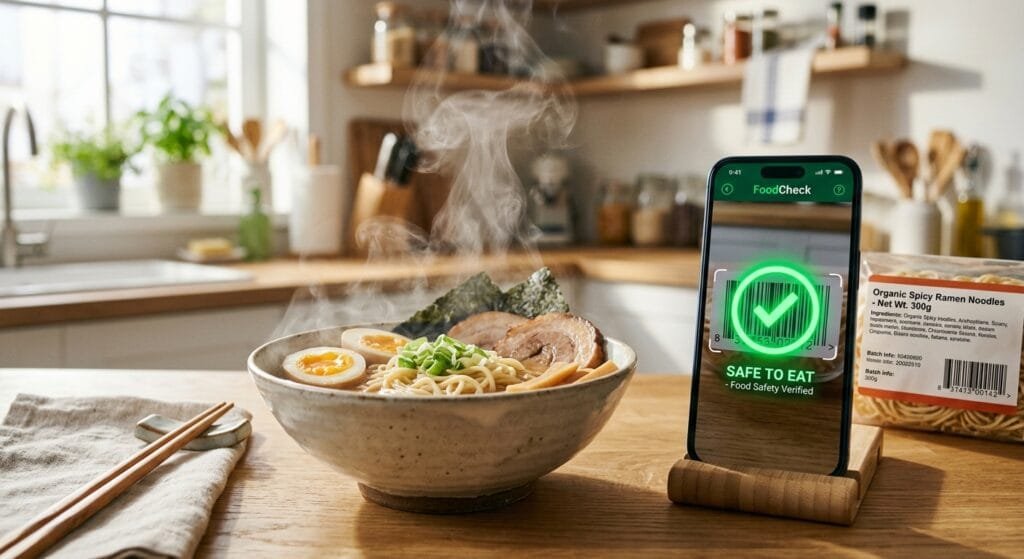
Instead of manually auditing every single word on a package, Food Scan Genius allows you to scan product barcodes instantly using your smartphone camera. The app cross-references the item’s precise formulation against your pre-set allergen profile—flagging hidden sources of gluten, dairy, soy, peanuts, and other sensitivities in real time. It cuts through confusing marketing jargon and alerts you to potential risks before the item ever makes it into your shopping cart.
What Real Users Are Saying
“Managing severe nut and wheat allergies in our household used to mean spending twenty minutes inspecting every single item at the supermarket. Since we started using Food Scan Genius, our grocery trips are faster, safer, and completely stress-free. Scanning a barcode tells me instantly whether a product is safe for my family. I can’t imagine shopping without it!”
— Sarah M., Allergy Parent & App User
If you want to take complete control of your dietary health, avoid unexpected allergen exposures, and make confident choices at the grocery store, there is no better time to upgrade your routine. Download Food Scan Genius today and experience total clarity with every scan.
Frequently Asked Questions
Does Maggi contain dairy or milk products?
Most standard noodle blocks and basic seasoning variants do not list milk as an active ingredient. However, because they are frequently processed in multi-purpose facilities, many packs feature a “may contain traces of milk” advisory statement. Always check the specific package labeling.
Are Maggi noodles safe for people with peanut allergies?
Under normal circumstances, standard Maggi formulations do not include peanuts. However, historic recall events involving undeclared peanut cross-contamination demonstrate that packaging and supply chain errors can occasionally occur. Utilizing a scanning tool helps catch unexpected manufacturing shifts.
How can I tell if a regional Maggi product is vegan or vegetarian?
While the vast majority of standard flavor lines are vegetarian (and distinct non-vegetarian variants like chicken flavor are explicitly marked), certain specialty or regional sauces may contain animal-derived ingredients or dairy derivatives. Inspecting the certified vegetarian symbols and reading the full ingredient disclosure is essential.
Can food scanning apps completely prevent allergic reactions?
While no tool can completely replace manufacturer accountability, apps like Food Scan Genius drastically reduce human error by parsing complex label databases and highlighting user-defined allergen triggers instantly, providing an extra layer of defense during shopping.