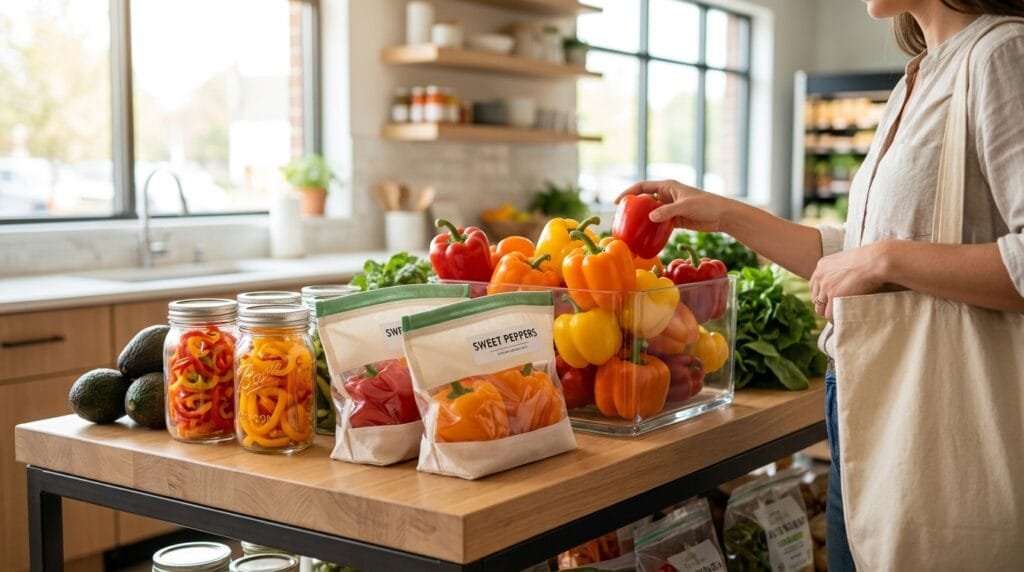
One medium raw sweet red pepper (119 grams) contains 31 calories, 1 gram of protein, 7 grams of carbohydrates, 2.5 grams of fiber, and 152 milligrams of vitamin C, delivering over 160% of your recommended daily value.
Ranking Sweet Peppers by Nutrient Impact: Red vs. Yellow vs. Green
Sweet bell peppers are among the most nutrient-dense vegetables you can toss into your grocery cart. While shoppers often treat red, yellow, orange, and green bell peppers as interchangeable ingredients, they are actually at completely different stages of plant maturity. A standard green bell pepper is simply an unripe pepper harvested early. Because it remains on the vine longer, a sweet pepper ripens into yellow, orange, and finally deep crimson red. As sunlight and plant sugars interact over those extra weeks, the nutrient density changes dramatically.
When ranked by overall nutrient impact, red sweet peppers take first place. Fully ripened red sweet peppers contain nearly triple the vitamin C of an unripe green pepper and more than ten times the beta-carotene, which your body converts into active vitamin A. Red peppers also pack powerful antioxidants like capsanthin and lycopene, which give them their rich hue and protect cellular tissue from daily oxidative wear. Following recommendations outlined in the World Health Organization Guidelines on Healthy Diets & Saturated Fats, filling your plate with naturally vibrant whole foods like ripe red peppers supports cardiovascular wellness while keeping dietary sodium and fats low.
Yellow and orange sweet peppers claim a solid second place. While slightly lower in beta-carotene than red varieties, yellow peppers are exceptional sources of lutein and zeaxanthin. These two plant pigments accumulate directly in the human retina, shielding your eyes against strain from blue light and age-related changes. A single 100-gram serving of yellow pepper delivers over 180 milligrams of vitamin C, surpassing even oranges and strawberries. Green peppers sit in third place: they offer slightly fewer natural sugars and modest amounts of vitamin C, but they still deliver crisp hydration and dietary fiber.
Choosing whole, colorful vegetables also plays a major role in gut wellness. According to PubMed Research on Ultra-Processed Foods & Gut Microbiome Disruption, diets dominated by heavily manufactured convenience foods can throw our digestive flora out of balance. Swapping out packaged savory snacks for fresh sliced sweet peppers introduces prebiotic plant fibers and water-soluble vitamins that feed beneficial intestinal microbes without unnecessary chemical preservatives.
Why Shopping for Sweet Peppers Shouldn’t Be This Hard: Real Labels and Packaged Variations
Standing in the produce aisle, picking up a bell pepper feels simple enough. But the moment you wander over to the frozen vegetable freezer or the canned foods aisle, things get confusing fast. A bag of frozen sliced fajita peppers looks just like fresh produce, yet the nutrition panel might reveal added seasonings, sodium, or oils. Jarred roasted red peppers are another common trap: what seems like pure grilled vegetables could be floating in brine containing hundreds of milligrams of salt or preserved in sunflower oil that spikes the calorie count beyond what you planned for dinner.
Labels differ significantly depending on where you shop. In the United States, a jar like Mezzetta Roasted Red Bell Peppers lists values per custom serving size, such as 28 grams (about 2 tablespoons or roughly 1 slice). That tiny serving might list only 10 calories and 140 milligrams of sodium. However, most home cooks empty half the jar into a soup or wrap, unknowingly consuming 500 milligrams of sodium in one sitting. In contrast, European and British packaging standards require nutrition facts to be displayed per 100 grams alongside per-portion amounts, making it much easier to evaluate true ingredient density at a glance under European Food Safety Authority (EFSA) Additive Safety Regulations.
Understanding allergen and ingredient statements is equally vital for everyday shoppers. Packaged pepper dips, jarred marinades, and canned blends often share processing lines with dairy, soy, or tree nuts. Following the Food Allergy Research & Education (FARE) Clinical Standards, manufacturers must declare major allergens clearly on their ingredient lists. However, reading fine print in a bustling grocery store while wrangling kids or rushing after work is tough.
This is where Food Scan Genius steps in as a quick, frictionless 2-second sanity check down Aisle 4. You do not need a complicated, restrictive diet app that makes you feel guilty about your grocery basket. Instead, you simply scan the barcode of that jar of Trader Joe’s Fire Roasted Red Peppers or Birds Eye Pepper & Onion Blend to confirm the sodium levels, verify added sugars, and check for declared allergens instantly. Our data relies strictly on the physical packaging information declared by the manufacturer. Food Scan Genius does not perform separate chemical laboratory testing or factory inspections; the food company remains entirely responsible for their printed label claims. The app simply turns that confusing fine print into instant, practical peace of mind.
| Nutrient (per 100g edible portion) | Green Bell Pepper (Raw) | Yellow Bell Pepper (Raw) | Red Bell Pepper (Raw) | Jarred Roasted Red Pepper (Drained) |
|---|---|---|---|---|
| Calories | 20 kcal | 27 kcal | 31 kcal | 25-35 kcal |
| Total Carbohydrates | 4.6 g | 6.3 g | 6.0 g | 5.0 g |
| Dietary Fiber | 1.7 g | 0.9 g | 2.1 g | 1.5 g |
| Natural Sugars | 2.4 g | 4.2 g | 4.2 g | 3.5 g |
| Protein | 0.9 g | 1.0 g | 1.0 g | 0.8 g |
| Total Fat | 0.2 g | 0.2 g | 0.3 g | 0.2-1.5 g (varies if packed in oil) |
| Vitamin C | 80.4 mg (89% DV) | 183.5 mg (204% DV) | 127.7 mg (142% DV) | 35.0-60.0 mg (degrades with heat) |
| Vitamin A (Beta-Carotene) | 18 mcg RAE | 10 mcg RAE | 157 mcg RAE | 90 mcg RAE |
| Sodium | 3 mg | 2 mg | 4 mg | 350-650 mg (brine-added) |
Common Confusions: What Most Shoppers Get Wrong About Sweet Peppers
A common misconception is that cooking sweet peppers ruins their nutritional value. While it is true that boiling peppers in water can cause heat-sensitive, water-soluble vitamin C to leach out, gentle cooking methods like roasting, sautéing, or steaming actually make carotenoids like beta-carotene and lycopene easier for your body to absorb. The mild heat softens plant cell walls, freeing up fat-soluble vitamins so your digestive tract can capture them more efficiently.
Another frequent mistake is assuming that sweet peppers contain capsaicin, the compound responsible for the burning sensation in spicy chili peppers. Sweet bell peppers carry a recessive gene that completely blocks the production of capsaicin. They rate a zero on the Scoville Heat Unit scale. Any warmth you taste is purely from natural sugars and aromatic plant compounds, making them gentle on sensitive stomachs.
Finally, shoppers often overlook the enormous nutritional gap between fresh sweet peppers and jarred varieties. A fresh bell pepper is essentially sodium-free, containing just 3 to 4 milligrams of naturally occurring salt per 100 grams. Jarred roasted red peppers, on the other hand, frequently sit in brine made of salt, water, and citric acid. Rinsing canned or jarred peppers under cold running water for 30 seconds can wash away up to 30% of the surface sodium, making them a healthier choice for quick salads and sandwiches.
Frequently asked questions
Which sweet pepper color is the healthiest?
Red sweet peppers are the most nutrient-dense overall. Because they ripen on the vine the longest, they contain the highest amounts of vitamin C, vitamin A (beta-carotene), and protective antioxidants like capsanthin.
Do sweet peppers lose vitamin C when cooked?
Yes, high heat and boiling reduce vitamin C by 25% to 50% because the vitamin breaks down under heat and dissolves in cooking water. To retain the most nutrients, eat peppers raw, steam them quickly, or sauté them lightly over medium heat.
Are green bell peppers just unripened red peppers?
In most commercial varieties, yes. Green peppers are harvested before they mature. If left on the plant, they gradually turn yellow, orange, and finally red, becoming sweeter and accumulating more vitamins along the way.
Can you eat sweet pepper seeds and white membranes?
Yes, sweet pepper seeds and the inner white ribs are completely safe and edible. Many cooks remove them because the seeds have a slightly bitter crunch and the ribs have a spongy texture, but they cause no harm.
How much sweet pepper should I eat each day for my vitamin C needs?
Eating just half of a medium red sweet pepper (around 60 grams) provides your entire recommended daily allowance of vitamin C, making it one of the easiest ways to meet daily fruit and vegetable targets.
References
- Food Allergy Research & Education (FARE) Clinical Standards
- European Food Safety Authority (EFSA) Additive Safety Regulations
- PubMed Research on Ultra-Processed Foods & Gut Microbiome Disruption
- World Health Organization Guidelines on Healthy Diets & Saturated Fats
Related guides
- Best Food Allergy Scanner App – Scan Food Labels Instantly — Food Allergy & Sensitivity Scanner Hub
- The 7 Best Free Food Scanner Apps of 2026 — best free food scanner apps
- Choosing the Best Barcode Scan App for Your Health — guide to choosing a barcode scanner app
- Food Scan Genius: World’s #1 Food Ingredient Scanner App — Food Scan Genius scanner app
Check Any Label Against 5 Million Products — Free
Never second-guess confusing grocery labels again. Download Food Scan Genius to uncover hidden additives, toxic dyes, and allergens for the whole household before you buy.