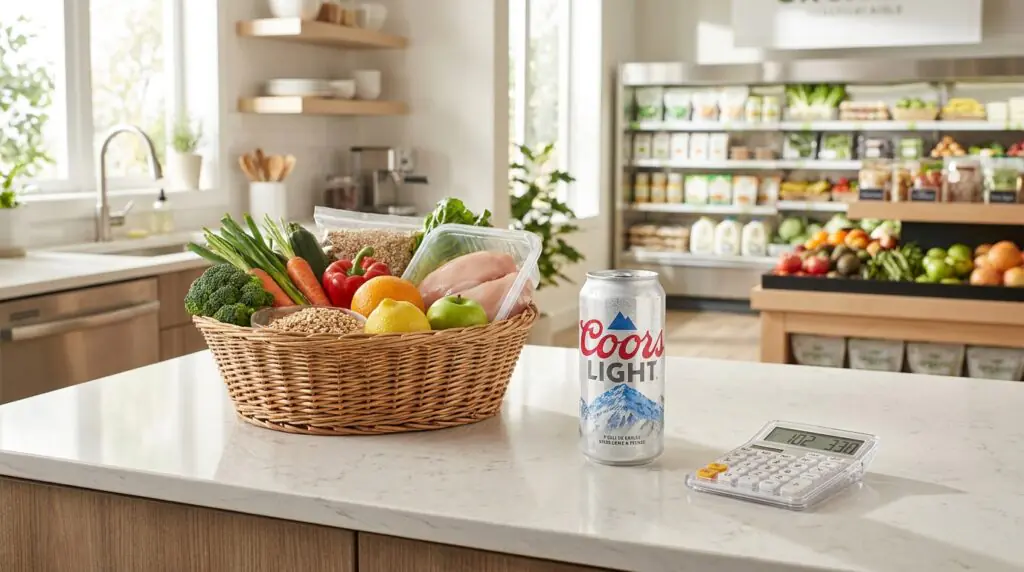
A standard 12-fluid-ounce (355 ml) can or bottle of Coors Light contains exactly 102 calories, 5 grams of carbohydrates, 0 grams of fat, and 4.2% alcohol by volume (ABV).
Breaking Down Coors Light Calories: Alcohol, Carbs, and Daily Intake
When you crack open a standard 12-ounce can of Coors Light, you are consuming 102 calories. Unlike typical snacks where calories come primarily from carbohydrates, fats, or protein, alcohol carries its own energy density. Pure alcohol provides 7 calories per gram, which is almost as energy-dense as pure dietary fat at 9 calories per gram, and higher than carbohydrates or protein at 4 calories per gram. In a single 12-ounce can of Coors Light at 4.2% ABV, about 70 to 72 of the calories come strictly from the alcohol content, while the remaining 30 or so calories come from the 5 grams of residual grain carbohydrates.
Understanding how this fits into your daily routine is largely about overall context. The World Health Organization Guidelines on Healthy Diets & Saturated Fats emphasize balancing total energy intake against physical expenditure while prioritizing nutrient-dense whole foods. Because beer provides energy without meaningful amounts of essential vitamins, dietary fiber, or minerals, nutritionists categorize these as discretionary calories. Having one 102-calorie light beer with dinner represents roughly 5% of a standard 2,000-calorie daily baseline, which easily fits within most balanced eating plans if tracked mindfully.
The physical brewing process explains why Coors Light stays relatively low in calories compared to regular lagers, which often run between 140 and 160 calories per can. Brewers use specific enzymatic mashing techniques and adjuncts like corn to ensure that yeasts ferment nearly all available simple sugars into alcohol. While commercial brewing avoids the chemical emulsifiers and artificial stabilizers often analyzed in PubMed Research on Ultra-Processed Foods & Gut Microbiome Disruption, liquid calories are digested and absorbed rapidly, bypassing the body’s natural fullness signals that solid foods normally trigger.
Reading the Can: Serving Sizes, Labeling Rules, and Real Packages
Standing in the beverage aisle trying to calculate calories can be surprisingly frustrating. In the United States, traditional beers are regulated by the Alcohol and Tobacco Tax and Trade Bureau (TTB) rather than the standard Food and Drug Administration (FDA) food guidelines. Because of this historical divide, alcoholic beverages are not federally required to display the standard, black-and-white Nutrition Facts panel that you see on cereal boxes or yogurt containers. While Molson Coors voluntarily prints a “Statement of Average Analysis” on Coors Light cans—listing calories, carbs, protein, and fat—many other brands leave the packaging completely blank.
Package sizing creates another layer of confusion when you are shopping. The classic silver bullet can is 12 fluid ounces (102 calories), but convenience stores and gas stations frequently stock 16-ounce “tallboys” (136 calories), 24-ounce single-serve cans (204 calories), or even 32-ounce crowlers. If you order a draft pint at a sports bar or restaurant, a standard American pint glass holds 16 fluid ounces, meaning that single pour delivers 136 calories rather than the familiar 102-calorie figure associated with a standard can.
If you look at European imports or travel abroad, the reporting looks entirely different. Under European Food Safety Authority (EFSA) Additive Safety Regulations and EU labeling rules, nutrition is consistently declared per 100 milliliters rather than per custom container. A 100 ml pour of Coors Light contains roughly 29 calories. Furthermore, while the FDA Food Allergen Labeling & Consumer Protection Act (FALCPA) governs allergen declarations on standard packaged groceries, beer labeling relies directly on the manufacturer’s on-pack ingredient declarations to identify malted barley, which contains gluten. Food Scan Genius reads these direct manufacturer declarations on the physical package in two seconds while you stand in the aisle, sparing you from doing mental math on non-standard fluid volumes.
| Coors Light Serving Format | Fluid Volume | Calories | Carbohydrates | Alcohol by Volume (ABV) |
|---|---|---|---|---|
| Standard Can / Bottle | 12 fl oz (355 ml) | 102 kcal | 5.0 g | 4.2% |
| Tallboy Can | 16 fl oz (473 ml) | 136 kcal | 6.7 g | 4.2% |
| Standard Draft Pint | 16 fl oz (473 ml) | 136 kcal | 6.7 g | 4.2% |
| King Can / Tall Can | 24 fl oz (710 ml) | 204 kcal | 10.0 g | 4.2% |
| Standard European Metric Measure | 100 ml (3.4 fl oz) | 29 kcal | 1.4 g | 4.2% |
Common Confusions: Where Shoppers Miscalculate Beer Calories
The most common mistake shoppers make is assuming that because a beer is labeled “light” and contains only 5 grams of carbohydrates, it is practically calorie-free. Many people forget that alcohol itself contains calories. Even if a beverage completely eliminates sugar, the alcohol content still contributes significant energy. A 12-ounce can with zero carbs and 4.2% ABV would still provide over 70 calories purely from alcohol metabolism.
Another frequent oversight happens when ordering draft beer at venues. Many casual restaurants serve draft beer in oversized 20-ounce or 22-ounce stadium glasses rather than traditional 12-ounce pours. Drinking two 22-ounce draft pours of Coors Light adds up to 374 calories—equivalent to eating a full deli sandwich—even though the consumer only ordered “two light beers.” Always check the pour volume on the drink menu to accurately estimate what you are consuming.
Frequently asked questions
Does Coors Light have sugar?
Coors Light contains less than 1 gram of residual sugar per 12-ounce can. Nearly all sugars created during the brewing process are fermented by yeast into alcohol, leaving behind 5 grams of total carbohydrates.
Is Coors Light considered low carb?
Yes, with 5 grams of carbohydrates per 12-ounce serving, Coors Light fits into many moderate low-carb eating plans. However, it is not strictly zero-carb, so those on strict ketogenic regimens must account for the 5 grams.
How many calories are in a 24-ounce can of Coors Light?
A 24-ounce can of Coors Light contains exactly 204 calories and 10 grams of carbohydrates. This is equivalent to drinking two standard 12-ounce cans.
Is Coors Light gluten-free?
No, Coors Light is brewed using water, barley malt, yeast, and hop extract. Because it contains barley, it contains gluten and is not safe for individuals with celiac disease or severe gluten sensitivities.
How does Coors Light compare to regular Coors Banquet in calories?
Coors Light has 102 calories and 5 grams of carbs per 12 ounces, whereas original Coors Banquet contains 147 calories, 11.7 grams of carbs, and a slightly higher 5.0% ABV.
References
- FDA Food Allergen Labeling & Consumer Protection Act (FALCPA)
- European Food Safety Authority (EFSA) Additive Safety Regulations
- PubMed Research on Ultra-Processed Foods & Gut Microbiome Disruption
- World Health Organization Guidelines on Healthy Diets & Saturated Fats
Related guides
- Best Food Allergy Scanner App – Scan Food Labels Instantly — Food Allergy & Sensitivity Scanner Hub
- The 7 Best Free Food Scanner Apps of 2026 — best free food scanner apps
- Choosing the Best Barcode Scan App for Your Health — guide to choosing a barcode scanner app
- Food Scan Genius: World’s #1 Food Ingredient Scanner App — Food Scan Genius scanner app
Check Any Label Against 5 Million Products — Free
Never second-guess confusing grocery labels again. Download Food Scan Genius to uncover hidden additives, toxic dyes, and allergens for the whole household before you buy.