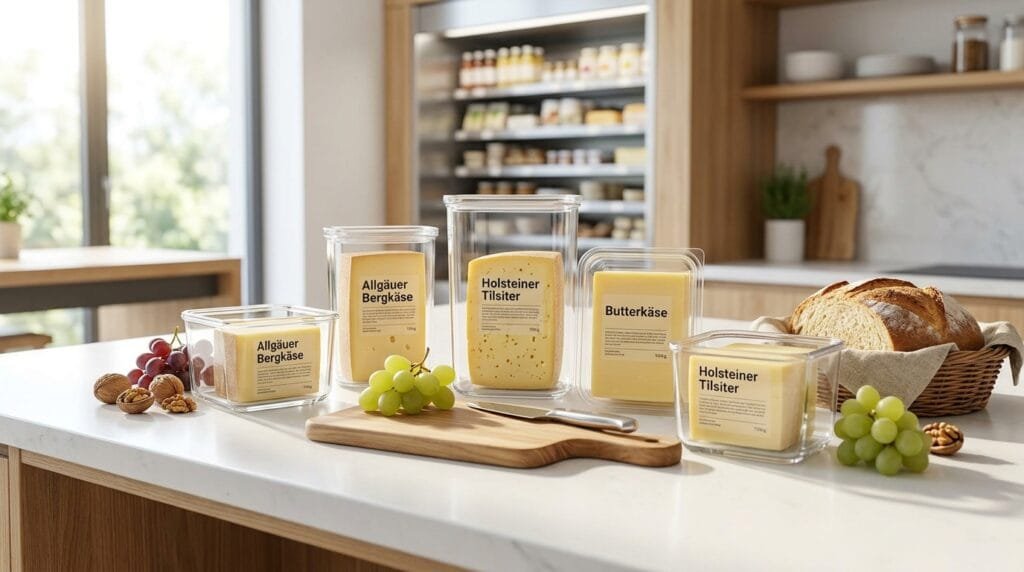
1. The Complex Allure of Cheese from Germany: Flavor Profiles vs. Digestive Pitfalls
Exploring the artisanal world of cheese from germany offers an extraordinary culinary journey, ranging from the pungent, golden-washed rinds of Allgäuer Bergkäse to the velvety depths of Bavarian blue wheels. Germany is quietly one of the world’s most prolific cheese producers and exporters, blending centuries-old monastic traditions with strict regional standards. However, for consumers navigating food allergies, cow’s milk protein reactivity, histamine intolerance, or lactose malabsorption, shopping the import aisle can trigger immense anxiety. What should be an elevated gastronomic tasting frequently deteriorates into an exhausting exercise in deciphering dense European nutritional panels and ambiguous translated ingredient declarations.
The central difficulty lies in the fact that not all dairy intolerances operate under the same biochemical mechanisms. While true lactose intolerance represents an enzymatic deficiency (a shortage of lactase in the brush border of the small intestine), dairy allergies involve an immunoglobulin E (IgE) or non-IgE immune-mediated response to specific casein or whey proteins. The FDA Food Allergen Labeling & Consumer Protection Act (FALCPA) mandates clear disclosure of major milk allergens on domestic shelves, but foreign specialty imports often feature supplemental distributor stickers that obscure critical sub-ingredients or truncate complex German labeling nuances.
Moreover, modern consumer health goes beyond single allergens to encompass the systemic metabolic impact of dairy selection. Balancing the nutritional density of authentic artisanal cheeses against the industrial processing shortcuts found in mass-market exports requires vigilant label auditing. As emphasized by the World Health Organization Guidelines on Healthy Diets & Saturated Fats, dietary fat sources must be evaluated within a broader context of whole-food integrity and gut microbiome compatibility. Understanding which German cheeses naturally eliminate lactose through rigorous, long-term bacterial fermentation versus those loaded with industrial stabilizers is crucial for stress-free shopping.
Scan Any Label for Hidden Additives and Allergens — Free
Never second-guess confusing grocery labels again. Download Food Scan Genius to uncover hidden additives, toxic dyes, and allergens for the whole household before you buy.


2. Biochemical Realities: Deceptive Additives, Fermentation Chemistry, and Label Loopholes
When selecting authentic cheese from germany, consumers frequently assume that traditional purity laws protect every wheel. While traditional cheeses like aged Emmentaler, Tilsiter, and mountain Bergkäse undergo extensive lactic acid fermentation that consumes residual milk sugars—naturally reducing lactose to negligible levels (<0.1g per 100g)—commercialized variants and processed spreads introduce distinct hidden hazards. According to the European Food Safety Authority (EFSA) Additive Safety Regulations, imported products permit specialized additives, preservatives, and surface treatments that can trigger unexpected sensitivities.
Furthermore, emerging PubMed Research on Ultra-Processed Foods & Gut Microbiome Disruption demonstrates how synthetic emulsifiers and thickeners common in industrial cheese preparations can compromise the intestinal mucosal barrier, exacerbating digestive distress beyond simple lactose intolerance. Below are the primary technical and labeling loopholes to watch for when evaluating German cheeses:
- Natamycin (E235) Surface Washes: Widely used on the rinds of semi-hard cheeses like Gouda and Tilsiter to prevent mold growth. While deemed safe in trace amounts, consumers with mold sensitivities or gut dysbiosis can experience cross-reactive adverse symptoms if the rind is consumed.
- Lysozyme (E1105) from Egg Albumin: Often added to prevent late-blowing defect caused by Clostridium tyrobutyricum during the ripening of hard Alpine cheeses. Because it is derived directly from egg whites, it represents a severe, hidden anaphylactic hazard for individuals with egg allergies, frequently hidden under generic enzyme listings.
- Industrial Annatto (E160b) vs. Beta-Carotene: Used to produce the classic golden-orange hues in certain regional cheeses. Annatto is a natural seed extract known to trigger IgE-mediated reactions, urticaria, and gastrointestinal irritation in sensitive populations, unlike inert carotenoid colorants.
- Import Distributor Re-Labeling Blindspots: When artisanal wheels are portioned and vacuum-sealed by third-party domestic distributors, original batch disclosures regarding animal rennet versus microbial coagulants, or raw milk status (vital for pregnancy safety), are frequently omitted.
- Processed ‘Schmelzkäse’ Emulsifying Salts: Mass-produced German processed cheese preparations utilize sodium phosphates (E339) and polyphosphates (E452). These additives alter intestinal permeability, introduce high bioavailable phosphorus loads, and indicate ultra-processed status under the NOVA 4 classification.
- Cross-Contact in Herb-Crusted Varieties: Renowned specialties like Kräuterkäse often incorporate regional spice blends processed on lines handling celery, mustard, or gluten-containing grains, introducing silent allergen vectors not obvious from the cheese base alone.
3. Technological Superiority: Auditing Imported Cheese with Food Scan Genius
| Feature / Capability | Food Scan Genius | Fig App | Spoonful | Manual Label Reading |
|---|---|---|---|---|
| Cost & Accessibility | 100% Free Core (No Paywalls) | $59/year Subscription | Limited Free Scans / Mo | Free (High Time Cost) |
| Database Depth | 5,000,000+ UPCs (NutriGraph AST) | Proprietary Store Database | Moderate US/UK Retail Only | Zero Database Verification |
| Multi-Household Screening | Yes (Single scan, named attribution) | Single User Focused | Single Profile Only | Mental Tracking (High Error Risk) |
| Custom Sensitivity Matching | 39 Profiles + Custom Direct Text | Extensive Pre-set Diets | Pre-set Diets (FODMAP focus) | Unassisted Search |
| Multi-Language OCR Engine | 11 Languages (Real-time German parsing) | English Dominant | English Only | Manual Translation Required |
Deciphering specialty imports demands algorithmic precision. While conventional grocery apps rely on basic keyword matching that misses foreign terms or isolates one shopper at a time, Food Scan Genius runs on the enterprise-grade NutriGraph Database. Covering more than 5,000,000 verified barcodes globally, our engine employs recursive Abstract Syntax Tree (AST) parsing. This means when you scan a package of authentic Bavarian Bergkäse or Rauchkäse, the engine analyzes not just the broad ingredient label, but dissects nested sub-compounds down to specific coagulation enzymes, rind preservatives (like natamycin), and color additives.
Rather than offering arbitrary ‘good or bad’ health grades, our ScanGenius AI Insight delivers clinical, contextual analysis. You receive transparent NOVA 1-4 food processing categorizations alongside scientific Nutri-Score transparency, highlighting whether a German cheese contains beneficial active cultures or ultra-processed industrial melting salts. Crucially, our Multi-Household Family Profiles screen for everyone at once: a single scan instantly confirms if an imported Allgäuer Emmentaler is completely lactose-free for you, while flagging hidden egg-derived lysozyme for your child with clear attribution (e.g., ‘Fails for Sri (Egg Derivative)’). Best of all, our complete core scanning power is 100% free with zero paywalls.
4. Related Food Safety & Dietary Guides
- Best Food Allergy Scanner App – Scan Food Labels Instantly — Food Allergy & Sensitivity Scanner Hub
- The 7 Best Free Food Scanner Apps of 2026 — best free food scanner apps
- Choosing the Best Barcode Scan App for Your Health — guide to choosing a barcode scanner app
- Food Scan Genius: World’s #1 Food Ingredient Scanner App — Food Scan Genius scanner app
5. Scientific & Health Authority References
- FDA Food Allergen Labeling & Consumer Protection Act (FALCPA)
- European Food Safety Authority (EFSA) Additive Safety Regulations
- PubMed Research on Ultra-Processed Foods & Gut Microbiome Disruption
- World Health Organization Guidelines on Healthy Diets & Saturated Fats
6. How to Scan in 3 Simple Steps
- Download the free Food Scan Genius app from the iOS App Store or Google Play Store (100% free core power with zero paywalls).
- Configure your Multi-Household Profile by selecting from 39 clinical dietary options (such as Lactose-Free, Casein Sensitivity, Low-Histamine) or add your own custom sensitivities like ‘Lysozyme’ or ‘Natamycin’.
- Point your smartphone camera at the barcode of any domestic or imported cheese from Germany to receive an instant, sub-ingredient audit in under 2 seconds across 11 supported languages.
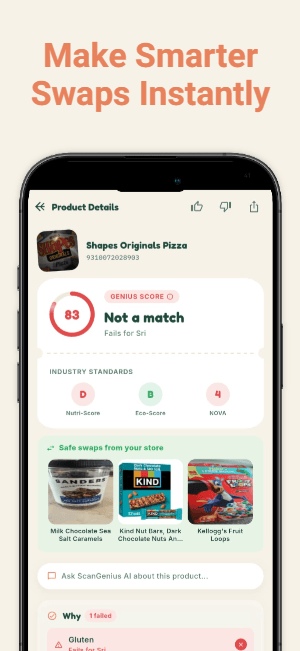
Instant Lactose-Free Audit Trail
7. Frequently Asked Questions (FAQ)
Which authentic German cheeses are naturally lactose-free?
Aged German hard cheeses such as Allgäuer Bergkäse, aged Allgäuer Emmentaler, and mature Tilsiter are naturally lactose-free. During traditional production, the whey (which contains the bulk of the lactose) is drained, and the remaining milk sugars are consumed by lactic acid bacteria during 3 to 12 months of aging, leaving less than 0.1g of lactose per 100g. Food Scan Genius instantly confirms whether a specific batch has completed sufficient maturation to guarantee zero residual lactose.
How can I tell if a cheese from Germany contains hidden egg allergens?
Many hard German cheeses employ lysozyme (labeled as E1105 or ‘Konservierungsstoff Lysozym aus Ei’) to prevent spoilage during aging. Because it is extracted directly from egg whites, it can trigger severe reactions in egg-allergic individuals. Food Scan Genius utilizes deep recursive AST parsing to detect hidden lysozyme derivatives across domestic and German-language labels instantly.
Can I eat Quark or German fresh cheeses if I am lactose intolerant?
Standard German Quark (Speisequark), Frischkäse, and Handkäse are unaged fresh cheeses that retain higher concentrations of liquid whey, resulting in notable lactose levels (typically 2.5g to 4g per 100g). Unless explicitly produced with added lactase enzymes (labeled ‘laktosefrei’), they will likely trigger digestive symptoms. Scanning these items with Food Scan Genius alerts you immediately to unfermented milk sugars.
What makes German processed cheese (Schmelzkäse) problematic for sensitive stomachs?
Schmelzkäse relies on industrial melting salts such as sodium phosphate (E339) and diphosphates (E450) to achieve a uniform, shelf-stable texture. These emulsifying agents classify the product as NOVA 4 ultra-processed food and can disrupt mucosal gut lining integrity. ScanGenius AI Insight automatically flags these additives and provides clean-label, traditionally fermented German cheese alternatives.
Know What’s In Your Food Before You Buy — Scan Free Today
Never second-guess confusing grocery labels again. Download Food Scan Genius to uncover hidden additives, toxic dyes, and allergens for the whole household before you buy.