1. The Innocent Pantry Staple That Isn’t: Deconstructing Soda Crackers in 2026
For generations, soda crackers—often known interchangeably as saltines—have occupied an almost sacred space in the family pantry. They are the universal sick-day remedy, the gentle snack handed to nauseous toddlers, the bland carbohydrate prescribed for morning sickness, and the habitual companion to a steaming bowl of chicken noodle soup. Because of their austere appearance, crisp snap, and clinical pale hue, consumers instinctively categorize them as harmless, minimalist staples. Yet, the reality of modern industrial baking tells a starkly different story. Far from being a simple heritage blend of stone-ground wheat, water, baking soda, and yeast, today’s commercially packaged soda crackers are masterpieces of food chemistry designed for indefinite shelf stability and hyper-palatability.
When individuals manage chronic conditions such as celiac disease, hypertension, non-celiac gluten sensitivity, or pediatric autoimmune disorders, assessing soda crackers nutrition becomes an exercise in frustration and anxiety. The tiny, perforated squares look benign, but a single cellophane sleeve can surreptitiously unravel weeks of clean dietary adherence. Parents scanning labels on grocery shelves frequently encounter microscopic ingredient lists dense with chemical dough conditioners, industrially fractionated fats, and ambiguous synthetic preservatives that slip past basic visual inspection. Adhering to clinical allergy protocols requires unwavering vigilance, especially when consulting established standards like the Food Allergy Research & Education (FARE) Clinical Standards, which emphasize that even trace cross-contact or unlisted derivatives can provoke severe systemic reactions.
Moreover, the metabolic impact of these seemingly light crackers is frequently misjudged. Commercial soda crackers are predominantly composed of ultra-refined white flour that has been stripped of its germ and bran, resulting in an ultra-high glycemic index food that causes rapid spikes in postprandial blood glucose and circulating insulin. Paired with elevated sodium concentrations strategically sprayed onto the surface of the cracker to hit the palate’s taste receptors instantly, this unassuming snack poses distinct cardiovascular challenges. According to the World Health Organization Guidelines on Healthy Diets & Saturated Fats, controlling cumulative sodium intake and limiting low-fiber refined starches are vital pillars for mitigating chronic lifestyle diseases. Understanding what truly lurks within a conventional box of soda crackers is no longer just for dietitians—it is an indispensable safety requirement for every health-conscious household.
Scan Any Label for Hidden Additives and Allergens — Free
Never second-guess confusing grocery labels again. Download Food Scan Genius to uncover hidden additives, toxic dyes, and allergens for the whole household before you buy.


2. Deceptive Labeling and Sneaky Additives: What Soda Crackers Nutrition Panels Conceal
Supermarket aisles present dozens of cracker varieties claiming to be ‘Light,’ ‘Original,’ or ‘Whole Grain Blend,’ yet deceptive regulatory loopholes permit manufacturers to obscure problematic compounds behind technical nomenclature. Investigating the anatomy of commercial soda crackers nutrition reveals several high-risk additives and hidden components:
- TBHQ (Tertiary Butylhydroquinone) & BHT: Synthetic petroleum-derived antioxidants sprayed directly onto crackers or dissolved within baking oils to prevent rancidity and guarantee an 18-month shelf life. Regulatory authorities such as the European Food Safety Authority (EFSA) Additive Safety Regulations have consistently re-evaluated acceptable daily intakes due to concerns surrounding biochemical cellular stress and immune system disruptions in long-term animal studies.
- Industrial Seed Oils & Interesterified Shortenings: While brands proudly boast ‘0g Trans Fat’ on the front display panel, FDA rounding rules permit any product containing under 0.5 grams of trans fat per serving to declare zero. Manufacturers routinely utilize heavily refined soybean, cottonseed, or palm oils treated with high heat and chemical solvents, which can provoke systemic inflammation. Emerging PubMed Research on Ultra-Processed Foods & Gut Microbiome Disruption correlates such modified industrial lipid matrices with reduced microbial diversity and intestinal barrier permeability.
- Hidden Gluten and Malted Barley Flour: Even when a soda cracker does not list raw wheat flour as its sole grain, commercial recipes almost universally integrate ‘malted barley flour’ or ‘barley malt extract’ for enzymatic starch breakdown and uniform browning. This creates an immediate hazard for celiac consumers who might mistake non-wheat specialty crackers for gluten-free options without deep-parsing sub-ingredients.
- Chemical Dough Conditioners (DATEM and Sodium Stearoyl Lactylate): Emulsifiers engineered to create a uniform, micro-bubble crumb structure that keeps industrial crackers light and crispy during mass factory transit. These synthetic surfactants can directly irritate sensitive mucosal linings in individuals with Irritable Bowel Syndrome (IBS) or inflammatory bowel conditions.
- Engineered Surface Sodium Distribution: A standard single serving of 5 crackers can silently deliver over 150 to 220 mg of sodium. Because the serving size is artificially small, consumers rarely stop at 5 crackers—consuming an entire 20-cracker sleeve often floods the system with nearly 900 mg of sodium, representing nearly 40% of the maximum daily allowance recommended for healthy adults, in a matter of minutes.
- Unlabeled Cross-Contact Processing Aids: Crackers baked on shared high-temperature production belts often carry unlisted traces of milk solids, soy lecithin release agents, and sesame particulates, slipping past basic ingredient list perusal while creating life-threatening hazards for severely anaphylactic individuals.
3. The Modern Shopper’s Shield: Food Scan Genius vs. Outdated Scanning Tools
| Feature / Capability | Food Scan Genius | Fig | Spoonful | Manual Label Reading |
|---|---|---|---|---|
| Core Access & Pricing | 100% Free Core (Zero Paywalls) | Paywalled ($59/yr) | Strict Monthly Scan Limits | Free, but High Error Rate |
| Database Scale & Parsing | NutriGraph (5M+ UPCs, Recursive AST Parsing) | Proprietary Database (Variable Sub-ingredients) | Moderate UPC Coverage | None (Human Eye Scan) |
| Dietary Profiles & Customization | 39 Profiles + Custom Sensitivities (TBHQ, Seed Oils) | Extensive Pre-set Profiles Only | Specialized (FODMAP-centric) | Manual Tracking of Each Term |
| Multi-Household Screening | Instant Multi-User Scan (e.g., ‘Fails for Sri (Gluten)’) | Single Active Profile Switching | Single User Mode | Mentally Exhausting for Multi-Allergy Families |
| Scientific Food Classification | NOVA 1-4 & Nutri-Score Context via ScanGenius AI | Red/Yellow/Green Ingredients | FODMAP Traffic Light Matrix | Subjective Guesswork |
| Multilingual Translation | 11 Global Languages in Real-Time | English Dominant | English Only | Requires Manual Translation Tool |
When examining crackers, conventional label reading falls short because industrial manufacturers hide problem ingredients beneath convoluted sub-ingredient brackets. Food Scan Genius circumvents this limitation through its enterprise-grade NutriGraph Database, cataloging over 5,000,000 verified UPC/EAN barcodes worldwide. By utilizing recursive Abstract Syntax Tree (AST) algorithmic parsing, Food Scan Genius dissects every complex chemical hierarchy—such as ‘enriched flour [wheat flour, niacin, reduced iron, thiamine mononitrate, riboflavin, folic acid], vegetable oil [contains one or more of: canola, palm, soybean with TBHQ for freshness]’. It identifies not merely surface-level triggers, but deeply buried derivatives that legacy scanners miss.
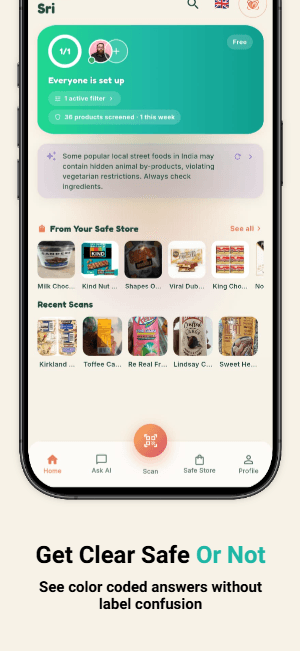
Crucially, Food Scan Genius avoids moralistic, arbitrary health grades. Instead, it pairs rigorous objective frameworks—such as standardized NOVA 1 through 4 processing classifications and European Nutri-Score ratings—with contextual ScanGenius AI Insights. Rather than branding a cracker as inherently ‘toxic’, our AI explains precisely how the interaction of refined flour, leaveners, and synthetic antioxidants impacts gastrointestinal recovery and metabolic rate. For busy families, our dynamic Multi-Household Profiles screen an entire household’s needs in a single 2-second scan, instantly alerting you if a box of soda crackers ‘Fails for Sri (Gluten)’ while simultaneously flagging high sodium for an aging parent, all translated effortlessly across 11 global languages without a paywall in sight.
4. Related Food Safety & Dietary Guides
- Best Food Allergy Scanner App – Scan Food Labels Instantly — Food Allergy & Sensitivity Scanner Hub
- The 7 Best Free Food Scanner Apps of 2026 — best free food scanner apps
- Choosing the Best Barcode Scan App for Your Health — guide to choosing a barcode scanner app
- Food Scan Genius: World’s #1 Food Ingredient Scanner App — Food Scan Genius scanner app
5. Scientific & Health Authority References
- Food Allergy Research & Education (FARE) Clinical Standards
- European Food Safety Authority (EFSA) Additive Safety Regulations
- PubMed Research on Ultra-Processed Foods & Gut Microbiome Disruption
- World Health Organization Guidelines on Healthy Diets & Saturated Fats
6. How to Scan in 3 Simple Steps
- Download the 100% free Food Scan Genius app from the iOS App Store or Google Play Store with zero subscription barriers.
- Configure your Multi-Household Profile by selecting from 39 clinical diets or entering custom sensitivities, such as TBHQ, soybean oil, or synthetic dough conditioners.
- Point your smartphone camera at any soda cracker barcode to receive an instantaneous 2-second breakdown detailing sub-ingredients, NOVA classification, and individual family member pass/fail alerts.
Instant Nut Allergen Audit Trail
7. Frequently Asked Questions (FAQ)
Are commercial soda crackers safe for individuals with celiac disease?
Standard soda crackers are fundamentally unsafe for those with celiac disease or gluten intolerance because they are baked with enriched wheat flour and frequently incorporate malted barley flour. Food Scan Genius analyzes complex sub-ingredient parentheticals down to the microscopic level to ensure hidden malt derivatives and cross-contact risks are immediately identified before purchase.
Why do soda crackers contain TBHQ, and should I be concerned?
TBHQ (Tertiary Butylhydroquinone) is a synthetic preservative added to prevent fats from oxidizing, allowing crackers to stay crisp on shelves for well over a year. While approved in small quantities, health-conscious consumers often prefer to minimize synthetic phenolic additives. Food Scan Genius lets you set custom sensitivities for TBHQ and other industrial preservatives so you can choose crackers with clean, natural fat bases.
Can soda crackers spike blood sugar despite tasting completely unsweetened?
Yes. Even though soda crackers are savory, they consist almost entirely of refined starches that break down rapidly into glucose upon digestion. This gives them a remarkably high glycemic index. Using the ScanGenius AI Insight feature, you can view the exact carbohydrate density and processing severity (NOVA level) of any cracker brand to maintain stable metabolic control.
How does Food Scan Genius handle multi-allergy screening for an entire family?
Unlike legacy apps that force you to toggle individual profiles or pay steep annual fees, Food Scan Genius supports Multi-Household Family Profiles completely free. In a single scan, our NutriGraph system evaluates the item against all configured profiles simultaneously, generating clear named attributions like ‘Fails for Sri (Gluten)’ while giving a green light to other members without sensitivities.
Know What’s In Your Food Before You Buy — Scan Free Today
Never second-guess confusing grocery labels again. Download Food Scan Genius to uncover hidden additives, toxic dyes, and allergens for the whole household before you buy.