A standard serving of saltine crackers (5 crackers, approximately 15 grams) contains 60 to 70 calories, 1.5 grams of fat, 11 to 12 grams of carbohydrates, 1 gram of protein, and between 130 and 180 milligrams of sodium.
Understanding Saltine Nutrition: Calories, Sodium, and Ingredients
Saltine crackers, also known as soda crackers, have been a kitchen staple for well over a century. Traditionally created with white flour, yeast, baking soda, and a touch of vegetable oil or shortening, their crisp texture comes from a slow fermentation process followed by high-heat baking. While they taste light and simple, their nutritional profile is driven almost entirely by simple carbohydrates and added salt. A standard 15-gram serving of five crackers provides roughly 60 to 70 calories, with nearly 80 percent of those calories coming from enriched wheat flour.
Sodium is the most variable nutrient on the label. While the base dough often contains salt to control yeast activity and balance flavor, manufacturers sprinkle coarse salt crystals onto the surface right before baking. Regular saltines average 130 to 180 milligrams of sodium per five crackers. While this fits comfortably into standard daily allowances, it adds up quickly if you eat a full sleeve while resting in bed with an upset stomach. When looking at total sodium and dietary fats, broad public health targets like the World Health Organization Guidelines on Healthy Diets & Saturated Fats emphasize keeping daily sodium intake under 2,000 milligrams to support healthy blood pressure.
The type of flour and shortening used also matters. Most standard saltines use refined wheat flour enriched with iron and B vitamins. Because the wheat germ and bran are removed during milling, traditional saltines have less than one gram of dietary fiber per serving. Additionally, many classic recipes rely on vegetable oils such as soybean, canola, or palm oil to keep the cracker flaky and shelf-stable. For those exploring digestive health and gut wellness, emerging research—such as PubMed Research on Ultra-Processed Foods & Gut Microbiome Disruption—suggests paying attention to how heavily refined grains and commercial baking fats interact with everyday digestion.
Reading Real Labels in the Aisle: Servings, Brands, and Package Checks
Standing in the cracker aisle trying to compare boxes can be surprisingly frustrating. One brand lists five crackers as a serving (15 grams), while another lists six crackers (16 grams), and store-brand sleeves may not mention cracker counts clearly on the front at all. For example, Nabisco Premium Original Crackers list 70 calories, 1.5 grams of total fat, and 135 milligrams of sodium for five crackers. In contrast, Keebler Zesta Original Crackers state 60 calories, 1.5 grams of fat, and 140 milligrams of sodium for five crackers. Store brands like Great Value usually match these numbers closely, but subtle differences in baking fats or leavening agents can shift the calorie and sodium counts slightly between production batches.
If you pick up crackers produced or sold in Europe, the label looks very different. In the United States, the Nutrition Facts panel emphasizes a single portion size, which makes it easy to overlook that a standard 4-ounce sleeve contains about 7 to 8 full servings. In the United Kingdom and the European Union, regulations require nutrition labels to display figures per 100 grams alongside the per-serving amount. This standard makes it much easier to see that 100 grams of standard soda crackers carry around 420 calories and over 900 milligrams of sodium. European products are also subject to distinct guidelines on processing aids and shelf-life preservatives, as outlined in the European Food Safety Authority (EFSA) Additive Safety Regulations, which often lead to different oils or antioxidant blends like rosemary extract instead of synthetic preservatives like TBHQ.
Food allergies also require careful attention. Traditional saltines contain wheat and gluten, and many are made on shared production lines that handle dairy, soy, or sesame. Following trusted standards, such as the Food Allergy Research & Education (FARE) Clinical Standards, helps shoppers spot mandatory bold allergen declarations at the bottom of the ingredient list. When you are rushing through Aisle 4 on a busy weekday, checking tiny text across four different boxes is the last thing you want to do. That is where Food Scan Genius fits into everyday grocery shopping. It serves as a quick, frictionless 2-second sanity check, letting you scan a barcode right from your phone to confirm sodium levels and allergen warnings before tossing a box into your cart. Remember that all ingredient lists, nutrient amounts, and allergy statements in the database come directly from the manufacturer’s physical box. Food manufacturers are solely responsible for declaring their recipes accurately, making the printed package the ultimate source of truth.
| Brand & Variety | Serving Size | Calories | Total Fat | Sodium | Total Carbs | Protein |
|---|---|---|---|---|---|---|
| Nabisco Premium Original | 5 crackers (15g) | 70 | 1.5g | 135mg | 12g | 1g |
| Nabisco Premium Unsalted Tops | 5 crackers (15g) | 70 | 1.5g | 75mg | 12g | 1g |
| Nabisco Premium Low Sodium | 5 crackers (15g) | 70 | 1.5g | 35mg | 12g | 1g |
| Keebler Zesta Original | 5 crackers (15g) | 60 | 1.5g | 140mg | 11g | 1g |
| Great Value Saltines (Walmart) | 5 crackers (15g) | 60 | 1.5g | 130mg | 11g | 1g |
| Schär Table Crackers (Gluten-Free) | 6 crackers (35g) | 160 | 5g | 240mg | 27g | 1g |
Common Label Confusions: Unsalted Tops vs. True Low Sodium
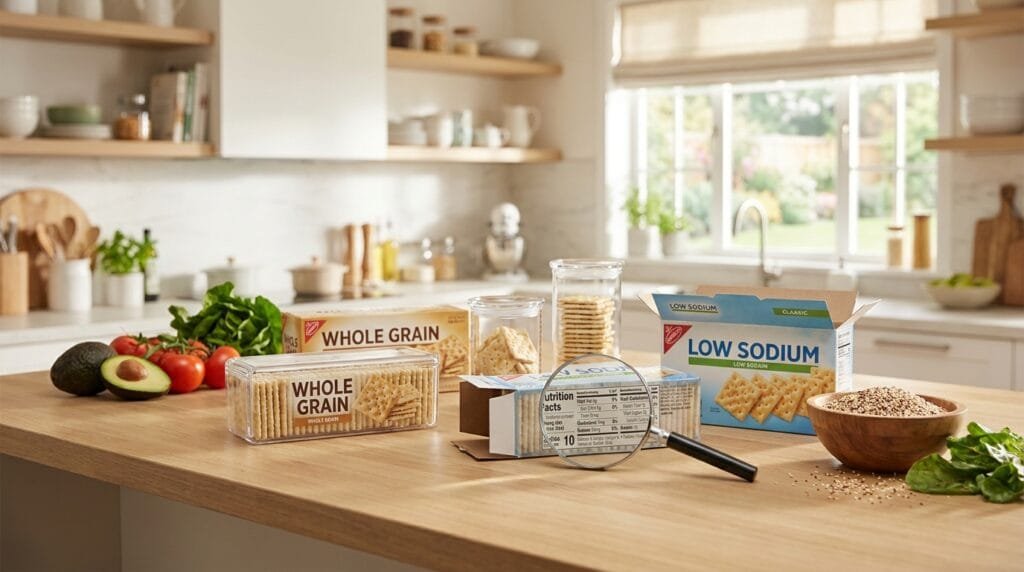
A frequent misunderstanding in the cracker aisle involves boxes marked "Unsalted Tops." Many shoppers assume this means the cracker is completely sodium-free. However, "unsalted tops" simply means the bakery omitted the coarse rock salt crystals usually sprinkled across the exterior before baking. The dough itself still contains salt and leavening soda. As a result, a serving of unsalted-top crackers still provides roughly 75 milligrams of sodium. If your physician has advised you to follow a strictly sodium-restricted meal plan, look specifically for "Low Sodium" boxes, which use modified recipes containing 35 to 40 milligrams or less per serving.
Another common mistake comes from portion sizes versus cracker sleeves. A cardboard box of saltines typically contains four wax-paper sleeves. Because crackers are light and airy, it is very common to eat an entire sleeve with a bowl of soup or chili. However, one sleeve contains roughly 38 to 40 crackers—which equals seven to eight official servings. Eating an entire sleeve delivers roughly 480 to 550 calories, 10 to 12 grams of fat, and over 1,000 milligrams of sodium. If you are watching your daily intake, taking a moment to count out a portion into a small bowl rather than snacking straight from the wax sleeve makes a significant difference.
Frequently asked questions
How many calories are in an entire sleeve of saltines?
A standard sleeve of saltine crackers contains about 38 to 40 crackers, which equals roughly 480 to 560 calories depending on the brand. It also contains approximately 10 to 12 grams of fat and 950 to 1,100 milligrams of sodium.
Are saltine crackers good for settling an upset stomach?
Saltines are often recommended for nausea because they are bland, low in fat, and high in easily digestible starch, which absorbs excess stomach acids. However, they provide minimal fiber and protein, so they are primarily helpful as a temporary source of mild energy.
Do saltines contain dairy or animal products?
Most traditional commercial saltines are naturally dairy-free and vegan, made with vegetable oils like canola, soybean, or palm oil. However, cross-contact with milk can occur during manufacturing, so shoppers with severe milk allergies should always read the manufacturer’s allergen statement on the box.
What is the difference between soda crackers and saltines?
There is no difference; they are the same product. The term "soda cracker" refers to the baking soda used as a leavening agent, while "saltine" originated as a specific brand trademark that eventually became the generic name for lightly salted, fermented white crackers.
How much sodium is in low-sodium saltines compared to regular saltines?
Regular saltines have about 130 to 180 milligrams of sodium per five-cracker serving. Official low-sodium varieties contain 35 to 40 milligrams per serving, representing an approximate 75 percent reduction in total salt.
References
- Food Allergy Research & Education (FARE) Clinical Standards
- European Food Safety Authority (EFSA) Additive Safety Regulations
- PubMed Research on Ultra-Processed Foods & Gut Microbiome Disruption
- World Health Organization Guidelines on Healthy Diets & Saturated Fats
Related guides
- Best Food Allergy Scanner App – Scan Food Labels Instantly — Food Allergy & Sensitivity Scanner Hub
- The 7 Best Free Food Scanner Apps of 2026 — best free food scanner apps
- Choosing the Best Barcode Scan App for Your Health — guide to choosing a barcode scanner app
- Food Scan Genius: World’s #1 Food Ingredient Scanner App — Food Scan Genius scanner app
Check Any Label Against 5 Million Products — Free
Never second-guess confusing grocery labels again. Download Food Scan Genius to uncover hidden additives, toxic dyes, and allergens for the whole household before you buy.