Is Amul Cheese Safe for Lactose Intolerance? A Comprehensive Ingredient and Nutrition Guide
Navigating the grocery aisles when you live with food sensitivities can feel like walking through a minefield. Whether you are managing bloating, gas, or unpredictable digestive discomfort, figuring out what you can safely eat is a daily challenge. Among the many questions shoppers ask, one of the most frequent is whether popular dairy items—specifically Amul Cheese—will trigger symptoms if you have lactose intolerance.
Across the globe, understanding food labels has become more critical than ever. Food manufacturing processes are complex, and hidden ingredients often lurk where you least expect them. In this article, we will examine the science of cheese-making, evaluate the lactose profile of Amul Cheese products, look at broader dietary considerations, and show you how modern tools like Food Scan Genius can help you decode labels with confidence.
Understanding Lactose Intolerance and Dairy Processing
To understand whether Amul Cheese is safe, we first need to look at what lactose intolerance actually is. Lactose is a natural disaccharide sugar found in milk and dairy products. Normally, the small intestine produces an enzyme called lactase, which breaks down lactose into simpler sugars (glucose and galactose) for easy absorption. When a person lacks sufficient lactase, undigested lactose travels to the colon, where gut bacteria ferment it, leading to gas, cramps, and bloating.
However, not all dairy products contain the same amount of lactose. The cheesemaking process inherently reduces lactose levels dramatically:
- Whey Separation: During production, liquid whey—which holds the vast majority of the milk’s water-soluble lactose—is drained away from the curd.
- Fermentation: Bacterial cultures added during cheese creation consume residual sugars, converting them into lactic acid.
- Aging: Long-aged hard cheeses undergo prolonged bacterial action, dropping lactose levels to near-zero.
According to findings published in nutritional science literature and insights highlighted by the National Dairy Council, many individuals with lactose intolerance can comfortably consume cheeses that contain low amounts of residual lactose without adverse effects.
Amul Cheese Profile: What’s Inside the Packet?
Amul is a household name, famous for its processed cheese blocks, slices, tins, and spreads. But how does processed cheese stack up compared to natural aged cheddar or fresh mozzarella?
Unlike raw-aged artisanal cheeses, processed cheese is typically manufactured by blending natural cheeses with emulsifiers, salt, and water, then melting and reforming them. Reviewing the standard nutrition and ingredient data for Amul Processed Cheese reveals:
| Nutritional Component | Per 25g Serving |
|---|---|
| Calories | 80 kcal |
| Total Fat | 6.50 g |
| Total Carbohydrates / Sugars | 0.30 g |
| Protein | 5.00 g |
| Key Additives | Sodium Citrate, Citric Acid, E200, E234 |
As shown in the nutritional breakdown, total carbohydrates (which consist almost entirely of residual lactose) sit at a very low 0.30g per 25g serving. Because the bulk of the whey is removed during the initial cheese base manufacturing phase, the final product retains only trace quantities of milk sugar.
Is Amul Cheese Safe to Eat If You Are Lactose Intolerant?
For the majority of people with mild-to-moderate lactose intolerance, consuming a standard serving or two of Amul Cheese (such as a single cheese cube or slice) is generally well-tolerated and unlikely to trigger symptoms. Clinical guidelines emphasize that lactose intolerance is threshold-dependent; most individuals can ingest up to 12 grams of lactose spread across a day without major distress. Since a serving of Amul Cheese contains a fraction of a gram, it falls well below typical personal tolerance thresholds.
That said, individual sensitivities vary wildly. People with severe lactase deficiency or those who experience hyper-sensitivity may still react to minor trace elements. Furthermore, it is vital to distinguish between lactose intolerance and a true cow’s milk protein allergy (involving proteins like casein or whey). If you have a milk allergy, even trace amounts can provoke severe immune responses, meaning all dairy—including processed cheese—must be strictly avoided.
The Broader Challenge: Hidden Ingredients in Everyday Foods
The confusion surrounding Amul Cheese highlights a larger, systemic issue for consumers worldwide: food ingredient transparency. Modern food manufacturing relies heavily on additives, milk solids, modified food starches, and hidden stabilizers that make label reading exhausting.
Recent reports in consumer advocacy journals and major food safety publications—such as coverage by Reuters and The Associated Press regarding food labeling transparency—emphasize that shoppers struggle daily to interpret cryptic chemical names and overlapping allergen warnings. Whether you are tracking hidden dairy derivatives, gluten, excess sodium, or ultra-processed emulsifiers, relying solely on quick glances at the back of a package is risky.
When dietary restrictions overlap—such as managing lactose intolerance alongside low-sodium needs or preservative avoidance—grocery shopping becomes overwhelming. This complexity is precisely why digital assistance tools have transformed how consumers manage their health at the point of purchase.
Simplifying Dietary Choices with Food Scan Genius
Navigating ingredients doesn’t have to be a guessing game. This is where applications like Food Scan Genius empower shoppers to take control of their nutrition.
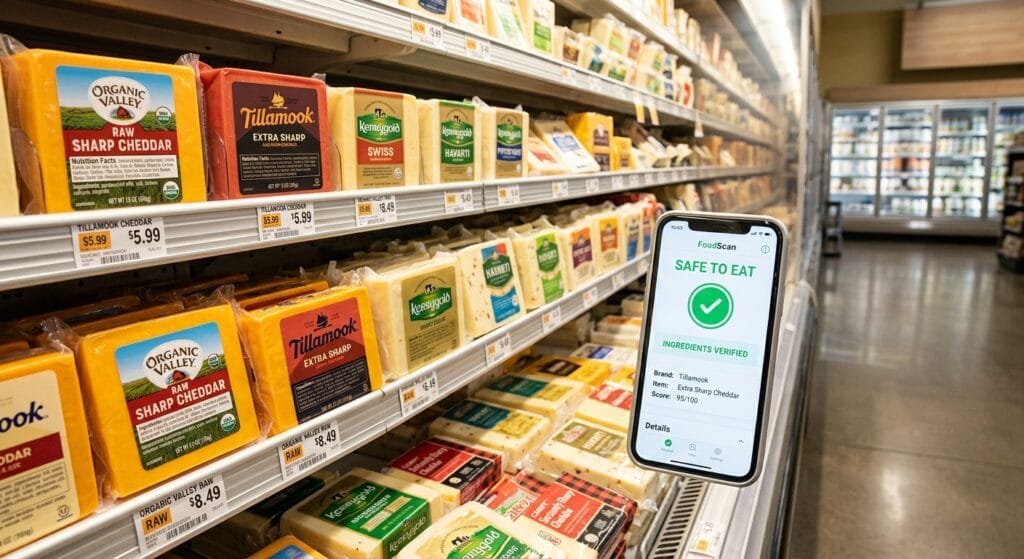
Instead of manually scrutinizing fine print or worrying whether a processed cheese product contains hidden milk solids that could upset your stomach, **Food Scan Genius** lets you scan product barcodes instantly. The app analyzes complex ingredient lists against your custom profile—highlighting hidden allergens, quantifying sensitivity risks, and giving you clear, real-time insights.
“As someone who loves cooking but struggles with severe lactose intolerance and food sensitivities, decoding labels used to give me anxiety every single time I went shopping. Since I started using **Food Scan Genius**, I just scan the barcode right in the aisle. It immediately tells me if a product is safe for my stomach. It has completely eliminated guesswork from my grocery trips, and I recommend it to anyone with dietary restrictions!”
— Priya S., Verified App User
If you want to remove the stress from reading nutrition labels and make sure your pantry aligns with your body’s unique needs, head over to Food Scan Genius and download the app today.
Frequently Asked Questions
1. Is Amul Cheese completely lactose-free?
No, Amul Cheese is not certified 100% lactose-free. It contains trace amounts of residual lactose (around 0.3g per serving), which is low enough for many people with mild lactose intolerance to digest comfortably.
2. Can I eat Amul Cheese if I have a milk allergy?
No. A milk allergy involves an immune reaction to milk proteins (casein and whey), not the sugar lactose. Because Amul Cheese contains dairy proteins, it is unsafe for anyone with a milk allergy.
3. How does Food Scan Genius help with lactose intolerance?
The Food Scan Genius app scans product barcodes to instantly analyze ingredient lists for hidden dairy derivatives, lactose sources, and additives, helping you shop safely and quickly without second-guessing.