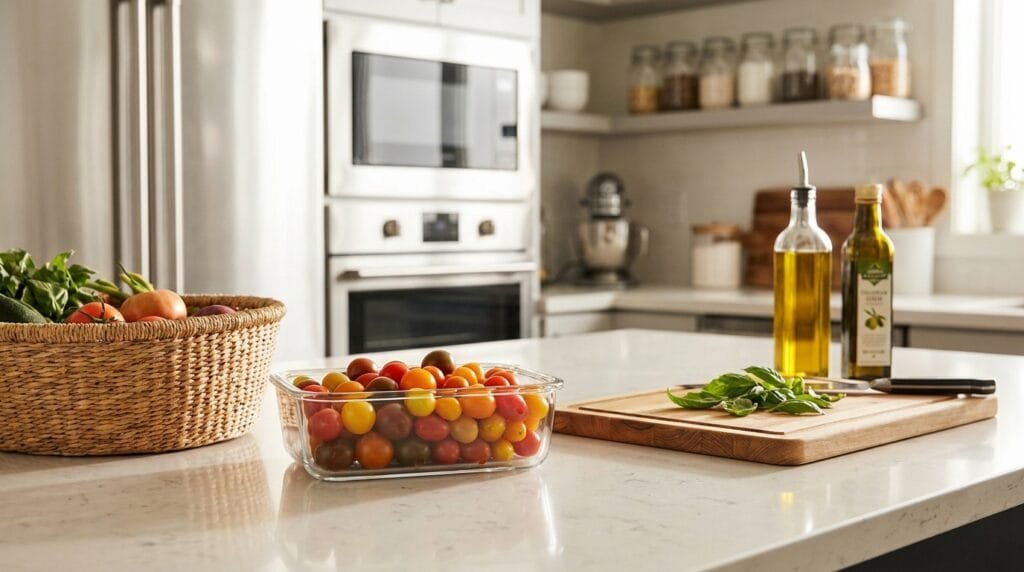
One cup (149 grams) of raw cherry tomatoes contains 27 calories, 5.8 grams of carbohydrates, 1.8 grams of fiber, 3.9 grams of natural sugar, 1.3 grams of protein, and 0.3 grams of fat, along with 353 milligrams of potassium.
The Complete Nutritional Profile of Cherry Tomatoes
Cherry tomatoes are naturally sweet, bite-sized powerhouses that fit effortlessly into lunches, salads, and quick family dinners. Botanically classified as a fruit but served as a culinary vegetable, these small gems are roughly 94% water by weight. That extremely high water content is why a generous single-cup portion (about 149 grams, or roughly 10 to 12 individual tomatoes) provides only 27 calories. For anyone keeping an eye on everyday energy balance, cherry tomatoes offer impressive volume and crunch without adding heavy calories. Their macronutrient split is almost entirely clean, easily digested carbohydrate, delivering 5.8 grams total per cup. Of those carbohydrates, 1.8 grams come from dietary fiber and 3.9 grams represent naturally occurring fruit sugars like fructose and glucose.
Beyond basic calories, cherry tomatoes supply a rich mix of essential vitamins and plant compounds. A single cup delivers approximately 19 to 22 milligrams of Vitamin C—meeting about 22% of your daily recommended intake—which supports immune health, skin elasticity, and iron absorption. They also supply around 353 milligrams of potassium per cup (nearly 8% of the daily value), an essential mineral that helps balance fluids and maintain healthy blood pressure. When you look at broad public health advice, such as the World Health Organization Guidelines on Healthy Diets & Saturated Fats, naturally potassium-rich, virtually fat-free whole foods like cherry tomatoes consistently form the cornerstone of protective cardiovascular eating patterns.
The deep red hue of most cherry tomatoes comes from lycopene, a potent carotenoid antioxidant. Lycopene has been widely studied for its ability to neutralize free radicals, reduce systemic inflammation, and protect cellular health over time. Interestingly, cherry tomatoes often boast higher concentrations of lycopene per gram than larger beefsteak or slicing tomatoes because the pigment is concentrated directly beneath the taut outer skin. While many processed snacks strip away these vital plant chemicals, choosing fresh, minimally processed produce helps preserve your body’s natural balance. Indeed, emerging scientific reviews like PubMed Research on Ultra-Processed Foods & Gut Microbiome Disruption point out that filling your plate with intact, fiber-filled whole foods supports beneficial gut flora and helps buffer your body against digestive stress.
You will also find smaller but meaningful amounts of other protective micronutrients tucked inside these tiny tomatoes. A standard cup offers approximately 15 micrograms of folate (vital for cellular repair and energy metabolism), 63 international units of Vitamin A (primarily as beta-carotene), and about 11 micrograms of Vitamin K, which aids normal blood clotting and bone strength. Because cherry tomatoes contain almost no sodium (roughly 5 to 7 milligrams per cup) and zero cholesterol, they serve as one of the simplest, lowest-friction staples for any household trying to eat well without overthinking the math.
Reading Real Packages: NatureSweet, Sunset, and Grocery Store Clamshells
When you walk into a typical North American grocery store, cherry tomatoes are usually sold in clear plastic clamshell containers or pint cartons. Brands like NatureSweet (known for their “Cherubs” and “Glorys”) and Mastronardi Produce’s Sunset brand (famous for “Angel Sweet” and “Flavor Bombs”) dominate the produce shelves. If you pick up a 10-ounce (283g) container of NatureSweet Cherubs, the US Nutrition Facts label usually defines a single serving as “1 cup (149g)” or “about 10 tomatoes,” stating 25 to 30 calories per serving. In contrast, bulk store brands from Kroger, Aldi, or Walmart often list serving sizes based on a weight of 85 grams (about 3 ounces, or 5 to 6 small tomatoes), showing around 15 calories. This discrepancy between 85-gram and 149-gram servings can easily trip up shoppers who assume every label shows the same standard portion.
If you purchase cherry tomatoes in the United Kingdom or the European Union, the labeling structure changes completely. European law mandates that all nutritional declarations appear “per 100 grams” rather than arbitrary household portions. On a pack of UK supermarket cherry tomatoes (such as Tesco or Sainsbury’s baby plum tomatoes), the panel clearly displays values for 100g: 18 kcal, 0.7g protein, 3.1g carbohydrates (of which 3.0g are sugars), 0.1g fat, and 1.2g fiber. This standardized per-100g format makes cross-product comparisons effortless. It is regulated by the European Food Safety Authority (EFSA) Additive Safety Regulations and food labeling frameworks to prevent misleading marketing, ensuring consumers see exact, comparable density metrics across fresh and packaged items alike.
Another common point of confusion arises with seasoned, marinated, or kit-based tomato packs. Plain fresh cherry tomatoes carry an ingredient list containing only one item: “Cherry Tomatoes.” However, modern snacking displays often feature grab-and-go packs that include pre-portioned dips, such as ranch dressing, balsamic glazes, or hummus. While the tomatoes themselves retain their baseline nutrition (around 27 calories and virtually zero fat per cup), adding just two tablespoons of commercial dairy-based ranch dressing can tack on an extra 130 to 150 calories, 14 grams of fat, and over 250 milligrams of sodium. Always verify whether the printed panel reflects just the raw vegetable or the combination of tomatoes and included dressings.
Finally, look closely at the wash and handling statements on the plastic container. Labels reading “Washed & Ready to Eat” versus “Wash Before Eating” do not change the nutritional breakdown, but they tell you how the manufacturer processed the crop after harvesting. Greenhouse-grown brands like Sunset Angel Sweet often emphasize clean handling right on the lid, but checking the back panel ensures you know whether you need to give them a quick rinse under cold tap water before packing them into school lunchboxes or tossing them into a skillet.
| Measurement / Portion Size | Weight (Grams) | Calories | Total Carbs | Dietary Fiber | Sugars | Protein | Potassium |
|---|---|---|---|---|---|---|---|
| 1 single cherry tomato | 15 g | 3 kcal | 0.6 g | 0.2 g | 0.4 g | 0.1 g | 36 mg |
| Small handful (approx. 5 tomatoes) | 75 g | 14 kcal | 2.9 g | 0.9 g | 2.0 g | 0.7 g | 178 mg |
| Standard 100g reference amount | 100 g | 18 kcal | 3.9 g | 1.2 g | 2.6 g | 0.9 g | 237 mg |
| 1 full measuring cup (whole) | 149 g | 27 kcal | 5.8 g | 1.8 g | 3.9 g | 1.3 g | 353 mg |
| 1 pint container (entire carton) | 283 g | 51 kcal | 11.0 g | 3.4 g | 7.4 g | 2.5 g | 671 mg |
Why Produce Shopping Shouldn’t Be This Hard (and How to Shop with Confidence)
Standing in the produce aisle after a long workday, trying to read tiny plastic labels while wrangling a grocery cart, is unnecessarily frustrating. Even when you are simply trying to buy fresh snacks for your family, the packaging can feel confusing. One brand lists a serving as five tomatoes, another lists a full cup, and the seasoned snacking tubs beside them bundle added oils and salts into the fine print. You shouldn’t need a degree in nutritional science just to figure out what is going into your body while walking down Aisle 4. Having a quick, effortless way to get clear clarity is why modern grocery tools matter so much for everyday shoppers.
This is where Food Scan Genius fits naturally into your routine. It is not built to be a rigid, restrictive diet app or an intrusive food judge. Instead, it serves as a simple, frictionless two-second sanity check right on your phone. When you pick up a prepared tomato snacking kit, a pre-washed container, or a seasoned medley, scanning the barcode immediately pulls up a plain-language view of the nutrition panel, allergens, and ingredients. You get instant peace of mind so you can make your choice and move on with your day, confident that you are feeding your household wholesome, nourishing foods.
Behind the scenes, Food Scan Genius operates on absolute ground-truth transparency: every single calorie count, allergen declaration, and ingredient listing comes directly and strictly from the manufacturer’s physical packaging. The app does not conduct third-party laboratory chemical tests, inspect far-off packing facilities, or guess at information omitted from the box. The food manufacturer holds sole and complete responsibility for everything declared on their label. If you manage specific medical conditions or serious sensitivities—such as nightshade reactions outlined under Food Allergy Research & Education (FARE) Clinical Standards—you can trust that our database mirrors exactly what the producer printed on that package, giving you a faithful, reliable window into the food you bring home.
Frequently asked questions
Are cherry tomatoes safe for low-carb and ketogenic diets?
Yes. A full cup of cherry tomatoes contains only 5.8 grams of total carbohydrates and 1.8 grams of dietary fiber, leaving just 4 grams of net carbs. In typical everyday meal portions, they fit comfortably within low-carb, keto, and diabetic meal plans without spiking blood glucose.
Do cherry tomatoes lose their nutrients when roasted or cooked?
Cooking causes cherry tomatoes to lose a small amount of heat-sensitive Vitamin C, but it significantly increases the bioavailability of lycopene. The heat breaks down the tomato’s thick plant cell walls, allowing your digestive system to absorb this key antioxidant much more efficiently.
How many cherry tomatoes equal one standard vegetable serving?
According to USDA and dietary guidelines, one cup of raw cherry tomatoes (about 10 to 12 small tomatoes, or roughly 149 grams) counts as one full daily vegetable serving. If you are eating smaller cherry tomatoes, five to six tomatoes count as roughly half a cup.
Are cherry tomatoes naturally low in sodium?
Yes. Fresh cherry tomatoes are naturally almost sodium-free, containing only about 5 milligrams of sodium per 100-gram serving. Unless seasoned with table salt, jarred with brine, or paired with commercial dressings, they are completely safe for sodium-restricted and heart-healthy diets.
Does eating the skin of cherry tomatoes provide extra fiber and antioxidants?
Yes. The thin skin of the cherry tomato contains the vast majority of its insoluble fiber and holds the densest concentration of protective plant pigments like lycopene and naringenin. Eating them whole and unpeeled gives you the full nutritional benefit of the fruit.
References
- Food Allergy Research & Education (FARE) Clinical Standards
- European Food Safety Authority (EFSA) Additive Safety Regulations
- PubMed Research on Ultra-Processed Foods & Gut Microbiome Disruption
- World Health Organization Guidelines on Healthy Diets & Saturated Fats
Related guides
- Best Food Allergy Scanner App – Scan Food Labels Instantly — Food Allergy & Sensitivity Scanner Hub
- The 7 Best Free Food Scanner Apps of 2026 — best free food scanner apps
- Choosing the Best Barcode Scan App for Your Health — guide to choosing a barcode scanner app
- Food Scan Genius: World’s #1 Food Ingredient Scanner App — Food Scan Genius scanner app
Check Any Label Against 5 Million Products — Free
Never second-guess confusing grocery labels again. Download Food Scan Genius to uncover hidden additives, toxic dyes, and allergens for the whole household before you buy.