You Asked: Are High Noons Gluten Free? Here’s the Real Question.
You came here for a simple yes or no. The can says “Gluten Free,” and officially, High Noon Hard Seltzers are made with vodka or tequila and contain no gluten ingredients. So, yes. Case closed, right?
Wrong. That’s the answer for everyone else. For you, the person with Celiac disease or a serious gluten sensitivity, that’s not an answer. It’s the beginning of a cross-examination. The label is not a guarantee; it’s an advertisement. The real question isn’t what the can says. It’s what the manufacturing line, the ingredient sourcing, and the shared facility policies don’t say. The real question is, “Can I, with my specific health needs, safely drink this?” Because a simple oversight in a factory hundreds of miles away can ruin your week.
The Anatomy of a High Noon Pineapple Can
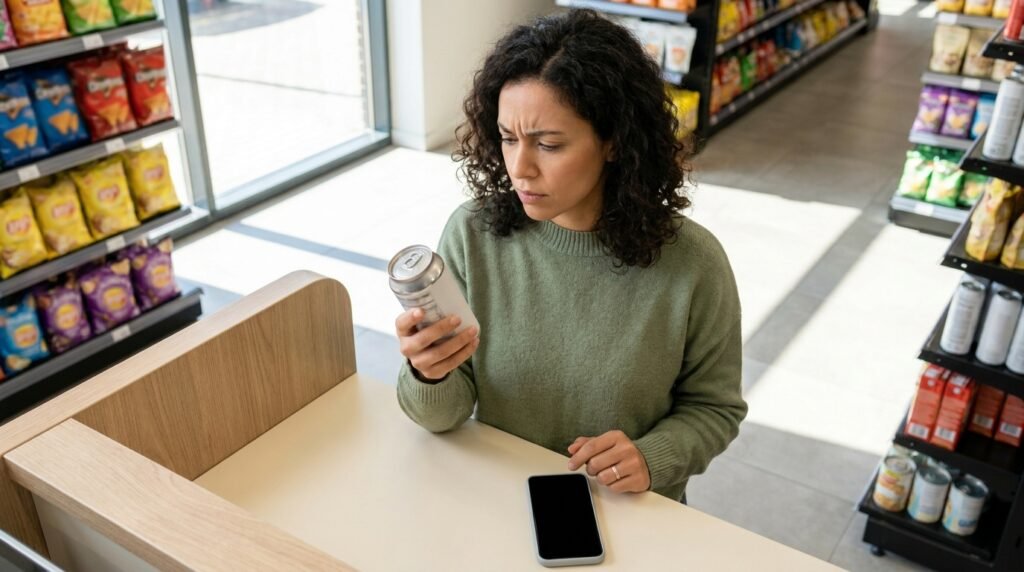
Let’s take a real-world product off the shelf: a can of High Noon Pineapple Vodka & Soda. You pick it up. You turn it over. The label is clean, minimalist. It’s designed to inspire confidence. Here’s what you see:
- Carbonated Water
- Vodka
- Real Juice
- Natural Flavors
- Citric Acid
- Sodium Citrate
Looks simple. Looks safe. But a trained eye—the eye of someone who has paid the price for a mistake—sees a minefield. The danger isn’t in the obvious ingredients. It’s in the ambiguity. It’s in the two words that the entire food and beverage industry uses to hide a universe of complexity: “Natural Flavors.”
Ingredient Analysis: Deconstructing the Label
Before you can make a decision, you have to break down the evidence. What you see on the label is just the headline. Here’s the fine print your body has to read, whether you know it or not.
| Ingredient | Stated Purpose | Hidden Gluten Risk (Celiac Perspective) |
| Carbonated Water | Fizz & Base | Low Risk. Generally safe, but the water source and treatment facility are unknown variables. |
| Vodka | Alcohol Base | Low to Moderate Risk. High Noon uses vodka distilled from corn. Proper distillation removes gluten proteins, even from grain-based sources. However, the risk lies in post-distillation additives or flavorings, which are rarely disclosed. |
| Real Juice | Flavor | Low Risk. Pure fruit juice is naturally gluten-free. The risk enters if the juice concentrate is processed in a facility that also handles gluten-containing products. |
| Natural Flavors | Flavor Enhancement | HIGH RISK. This is the black box. “Natural Flavors” can be derived from thousands of sources. Critically, the carriers used for these flavors, such as alcohol or maltodextrin, can be derived from wheat or barley. The manufacturer is not required to disclose the source if it falls below a certain percentage. This is the #1 source of accidental gluten exposure from “gluten-free” products. |
| Citric Acid | Preservative/Tartness | Low Risk. Almost always derived from corn. Safe for gluten-sensitive individuals. |
| Sodium Citrate | Flavor/Acidity Regulator | Low Risk. A salt of citric acid, considered safe. |
The Verdict: A Mock Scan of High Noon Hard Seltzer
Based on the public information and the potential for undisclosed ingredients, here is the Food Scan Genius verdict for someone with Celiac disease or high gluten sensitivity.
⚠️ Caution
Reasoning: While High Noon is marketed as gluten-free and does not contain primary gluten ingredients, the inclusion of “Natural Flavors” without source specification presents an unacceptable ambiguity for anyone with Celiac disease. Furthermore, without a third-party audit of their bottling facility’s cross-contamination protocols, the risk cannot be fully eliminated. A simple “yes” is reckless. A cautious approach is mandatory.
The Yuka Score vs. Your Life
Generic apps like Yuka might give this a “Good” score because the sugar is low. But Yuka doesn’t know you have Celiac disease. It doesn’t understand that a trace amount of barley from a “natural flavor” carrier can trigger a severe autoimmune reaction. Food Scan Genius gives you a personalized “Yes/No” decision based on your specific allergens and diet. It’s not a score; it’s a safeguard.
The Unspoken Anxiety of the Celiac Shopper
This is about more than one can of High Noon. This is about the constant, draining vigilance required to navigate a world that isn’t built for you. It’s the mental exhaustion of standing in a grocery aisle, phone in hand, trying to decipher the fine print on twenty different products while your family waits. It’s the low-grade, persistent anxiety that follows you to every barbecue, every party, every restaurant.
Every food choice is a risk calculation. You’re not just reading a label; you’re interrogating it. You’re looking for clues, for loopholes, for the one word that could betray you.
The Manufacturing Blind Spot: Where Labels Fail
The ingredient list is only the first chapter of the story. The real danger lies in the chapters you’re not allowed to read: the manufacturing process. This is where the promise of a “gluten-free” label can fall apart completely.
Let’s talk about shared equipment. Imagine the bottling plant where High Noon is made. On Monday, that same facility might be producing a wheat-based beer or a flavored malt beverage. The same stainless steel tanks, the same hoses, the same nozzles, the same conveyor belts. On Tuesday, they switch to High Noon.
What happens in between? Is there a simple water rinse? Or is there a full, validated, allergen-control cleaning protocol involving disassembly, chemical scrubs, and ATP swab testing to verify the removal of all protein residues? The label will never tell you. The company’s marketing department might not even know the specifics. But your immune system will.
This isn’t theoretical. Cross-contamination is a primary vector for gluten exposure in processed foods and beverages. A few parts per million (ppm) is all it takes. The FDA standard for a “gluten-free” claim is less than 20 ppm. For many people with Celiac disease, especially those who are highly sensitive, even 10 ppm can be enough to trigger symptoms and intestinal damage. You are essentially trusting an invisible, unverified process with your health.
The Trojan Horse of “Natural Flavors” and Other Aliases
Let’s go deeper into “Natural Flavors.” Under the Code of Federal Regulations, this term can refer to an essential oil, oleoresin, essence, or extractive derived from a spice, fruit, vegetable, edible yeast, herb, bark, bud, root, leaf, or similar plant material. The problem isn’t the source; it’s the carrier.
To turn a flavor essence into a stable, mixable ingredient, it’s often bound to a carrier or solvent. One of the most common and cheapest carriers is alcohol. And that alcohol can be distilled from any source, including wheat or rye. While distillation removes gluten proteins, some companies add a tiny amount of the original grain mash back into the final spirit for flavor or color, which can reintroduce gluten. Is the alcohol carrier in your High Noon’s “Natural Pineapple Flavor” from a 100% gluten-free source? You can’t know. The label won’t tell you.
It’s not just “Natural Flavors.” The gluten-sensitive shopper has to become a part-time chemist, memorizing a list of potential aliases:
- Malt Flavoring / Malt Extract: Almost always derived from barley. A definite red flag.
- Yeast Extract / Autolyzed Yeast: Can be grown on a barley-based medium. While often gluten-free, the risk of contamination is significant unless specified otherwise.
- Dextrin / Maltodextrin: Often from corn or potato, but can be derived from wheat. If from wheat, it must be declared on the label in the US, but regulations vary internationally, and supply chains are global.
- Caramel Color: Historically, some caramel colors were made using barley malt. While most modern caramel color is gluten-free, it remains a point of concern and requires verification.
- Smoke Flavor: Can sometimes contain barley malt flour as a carrier.
Reading a label isn’t reading. It’s pattern recognition for threats. It’s a high-stakes memory game. And the food industry is constantly finding new ways to formulate ingredients, creating new ambiguities you have to learn. Understanding these hidden sources is the first step to taking back control, a topic we explore in-depth in our complete Gluten Sensitivity Guide.
Food Scan Genius: The Great Equalizer
This is the core of the problem: you are forced to make a critical health decision with incomplete, and often misleading, information. You are expected to be an expert in food science, supply chain management, and regulatory law, just to buy a drink.
This is why Food Scan Genius exists. We do the work for you. We don’t just scan the ingredient list. Our engine cross-references the product’s UPC with a massive database that includes manufacturer statements, allergen certifications, and data on manufacturing facilities. We track which brands use dedicated lines versus shared lines. We flag ambiguous terms like “Natural Flavors” and weigh them against the manufacturer’s overall allergen safety record.
When you scan a can of High Noon with our app, you’re not just getting a summary of the label. You’re getting a synthesized verdict based on thousands of data points. The app knows your specific sensitivity level. It knows you have Celiac disease. It can tell you, “Yes, this is safe for you,” or “Warning: This product contains ambiguous flavorings and is made in a shared facility with wheat products. Avoid.”
It transforms the exhausting process of interrogation into a single, empowering action. It ends the guesswork. It gives you back the time and mental energy that chronic illness steals. It’s not about one can of seltzer. It’s about being able to walk into any store, pick up any product, and get a clear, trustworthy answer. It’s about peace of mind.
Stop Guessing. Start Scanning.
The label on that can of High Noon tells you a story. The marketing tells you what they want you to believe. But your body feels the truth. You don’t have to live with the anxiety of the unknown anymore.
Is this specific can of High Noon, from this specific batch, in this specific store, truly safe for you? There is only one way to know for sure.
Stop guessing. Scan this product with Food Scan Genius. Get the definitive, personalized answer in one second. Your health and peace of mind are worth more than a guess. Download the app and take control of your food choices, for good.
Scan any product in two seconds
Check allergens, additives and 39 diets before you buy. Free on both stores.


Every scan is answered by NutriGraphAPI, our own catalogue of over 5 million barcode-indexed packaged products with allergen, additive and dietary data. Building a food or grocery app yourself? The same data is available as an API.