1. The short answer on coconut meat and dogs
Yes, in small amounts. Plain, unsweetened coconut meat is generally not toxic to dogs, but it is high in fat, so too much can cause loose stools or vomiting. Ask your vet first if your dog has a health condition.
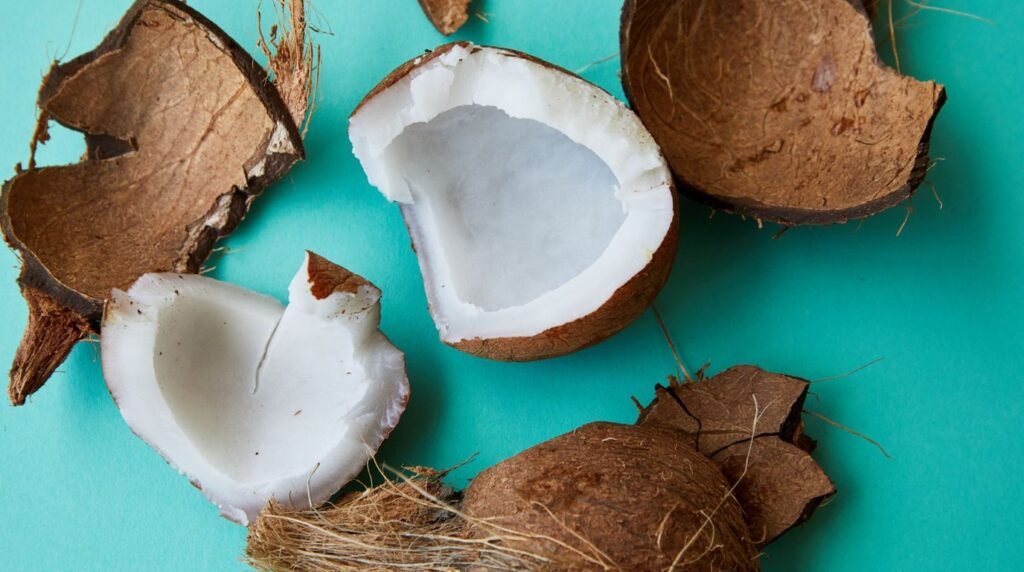
Coconut meat is the white flesh inside the shell. Per 100 grams of raw flesh, it carries roughly 33 grams of fat, mostly saturated, around 9 grams of fiber, and about 350 calories. The ASPCA lists coconut and coconut products as non-toxic to dogs but notes they may cause stomach upset, loose stools, or diarrhea. Fat and fiber are the two reasons a food this small can upset a dog’s gut.
The fat content is also why this is a conversation for your vet in some cases. High-fat foods are a recognized concern for dogs with a history of pancreatitis, and dogs with kidney disease, obesity, or a prescription diet often have specific limits. Coconut allergy is uncommon, but food allergies in dogs are real and are diagnosed by a veterinarian, not by trial and error at home. If your dog falls into any of these groups, consult your veterinarian before offering coconut.
If your vet has no objection, the usual approach is modest. Offer fresh, unsweetened flesh with the hard shell and any husk fibers removed, cut into small pieces. Give it as an occasional treat, not a meal topper every day. A common rule of thumb is that treats should stay under about 10 percent of daily calories. Because coconut is calorie-dense, that allowance is used up faster than most owners expect, especially for small dogs. Introduce it on its own so that if your dog gets an upset stomach, you know the cause.
2. Coconut products to skip or double-check
Most problems with coconut come from what is added to it or what surrounds it, not from the flesh itself. In the snack aisle, read the whole label before you share anything.
- Sweetened shredded or flaked coconut: added sugar, plus preservatives that serve no purpose for a dog. Skip it.
- Coconut candy, macaroons, and baked goods: these often contain chocolate, raisins, macadamia nuts, or xylitol, all of which are dangerous to dogs. If your dog has eaten any of these, contact your vet or a pet poison hotline right away. Do not wait for symptoms.
- Shell and husk: hard fragments can injure the mouth or cause a blockage. Blockage is an emergency for a veterinarian.
- Coconut water: naturally high in potassium. The ASPCA advises against giving large amounts, and flavored or sweetened versions add other ingredients to worry about.
- Coconut oil: pure fat with no fiber. It is easy to overdo, and it is the form most likely to cause greasy stools. Ask your vet before adding it to meals.
Xylitol deserves its own warning. It appears in some sugar-free products, and it is toxic to dogs even in small quantities. If there is any chance your dog ate something containing it, treat it as an emergency and call your vet or a poison line immediately.
3. When coconut appears on a dog food label
Coconut shows up in some dog foods and treats as “dried coconut,” “coconut flour,” “coconut meal,” or “coconut oil.” Each does something different. Dried coconut and coconut flour add fiber and some fat, and manufacturers sometimes use them as a binder or a plant-based energy source. Coconut oil is added as a fat source and for palatability. None of these are automatically good or bad. What matters is how much is in the bag and what else is in the formula.
That is where ingredient order helps. Ingredients are listed by weight at the time they go into the mixer, heaviest first. A fresh ingredient such as fresh chicken is about 70 percent water, so it weighs a lot up front and loses much of that weight during cooking. A dried ingredient such as chicken meal or coconut flour is already concentrated. So the list tells you ranking by pre-cooking weight, not by how much of each ends up in the finished kibble. As a rough guide, anything in the first five ingredients makes up a meaningful share, while anything listed after the vitamin and mineral premix is likely a trace amount.
Watch for ingredient splitting too. A formula might list “peas, pea protein, pea fiber” separately, which pushes each lower on the list even though together they may outweigh the meat. Coconut derivatives can be split the same way, such as coconut flour plus coconut oil.
Then check the guaranteed analysis panel. It lists minimum crude protein, minimum crude fat, maximum crude fiber, and maximum moisture. Coconut pushes the fat and fiber lines up. The panel is on an as-fed basis, so comparing a kibble with a canned food is misleading unless you convert to dry matter. Divide the nutrient percentage by (100 minus the moisture percentage) and multiply by 100. A kibble at 10 percent moisture and 15 percent fat is about 16.7 percent fat on a dry-matter basis. A canned food at 78 percent moisture and 4 percent fat works out to about 18.2 percent. The canned food looks leaner on the label but is not.
If your dog has been told to limit fat, the number on the bag is a starting point for the conversation with your vet, not a verdict.
4. Fillers, vague meat terms, by-products, and AAFCO wording
Whether the formula contains coconut or not, the same label problems come up. Here is what to look for while you are standing in the aisle.
- Fillers: there is no legal definition, but the term usually refers to ingredients that add bulk with little nutritional value for the cost. Examples include cellulose, peanut hulls, rice hulls, and large amounts of beet pulp. Fiber has a role in a diet, so judge by amount and position on the list, not by the word “filler.”
- Ambiguous meat terms: “meat meal,” “meat and bone meal,” and “animal digest” do not tell you which species they come from. Named versions such as “chicken meal” or “lamb meal” do. The same goes for fats: “chicken fat” is specific, while “animal fat” is not. Vague naming matters most for dogs with suspected food sensitivities, since you cannot avoid an ingredient you cannot identify.
- By-product naming: “chicken by-product meal” names its source. “Poultry by-product meal” or “meat by-products” gives you less to go on. By-products are not automatically poor quality, since they can include organ meats, but the source should be named.
- AAFCO statements: AAFCO sets nutrient profiles, and it does not approve or certify individual products. Look for the wording. “Formulated to meet the nutritional levels established by the AAFCO Dog Food Nutrient Profiles” means the recipe was calculated on paper. “Animal feeding tests using AAFCO procedures substantiate” means it was fed to dogs in a trial. Then check the life stage: maintenance, growth and reproduction, or all life stages. Large-breed puppies have their own wording for growth.
- “Intermittent or supplemental feeding only”: this phrase means the product is not complete and balanced. Many coconut treats carry it, which is fine for a treat but not for a main meal.
Pet Scan Genius is useful at this point. Scanning the barcode shows how the ingredients, the guaranteed analysis, and the AAFCO wording line up against your dog’s breed, age, weight, and any conditions you have entered, so you spot a vague term or a coconut-derived ingredient without reading every line. It informs the decision. It does not make it, and it is not a substitute for your vet.
Bring that information to your veterinarian if your dog has pancreatitis, kidney disease, allergies, or any condition that shapes the diet. If your dog eats something that might be toxic, such as a coconut treat with chocolate or xylitol, call your vet or a poison line right away.
Check the bag before you buy it. Pet Scan Genius reads a pet food label and explains what the ingredients mean for your animal by breed, age, weight and health conditions.
Frequently asked questions
Is coconut meat toxic to dogs?
The ASPCA lists coconut as non-toxic to dogs, though it may cause stomach upset or diarrhea. The risks come mainly from the high fat content, shell pieces, and added ingredients such as sugar, chocolate, or xylitol. If your dog eats a product with a toxic ingredient, contact your vet or a poison line.
Can dogs with pancreatitis eat coconut?
This is a question for your veterinarian. Coconut meat is high in fat, and high-fat foods are a recognized concern for dogs with a history of pancreatitis. Do not add it without your vet’s approval.
Can dogs eat dried or shredded coconut?
Unsweetened dried coconut is the same food with the water removed, so it is more concentrated in fat and calories per gram. Sweetened flakes add sugar and preservatives and are best avoided. Always check the label for xylitol, chocolate, and raisins.
Is coconut oil in dog food a problem?
It is a fat source that appears in many formulas, and its presence alone is not a red flag. Check where it sits in the ingredient list and what the guaranteed analysis says about crude fat. If your dog has a fat-sensitive condition, ask your vet.
This article is general information, not veterinary advice. Talk to your vet about your own animal.