1. Why Fruit Can Be Gluten Free in the Orchard and Risky in the Package
Is fruit gluten free? Yes: fresh, whole, unprocessed fruit = naturally gluten free, while processed fruit products (dried, canned, coated, or pre-cut) can contain gluten from added ingredients or cross-contact. An apple, a banana, a bunch of grapes, or a ripe mango contains no wheat, barley, or rye protein. Fruit does not produce gluten, so you can build a safe plate around it. The trouble starts when fruit is cut, mixed, sweetened, thickened, coated, or packaged by someone else.
That gap between ‘naturally safe’ and ‘safe in this specific package’ is where people with celiac disease, non-celiac gluten sensitivity, and wheat allergy get hurt. If you have spent months after a diagnosis learning to distrust every label, it is reasonable to wonder whether even a fruit cup is safe. Your caution is not paranoia. For someone with celiac disease, repeated small exposures can keep the intestinal lining inflamed even when no symptoms appear. The Celiac Disease Foundation Threshold Requirements reflect this. Packaged foods labeled gluten free in the United States must contain less than 20 parts per million of gluten, and that figure only helps if you can tell which products have been tested or made with controls.
Families feel this most. One person needs strict gluten avoidance, another is dairy free, and a child just wants a snack in the lunchbox. Fruit looks like the easy answer, so it is the category where people let their guard down. A pouch of fruit puree, a tub of fruit salad from the deli counter, and a bag of trail-mix-style dried fruit are all sold as ‘just fruit.’ Each one deserves a second look.
The goal of this guide is to give you a clear rule you can rely on. Whole fruit you wash and cut yourself is safe. Anything else is a quick label check. Knowing which products to question, and why, lets you keep fruit in your diet without worry.
Scan Any Label for Hidden Additives and Allergens — Free
Never second-guess confusing grocery labels again. Download Food Scan Genius to uncover hidden additives, toxic dyes, and allergens for the whole household before you buy.


2. Where Gluten Hides in Fruit Products: 6 Loopholes to Know
Gluten does not come from the fruit. It comes from what happens to the fruit after harvest. Highly processed fruit products often contain additives, carriers, and thickeners, and some of those can be gluten-containing grains or share equipment with them. Research on PubMed Research on Ultra-Processed Foods & Gut Microbiome Disruption is a useful reminder that the further a food gets from its whole form, the more ingredients you need to evaluate. The same applies to gluten. The six most common problem areas are below.
- Flour-dusted dried fruit: Sticky dried fruit such as dates, figs, and chopped apricots is sometimes tossed in rice flour, oat flour, or wheat flour so the pieces do not clump. Oat flour is a particular concern because oats are often contaminated with wheat or barley unless certified gluten free.
- Pie fillings and fruit compotes: Canned or jarred fruit fillings are often thickened with modified food starch, and in some regions that starch can be wheat-derived. The ingredient list may only say ‘starch’ or ‘modified starch,’ so you need to look for a wheat allergen declaration or a gluten free certification.
- Fruit snacks, leathers, and gummies: These often include glucose syrup, dextrin, or maltodextrin. In many cases these are made from corn, but wheat is a possible source. Barley malt syrup or malt flavoring is a clear red flag because barley contains gluten.
- Pre-cut fruit and salad bars: Shared tongs, cutting boards, and containers next to croutons, pasta salad, or granola can transfer gluten. This is cross-contact, not an ingredient problem, so a label will rarely warn you about it.
- Smoothies, juices, and blended drinks: Smoothie shops may add malt powder, protein blends, cookie pieces, or oats. Bottled blends may include barley grass or other grain-based additions, so the ‘fruit’ name on the front can mislead.
- Coated, flavored, and mixed products: Chocolate-covered fruit, yogurt-coated fruit, granola-fruit clusters, seasoned fruit, and baked fruit snacks can all include flour, cookie crumbs, or flavorings with unclear gluten status. Shared production lines add further risk.
Regulators approach this through ingredient transparency. The European Food Safety Authority (EFSA) Additive Safety Regulations cover how additives are assessed and labeled in Europe, and in the EU, gluten-containing cereals must be emphasized in the ingredient list. Precautionary statements like ‘may contain wheat’ are largely voluntary, so a product without one is not guaranteed to be free of cross-contact. Gluten free labeling is the strongest signal, because it comes with a defined threshold.
Also keep in mind that people sometimes confuse other fruit reactions with gluten. Oral allergy syndrome, which causes an itchy mouth after raw fruit, or fructose intolerance can cause symptoms that look like a gluten reaction but have a different cause. If symptoms continue after you have removed all gluten, discuss them with your clinician rather than cutting out more foods. The World Health Organization Guidelines on Healthy Diets & Saturated Fats encourage eating plenty of fruit and vegetables, so keeping whole fruit in a gluten-free diet is nutritionally sound.
3. Food Scan Genius vs. Other Ways to Check Packaged Fruit
| Dimension | Food Scan Genius | Fig | Spoonful | Manual Label Reading |
|---|---|---|---|---|
| Cost | 100% free core features, no paywalls | $59/year | Limited scans | Free, but time-consuming |
| Ingredient depth | NutriGraph Database: 5,000,000+ verified barcodes with recursive sub-ingredient parsing | Ingredient-based screening | Ingredient-based screening | Depends on your own knowledge of terms like ‘malt’ or ‘modified starch’ |
| Dietary profiles | 39 profiles plus custom sensitivities | Preset profiles | Preset profiles | One person’s memory |
| Family screening | Multi-household profiles, one scan, named results such as ‘Fails for Sri (Gluten)’ | Check per person | Check per person | Repeat the check for each person |
| Languages | 11 languages with real-time in-app translation | Varies | Varies | Only the label’s language |
Most fruit-product problems are buried in the second or third layer of an ingredient list. A ‘fruit blend’ may contain a seasoning, which contains a carrier, which contains a starch. Food Scan Genius is powered by the NutriGraph Database, which uses recursive sub-ingredient parsing to follow those nested components instead of stopping at the headline ingredient. Because your household’s profiles are applied to the same scan, you see at once who in the family the product works for and who it does not. A result such as ‘Fails for Sri (Gluten)’ tells you exactly what to do with the fruit snack. You can also add your own custom sensitivity, for example a dye, a seed oil, or a specific additive, so that fruit products are screened against your own needs and not only the standard allergen list.
A flag is only useful if you understand it. ScanGenius AI Insight explains why a product was flagged, for example that a fruit filling lists a starch with no stated grain source, or that a dried fruit may involve oat flour. It also adds NOVA 1-4 classification and Nutri-Score, so you can see how processed an item is and how it rates nutritionally, without a single moralizing score telling you the food is ‘good’ or ‘bad.’ That context helps you judge a fruit cup against whole fruit calmly and make the call that fits your health needs. Food Scan Genius is a screening aid and does not replace a clinician’s guidance or a manufacturer’s gluten free certification.
4. Related Food Safety & Dietary Guides
- Best Food Allergy Scanner App – Scan Food Labels Instantly — Food Allergy & Sensitivity Scanner Hub
- The 7 Best Free Food Scanner Apps of 2026 — best free food scanner apps
- Choosing the Best Barcode Scan App for Your Health — guide to choosing a barcode scanner app
- Food Scan Genius: World’s #1 Food Ingredient Scanner App — Food Scan Genius scanner app
5. Scientific & Health Authority References
- Celiac Disease Foundation Threshold Requirements
- European Food Safety Authority (EFSA) Additive Safety Regulations
- PubMed Research on Ultra-Processed Foods & Gut Microbiome Disruption
- World Health Organization Guidelines on Healthy Diets & Saturated Fats
6. How to Scan in 3 Simple Steps
- Download Food Scan Genius free on iOS or Android. The core features have no paywall and no scan limits to worry about.
- Set up your profile. Choose the Gluten Free profile (or any of the 39 supported dietary profiles), add family members to your household, and use ‘Add Your Own Custom Sensitivity’ for anything extra, such as a specific additive or dye. Pick from 11 languages if you prefer.
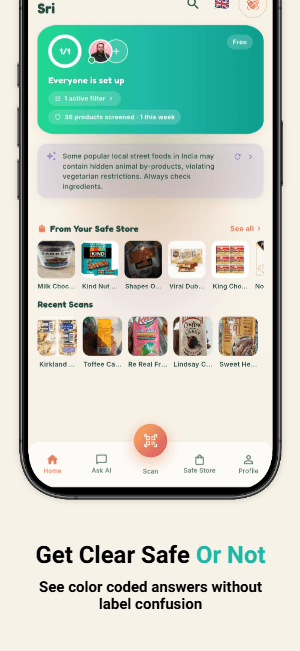
- Scan the barcode on any packaged fruit product. In about two seconds you get an instant audit trail showing which ingredient or sub-ingredient triggered a flag, who in your household it affects, and the ScanGenius AI Insight explaining why.
Instant Gluten-Free Audit Trail
7. Frequently Asked Questions (FAQ)
Is fruit gluten free if I buy it fresh at the grocery store?
Yes. Whole, fresh, unprocessed fruit is naturally gluten free, so is fruit gluten free is answered with a clear yes for apples, berries, citrus, melons, and similar produce. Wash it and cut it with clean tools and surfaces. The only real risk is cross-contact, for example from shared cutting boards or pre-cut containers at a salad bar. Food Scan Genius is for packaged products, where ingredients and processing can change the answer.
Is dried fruit gluten free?
Not always. Plain dried fruit with a single ingredient is usually gluten free, but some dried fruit is coated in flour (rice, oat, or wheat) to prevent sticking, and oats may be cross-contaminated with wheat or barley. Mixes can also share lines with granola or cereal. Scanning the barcode in Food Scan Genius lets the NutriGraph Database check the full ingredient list and sub-ingredients, and look for a gluten free certification on the pack.
Are canned fruit, fruit cups, and pie fillings safe on a gluten-free diet?
Canned fruit packed in juice or water is usually fine, but pie fillings, fruit cups in gel, and sauces may use modified food starch, malt, or other thickeners. In the US, a ‘gluten free’ label means under 20 ppm of gluten, which is the standard cited by celiac organizations. Without that label, check for wheat declarations and unclear starches. A Food Scan Genius scan flags these items and explains the reason through ScanGenius AI Insight.
Can one scan check fruit snacks for my whole family if they have different diets?
Yes. With Multi-Household Family Profiles, Food Scan Genius screens a product against everyone in your household at once and names who it fails for, such as ‘Fails for Sri (Gluten).’ You can add any of the 39 dietary profiles per person, plus custom sensitivities, and use the app in 11 languages. This is helpful for fruit snacks, pouches, and dried fruit mixes, where gluten, dairy, and additive concerns can overlap.
Know What’s In Your Food Before You Buy — Scan Free Today
Never second-guess confusing grocery labels again. Download Food Scan Genius to uncover hidden additives, toxic dyes, and allergens for the whole household before you buy.