
1. Why Finding a Truly Gluten-Free Chocolate Cookie Is Harder Than It Looks in 2026
If you have ever stood in a cookie aisle turning a package over and over, you know the particular exhaustion of it. A chocolate cookie should be a simple pleasure. For anyone with celiac disease, non-celiac gluten sensitivity, or a wheat allergy, it can feel like a small test you have to pass before you are allowed to enjoy anything. If you are shopping for a child, a partner, or a parent, the pressure is higher. You are not only looking for flavor. You are trying to avoid a reaction that may cost someone days of pain, fatigue, or brain fog.
Part of the problem is that ‘gluten-free’ on a front panel can mean very different things. In the United States, a product labeled gluten-free must contain fewer than 20 parts per million of gluten. That threshold is a regulatory standard, and the Celiac Disease Foundation Threshold Requirements and related patient guidance explain why it matters for people with celiac disease and how label claims, certifications, and testing fit together. Chocolate cookies make this harder than most categories. They combine flour, malt, cocoa, chocolate chips, flavorings, and often shared manufacturing lines, and each of those is a possible entry point for gluten.
There is also a second layer of worry. Many gluten-free cookies replace wheat flour with refined starches, gums, and long additive lists to imitate the texture of the original. That is not automatically bad, but it means a cookie can pass the gluten test and still be a highly engineered product. Researchers continue to study how heavily processed diets may affect digestive health, and the PubMed Research on Ultra-Processed Foods & Gut Microbiome Disruption is a useful starting point if you want to understand that conversation. Many people with celiac disease already have a sensitive gut, so they have reason to care about both questions.
You are not being overly cautious by reading every label twice. You are responding to a category where the labeling is genuinely inconsistent, and the goal of this checklist is to make that scrutiny faster and less draining.
Scan Any Label for Hidden Additives and Allergens — Free
Never second-guess confusing grocery labels again. Download Food Scan Genius to uncover hidden additives, toxic dyes, and allergens for the whole household before you buy.


2. Where Gluten Hides in Chocolate Cookies: Sneaky Ingredients and Labeling Loopholes
Most shoppers know to look for ‘wheat flour.’ The trickier problems sit further down the ingredient list, or are missing from it entirely. Here are the most common places a chocolate cookie gluten free search can go wrong:
- Barley malt and malt extract: Common in chocolate cookies for a deeper, toasty flavor. Barley is a gluten-containing grain, but in the US it is not one of the major allergens that must be called out in a bold ‘Contains’ statement, so it can sit quietly in the ingredient list.
- Chocolate chips and inclusions: A cookie dough may be gluten-free while the chips, cocoa nibs, or cream filling are not. Some chocolate products use malt, cookie pieces, or are made on shared equipment.
- Oats without a purity claim: Oatmeal-chocolate cookies are a classic trap. Oats are frequently contaminated with wheat or barley during growing and processing unless they are specifically labeled gluten-free.
- ‘Natural flavors’ and ambiguous starches: These can come from different sources, and the label may not tell you which. Some starches or flavorings may be derived from gluten-containing grains, so unclear wording is a reason to look closer or contact the maker.
- Cross-contact and ‘may contain’ statements: Precautionary statements are generally voluntary and inconsistent. A cookie with no warning is not guaranteed safe, and one with a warning may still be low risk. Only a recognized gluten-free claim or third-party certification gives you a testable standard.
- Wheat starch labeled as gluten-free: In some regions, specially processed wheat starch can be used in products that meet a gluten threshold. Some people with celiac disease choose to avoid it. You deserve to see it clearly rather than discover it later.
Beyond gluten, it helps to look at what else is in the cookie. Emulsifiers, colors, and preservatives are regulated differently across markets, and the European Food Safety Authority (EFSA) Additive Safety Regulations show how additive safety is evaluated in the EU. Fat and sugar content matter as well, particularly because gluten-free baked goods often compensate for texture with more fat or sugar. The World Health Organization Guidelines on Healthy Diets & Saturated Fats offer general context for how often these foods fit into a balanced pattern.
A quick shopper’s checklist: (1) Look for a clear gluten-free claim or certification mark. (2) Read the full ingredient list, including malt, oats, and flavors. (3) Check the chips and fillings separately. (4) Check the manufacturing statement. (5) Re-check the label whenever a familiar brand changes its packaging, because recipes and suppliers change.
3. Food Scan Genius vs. Other Ways to Check a Gluten-Free Cookie
| Dimension | Food Scan Genius | Fig | Spoonful | Manual Label Reading |
|---|---|---|---|---|
| Cost | 100% free core features, no paywalls | $59/year | Limited scans | Free, but time-intensive |
| Ingredient depth | NutriGraph Database with 5,000,000+ verified UPC/EAN barcodes and recursive sub-ingredient parsing | Ingredient flagging | Ingredient flagging | Depends on your own knowledge |
| Dietary profiles | 39 profiles plus custom sensitivities (seed oils, dyes, additives) | Varies by plan | Varies by plan | Mental checklist only |
| Family screening | Multi-household profiles with named results, e.g. ‘Fails for Sri (Gluten)’ | Individual-focused | Individual-focused | Repeat the check for each person |
| Languages | 11 global languages with real-time in-app translation | Limited | Limited | Requires translating by hand |
The advantage of a scanner is not that it replaces your judgment. It is that it does the tedious parts of the work consistently. Food Scan Genius is built on the NutriGraph Database, which holds more than 5,000,000 verified UPC and EAN barcodes and uses recursive AST parsing to break compound ingredients into their sub-ingredients. That matters for chocolate cookies, where a single line such as ‘chocolate chips’ or ‘cookie pieces’ may hide its own ingredient list. Rather than stopping at the top layer, the scan looks through it. Your profile can be one of 39 dietary profiles, and you can add a custom sensitivity such as a particular dye, seed oil, or additive.
Just as important is how results are explained. ScanGenius AI Insight gives plain-language context instead of a single pass-or-fail score: why an ingredient was flagged, whether it is a definite gluten source or an ambiguous one such as an unspecified flavor, and what that means for your profile. Each product also shows a NOVA 1-4 classification and a Nutri-Score, so you can see how processed it is and how it compares nutritionally without being told a food is ‘good’ or ‘bad.’ If you shop for a family, Multi-Household Family Profiles check everyone in one scan and name who is affected, such as ‘Fails for Sri (Gluten),’ so one cookie is not safe for one person and a problem for another without you noticing. With 11 languages and real-time translation, imported cookies and multilingual households are covered too.
4. Related Food Safety & Dietary Guides
- Best Food Allergy Scanner App – Scan Food Labels Instantly — Food Allergy & Sensitivity Scanner Hub
- The 7 Best Free Food Scanner Apps of 2026 — best free food scanner apps
- Choosing the Best Barcode Scan App for Your Health — guide to choosing a barcode scanner app
- Food Scan Genius: World’s #1 Food Ingredient Scanner App — Food Scan Genius scanner app
5. Scientific & Health Authority References
- Celiac Disease Foundation Threshold Requirements
- European Food Safety Authority (EFSA) Additive Safety Regulations
- PubMed Research on Ultra-Processed Foods & Gut Microbiome Disruption
- World Health Organization Guidelines on Healthy Diets & Saturated Fats
6. How to Scan in 3 Simple Steps
- Download Food Scan Genius free on iOS or Android. The core features have no paywall and no scan limit to worry about, so you can check every cookie on your list.
- Set up your profile for gluten. Choose the gluten-free dietary profile, add family members under Multi-Household Family Profiles, and use ‘Add Your Own Custom Sensitivity’ for anything else you avoid, such as barley malt, certain dyes, or seed oils.
- Scan the cookie’s barcode in about two seconds. Review the instant audit trail, the named results for each family member, the ScanGenius AI Insight, and the NOVA and Nutri-Score details before it goes in your cart.
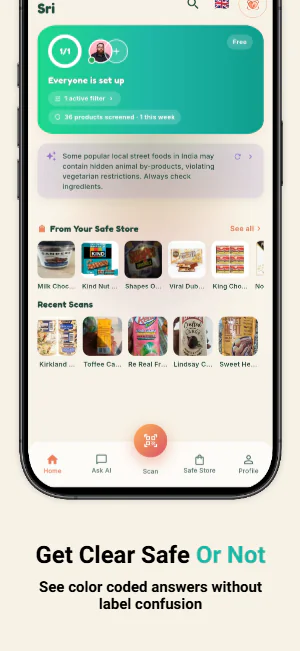
Instant Gluten-Free Audit Trail
7. Frequently Asked Questions (FAQ)
Does ‘gluten-free’ on a chocolate cookie package guarantee it is safe for celiac disease?
A gluten-free claim in the US means the product contains fewer than 20 ppm of gluten, which is the regulatory standard most people with celiac disease rely on. It is a strong signal, but not the whole story: individual sensitivity varies, and recipes and suppliers can change. Food Scan Genius adds a second layer by parsing sub-ingredients in the NutriGraph Database and flagging items like barley malt or unspecified flavors, so you see why a chocolate cookie gluten free claim holds up or does not for your profile.
Are chocolate chips in gluten-free cookies always gluten-free?
No. Chocolate chips can contain malt or be made on shared equipment, and some inclusions such as cookie pieces or fillings may include wheat. A gluten-free dough does not automatically mean every component is safe. When you scan a chocolate cookie, Food Scan Genius’s recursive sub-ingredient parsing looks into compound ingredients like chips and fillings rather than stopping at the top-level label.
Why are oats a concern in chocolate oatmeal cookies?
Oats are naturally gluten-free, but they are often cross-contaminated with wheat or barley during growing, transport, or milling. Unless oats are specifically labeled gluten-free, they carry risk for people with celiac disease. Food Scan Genius can flag oats in a cookie’s ingredient list, and the ScanGenius AI Insight explains whether the product carries a gluten-free claim that addresses the concern.
Can I screen cookies for my whole family, including different dietary needs, in one scan?
Yes. Multi-Household Family Profiles let you add each family member and their dietary profile, choosing from 39 profiles or adding a custom sensitivity. When you scan a chocolate cookie, the results name who is affected, such as ‘Fails for Sri (Gluten),’ so you can quickly see which cookies work for everyone. It is free, with the app available in 11 languages with real-time translation.
Know What’s In Your Food Before You Buy — Scan Free Today
Never second-guess confusing grocery labels again. Download Food Scan Genius to uncover hidden additives, toxic dyes, and allergens for the whole household before you buy.