1. Why Choosing Iron-Rich First Foods Feels So Complicated in 2026
Around six months, many parents notice something quietly stressful: the baby is ready for solids, and everyone has an opinion about what to serve first. Then you stand in the baby-food aisle holding a pouch that says “supports development,” a cereal box that says “fortified,” and a purée with a tiny font ingredient list. If you have ever wondered whether you are getting this right, you are in good company. Most parents feel this way, and it reflects how confusing the marketing is, not a lack of care on your part.
The clinical reason iron matters is straightforward. Babies are born with iron stores that gradually run down in the first half of the first year, while the brain and body are growing fast. Standard U.S. guidance puts iron needs at about 11 mg per day for babies 7 to 12 months old, which is higher than for toddlers. The American Academy of Pediatrics recommends offering iron-rich complementary foods from around six months, such as meat, poultry, fish, iron-fortified infant cereal, eggs, beans, and lentils. Breastfed babies often need an iron supplement until they eat enough of these foods, so please confirm your plan with your pediatrician. This guide is educational and does not replace individual medical advice.
Iron-rich first foods also overlap with the most common allergens, including egg, fish, peanut, and wheat-based cereals. The FDA Food Allergen Labeling & Consumer Protection Act (FALCPA) requires major allergens to be declared on packaged foods, but you still have to read and interpret each label. The World Health Organization Guidelines on Healthy Diets & Saturated Fats also encourage continued breastfeeding alongside varied, nutrient-dense complementary foods, and limiting free sugars and salt from the start.
Convenience foods add another layer. Pouches, puffs, and toddler snacks are practical on hard days, and there is no shame in using them. But heavily processed products can crowd out whole, iron-rich foods, and emerging work such as PubMed Research on Ultra-Processed Foods & Gut Microbiome Disruption is one reason many families want to understand processing levels, not just iron claims. The goal is informed choices, not perfection.
Scan Any Label for Hidden Additives and Allergens — Free
Never second-guess confusing grocery labels again. Download Food Scan Genius to uncover hidden additives, toxic dyes, and allergens for the whole household before you buy.


2. Hidden Pitfalls on Iron-Fortified and “Iron-Rich” Baby Food Labels
The best foods high in iron for infants are usually simple: well-cooked meat, mashed lentils, eggs, and fortified infant cereal. The trouble starts with packaged products, where these six label issues come up most often:
- Front-of-pack iron claims: “Good source of iron” can sit on a product that is mostly fruit purée or starch with a small amount of added iron. Check the ingredient order and the milligrams on the Nutrition Facts panel.
- Confusing %Daily Value: Iron appears as a percentage, which is hard to translate into what a 7-month-old needs (about 11 mg a day). Convert it to milligrams before comparing products.
- Allergens in blends: Major allergens must be declared under FALCPA, but “may contain” cross-contact warnings are voluntary. Multigrain cereals and savory blends can include wheat, egg, soy, or milk.
- Added sugar, salt, and “natural flavors”: Juice concentrates, sweetened cereals, and seasoned toddler meals can add sweetness or sodium that infants do not need.
- Thickeners and additives: Additive rules differ by region, and the European Food Safety Authority (EFSA) Additive Safety Regulations are a useful reference if you buy imported products or want to compare standards.
- Honey and rice-only cereals: Honey, sometimes found in snack bars and cereals, is unsafe before 12 months because of infant botulism risk. Rice cereal can also contribute inorganic arsenic, so rotate with oat, barley, or multigrain options.
Serving tips that make iron count: Pair plant iron (lentils, beans, tofu, spinach) with vitamin C foods such as strawberries, bell pepper, or tomato to improve absorption. Serve meats as soft purées, finely shredded pieces, or tender strips, depending on your baby’s skills. Offer thinned nut butters, never whole nuts. Skip cow’s milk as a drink before 12 months, and avoid tea or large dairy servings right alongside an iron-rich meal.
Three simple recipes:
- Lentil and sweet potato mash: Simmer 1/4 cup red lentils with a small cubed sweet potato until very soft. Mash, add a squeeze of orange juice for vitamin C, and thin with breast milk or formula if needed.
- Beef and pumpkin purée: Slow-cook lean ground beef until fully done, blend with cooked pumpkin and cooking liquid until smooth. Freeze in ice-cube trays.
- Egg and spinach strips: Whisk a well-cooked egg with finely chopped spinach, cook into a thin omelet, and cut into finger-length strips. Introduce egg first if you have not already, and watch for reactions.
3. Food Scan Genius vs. Manual Label Reading and Generic Tools
| Dimension | Food Scan Genius | Manual Label Reading | Generic Nutrition Trackers | Paid Allergy-Scanning Apps |
|---|---|---|---|---|
| Database & ingredient depth | NutriGraph: 5,000,000+ verified UPC/EAN barcodes with recursive sub-ingredient parsing | Limited to what you can read and decode in the aisle | Focused on calories and macros, often user-submitted | Varies; often narrower allergen focus |
| Cost | 100% free core features, zero paywalls | Free, but time-intensive | Free tier with premium upsells | Subscriptions or scan limits (for example, $59/yr) |
| Personalization | 39 dietary profiles plus custom sensitivities (additives, dyes, seed oils) | Entirely manual | Basic diet goals | Limited preset lists |
| Family screening | Multi-household profiles; one scan with named results like “Fails for Maya (Egg)” | Re-check the label for each person | Single-user tracking | Often one profile per scan |
| Context & language | ScanGenius AI Insight, NOVA 1-4, Nutri-Score, 11 languages with real-time translation | No context; foreign labels are a barrier | Numbers without interpretation | Often a single score, few languages |
When you are feeding a baby, a label has to answer several questions at once: Is this safe for my child’s allergies? Is it heavily processed? Is the iron meaningful, or just a marketing claim? Food Scan Genius is powered by the NutriGraph Database, which parses nested sub-ingredients (the “spice blend” inside a “seasoning” inside a purée) so that hidden allergens and additives surface instead of staying buried. If you have a baby with an egg allergy, an older sibling avoiding gluten, and a parent who limits certain additives, one scan screens everyone and names who is affected.
Just as important is how results are explained. Instead of a simplistic good-or-bad score, ScanGenius AI Insight gives nuanced context alongside a NOVA 1-4 classification and Nutri-Score. A fortified infant cereal and a sweetened toddler snack can both mention iron, but they tell very different stories, and the Insight helps you see why. You can add your own custom sensitivity for specific additives, dyes, or seed oils, and read results in any of 11 supported languages, which helps when a relative or caregiver reads a different language. The app supports your judgment and your pediatrician’s advice; it does not replace either.
4. Related Food Safety & Dietary Guides
- Best Food Allergy Scanner App – Scan Food Labels Instantly — Food Allergy & Sensitivity Scanner Hub
- The 7 Best Free Food Scanner Apps of 2026 — best free food scanner apps
- Choosing the Best Barcode Scan App for Your Health — guide to choosing a barcode scanner app
- Food Scan Genius: World’s #1 Food Ingredient Scanner App — Food Scan Genius scanner app
5. Scientific & Health Authority References
- FDA Food Allergen Labeling & Consumer Protection Act (FALCPA)
- European Food Safety Authority (EFSA) Additive Safety Regulations
- PubMed Research on Ultra-Processed Foods & Gut Microbiome Disruption
- World Health Organization Guidelines on Healthy Diets & Saturated Fats
6. How to Scan in 3 Simple Steps
- Download Food Scan Genius free on iOS or Android. There are no paywalls on core features, so you can screen every baby food and snack you buy.
- Set up your household profiles. Add your baby with their known allergens (such as egg, peanut, or fish) and any custom sensitivities like honey-containing ingredients or specific additives, then add other family members from the 39 dietary profiles.
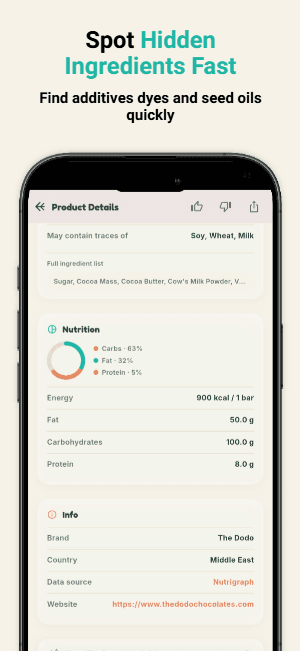
- Scan the barcode of any cereal, purée, or snack. In about 2 seconds you get an instant audit trail with named fail attribution, ScanGenius AI Insight, NOVA 1-4, Nutri-Score, and the listed iron content to compare against your pediatrician’s guidance.
Personalized Match & AI Insight
7. Frequently Asked Questions (FAQ)
What are the best foods high in iron for infants starting solids?
Heme iron sources such as well-cooked beef, lamb, dark-meat poultry, and fish are absorbed most efficiently. Iron-fortified infant cereal, eggs, lentils, beans, tofu, and finely ground seeds are also good choices. Pair plant sources with vitamin C foods to boost absorption. Food Scan Genius helps you check packaged versions of these foods for allergens, added sugars, and additives before you buy.
How much iron does a baby need, and do all babies need a supplement?
Babies 7 to 12 months old need about 11 mg of iron per day. Breastfed infants often receive a supplement from around 4 months until they eat enough iron-rich foods, and formula is already iron-fortified. Needs vary, so your pediatrician should guide supplementation. Food Scan Genius shows the iron listed on a product’s label so you can compare it with that target, but it does not replace medical advice.
Can I use Food Scan Genius to screen baby foods for allergens when introducing iron-rich foods like egg or fish?
Yes. Add your baby’s profile with any known or suspected allergens, and the app scans sub-ingredients to flag them with named attribution, such as “Fails for Maya (Egg).” It checks ingredient declarations, not preparation methods, so you should still watch your baby after introducing a new allergen and talk with your pediatrician about timing and amounts.
Are iron-fortified cereals and baby food pouches safe, or should I avoid ultra-processed options?
Iron-fortified infant cereal is a widely recommended iron source, and pouches can be a convenient occasional option. The key is variety: rotate grains to limit arsenic exposure, choose products without added sugar, salt, or honey, and keep whole iron-rich foods in the mix. Food Scan Genius displays NOVA 1-4 classification and Nutri-Score with AI Insight context, so you can compare products without feeling judged for using convenience foods.
Know What’s In Your Food Before You Buy — Scan Free Today
Never second-guess confusing grocery labels again. Download Food Scan Genius to uncover hidden additives, toxic dyes, and allergens for the whole household before you buy.