
1. Why Choosing Iron-Rich First Foods Feels So Overwhelming in 2026
If you are staring at a wall of pouches, cereals, and puffs wondering which ones actually support your baby’s iron needs, you are not alone. Around six months, an infant’s built-in iron stores begin to run low, while growth and brain development are moving fast. Guidance from pediatric bodies puts the target at about 11 mg of iron per day for babies aged 7 to 12 months. That is a lot for a tiny appetite, and it is why foods high in iron for infants become a priority the moment solids begin. The pressure is real, and so is the worry about doing it right.
The shopping aisle makes it harder. Front-of-pack claims like ‘made with real veggies’ or ‘supports brain development’ say little about how much absorbable iron is inside, or what else came along with it. A pouch can be marketed as iron-rich while the iron comes from a small amount of fortification and the base is mostly fruit puree. Meanwhile, the allergens you are supposed to introduce early, such as egg, peanut, and fish, appear inside blends you may not expect. Under the FDA Food Allergen Labeling & Consumer Protection Act (FALCPA), major allergens must be declared in plain language. Even so, reading every label while holding a hungry baby is exhausting.
Absorption is the other layer. Iron from meat, poultry, and fish (heme iron) is absorbed far more efficiently than iron from plants and fortified cereals (non-heme iron). Pairing plant-based iron with vitamin C, such as strawberries, bell pepper, or tomato, improves uptake. Giving cow’s milk as a drink before 12 months works against iron status, and the same goes for heavy dairy servings alongside iron-rich meals. These details rarely appear on a package, so parents are left piecing together advice from pediatric visits, social media, and grandparents.
Here is the reassuring part: you do not need perfection. You need a short list of reliably iron-rich foods, safe textures, and a quick way to vet packaged products. Always talk with your pediatrician about supplementation. This is especially important for exclusively breastfed babies, premature infants, and babies with a family history of anemia. Everything below is educational and does not replace individual medical advice.
Scan Any Label for Hidden Additives and Allergens — Free
Never second-guess confusing grocery labels again. Download Food Scan Genius to uncover hidden additives, toxic dyes, and allergens for the whole household before you buy.


2. Sneaky Pitfalls Hiding Behind ‘Iron-Rich’ Baby Foods
Marketing language around iron is loosely regulated compared with ingredient and allergen disclosure. These are the most common traps we see when auditing infant products, and each is worth a second look before you buy.
- ‘Made with iron-rich ingredients’ without numbers: This phrase can describe a trace of spinach or lentil in a fruit-heavy puree. Check the nutrition panel for actual iron per serving instead of trusting the front label.
- Fortified cereals dominated by one grain: Iron-fortified infant cereal is a legitimate tool, but rice-based options can carry more inorganic arsenic than other grains. Rotating oats, barley, and multigrain varieties is a sensible approach.
- Added sugars and fruit-juice concentrates: Some ‘veggie and grain’ blends are sweetened to improve acceptance. The World Health Organization Guidelines on Healthy Diets & Saturated Fats advise limiting free sugars and salt from early childhood, and habits form early.
- Hidden allergens in blended pouches: Wheat, soy, milk, egg, and tree nuts can sit in the sub-ingredients of a seasoning, a thickener, or a ‘natural flavor’ carrier. Allergen-aware introduction depends on knowing exactly what is in the blend.
- Ultra-processed ‘toddler snacks’ with iron added: Puffs and melts often advertise added iron while relying on refined starches, flavorings, and emulsifiers. The PubMed Research on Ultra-Processed Foods & Gut Microbiome Disruption is a helpful starting point for understanding why processing level deserves attention, though it does not mean one fortified snack is harmful.
- Additive rules that differ by region: Colors, thickeners, and preservatives are evaluated differently across markets. Review the European Food Safety Authority (EFSA) Additive Safety Regulations if you buy imported baby products or travel with formula and foods.
Safe, Iron-Rich First Foods and How to Serve Them
Start with the strongest sources. Meat and poultry (beef, lamb, dark-meat chicken or turkey) can be cooked until very tender and served as a smooth puree, finely minced and mixed into other foods, or as a soft, large strip for baby-led weaning. Eggs should be fully cooked and mashed or served as thin omelet strips. Fish such as salmon or sardines (choose low-mercury options, remove all bones) can be flaked. Lentils, beans, and tofu should be well cooked and mashed or lightly crushed. Iron-fortified infant cereal mixes easily with breast milk or formula. Liver is very iron-dense but high in vitamin A, so keep portions tiny and occasional. Peanut and other nut products should be thinned or mixed into purees, never given as whole nuts or thick spoonfuls. Honey is off the menu until after age one.
Three Simple Recipes
- Beef and sweet potato mash: Simmer 60 g lean ground beef until fully cooked, blend with steamed sweet potato and a splash of cooking water until smooth. Add a few spoonfuls of mashed orange or strawberry on the side for vitamin C.
- Lentil and tomato puree: Cook red lentils until they fall apart, stir in cooked tomato and a drop of olive oil. No added salt. Serve warm and thick enough to stay on a preloaded spoon.
- Spinach and egg strips: Whisk one egg with a tablespoon of finely chopped cooked spinach, cook in a thin layer, and slice into finger-width strips. Cool fully before serving.
3. Vetting Baby Food Labels: Food Scan Genius vs. the Alternatives
| Dimension | Food Scan Genius | Fig | Spoonful | Manual Label Reading |
|---|---|---|---|---|
| Cost | 100% free core features, zero paywalls | Premium plan around $59/yr | Limited scans on free tier | Free, but slow |
| Database and ingredient depth | NutriGraph: 5,000,000+ verified UPC/EAN barcodes with recursive sub-ingredient parsing | Varies by product | Varies by product | Only what you can read and decode |
| Dietary and allergy profiles | 39 profiles plus custom sensitivities (additives, dyes, seed oils) | Preset profiles | Preset profiles | Memory and notes |
| Whole-household screening | Multi-household profiles with named results, e.g. ‘Fails for Sri (Gluten)’ | Varies by plan | Varies by plan | One person at a time |
| Languages and context | 11 languages with real-time translation, AI insight, NOVA 1-4, Nutri-Score | Varies | Varies | Depends on your language skills |
Iron-rich feeding is not a single-label question. A fortified cereal might be ideal for one baby and a problem for another with an egg, soy, or wheat allergy. Food Scan Genius is powered by the NutriGraph Database, which parses ingredient lists recursively. That means a ‘seasoning blend’ or ‘natural flavor’ is broken into its sub-ingredients rather than left as a vague line item. With multi-household profiles, one scan can check the baby’s profile, a sibling’s allergy, and a parent’s dietary needs at once, and it names exactly who is affected. You can also add custom sensitivities, such as a specific dye or additive you want to avoid. All 11 supported languages translate in real time, which helps caregivers and grandparents read the same results.
The ScanGenius AI Insight adds nuance rather than a pass-or-fail verdict. It explains why a product was flagged, assigns a NOVA 1-4 processing classification, and shows the Nutri-Score without moralizing about your choices. A plain mashed-lentil pouch and a fortified puff can both contain iron, but they sit in very different places on the processing spectrum, and you decide what fits your family. To be clear, the app screens ingredients, allergens, and additives. It does not replace your pediatrician’s guidance on iron dosing, supplements, or screening.
4. Related Food Safety & Dietary Guides
- Best Food Allergy Scanner App – Scan Food Labels Instantly — Food Allergy & Sensitivity Scanner Hub
- The 7 Best Free Food Scanner Apps of 2026 — best free food scanner apps
- Choosing the Best Barcode Scan App for Your Health — guide to choosing a barcode scanner app
- Food Scan Genius: World’s #1 Food Ingredient Scanner App — Food Scan Genius scanner app
5. Scientific & Health Authority References
- FDA Food Allergen Labeling & Consumer Protection Act (FALCPA)
- European Food Safety Authority (EFSA) Additive Safety Regulations
- PubMed Research on Ultra-Processed Foods & Gut Microbiome Disruption
- World Health Organization Guidelines on Healthy Diets & Saturated Fats
6. How to Scan in 3 Simple Steps
- Download Food Scan Genius free on iOS or Android. Core features have no paywall and no scan limits to worry about while you shop for baby food.
- Set up your household. Create a baby profile and add any known allergies (such as egg, peanut, or dairy), then choose from the 39 dietary profiles or add a custom sensitivity such as a specific additive or dye. Add siblings and parents so one scan checks everyone.
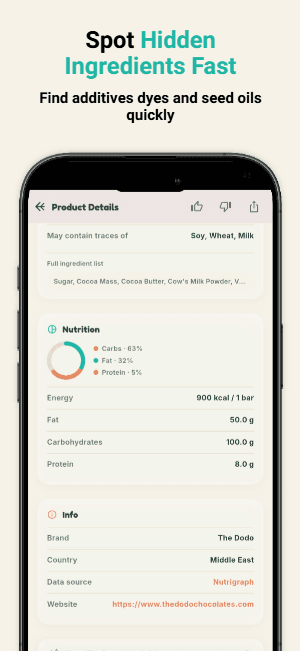
- Scan the barcode on any cereal, pouch, or snack. In about two seconds you get an instant audit trail: sub-ingredient breakdown, named failures like ‘Fails for Sri (Gluten)’, NOVA 1-4 class, Nutri-Score, and ScanGenius AI Insight. Then compare the iron per serving on the nutrition panel.
Personalized Match & AI Insight
7. Frequently Asked Questions (FAQ)
What are the best foods high in iron for infants starting solids?
Heme iron sources such as beef, lamb, dark-meat poultry, and fish are absorbed most efficiently. Eggs, lentils, beans, tofu, and iron-fortified infant cereal are also strong options. Serve them in age-appropriate textures and pair plant-based iron with vitamin C foods to improve absorption. When buying packaged versions, Food Scan Genius can scan the barcode to reveal sub-ingredients, allergens, and processing level so you can choose a product that fits your baby’s profile.
How much iron does a baby need, and do I still need a supplement?
Pediatric guidance generally sets about 11 mg per day for babies aged 7 to 12 months. Many exclusively breastfed infants are recommended an iron supplement from around four months until iron-rich foods are established, but this depends on the child. Ask your pediatrician about your baby’s needs. Food Scan Genius helps you vet packaged foods but does not provide medical dosing advice.
Are fortified infant cereals and baby snacks a good way to get iron?
Iron-fortified infant cereal is a well-established option, and many families use it alongside meats and legumes. The concerns are product-specific: high arsenic exposure from rice-heavy diets, added sugars, and highly processed snacks with iron added. Scanning with Food Scan Genius shows the NOVA 1-4 classification, Nutri-Score, and ScanGenius AI Insight so you see the whole picture, not just the iron claim.
How can I introduce allergens like egg and peanut while focusing on iron?
Eggs and thinned peanut products can be iron-containing foods that also support early allergen introduction, and guidance generally favors introducing them around six months unless your doctor advises otherwise. Never offer whole nuts or thick spoonfuls of nut butter. Food Scan Genius lets you create a baby profile with specific allergens, scans for hidden sub-ingredients, and shows named results across the household, which is useful if a sibling has a different allergy. Under FALCPA, major allergens must be labeled clearly, and the app makes that information faster to review.
Know What’s In Your Food Before You Buy — Scan Free Today
Never second-guess confusing grocery labels again. Download Food Scan Genius to uncover hidden additives, toxic dyes, and allergens for the whole household before you buy.