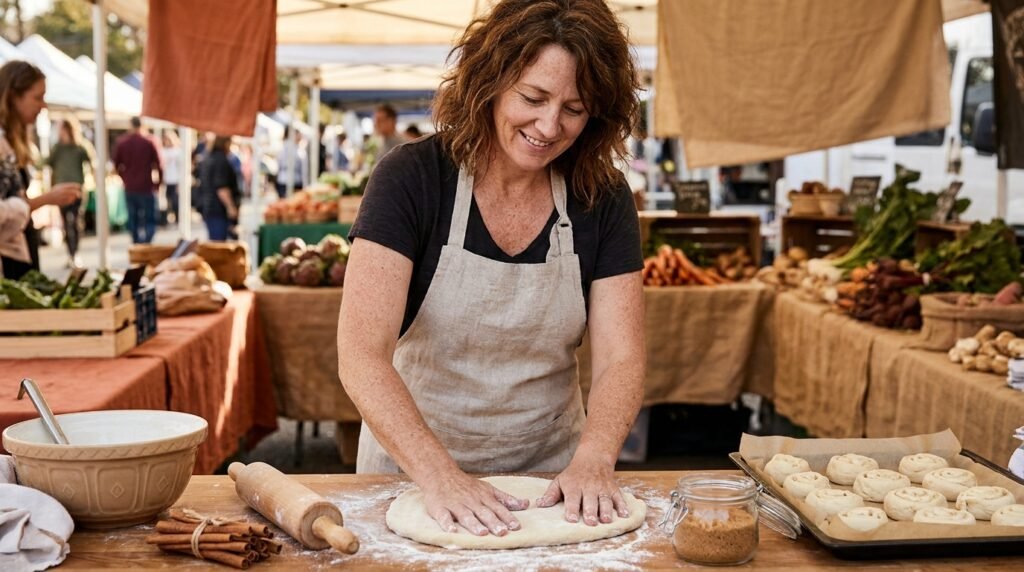
1. Why Gluten Free Cinnamon Rolls Are So Hard to Get Right in 2026
If you have ever pulled a tray of gluten free cinnamon rolls out of the oven only to find dense, gummy pucks, you are in good company. Traditional cinnamon rolls depend on gluten to trap steam, stretch around the filling and give that pillowy pull-apart crumb. Remove it, and you have to rebuild structure with starches, gums, fiber and careful hydration. For many families the stakes are higher than a disappointing breakfast. A cinnamon roll is often the food a person with celiac disease misses most, and the one they are most nervous to trust when someone else made it.
The emotional side is real. Birthdays, holiday mornings and Sunday brunches revolve around baked goods, and being handed a sad, crumbly substitute (or being told ‘just skip it’) stings. Then comes the shopping. The gluten free aisle is crowded with blends, mixes, frostings and refrigerated doughs, each with a different ingredient list and a different level of cross-contact risk. The Celiac Disease Foundation Threshold Requirements guidance reminds us that even trace amounts matter for people with celiac disease, and that ‘gluten free’ labeling standards (under 20 parts per million in the United States) exist to protect them. Reading labels carefully is not paranoia. It is clinical common sense.
Baking from scratch gives you the most control, but only if every component is safe: the flour blend, the yeast, the cinnamon, the powdered sugar, the cream cheese, even the vanilla. A single ingredient with a hidden gluten source or a shared-facility warning can undo an hour of careful work. That is why the best gluten free cinnamon rolls start at the grocery shelf, not in the mixing bowl.
The good news is that soft, fluffy results are achievable at home with a handful of reliable techniques. Use a blend that includes a fine rice flour plus starch (tapioca or potato), add psyllium husk or xanthan gum for elasticity, and keep the dough wetter and stickier than you would expect. Warm milk (dairy or plant-based), a little egg or aquafaba for structure, and a proof in a draft-free, slightly warm spot all help. Roll the dough between sheets of parchment, spread with soft butter, brown sugar and cinnamon, and slice with unflavored dental floss for clean spirals. Bake until the centers reach about 195 to 200°F so they are set but still tender.
Scan Any Label for Hidden Additives and Allergens — Free
Never second-guess confusing grocery labels again. Download Food Scan Genius to uncover hidden additives, toxic dyes, and allergens for the whole household before you buy.


2. Sneaky Ingredients and Labeling Gaps in Gluten Free Cinnamon Rolls
Even careful bakers get caught by ingredients that look harmless. Whether you are buying a mix, a refrigerated dough or a tub of frosting, these are the places where gluten (or ambiguity about it) most often hides. The European Food Safety Authority (EFSA) Additive Safety Regulations are a useful reference for understanding how additives, thickeners and stabilizers are evaluated, but additive approval does not tell you whether a carrier or starch came from wheat. That is a separate question, and it is where label reading gets tricky.
- Uncertified oat flour: Oats are naturally gluten free, but they are frequently contaminated with wheat, barley or rye during harvesting and milling. Many ‘soft’ cinnamon roll recipes call for oat flour, so look for a purity-protocol or certified gluten free claim.
- Barley malt and malt extract: Sometimes used for browning or sweetness in doughs, icings and flavorings. Barley is a gluten-containing grain, and malt can appear deep in a sub-ingredient list.
- Modified food starch and dextrin: In the US these can be derived from corn, tapioca, potato or wheat. If wheat is the source, allergen law requires it to be declared, but the wording can be easy to miss on a crowded panel.
- Wheat starch labeled gluten free: Some jurisdictions allow specially processed wheat starch in products labeled gluten free if the final product meets the threshold. Some people with celiac disease or wheat allergy prefer to avoid it entirely.
- Shared-facility spices and sugars: Cinnamon, powdered sugar and baking powder can pick up cross-contact from shared lines or from anti-caking agents. A bag of cinnamon is rarely the culprit, but a blend labeled ‘cinnamon sugar’ sometimes is.
- ‘Natural flavors’ and frosting stabilizers: Vague flavor terms and thickeners in cream cheese icing can obscure sub-ingredients. Many are fine, but you cannot verify that from the front of the package.
There is also a broader nutrition question. Many packaged gluten free baked goods are ultra-processed, built from refined starches, emulsifiers and added sugars. PubMed Research on Ultra-Processed Foods & Gut Microbiome Disruption is an area of active study, and it is a good reason to consider a homemade roll with recognizable ingredients as an occasional treat. The World Health Organization Guidelines on Healthy Diets & Saturated Fats also encourage moderating free sugars and saturated fat, which is useful context when you are deciding how much butter and icing belongs in your recipe.
3. Food Scan Genius vs. Other Ways to Vet Your Baking Ingredients
| Feature | Food Scan Genius | Fig | Spoonful | Manual Label Reading |
|---|---|---|---|---|
| Cost | 100% free core features, no paywalls | $59/yr for full access | Limited free scans | Free, but time-consuming |
| Database depth | NutriGraph: 5M+ verified UPC/EAN barcodes with recursive sub-ingredient parsing | Ingredient-level analysis | Ingredient-level analysis | Only what you can read and recognize |
| Dietary profiles | 39 profiles plus custom sensitivities | Preset profiles | Preset profiles | Whatever you remember |
| Family screening | Multi-household profiles with named fail attribution | Limited | Limited | Manual, one person at a time |
| Languages | 11 languages, real-time in-app translation | Limited | Limited | Depends on your own fluency |
The core advantage is depth. Food Scan Genius is powered by the NutriGraph Database, which links more than 5,000,000 verified UPC/EAN barcodes to ingredient data and uses recursive AST parsing to unpack sub-ingredients. If a frosting lists ‘modified food starch’ that itself contains a flagged component, or a seasoning blend contains malt, the scan can surface that instead of stopping at the top-level list. With 39 supported dietary profiles and the option to add your own custom sensitivity (a seed oil, a specific dye, a particular additive), you can screen a gluten free cinnamon roll mix for celiac safety and for the other preferences in your household at the same time.
The ScanGenius AI Insight adds context rather than a blunt verdict. Each product gets a NOVA 1-4 classification and a Nutri-Score, along with a plain-language explanation of why something flagged. A roll mix might pass your gluten profile yet land in NOVA 4, and you decide what that means for your family without a simplistic moral score. Multi-Household Family Profiles screen everyone in one scan, with clear attribution such as ‘Fails for Sri (Gluten)’, so a shared pantry run does not become a guessing game. The app also works in 11 languages with real-time translation, which helps when you are reading an imported flour or spice label.
4. Related Food Safety & Dietary Guides
- Best Food Allergy Scanner App – Scan Food Labels Instantly — Food Allergy & Sensitivity Scanner Hub
- The 7 Best Free Food Scanner Apps of 2026 — best free food scanner apps
- Choosing the Best Barcode Scan App for Your Health — guide to choosing a barcode scanner app
- Food Scan Genius: World’s #1 Food Ingredient Scanner App — Food Scan Genius scanner app
5. Scientific & Health Authority References
- Celiac Disease Foundation Threshold Requirements
- European Food Safety Authority (EFSA) Additive Safety Regulations
- PubMed Research on Ultra-Processed Foods & Gut Microbiome Disruption
- World Health Organization Guidelines on Healthy Diets & Saturated Fats
6. How to Scan in 3 Simple Steps
- Download Food Scan Genius free on iOS or Android. There are no paywalls on the core scanning features, so you can start vetting your baking aisle right away.
- Set up your profile for gluten free baking: select Celiac Disease or Gluten-Free from the 39 dietary profiles, add family members under Multi-Household Profiles, and add custom sensitivities such as barley malt, specific dyes or seed oils.
- Scan the barcode on each ingredient (flour blend, yeast, baking powder, cinnamon sugar, cream cheese, powdered sugar, frosting) in about two seconds. Review the instant audit trail, the named fail attribution, the NOVA and Nutri-Score context, and the AI Insight before it goes in your cart.
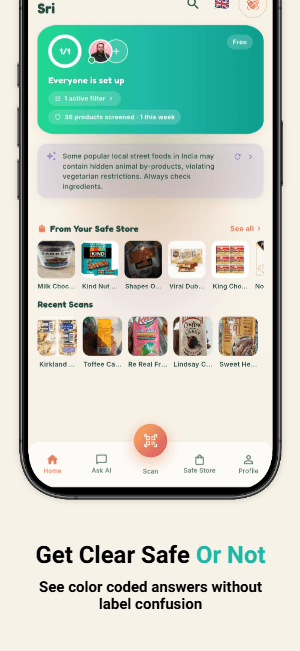
Instant Gluten-Free Audit Trail
7. Frequently Asked Questions (FAQ)
What makes homemade gluten free cinnamon rolls soft and fluffy?
Moisture and structure are the keys. Use a balanced flour blend (fine rice flour plus tapioca or potato starch), add psyllium husk or xanthan gum for elasticity, and keep the dough wetter and stickier than wheat dough. Proof in a warm spot, avoid overbaking (internal temperature around 195 to 200°F), and brush with butter while warm. Before you bake, scan each ingredient in Food Scan Genius to confirm the blend, yeast and icing are safe for your gluten free profile.
Is ‘gluten free’ on a cinnamon roll mix always safe for celiac disease?
A gluten free label in the US means the product contains less than 20 ppm of gluten, which is the standard generally accepted as safe for most people with celiac disease. Individual sensitivity varies, and some people avoid products with wheat starch or shared-facility warnings. Food Scan Genius parses sub-ingredients through the NutriGraph Database and lets you add a custom sensitivity so you can apply stricter personal rules to any gluten free cinnamon rolls mix.
Can I screen a whole family’s dietary needs when buying gluten free cinnamon roll ingredients?
Yes. Multi-Household Family Profiles let you add each person’s dietary profile, such as gluten for one child and dairy for another, and screen the whole household in a single scan. The result names who is affected, for example ‘Fails for Sri (Gluten)’, so you can decide quickly whether to buy, swap or skip the item.
Are gluten free cinnamon rolls healthy?
They can be a fine occasional treat, but ‘gluten free’ does not automatically mean nutritious. Many packaged versions are ultra-processed and high in refined starch, sugar and saturated fat. Food Scan Genius provides a NOVA 1-4 classification and a Nutri-Score with ScanGenius AI Insight context, so you can compare a store-bought roll with your homemade version without a moralizing score and choose what fits your family.
Know What’s In Your Food Before You Buy — Scan Free Today
Never second-guess confusing grocery labels again. Download Food Scan Genius to uncover hidden additives, toxic dyes, and allergens for the whole household before you buy.
Related guides