
1. Why Finding a Safe Gluten Free Egg Noodle Is Harder Than It Should Be in 2026
If you have ever stood in a pasta aisle holding a bag of noodles and wondering whether tonight’s chicken soup is going to make someone sick, you are not being dramatic. You are being careful, and that is exactly right. Traditional egg noodles are built on wheat flour, so a true gluten free egg noodle has to rebuild that familiar tender, springy bite from scratch, using rice, corn, potato, tapioca, or legume flours. Many shoppers have bought a box that promised comfort and ended up with a pot of mush, or worse, a box that quietly wasn’t safe.
For people with celiac disease, the stakes go well beyond a ruined dinner. Even tiny, repeated exposures can trigger intestinal damage, whether or not you feel symptoms right away. The Celiac Disease Foundation Threshold Requirements and related guidance explain why the commonly used standard of under 20 parts per million of gluten matters, and why “just a little” is not a safe strategy. The same caution applies to people with non-celiac gluten sensitivity and wheat allergy, and to the parents and partners who cook for them and carry the mental load of every meal.
Egg noodles add a second layer of complexity. By definition they contain egg, which is a major allergen in its own right, so households managing both gluten and egg concerns need to read even more carefully. Gluten-free formulations also tend to lean on gums, starches, and binders to mimic the structure that gluten normally provides. That leads to a fair question many families ask: is this product actually nourishing, or just technically safe? PubMed Research on Ultra-Processed Foods & Gut Microbiome Disruption is a useful reminder that how a food is made matters alongside what it leaves out.
This guide is not a rigid brand ranking, because formulations, facilities, and certifications change often, and a list that is accurate today can be out of date after the next production run. Instead, we show you what a great gluten free egg noodle looks like on taste, texture, and safety, which label details to distrust, and how to verify any package in about two seconds, so your decision rests on the barcode in your hand and not on last year’s blog post.
Scan Any Label for Hidden Additives and Allergens — Free
Never second-guess confusing grocery labels again. Download Food Scan Genius to uncover hidden additives, toxic dyes, and allergens for the whole household before you buy.


2. Sneaky Ingredients and Label Loopholes Hiding Behind a Gluten Free Egg Noodle
A front-of-pack claim is only the beginning of the story. Here is where even careful label readers get tripped up when shopping for a gluten free egg noodle:
- “Wheat-free” is not “gluten-free.” A noodle can leave out wheat yet still contain barley, rye, or contaminated oats. Always look for an explicit gluten-free claim, and prefer products with third-party certification, which often uses stricter limits than the legal minimum.
- Barley malt and malt extracts. In the US, wheat must be declared as an allergen, but barley and rye are not covered by the same bolded allergen statement. Malt-derived sweeteners or flavorings can hide in ingredient lists without a warning.
- Oat cross-contact. Some gluten-free blends add oat flour for softness. Unless the oats are specifically labeled gluten-free, they are commonly contaminated by wheat or barley during growing and milling.
- Voluntary “may contain” statements. Advisory labels such as “made in a facility that also processes wheat” are generally not standardized. Their absence does not prove a shared line was never used, and their presence does not tell you how well it was cleaned.
- Gum and starch stacks. To replace gluten’s elasticity, manufacturers often combine xanthan gum, guar gum, modified starches, and emulsifiers. These are generally permitted, and the European Food Safety Authority (EFSA) Additive Safety Regulations show how rigorously additives are evaluated. Still, some people want to avoid specific ones for personal or digestive reasons, and they deserve to know they are there.
- Sub-ingredients inside sub-ingredients. A “seasoning” or “enriched” component can have its own ingredient list nested inside it. A quick skim of the top-level list can miss a gluten-containing carrier, which is why deep parsing matters.
There is also the nutrition side. Some gluten-free noodles are lower in protein and fiber than their wheat counterparts, and some are high in sodium or made with added fats. The World Health Organization Guidelines on Healthy Diets & Saturated Fats offer a grounded framework for limiting sodium and saturated fat, which is useful context when you are comparing a boxed noodle to a fresh or refrigerated alternative.
What should you look for on the taste and texture side? Blends that combine rice with corn or potato starch tend to cook up smoother and more neutral. Noodles with real egg in the recipe usually carry a richer flavor and a more golden color. Rinse sparingly, because starch helps sauces cling, and cook one minute shy of the package time, since gluten-free noodles can go from perfect to gummy fast. Texture is a preference, but safety is a requirement, so verify first and judge flavor second.
3. Head-to-Head: Food Scan Genius vs. Other Ways to Vet a Gluten Free Egg Noodle
| Dimension | Food Scan Genius | Manual Label Reading | Fig | Spoonful |
|---|---|---|---|---|
| Cost | 100% free core features, zero paywalls | Free, but costs time | $59/yr | Limited scans |
| Ingredient Depth | NutriGraph Database with 5,000,000+ verified barcodes and recursive sub-ingredient parsing | Depends on your memory and the print size | Varies by plan | Varies by plan |
| Dietary Profiles | 39 profiles plus custom sensitivities (seed oils, dyes, additives) | Only what you remember to check | Subscription-dependent | Scan-limit dependent |
| Family Screening | Multi-household profiles with named results, e.g. “Fails for Sri (Gluten)” | Re-read for each person | Varies | Varies |
| Context and Language | ScanGenius AI Insight, NOVA 1-4, Nutri-Score, 11 languages with real-time translation | None; foreign labels are a barrier | Varies | Varies |
The real advantage is depth. Most tools check the headline ingredient list and stop there. Food Scan Genius is powered by the NutriGraph Database, which links more than 5,000,000 verified UPC/EAN barcodes to ingredient data and uses recursive AST parsing to break compound ingredients into their sub-ingredients. When a gluten free egg noodle lists a seasoning blend, a starch, or a flavoring with its own components, those components are examined too. Because you can add your own custom sensitivity, such as seed oils, a specific dye, or an additive you prefer to avoid, the scan reflects your household’s actual rules, not a generic checklist.
Just as important is how results are communicated. Instead of a single moralizing score that labels a food “good” or “bad,” ScanGenius AI Insight explains what it found and why it matters, alongside a NOVA 1-4 classification and a Nutri-Score so you can weigh processing and nutrition in context. With Multi-Household Family Profiles, one scan screens everyone at your table and names who is affected, for example “Fails for Sri (Gluten),” so you do not have to cross-check each person from memory. Real-time translation across 11 global languages also helps when you are reading imported noodle packaging or sharing results with relatives and caregivers.
4. Related Food Safety & Dietary Guides
- Best Food Allergy Scanner App – Scan Food Labels Instantly — Food Allergy & Sensitivity Scanner Hub
- The 7 Best Free Food Scanner Apps of 2026 — best free food scanner apps
- Choosing the Best Barcode Scan App for Your Health — guide to choosing a barcode scanner app
- Food Scan Genius: World’s #1 Food Ingredient Scanner App — Food Scan Genius scanner app
5. Scientific & Health Authority References
- Celiac Disease Foundation Threshold Requirements
- European Food Safety Authority (EFSA) Additive Safety Regulations
- PubMed Research on Ultra-Processed Foods & Gut Microbiome Disruption
- World Health Organization Guidelines on Healthy Diets & Saturated Fats
6. How to Scan in 3 Simple Steps
- Download Food Scan Genius free on iOS or Android. All core features are included, with no paywall and no scan cap standing between you and a safe dinner.
- Set up your profile for gluten: choose the gluten-free or celiac-appropriate dietary profile from the 39 available, add egg or other allergens if relevant, and include any custom sensitivities such as specific additives or seed oils. Add family members so everyone is screened together.
- Scan the barcode on any gluten free egg noodle package. In about two seconds you get an instant audit trail showing pass or fail results by name, sub-ingredient findings, ScanGenius AI Insight, NOVA classification, and Nutri-Score.
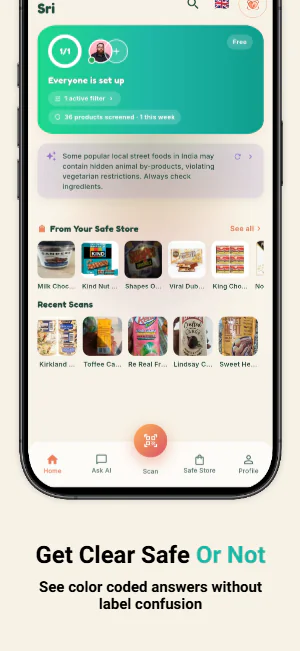
Instant Gluten-Free Audit Trail
7. Frequently Asked Questions (FAQ)
What makes a gluten free egg noodle different from regular egg noodles?
Regular egg noodles are made with wheat flour, which supplies gluten. A gluten free egg noodle replaces wheat with flours and starches such as rice, corn, potato, or tapioca, usually with a binder like xanthan gum, while still including egg for richness and color. Because recipes vary widely, scanning the package with Food Scan Genius lets you see the full ingredient breakdown, including sub-ingredients, and confirm it fits your gluten profile.
Is a “gluten-free” label enough to trust a noodle if I have celiac disease?
A gluten-free claim is a strong starting point, and in the US it generally means under 20 parts per million of gluten. Many people with celiac disease also prefer third-party certified products and look closely at oats, malt, and shared-facility practices. Food Scan Genius checks ingredient data against your profile and flags concerns like barley malt, but you should always follow your physician’s or dietitian’s guidance for your own tolerance.
Do gluten-free egg noodles taste and cook like the wheat version?
They can come close, but they behave differently. Blends of rice and corn or potato starch often give the smoothest, most neutral result, while egg adds a richer flavor. Cook them slightly under the package time, stir gently, and avoid over-rinsing so sauces cling. Taste is subjective, so use Food Scan Genius to confirm safety first and then choose among the safe options by your own preference.
Can Food Scan Genius screen a gluten free egg noodle for my whole family at once?
Yes. Multi-Household Family Profiles let you save each person’s dietary needs, such as gluten for one person and egg or a custom additive for another, and screen them all in a single scan. Results name who is affected, like “Fails for Sri (Gluten),” and the app works in 11 languages with real-time translation, so everyone in the household can read the results. The core features are 100% free.
Know What’s In Your Food Before You Buy — Scan Free Today
Never second-guess confusing grocery labels again. Download Food Scan Genius to uncover hidden additives, toxic dyes, and allergens for the whole household before you buy.