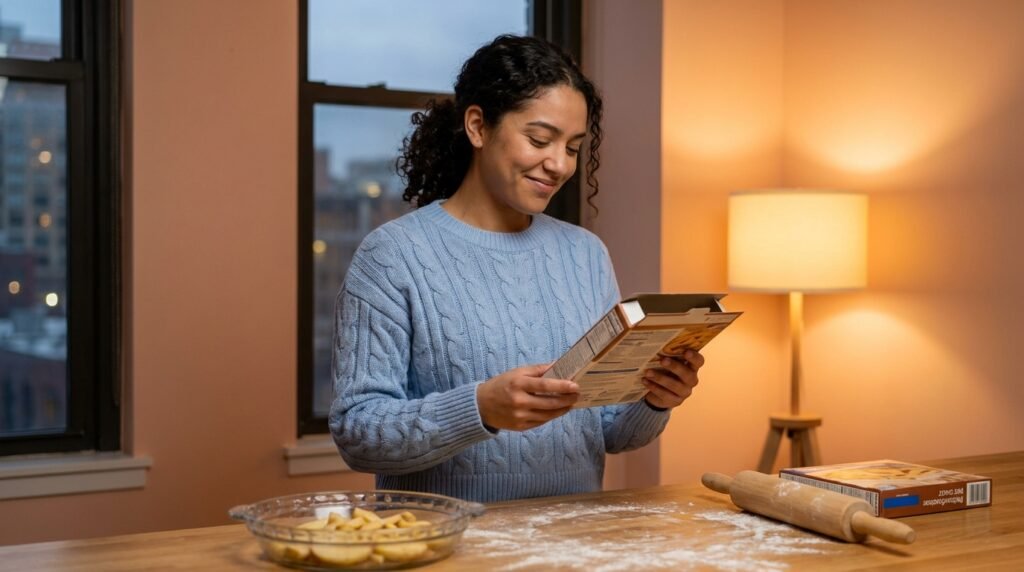
1. Why Choosing a Gluten Free Pie Shell Is Harder Than It Looks in 2026
You have the filling ready, the oven is preheating, and a holiday dinner or birthday is hours away. Then you stand in the freezer aisle holding a gluten free pie shell and wonder whether it will crack, turn gummy, or make someone sick. If that feels familiar, you are not being fussy. Pastry is where gluten does its most important work. It gives dough elasticity, helps it hold fat in layers, and creates the flake we associate with a great crust. Replacing it takes a careful blend of starches, gums and fats, and every one of those choices affects both texture and safety.
For people with celiac disease, the stakes go beyond a soggy bottom. Even small, repeated exposures can trigger intestinal damage, whether or not symptoms appear. The Celiac Disease Foundation Threshold Requirements and related guidance explain why a product must meet a defined gluten limit (under 20 parts per million in the United States) to carry a gluten-free claim. That standard is a floor. It does not tell you how a shell was made, what shares its production line, or whether a sensitive family member will tolerate the other ingredients.
Convenience adds a second layer of difficulty. Store-bought shells are built for shelf life, freezer stability and fast baking, so manufacturers often reach for emulsifiers, modified starches, preservatives and shortening blends. Many of them are fine. Some are the kind of industrial formulation discussed in PubMed Research on Ultra-Processed Foods & Gut Microbiome Disruption, which is worth knowing about if you are already managing a sensitive gut. The research does not say a pie shell is dangerous. It says the ingredient list deserves a closer look than the front-of-pack badge invites.
Finally, there is the emotional load. Many gluten-free households have learned to treat every shared meal as a risk assessment, and a pie is often the centerpiece of a gathering. At Food Scan Genius we want you to bake with confidence, not dread. A good shell should be flaky enough to enjoy, quick enough for a busy kitchen, and verifiably safe for the people eating it. Here is how to tell which ones are.
Scan Any Label for Hidden Additives and Allergens — Free
Never second-guess confusing grocery labels again. Download Food Scan Genius to uncover hidden additives, toxic dyes, and allergens for the whole household before you buy.


2. Sneaky Ingredients and Labeling Loopholes in Gluten Free Pie Shells
Flipping over a package can feel like decoding a foreign language. In a gluten free pie shell, the trouble rarely sits in the first ingredient. It tends to hide in the supporting cast, the facility statements and the fine print. These are the six issues we see most often when we audit shells in the NutriGraph Database:
- Voluntary "may contain" and shared-line statements: In the US, precautionary allergen labeling is not standardized. One shell may say "made in a facility that also processes wheat" while an equivalent one says nothing, even though both share equipment. Absence of a warning is not proof of a dedicated facility.
- Wheat starch with a gluten-free claim: Some products, especially in certain international markets, use specially processed wheat starch and still meet a low-gluten threshold. The claim may be legal, but some people with celiac disease prefer to avoid it. You should be able to see it before it lands in your cart.
- Oat flour without purity assurance: Oats are naturally gluten-free but are commonly contaminated with wheat, barley or rye during growing and milling. A shell that lists oat flour should specify purity-protocol or certified gluten-free oats.
- Vague "natural flavors" and processing aids: These umbrella terms can contain carriers or derivatives that are hard to trace. Gluten is rarely the culprit in modern US labeling, but dairy, soy and other allergens can appear here.
- Emulsifiers and stabilizers: Mono- and diglycerides, soy lecithin, xanthan gum, guar gum and cellulose derivatives keep gluten-free dough workable. They are generally permitted, and the European Food Safety Authority (EFSA) Additive Safety Regulations show how rigorously additives are re-evaluated. Still, individuals who react to gums or soy need a clear flag.
- Fat blends heavy in saturated fat: Flaky texture often comes from palm oil, hydrogenated fat or shortening. If you follow the World Health Organization Guidelines on Healthy Diets & Saturated Fats, or you avoid seed oils for personal reasons, the fat source matters as much as the flour.
None of these items makes a shell automatically "bad." The point is that safety depends on your own needs. A shell that is perfect for one person may be wrong for the next person at the table, and a plain gluten-free logo cannot show you the difference.
3. Food Scan Genius vs. Other Ways to Vet a Gluten Free Pie Shell
| Dimension | Food Scan Genius | Fig | Spoonful | Manual Label Reading |
|---|---|---|---|---|
| Cost | 100% free core features, no paywalls | $59/year for full access | Limited free scans | Free, but costs time |
| Ingredient depth | 5,000,000+ verified barcodes with recursive sub-ingredient parsing | Ingredient-level matching | Ingredient-level matching | Depends on your expertise and eyesight |
| Dietary profiles | 39 profiles plus custom sensitivities (seed oils, dyes, additives) | Preset profiles | Preset profiles | Whatever you remember |
| Family screening | Multi-household profiles, one scan, named results like "Fails for Sri (Gluten)" | Limited | Limited | Re-check for each person |
| Languages and context | 11 languages with real-time translation; AI Insight, NOVA 1-4, Nutri-Score | Fewer language options | Fewer language options | None; foreign labels are a barrier |
The real advantage of Food Scan Genius is how deeply it reads an ingredient list. A gluten free pie shell may list a compound ingredient such as a "flavor blend" or "dough conditioner," which itself contains sub-ingredients. Our NutriGraph Database uses recursive AST parsing to unpack those nested layers, so a trace allergen or an unwanted additive buried two levels down still surfaces. Because the core experience is free, a shopper standing in the freezer aisle never has to choose between a paywall and a guess.
Raw detection is only half the picture, so ScanGenius AI Insight adds nuance. Instead of a single good-or-bad score, it explains why a shell matters for you. It might note that a crust is gluten-free but relies on a saturated-fat-heavy blend, or that it sits at NOVA 4 because of its emulsifier system. The Nutri-Score and NOVA 1-4 classification are presented as context, not moral judgment, since an occasional holiday pie crust is not a character test. With Multi-Household Family Profiles, one scan can check everyone at the table at once and show who is affected, and the 11-language support helps with imported products and multilingual households.
4. Related Food Safety & Dietary Guides
- Best Food Allergy Scanner App – Scan Food Labels Instantly — Food Allergy & Sensitivity Scanner Hub
- The 7 Best Free Food Scanner Apps of 2026 — best free food scanner apps
- Choosing the Best Barcode Scan App for Your Health — guide to choosing a barcode scanner app
- Food Scan Genius: World’s #1 Food Ingredient Scanner App — Food Scan Genius scanner app
5. Scientific & Health Authority References
- Celiac Disease Foundation Threshold Requirements
- European Food Safety Authority (EFSA) Additive Safety Regulations
- PubMed Research on Ultra-Processed Foods & Gut Microbiome Disruption
- World Health Organization Guidelines on Healthy Diets & Saturated Fats
6. How to Scan in 3 Simple Steps
- Download Food Scan Genius free on iOS or Android. There is no paywall on the core features, and no scan limits to worry about while you shop for a gluten free pie shell.
- Set up your profiles. Choose the Gluten-Free or Celiac profile from the 39 dietary options, add family members such as a child with a dairy allergy, and use Add Your Own Custom Sensitivity for seed oils, specific dyes or additives you want flagged in shells.
- Scan the barcode on any pie shell. In about two seconds you get an instant audit trail with sub-ingredient breakdown, named fail attribution such as "Fails for Sri (Gluten)", plus ScanGenius AI Insight, NOVA group and Nutri-Score.
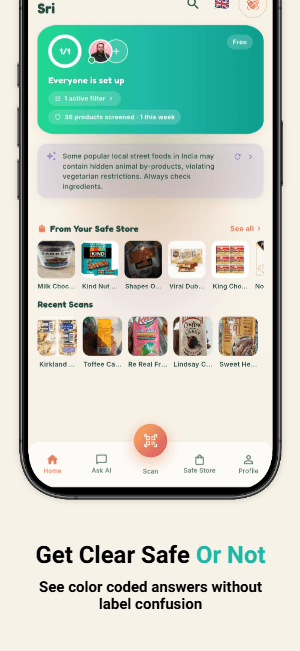
Instant Gluten-Free Audit Trail
7. Frequently Asked Questions (FAQ)
Does a gluten-free label guarantee a gluten free pie shell is safe for celiac disease?
It is a strong starting point but not a complete answer. In the US, a gluten-free claim means the product is under 20 ppm of gluten, which is the threshold most celiac guidance relies on. It does not reveal other ingredients you may react to, such as dairy, soy or certain gums, and it does not tell you about shared equipment unless the manufacturer says so. Food Scan Genius reads the full ingredient list through the NutriGraph Database and checks it against your own profile, so you see the whole picture.
What makes a store-bought gluten free pie shell flaky instead of crumbly?
Flakiness comes from solid fat staying in distinct layers while the dough bakes, supported by a binder that replaces gluten’s structure. Most shells use a blend of rice flour, tapioca or potato starch, and xanthan or guar gum, along with a shortening, butter or oil blend. Shells that stay tender but hold together usually balance those elements well. Food Scan Genius cannot judge taste for you, but it shows the fat sources and additives so you can match a shell to your texture and dietary preferences, for example avoiding palm oil or seed oils through a custom sensitivity.
Can I screen a gluten free pie shell for my whole family at once?
Yes. Multi-Household Family Profiles let you save each person’s dietary needs, such as one member who is celiac, another who avoids dairy, and a third who skips artificial dyes. When you scan a gluten free pie shell, the result names who it fails for, in the format "Fails for Sri (Gluten)". That saves you from re-reading the label for every person and helps when you are shopping for guests.
Is Food Scan Genius really free, and does it work if I shop abroad?
The core features are 100% free with no paywalls, unlike Fig’s $59 yearly subscription or Spoonful’s limited scans. You get the 39 dietary profiles, custom sensitivities, family profiles, ScanGenius AI Insight, NOVA classification and Nutri-Score without paying. The app supports 11 global languages with real-time in-app translation, so you can scan a gluten free pie shell in another country and still read the results in your own language. Always confirm gluten-free certification on the package itself, because regulations differ by region.
Know What’s In Your Food Before You Buy — Scan Free Today
Never second-guess confusing grocery labels again. Download Food Scan Genius to uncover hidden additives, toxic dyes, and allergens for the whole household before you buy.