1. Why Getting a Gluten-Free Sourdough Started Is Harder Than It Looks in 2026
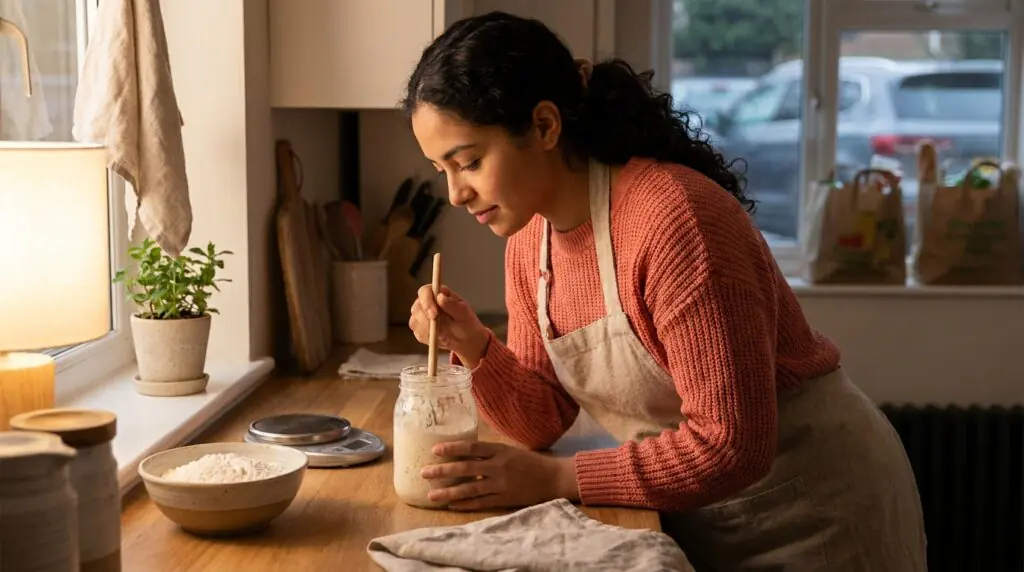
If you have ever stared at a jar of lifeless flour paste on day six and wondered what you did wrong, you are in good company. Traditional sourdough is forgiving because wheat gluten gives dough structure and traps gas. A gluten free sourdough started has none of that scaffolding. It relies on the natural yeast and lactic acid bacteria in the flour, which are the same organisms, in a less forgiving environment. Beginners often quit within the first week, and the cause is rarely their skill. It is usually temperature, water quality, or the flour itself.
For people with celiac disease or non-celiac gluten sensitivity, there is a second worry that bakers without dietary restrictions never face: is the flour really safe? A starter is a living culture you feed every day for months or years, so any hidden gluten you introduce stays in the culture and ends up in every loaf. Under U.S. rules, “gluten-free” generally means fewer than 20 parts per million of gluten, a benchmark discussed in the Celiac Disease Foundation Threshold Requirements resources. A flour that was milled on shared equipment can exceed that level without any gluten ingredient on its label.
There is also an emotional side. Many newly diagnosed adults and parents of children with celiac disease miss real bread more than they expected. A tangy, crackly-crusted loaf feels like getting a piece of normal life back. When the first attempt fails, or worse, when someone gets sick from a contaminated bag of flour, it can feel like one more thing the condition has taken away. That frustration is valid, and it is why a careful, repeatable process matters.
The shopping side adds to the strain. Brown rice flour, sorghum, buckwheat, millet, teff, and oat flour all behave differently, and each brand handles them differently. Some sell starter kits or dried cultures with ingredients you would not expect. Others add enzymes, gums, or “natural flavors.” Before you feed your first jar, it helps to know exactly what is going into it. Broader research, such as this PubMed Research on Ultra-Processed Foods & Gut Microbiome Disruption topic, is also a reminder that a simple homemade ferment made from two ingredients often sits at the opposite end of the processing spectrum from a packaged gluten-free loaf with a long additive list.
Scan Any Label for Hidden Additives and Allergens — Free
Never second-guess confusing grocery labels again. Download Food Scan Genius to uncover hidden additives, toxic dyes, and allergens for the whole household before you buy.


2. Hidden Gluten and Label Loopholes That Can Sabotage Your Starter
A gluten free sourdough started needs only two ingredients, flour and water, which makes the flour choice the single most important safety decision. These are the pitfalls we see most often when shoppers read labels for starter supplies:
- “Wheat-free” is not “gluten-free.” A wheat-free flour blend can still contain barley, rye, or related grains such as spelt and kamut. Always look for a clear gluten-free claim, not just the absence of the word wheat.
- Cross-contact during milling. Naturally gluten-free grains like oats, buckwheat, and millet are often grown in rotation with wheat and processed on shared equipment. Uncertified oat flour is the most common culprit. Choose products that are certified or tested to the 20 ppm standard.
- “May contain wheat” and missing precautionary statements. Allergen advisory labels are largely voluntary in many markets, so a bag without a warning is not a guarantee. Sorghum or rice flour from a mixed-grain facility may carry no warning at all.
- Dried or shared starter cultures. Some dehydrated starters, including ones sold as “heirloom,” are dried onto wheat flour or maintained in facilities that also handle wheat. Never accept a gifted starter unless you know exactly what it has been fed. Fermentation does not remove gluten from wheat, and a wheat-based culture cannot be “converted.”
- Malt and barley-derived ingredients. Barley malt, malt extract, and malt vinegar sometimes appear in “sourdough flavor” boosters, bread improvers, and some flour blends. They contain gluten and are easy to miss in a sub-ingredient list.
- Additive-heavy blends. Pre-mixed gluten-free flours can contain gums, emulsifiers, enzymes, and “natural flavors.” These are not necessarily unsafe, and the European Food Safety Authority (EFSA) Additive Safety Regulations explain how they are evaluated. But some people avoid them, and they offer nothing to a starter that single-grain flour does not.
Good habits at home matter as much as good shopping. Use a dedicated jar, spatula, and cloth for your gluten-free culture. Wash them separately from tools used with wheat. Keep the starter away from airborne wheat flour in shared kitchens. If you are starting from scratch, a typical beginner method is to mix about 30 g of whole-grain brown rice flour with 30 g of unchlorinated water, stir, cover loosely, and keep it at 70-78°F (21-26°C). Each day, discard about half and feed it equal weights of flour and water. Expect bubbles and a pleasantly sour, yeasty aroma somewhere between day 4 and day 10. Fuzzy mold or orange or pink streaks mean you should discard the batch and start over.
It also helps to see the bigger nutritional picture. The World Health Organization Guidelines on Healthy Diets & Saturated Fats emphasize whole and minimally processed foods. A simple starter built on whole-grain gluten-free flours fits that approach, as long as you also vary your grains over time, since relying on one flour exclusively can narrow your nutrient intake.
3. Head-to-Head: Checking Starter Ingredients With Food Scan Genius vs. Other Methods
| Dimension | Food Scan Genius | Fig | Spoonful | Manual Label Reading |
|---|---|---|---|---|
| Cost | 100% free core features, no paywalls | $59/year | Limited scans | Free, but time-consuming |
| Database depth | NutriGraph: 5,000,000+ verified UPC/EAN barcodes with recursive sub-ingredient parsing | Large database, premium features gated | Varies by scan allowance | Only what the label shows you |
| Dietary profiles | 39 profiles plus custom sensitivities (seed oils, dyes, additives) | Fixed profile list | Fixed profile list | Depends on your own memory |
| Family screening | Multi-household profiles, one scan, named results like “Fails for Sri (Gluten)” | Limited family features | Limited family features | Check once per person |
| Languages and context | 11 languages with real-time translation; AI Insight, NOVA 1-4, Nutri-Score | Fewer language options | Fewer language options | Requires reading foreign labels yourself |
Reading a flour label is easy. Reading it well is not. A bag of “gluten-free flour blend” may list a dozen components, and some of those, such as a flavoring or processing aid, have their own sub-ingredients. Food Scan Genius uses the NutriGraph Database and recursive sub-ingredient parsing to break those nested lists down automatically, so a hidden barley-derived component does not slip past you at the shelf. You scan the barcode, and your profile determines what passes or fails. If you shop for a household with different needs, the result names the person affected, such as “Fails for Sri (Gluten),” so nobody has to guess.
What sets the app apart is context rather than a single judgment. ScanGenius AI Insight explains why a product was flagged, adds a NOVA 1-4 processing classification and a Nutri-Score, and avoids simplistic good-or-bad scoring. A plain bag of certified gluten-free brown rice flour and a heavily formulated bread mix will look very different, and you can see precisely why. You can also add your own custom sensitivity if you avoid certain additives or seed oils, and read everything in one of 11 languages. One caveat: a barcode scan reads the product data on record, so it cannot replace certified testing, and anyone with celiac disease should continue to favor products with credible gluten-free certification and contact manufacturers about milling practices when in doubt.
4. Related Food Safety & Dietary Guides
- Best Food Allergy Scanner App – Scan Food Labels Instantly — Food Allergy & Sensitivity Scanner Hub
- The 7 Best Free Food Scanner Apps of 2026 — best free food scanner apps
- Choosing the Best Barcode Scan App for Your Health — guide to choosing a barcode scanner app
- Food Scan Genius: World’s #1 Food Ingredient Scanner App — Food Scan Genius scanner app
5. Scientific & Health Authority References
- Celiac Disease Foundation Threshold Requirements
- European Food Safety Authority (EFSA) Additive Safety Regulations
- PubMed Research on Ultra-Processed Foods & Gut Microbiome Disruption
- World Health Organization Guidelines on Healthy Diets & Saturated Fats
6. How to Scan in 3 Simple Steps
- Download Food Scan Genius free on iOS or Android. There is no paywall for core scanning, so you can audit every flour, grain, and baking ingredient you buy for your starter without worrying about a scan limit.
- Set up your profile for gluten-free baking. Choose the Gluten-Free or Celiac profile from the 39 supported dietary profiles, add family members if you shop for a household, and use “Add Your Own Custom Sensitivity” for anything else you avoid, such as specific additives or seed oils. Pick your preferred language from the 11 available.
- Scan the barcode on each bag of flour in about 2 seconds. Review the instant audit trail, which covers sub-ingredients, named pass or fail results, ScanGenius AI Insight, NOVA class, and Nutri-Score. Buy only the flours that pass, then start feeding your jar with confidence.
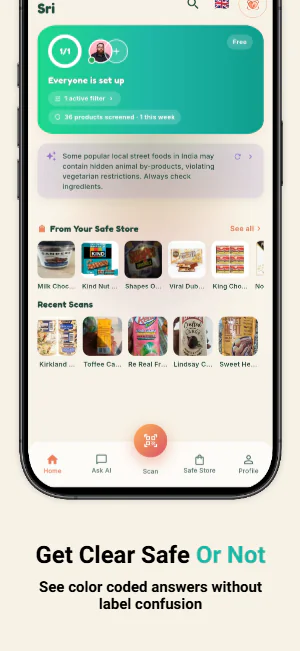
Instant Gluten-Free Audit Trail
7. Frequently Asked Questions (FAQ)
What is the best flour for a gluten free sourdough started?
Whole-grain brown rice flour is the most common beginner choice because it ferments reliably and is widely available. Sorghum, buckwheat, millet, and teff also work well, and many bakers combine them once the culture is active. Whatever you choose, it should be labeled gluten-free, and certified products are the safest option for celiac disease. Scan each bag with Food Scan Genius to check sub-ingredients and confirm that it passes your gluten profile before you begin.
How long does it take to get a gluten free sourdough started active?
Most gluten-free starters show bubbles and a pleasant sour aroma within 4 to 10 days when kept at roughly 70-78°F and fed once a day with equal weights of flour and water. Gluten-free cultures can be slower or more erratic than wheat ones, and cooler kitchens add days. Look for consistent rising and falling after each feeding before you bake. If you see fuzzy mold or pink or orange streaks, discard it and begin again with fresh, verified ingredients.
Does sourdough fermentation make wheat bread safe for celiac disease?
No. Long fermentation may reduce some gluten, but it does not reliably bring wheat or rye bread under the 20 ppm threshold, and it is not considered safe for people with celiac disease. A gluten free sourdough started must be built entirely on gluten-free flours from the beginning. Food Scan Genius helps by flagging wheat, barley, rye, and malt-derived sub-ingredients in products so you can keep your culture and your kitchen free of them.
How do I maintain my starter and keep it gluten-free long term?
Feed it at a steady ratio, commonly 1:1:1 by weight of starter, flour, and water, and keep it on the counter daily or in the fridge with a weekly feeding if you bake occasionally. Use dedicated jars and utensils, and never mix in wheat-based starter or tools. Re-scan flour whenever you switch brands, because formulations and facilities can change. Food Scan Genius lets you screen the whole household in one scan, with named results like “Fails for Sri (Gluten),” so every family member is covered.
Know What’s In Your Food Before You Buy — Scan Free Today
Never second-guess confusing grocery labels again. Download Food Scan Genius to uncover hidden additives, toxic dyes, and allergens for the whole household before you buy.