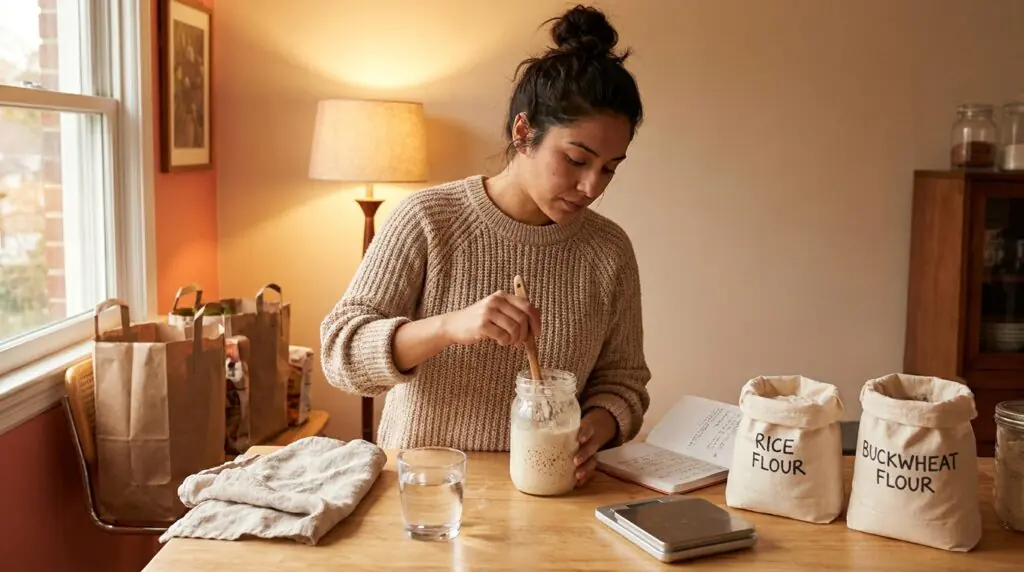
1. Why Getting a Gluten Free Sourdough Started Is Harder Than It Looks in 2026
If you have celiac disease or non-celiac gluten sensitivity, you probably remember the first time you smelled real sourdough again, even if only in a memory. The tang, the crackly crust and the open crumb are exactly what gluten-free bread usually lacks. So it makes sense that so many people search for how to get a gluten free sourdough started. The good news is that it works. A starter is just flour, water, wild yeast and lactic acid bacteria, and none of them need wheat. The frustration is that the process is full of small places where gluten can slip in unnoticed.
The first problem is that the flours at the center of your starter are not always safe. Brown rice, sorghum, buckwheat, teff and millet are naturally gluten-free. But they are often milled in facilities that also process wheat, barley and rye. The Celiac Disease Foundation Threshold Requirements and the FDA standard both set gluten-free at under 20 parts per million. A flour that is merely ‘naturally gluten-free’ with no certification may not meet that standard. A starter is fed every day for weeks, so any contamination in the flour compounds with each feeding.
The second problem is a persistent myth. Long fermentation of wheat sourdough does reduce some gluten, but it does not make bread safe for celiac disease. ‘Gluten-removed’ and ‘low-gluten’ claims are not a substitute for a truly gluten-free starter. If you have been told otherwise by a well-meaning baker, your caution is justified, not excessive.
The third problem is that the habit takes patience and vigilance in a kitchen you may share with gluten-eating family members. Shared jars, wooden spoons, flour-dusted counters and crumb-filled toasters all matter. Food research also keeps showing that what we eat shapes our gut. A growing body of PubMed Research on Ultra-Processed Foods & Gut Microbiome Disruption explains why many people with gluten-related conditions turn to home fermentation: they want fewer additives and more control over what reaches their gut. That instinct is sound, and it deserves tools that make it easier to follow through.
Scan Any Label for Hidden Additives and Allergens — Free
Never second-guess confusing grocery labels again. Download Food Scan Genius to uncover hidden additives, toxic dyes, and allergens for the whole household before you buy.


2. Sneaky Gluten Sources That Can Derail Your Starter
A starter looks like the simplest recipe in the world, but the ingredients around it are where the risk sits. Before you mix your first jar, check these six pitfalls. Each one can turn a promising starter into a hidden exposure.
- Uncertified flours with cross-contact risk: Rice, sorghum, buckwheat and teff are gluten-free by nature but are often processed on shared equipment. Look for a third-party gluten-free certification, not just a front-of-pack claim.
- Oat flour that is not purity-protected: Oats are frequently contaminated with wheat or barley during growing and milling. Use only oats labeled gluten-free, and note that a small share of people with celiac disease also react to avenin, the protein in oats.
- Pre-mixed ‘gluten-free’ blends with questionable add-ins: Some blends contain wheat starch (allowed in certain jurisdictions if processed to very low gluten levels), malt extract, or barley-derived flavorings. Read the full ingredient list, not just the headline claim.
- Commercial starter packets and cultures: Dehydrated starters and ‘discard’ mixes may be made on wheat-based media or in wheat facilities. Confirm they are explicitly gluten-free before use.
- Enzyme and dough-improver additives: Some additives and processing aids are derived from cereal sources, and the label may not make that obvious. Regulators such as the European Food Safety Authority (EFSA) Additive Safety Regulations assess the safety of additives, but safety review is not the same as a guarantee of being gluten-free.
- Kitchen cross-contact: Shared sieves, scales, jars, towels and wooden utensils can transfer gluten. Dedicate a jar, lid, spatula and cloth to your starter.
Once your starter is active, the same vigilance applies to what you bake with it. Many gluten-free bread mixes, seed toppings and flavored butters add emulsifiers, gums and other additives. Dietary guidance such as the World Health Organization Guidelines on Healthy Diets & Saturated Fats is a good reminder to weigh the whole product, not only the gluten question. Gluten-free does not automatically mean nutritious, and a clean ingredient list is easier to build when you ferment at home.
3. Food Scan Genius vs. Other Ways to Vet Your Starter Ingredients
| Feature | Food Scan Genius | Fig | Spoonful | Manual Label Reading |
|---|---|---|---|---|
| Cost | 100% free core features, no paywalls | Paid plan (about $59/yr) | Limited scans | Free, but time-consuming |
| Database depth | NutriGraph: 5,000,000+ verified UPC/EAN barcodes with recursive sub-ingredient parsing | Varies by product | Varies by product | Only what the label shows |
| Dietary profiles | 39 profiles plus custom sensitivities | Fixed profile list | Fixed profile list | Depends on your memory |
| Family screening | Whole household in one scan, with named results like ‘Fails for Sri (Gluten)’ | Individual focus | Individual focus | Manual, one person at a time |
| Languages and context | 11 languages with real-time translation; AI Insight, NOVA 1-4 and Nutri-Score | Limited | Limited | None; you translate yourself |
Most ingredient lists are written for regulators, not for people managing a medical diet. A flour blend might list ‘natural flavor’ or a multi-part ingredient that hides its own sub-ingredients. Food Scan Genius is powered by the NutriGraph Database, which uses recursive AST parsing to break nested ingredients into their components. That means a barcode scan can surface a questionable sub-ingredient in a flour blend, a seed topping or a bread mix, not just the top line of the label. You can also add your own custom sensitivity, such as a specific additive, dye or seed oil, so the app reflects your real life and not only a standard checklist.
The ScanGenius AI Insight adds nuance instead of a single pass/fail number. It explains why a product was flagged, adds NOVA 1-4 processing context and a Nutri-Score, and avoids moralizing about food. A certified gluten-free flour might be perfect for your starter, while a heavily processed gluten-free bread mix may be fine occasionally but is worth knowing about. With Multi-Household Family Profiles, one scan shows who can safely eat what, for example ‘Fails for Sri (Gluten)’ next to a pass for everyone else. With 11 supported languages and real-time in-app translation, the same clarity extends to imported flours and international grocery aisles.
4. Related Food Safety & Dietary Guides
- Best Food Allergy Scanner App – Scan Food Labels Instantly — Food Allergy & Sensitivity Scanner Hub
- The 7 Best Free Food Scanner Apps of 2026 — best free food scanner apps
- Choosing the Best Barcode Scan App for Your Health — guide to choosing a barcode scanner app
- Food Scan Genius: World’s #1 Food Ingredient Scanner App — Food Scan Genius scanner app
5. Scientific & Health Authority References
- Celiac Disease Foundation Threshold Requirements
- European Food Safety Authority (EFSA) Additive Safety Regulations
- PubMed Research on Ultra-Processed Foods & Gut Microbiome Disruption
- World Health Organization Guidelines on Healthy Diets & Saturated Fats
6. How to Scan in 3 Simple Steps
- Download Food Scan Genius free on iOS or Android. There is no paywall on the core features, so you can vet every flour, oat product and mix before it goes in your jar.
- Set up your profile: choose Gluten-Free or Celiac from the 39 dietary profiles, add custom sensitivities such as specific additives or seed oils, and create Multi-Household Family Profiles so every family member is screened in one scan.
- Scan the barcode of each flour or ingredient in about 2 seconds. Review the instant audit trail, the named fail attribution, the ScanGenius AI Insight, the NOVA 1-4 class and the Nutri-Score before you begin feeding your starter.
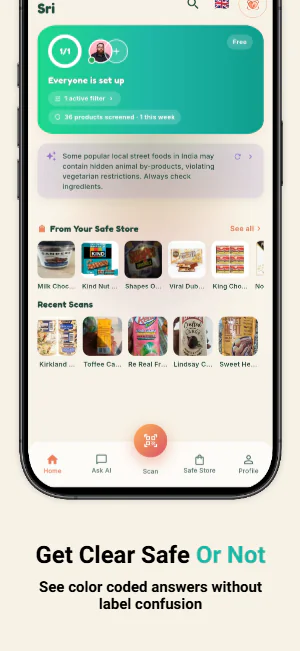
Instant Gluten-Free Audit Trail
7. Frequently Asked Questions (FAQ)
What flours work best for a gluten free sourdough started from scratch?
Whole-grain brown rice flour is the most reliable beginner choice because it ferments vigorously and is mild in flavor. Sorghum, buckwheat, teff and millet also work well, alone or blended. Whichever you choose, buy flours that are certified gluten-free. Scan each bag with Food Scan Genius to check the sub-ingredients and flag possible cross-contact before you start your gluten free sourdough started.
How do I feed and maintain a gluten-free starter day to day?
Mix equal weights of flour and chlorine-free water (for example 50 g each) with a small amount of existing starter, and keep it warm, ideally around 75-80°F (24-27°C). Feed it once or twice daily until it is bubbly and reliably doubles, usually in 5 to 10 days. After that, store it in the fridge and feed it weekly. Use a dedicated jar and utensils, and scan any new flour with Food Scan Genius before adding it.
Is long-fermented wheat sourdough safe for celiac disease?
No. Fermentation can lower gluten levels, but it does not reliably reduce them below the 20 ppm gluten-free threshold, and ‘gluten-removed’ claims are not considered safe for celiac disease. A gluten free sourdough started made only from certified gluten-free flours is the safer path. Food Scan Genius can flag wheat, barley and rye-derived ingredients in other products you buy, so you can maintain the same standard everywhere.
Can Food Scan Genius help if my family eats different diets?
Yes. Multi-Household Family Profiles let you save each person’s dietary needs and screen the whole household in one scan. The result names who is affected, for example ‘Fails for Sri (Gluten)’. This helps in a mixed kitchen where one person bakes with a gluten free sourdough started while others eat gluten, because you can quickly identify which products are safe for the shared pantry.
Know What’s In Your Food Before You Buy — Scan Free Today
Never second-guess confusing grocery labels again. Download Food Scan Genius to uncover hidden additives, toxic dyes, and allergens for the whole household before you buy.