1. Why a Gluten-Free Sourdough Starter Is Harder Than It Looks in 2026
If you have celiac disease or non-celiac gluten sensitivity, you probably know the grief of walking past a bakery. Sourdough is one of the oldest breads in the world, and its tang, chew, and slow-fermented aroma feel out of reach. So when you decide to build a gluten-free sourdough starter at home, you are doing more than baking. You are taking back something that diagnosis took away. That deserves respect, and it deserves a process you can trust.
The frustration is real. Many online recipes assume you can swap in any flour and wait a week. In practice, a gluten-free starter ferments differently. Rice, sorghum, millet, buckwheat, and teff flours have no gluten network to trap gas, so activity can look weaker, and a starter can stall or turn sour fast. The bigger worry is safety. A starter is a living jar you feed for months, so one contaminated bag of flour, one shared spoon, or one dusty counter can quietly undermine every loaf you bake afterward.
Clinically, the stakes are well documented. For people with celiac disease, repeated low-level exposure can keep the small intestine inflamed even when symptoms are mild or absent. The Celiac Disease Foundation Threshold Requirements explain why labeling standards, generally under 20 parts per million of gluten, matter and why certified gluten-free ingredients are the safest base for fermentation. Sourdough fermentation does not make wheat safe. Long fermentation of wheat or rye flour lowers gluten somewhat but does not reliably bring it under that threshold. Every ingredient that enters your starter must be gluten-free from the start.
There is also the question of what else goes into the jar. Pre-mixed gluten-free flour blends, dried starter packets, and “fermentation boosters” often contain gums, starches, flavorings, or processing aids. If you are trying to eat less ultra-processed food, it helps to read about the PubMed Research on Ultra-Processed Foods & Gut Microbiome Disruption. Simple whole-grain flour and water is not just easier to ferment. It also keeps your starter close to the minimally processed food you probably want your gut to see.
Scan Any Label for Hidden Additives and Allergens — Free
Never second-guess confusing grocery labels again. Download Food Scan Genius to uncover hidden additives, toxic dyes, and allergens for the whole household before you buy.


2. The Science of the Starter and the Sneaky Places Gluten Hides
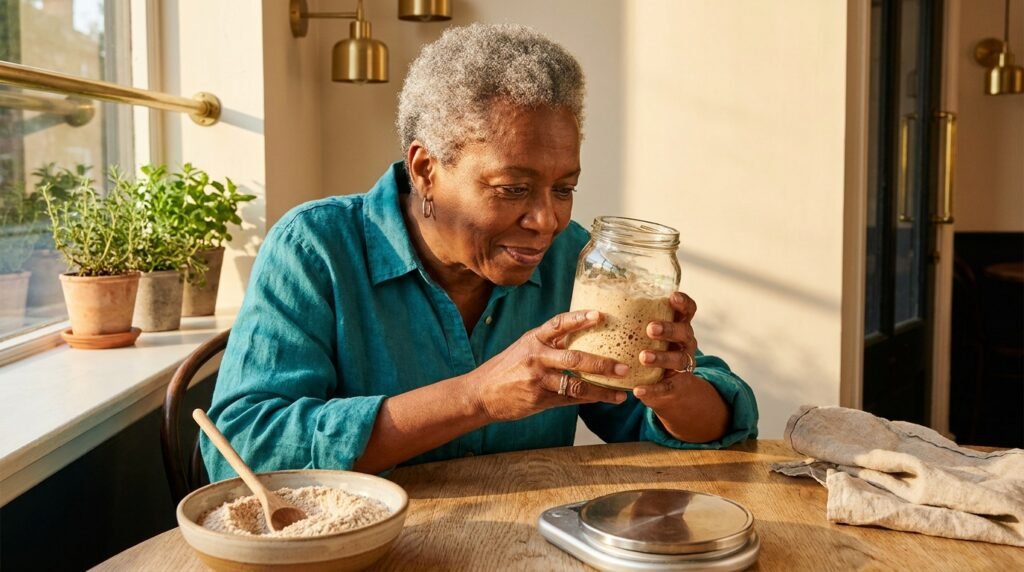
A sourdough starter is a community of wild yeast and lactic acid bacteria living in flour and water. The yeast produces carbon dioxide, which makes the starter bubble and rise. The bacteria produce lactic and acetic acids, which give the tang and help protect the culture from unwanted microbes. A gluten-free starter works the same way. It just needs whole-grain flours rich in the natural microbes and nutrients that feed them, and brown rice flour is the most reliable base.
A reliable 7-day method:
- Day 1: In a clean glass jar, stir 50 g certified gluten-free whole-grain brown rice flour with 50 g non-chlorinated water. Cover loosely and keep it at about 75–80°F (24–27°C).
- Days 2–3: Discard about half, then feed with 50 g flour and 50 g water once a day. Expect a few bubbles and a mild, slightly sour smell.
- Days 4–5: Keep discarding and feeding. If activity is slow, move to two feedings a day or stir in a spoonful of certified gluten-free buckwheat or sorghum flour for extra nutrients.
- Days 6–7: Look for a starter that doubles within 4–8 hours of feeding, has a domed top, and smells pleasantly tangy rather than harsh.
Discard the whole jar if you see fuzzy mold or pink or orange streaks. A thin layer of gray liquid on top, often called hooch, is harmless and means the starter is hungry. Dedicate your own jar, spoon, scale, and cloth cover so nothing touches wheat residue. The ingredient list is where hidden gluten usually enters, so watch for these:
- Uncertified oat flour: Oats are often grown and milled alongside wheat, barley, and rye. Only use oats labeled certified gluten-free.
- Shared-facility flours: Rice or millet flour without a gluten-free certification can pick up wheat dust during milling or packing. Bulk bins are the highest-risk source.
- Barley malt and malt extract: These show up in some flour blends, “starter boosters,” and flavored mixes, and barley is a gluten grain.
- Wheat starch labeled “gluten-free”: In some regions, specially processed wheat starch can legally carry a gluten-free claim. Many people with celiac disease avoid it, and it should not be in a starter.
- Vague “natural flavors” and processing aids: Dried starter packets and blends can include flavorings, anti-caking agents, or carriers whose sources are unclear. The European Food Safety Authority (EFSA) Additive Safety Regulations show how tightly additives are evaluated, but allergen sources can still be buried in sub-ingredients.
- “Gluten-removed” or “reduced” claims: These are not the same as gluten-free. Gluten tests on fermented or hydrolyzed products can be unreliable, so avoid them as starter ingredients.
For general guidance on building a balanced plate around your bread, the World Health Organization Guidelines on Healthy Diets & Saturated Fats are a useful reference, especially if you plan to enrich loaves with butter, cheese, or seed spreads.
3. Food Scan Genius vs. Other Ways to Vet Your Starter Ingredients
| Dimension | Food Scan Genius | Fig | Spoonful | Manual Label Reading |
|---|---|---|---|---|
| Cost | 100% free core features, no paywalls | $59/year | Limited free scans | Free, but slow |
| Database and ingredient depth | NutriGraph: 5,000,000+ verified UPC/EAN barcodes with recursive sub-ingredient parsing | Curated product database | Curated product database | Only what the printed label shows |
| Dietary profiles | 39 profiles plus custom sensitivities | Fewer preset profiles | Fewer preset profiles | Depends on your memory |
| Family screening | Multi-household profiles, one scan, named results such as “Fails for Sri (Gluten)” | Primarily individual | Primarily individual | Check each person separately |
| Languages | 11 languages with real-time in-app translation | Limited | Limited | Needs a separate translator |
Most flour labels look simple until you reach the fine print. A “gluten-free baking blend” may contain a flavoring that contains a malt derivative, which in turn lists its own carrier. Food Scan Genius is built on the NutriGraph Database, which parses these nested sub-ingredients recursively instead of stopping at the first line of text. When you scan a bag of brown rice flour, sorghum flour, or a dried starter packet, the app audits the whole ingredient tree against your profile in about two seconds. If you are shopping for a household, one scan can show who in the family is affected, with named results like “Fails for Sri (Gluten).” You can also add a custom sensitivity for seed oils, certain dyes, or specific additives. It is free and available in 11 languages.
The ScanGenius AI Insight adds context rather than a pass-or-fail score. It explains why an ingredient was flagged, whether it points to a true gluten source or only to a cross-contact possibility, and where the product falls on the NOVA 1–4 processing scale and Nutri-Score. A plain certified gluten-free brown rice flour typically lands in a minimally processed group, while a flavored starter kit with additives sits higher. We do not moralize or tell you a food is “good” or “bad.” We give you the evidence and let you decide, which matters when you are building a daily-fed culture you will keep for years. Food Scan Genius supports your label-reading, but it does not replace a clinician’s advice or certified testing.
4. Related Food Safety & Dietary Guides
- Best Food Allergy Scanner App – Scan Food Labels Instantly — Food Allergy & Sensitivity Scanner Hub
- The 7 Best Free Food Scanner Apps of 2026 — best free food scanner apps
- Choosing the Best Barcode Scan App for Your Health — guide to choosing a barcode scanner app
- Food Scan Genius: World’s #1 Food Ingredient Scanner App — Food Scan Genius scanner app
5. Scientific & Health Authority References
- Celiac Disease Foundation Threshold Requirements
- European Food Safety Authority (EFSA) Additive Safety Regulations
- PubMed Research on Ultra-Processed Foods & Gut Microbiome Disruption
- World Health Organization Guidelines on Healthy Diets & Saturated Fats
6. How to Scan in 3 Simple Steps
- Download Food Scan Genius free on iOS or Android. There are no paywalls on the core scanning features, and you can switch the app into any of 11 supported languages.
- Set up your profile for gluten-free baking: choose the Celiac or Gluten-Free profile from the 39 dietary options, add family members if you bake for a household, and add a custom sensitivity for any additive or oil you also want to avoid.
- Scan the barcode of each flour, such as brown rice, sorghum, or buckwheat, in about two seconds. Review the instant audit trail and the ScanGenius AI Insight before the flour goes into your starter jar.
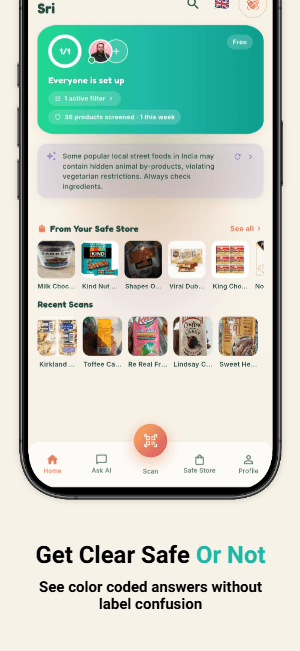
Instant Gluten-Free Audit Trail
7. Frequently Asked Questions (FAQ)
What is the best flour for a gluten-free sourdough starter?
Whole-grain brown rice flour is the most reliable base because it is rich in the microbes and nutrients that wild yeast and bacteria feed on. Sorghum, buckwheat, millet, and teff also work well, alone or mixed in. Whichever you choose, buy flour labeled certified gluten-free. Food Scan Genius can scan the package barcode and check the full ingredient tree against your gluten-free profile before you buy or use it.
How long does it take to make a gluten-free sourdough starter?
Most starters become active in 5 to 10 days at around 75–80°F (24–27°C), though cooler kitchens may take longer. Look for a starter that doubles in 4 to 8 hours after feeding, has a domed top, and smells pleasantly tangy. If it stays flat after two weeks, try a warmer spot, a fresh bag of whole-grain flour, or twice-daily feedings. Scanning your flour with Food Scan Genius also helps rule out a product that has been altered by additives or preservatives.
Can I use my regular wheat sourdough starter and convert it to gluten-free?
No. A wheat starter contains gluten, and repeated feedings with gluten-free flour will not reliably remove it. Residual gluten can persist in the culture and the jar. For celiac disease, start a new culture in a clean, dedicated jar with certified gluten-free ingredients and tools. Food Scan Genius can help you verify every flour you add to the new starter.
How can I tell whether my starter or flour is safe if I have celiac disease?
Start with certified gluten-free flours that meet the under-20 ppm standard, and avoid bulk bins and shared utensils. Then check the full ingredient list for barley malt, uncertified oats, wheat starch, and vague flavorings. Food Scan Genius uses NutriGraph’s recursive parsing to flag these sub-ingredients and shows named alerts for each family member on your profile. It is a screening aid and not a substitute for medical advice, so talk with your care team about your own tolerance and testing.
Know What’s In Your Food Before You Buy — Scan Free Today
Never second-guess confusing grocery labels again. Download Food Scan Genius to uncover hidden additives, toxic dyes, and allergens for the whole household before you buy.