1. Why a Simple Question About Butter Isn’t Always Simple
Yes, pure butter is gluten-free: Butter = Cream + (optional) Salt = zero gluten-containing ingredients. The risk is not in butter itself. It comes from flavored butters, blended spreads, butter-flavored products, and cross-contact from shared knives, tubs, and kitchen surfaces.
If you live with celiac disease or non-celiac gluten sensitivity, you already know that a food can be safe in theory and still make you sick in practice. Butter shows how that happens. Churned cream is one of the simplest foods on the shelf, and most unflavored sticks list only cream, sometimes with salt or a natural coloring such as annatto. Nothing in that process involves wheat, barley, or rye. Yet many people with celiac disease still get glutened by something labeled or served as ‘butter.’ It is exhausting, and it is fair to feel frustrated.
Clinically, the stakes are real. For people with celiac disease, repeated low-level gluten exposure can keep the small intestine inflamed even when there are no obvious symptoms. The Celiac Disease Foundation Threshold Requirements and gluten-free labeling rules center on a limit of fewer than 20 parts per million of gluten. A few breadcrumbs left on a butter knife can exceed that. This is why the question is not only ‘what is butter made of?’ but also ‘what happened to this butter before it reached my plate?’
Modern shopping adds another layer. The dairy case now holds whipped butters, cultured butters, garlic-herb compounds, honey butters, plant-based butter alternatives, and butter blends with oils and additives. Each added ingredient is another place for gluten to show up, often under vague terms like ‘natural flavors’ or ‘seasoning.’ Knowing that plain butter is safe is a good start. It does not replace checking the product in your hand.
Scan Any Label for Hidden Additives and Allergens — Free
Never second-guess confusing grocery labels again. Download Food Scan Genius to uncover hidden additives, toxic dyes, and allergens for the whole household before you buy.


2. Where Gluten Can Hide in ‘Butter’: Labeling Gaps and Sneaky Sources
In the United States, standard butter must be made from milk or cream and contain at least 80% milk fat. Salt and coloring are the usual optional additions. That is why plain sticks and blocks are considered safe on a gluten-free diet. Once a product moves away from that definition, such as spreads, blends, and flavored or restaurant ‘butter,’ you need to read the label. Here are the most common problem areas:
- Flavored and compound butters: Garlic-herb, steakhouse, cinnamon-sugar, and seasoned butters may contain spice blends, bread-based fillers, or flavorings that use wheat-derived ingredients. Always check the full ingredient list, not the front of the package.
- Butter spreads and blends: These products combine butter with vegetable oils, water, emulsifiers, and stabilizers. Most are gluten-free, but the longer ingredient list means more places to check, including thickeners, starches, and flavorings.
- ‘Butter-flavored’ products: Sprays, popcorn toppings, baking sticks, and flavor powders often contain no real butter. They may use maltodextrin, malt-derived flavors, or other ingredients that need a closer look. In the U.S., wheat must be declared as an allergen, but barley malt and rye are not covered the same way, so look for a clear gluten-free claim.
- Cross-contact in shared tubs: At home, a knife that touches toast and then goes back into the butter dish can deposit crumbs. In a shared household, a dedicated gluten-free butter container is a simple and effective safeguard.
- Restaurant ‘butter’ and basting sauces: Butter melted on a shared flat-top, ‘butter sauces’ thickened with flour, and buttered bread baskets can all contaminate a dish. Ask whether the butter is plain, whether it comes from a sealed portion, and whether it is kept apart from bread.
- Additive and ultra-processed creep: Some spreads and ‘light’ butter products rely on emulsifiers, gums, and flavor systems. The European Food Safety Authority (EFSA) Additive Safety Regulations explain how additives are evaluated for safety, and the PubMed Research on Ultra-Processed Foods & Gut Microbiome Disruption is useful reading if you want to understand how heavily processed products differ from simple dairy.
Two clarifications are worth making. First, dairy and gluten are separate issues. Butter contains only trace amounts of milk proteins and lactose, so it is often tolerated by people with lactose intolerance, but that is a different question from gluten. Some people with celiac disease also have temporary lactose intolerance because of intestinal damage. Second, ‘gluten-free’ on a label is helpful but not the whole picture. Butter is also high in saturated fat, and the World Health Organization Guidelines on Healthy Diets & Saturated Fats recommend keeping saturated fat to under 10% of total energy intake. Being gluten-free does not make a food nutritionally neutral, and it does not need to be treated as a food to avoid either. It is simply one factor among several.
3. Checking Butter Faster and More Accurately: Food Scan Genius vs. Other Methods
| Dimension | Food Scan Genius | Fig | Spoonful | Manual Label Reading |
|---|---|---|---|---|
| Cost | 100% free core features, no paywalls | About $59/year for full access | Limited free scans | Free, but time-consuming |
| Ingredient depth | NutriGraph: 5M+ verified barcodes with recursive sub-ingredient parsing | Barcode-based ingredient analysis | Barcode-based ingredient analysis | Depends on your own knowledge of terms like ‘malt’ |
| Dietary profiles | 39 profiles plus custom sensitivities | Preset restriction list | Preset restriction list | Mental checklist |
| Family screening | Multi-household profiles with named results, e.g. ‘Fails for Sri (Gluten)’ | Primarily individual profiles | Primarily individual profiles | Repeated checks for each person |
| Languages | 11 languages with real-time in-app translation | Limited | Limited | Requires translating foreign labels yourself |
For plain butter, a barcode scan should confirm what you already expect: cream, salt, and nothing else. The real value appears with the products that look like butter but are not. Food Scan Genius draws on the NutriGraph Database, which holds more than 5 million verified UPC/EAN barcodes. It parses ingredients recursively, so a compound item like ‘seasoning blend’ or ‘natural flavor’ is broken down into its own components and not accepted at face value. That matters for garlic-herb butters, spreads, and butter-flavored products, where a single vague term can hide the ingredient you are trying to avoid.
Results come with context. ScanGenius AI Insight explains why a product passed or failed, for example whether a butter blend is flagged for a malt-derived flavor or simply has a longer additive list. It also shows a NOVA 1-4 processing classification and a Nutri-Score, so you can see that plain butter is a minimally processed food while a flavored spread is more processed, without a scolding ‘good or bad’ grade. You can add a custom sensitivity such as seed oils or a specific additive. If you shop for a household, family profiles screen everyone in one scan and name who is affected, so a result reads like ‘Fails for Sri (Gluten)’ and not a generic warning. The app is available in 11 languages, which helps when you are reading imported European butters or traveling.
4. Related Food Safety & Dietary Guides
- Best Food Allergy Scanner App – Scan Food Labels Instantly — Food Allergy & Sensitivity Scanner Hub
- The 7 Best Free Food Scanner Apps of 2026 — best free food scanner apps
- Choosing the Best Barcode Scan App for Your Health — guide to choosing a barcode scanner app
- Food Scan Genius: World’s #1 Food Ingredient Scanner App — Food Scan Genius scanner app
5. Scientific & Health Authority References
- Celiac Disease Foundation Threshold Requirements
- European Food Safety Authority (EFSA) Additive Safety Regulations
- PubMed Research on Ultra-Processed Foods & Gut Microbiome Disruption
- World Health Organization Guidelines on Healthy Diets & Saturated Fats
6. How to Scan in 3 Simple Steps
- Download Food Scan Genius free on iOS or Android. The core features have no paywall and no scan cap.
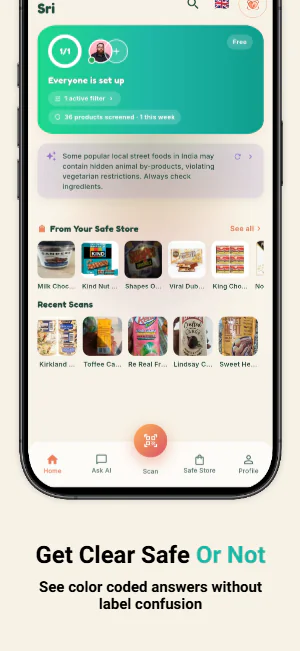
- Set up your profile: choose the Gluten-Free or Celiac profile from the 39 dietary profiles, and add any custom sensitivities (for example a specific additive or seed oils). If you shop for others, add family members so each person is screened separately.
- Scan the butter’s barcode. In about two seconds you get a pass or fail with a full ingredient audit trail, a named fail attribution for each household member, and ScanGenius AI Insight explaining any flagged ingredient.
Instant Gluten-Free Audit Trail
7. Frequently Asked Questions (FAQ)
Is butter gluten free if I have celiac disease?
Yes, plain butter made from cream, with or without salt, is gluten-free, so it is generally safe for people with celiac disease. The caution applies to flavored butters, spreads, butter-flavored products, and cross-contact from shared knives or containers. Scanning the barcode in Food Scan Genius lets you confirm the exact ingredient list of the product you are holding.
Can butter be contaminated with gluten at home?
Yes. The most common cause is cross-contact: a knife that touches bread and then goes back into the butter leaves crumbs behind. If gluten-containing and gluten-free eaters share a household, use a separate butter dish or squeeze container labeled for gluten-free use. Food Scan Genius’s family profiles can help you identify which products in the home are safe for each person, but kitchen habits still need to be managed manually.
Is ghee or clarified butter also gluten-free?
Ghee and clarified butter are made by removing water and milk solids from butter, and plain versions contain no gluten ingredients. As with regular butter, check flavored or infused varieties for added seasonings. Scanning the jar with Food Scan Genius shows the full ingredient breakdown and a NOVA classification so you can see how processed the product is.
Is butter-flavored spray or margarine gluten-free like butter?
Not automatically. These products are not butter. They are built from oils, water, emulsifiers, flavorings, and sometimes starch or malt-derived ingredients, so each one needs to be checked individually. The question ‘is butter gluten free’ has a clear yes for plain butter, but not for substitutes. Food Scan Genius’s recursive ingredient parsing breaks down vague terms like ‘natural flavor’ and flags any gluten-containing source.
Know What’s In Your Food Before You Buy — Scan Free Today
Never second-guess confusing grocery labels again. Download Food Scan Genius to uncover hidden additives, toxic dyes, and allergens for the whole household before you buy.