
1. Why Corn Starch Still Causes Celiac Confusion in 2026
Yes: pure corn starch is gluten free (corn starch = 100% corn = no wheat, barley, or rye proteins), though cross-contact in processing or blended products can add gluten. That is the short answer, and it is the one you can safely quote. The longer answer matters for anyone with celiac disease, because the real risk is rarely the corn. It is what happens to the corn starch before it reaches your kitchen.
Corn contains a protein called zein, which is chemically distinct from the gluten found in wheat (gliadin and glutenin), barley (hordein), and rye (secalin). Corn starch is also the refined starch portion of the kernel, with most protein washed away. So the ingredient is naturally gluten free. Yet many people with celiac disease feel uneasy about it, and that is understandable. You have probably been burned by a product that looked safe and was not. When one mistake can mean days of pain, fatigue, and brain fog, and quietly damage your intestinal lining even when symptoms are mild, caution is a sensible response.
The clinical standard is clear. In the United States, a food labeled gluten free must contain less than 20 parts per million (ppm) of gluten, and the Celiac Disease Foundation Threshold Requirements explain what that number means and why strict, lifelong avoidance remains the only treatment. Because the threshold is so small, a bit of wheat flour dust on shared equipment can matter more than the ingredient list suggests.
The other challenge is that corn starch rarely arrives alone. It sits inside baking powders, powdered sugar, seasoning blends, gravies, processed meats, and gluten-free flour mixes. Many of those products are also ultra-processed, a category linked in emerging science to changes in gut health, as summarized in PubMed Research on Ultra-Processed Foods & Gut Microbiome Disruption. For a celiac gut that is already healing, it helps to understand not just whether an ingredient is safe, but what it is bundled with.
Scan Any Label for Hidden Additives and Allergens — Free
Never second-guess confusing grocery labels again. Download Food Scan Genius to uncover hidden additives, toxic dyes, and allergens for the whole household before you buy.


2. Where Gluten Hides Around Corn Starch
Corn starch itself is not the problem. The risks come from labeling gaps, shared facilities, and look-alike ingredients. Food additive rules differ by region too, and the European Food Safety Authority (EFSA) Additive Safety Regulations are a useful reference for how starches and their derivatives are evaluated. Safety review of an additive is not the same as a gluten-free guarantee, however. Here are the six situations that most often trip people up:
- Cross-contact in shared facilities: Corn starch may be milled, packed, or bagged on lines that also handle wheat flour. Unless the package carries a gluten-free certification or testing statement, you cannot confirm it from the ingredient alone.
- Modified food starch: This term covers starches chemically or physically altered for texture, and the source is not always obvious. In the US, if wheat is the source it must be declared under allergen labeling rules, but you still need to read the full label rather than assume it is corn.
- Wheat starch in imported products: Some countries permit wheat starch that has been processed to very low gluten levels in products labeled gluten free. The ingredient list may show starch without clearly saying which grain it came from, so regional labeling rules matter.
- The cornflour naming trap: In the UK and parts of the Commonwealth, cornflour means corn starch. In some other places, similar words can refer to maize flour or even wheat-based products. Translation errors add to the confusion when you travel or buy imported goods.
- Blended anti-caking and thickening mixes: Powdered sugar, shredded cheese, baking powder, spice rubs, and gravy mixes often use corn starch, but they may also contain other starches, flours, or flavorings. A single gluten-containing sub-ingredient can sit deep in the list.
- Non-food sources: Corn starch appears in medications, supplements, and even some cosmetics, where gluten-free status is not always required to be stated. Ask your pharmacist if you have any doubt.
You may also notice that a small number of people with celiac disease report symptoms after eating corn. Current evidence does not show that zein triggers the same immune response as wheat gluten, and the standard medical position is that corn is safe for celiac disease. Persistent symptoms after a carefully gluten-free diet are best investigated with your gastroenterologist or dietitian, who can check for hidden cross-contact, other intolerances, or ongoing intestinal damage. For broader dietary guidance beyond gluten, the World Health Organization Guidelines on Healthy Diets & Saturated Fats offer a useful framework for building a balanced plate.
3. Food Scan Genius vs. Other Ways of Checking Corn Starch
| Dimension | Food Scan Genius | Fig | Spoonful | Manual Label Reading |
|---|---|---|---|---|
| Cost for core features | 100% free, no paywalls | About $59/year | Limited scans | Free, but time-consuming |
| Sub-ingredient depth | Recursive parsing of nested ingredients (e.g., starch inside a seasoning blend) | Varies by product | Varies by product | Depends on your own expertise |
| Dietary profiles | 39 profiles plus custom sensitivities | Fewer preset options | Fewer preset options | One person, one memory |
| Family screening | Whole household in one scan, with named results like Fails for Sri (Gluten) | Limited | Limited | Manual, repeated per person |
| Languages | 11 languages with real-time in-app translation | Fewer languages | Fewer languages | Needs a separate translator |
Food Scan Genius runs on the NutriGraph Database, which holds more than 5,000,000 verified UPC/EAN barcodes. Rather than reading only the top line of an ingredient list, it uses recursive AST parsing to open up nested sub-ingredients. That matters for corn starch because the starch is often one component inside a seasoning, a coating, or a mix. When you scan the barcode, the app evaluates the full ingredient tree against your gluten profile and shows you exactly which ingredient raised the flag. Packaging statements about cross-contact still deserve a human read, and the app treats them as one more piece of evidence rather than hiding them.
The ScanGenius AI Insight adds plain-language context so you are not left guessing. If corn starch appears in a product, the insight can explain that it is naturally gluten free, then point out any other ingredients that deserve attention. It also shows a NOVA 1-4 classification and a Nutri-Score, so you can see how processed a food is without being handed a simplistic good-or-bad grade. If your household includes a child with celiac disease and a partner who avoids seed oils, multi-household profiles let you screen everyone at once, and custom sensitivities let you add whatever else you track.
4. Related Food Safety & Dietary Guides
- Best Food Allergy Scanner App – Scan Food Labels Instantly — Food Allergy & Sensitivity Scanner Hub
- The 7 Best Free Food Scanner Apps of 2026 — best free food scanner apps
- Choosing the Best Barcode Scan App for Your Health — guide to choosing a barcode scanner app
- Food Scan Genius: World’s #1 Food Ingredient Scanner App — Food Scan Genius scanner app
5. Scientific & Health Authority References
- Celiac Disease Foundation Threshold Requirements
- European Food Safety Authority (EFSA) Additive Safety Regulations
- PubMed Research on Ultra-Processed Foods & Gut Microbiome Disruption
- World Health Organization Guidelines on Healthy Diets & Saturated Fats
6. How to Scan in 3 Simple Steps
- Download Food Scan Genius free on iOS or Android. There is no paywall on core scanning, family profiles, or dietary screening, and you can switch the app into any of 11 languages.
- Set up your profile by choosing Celiac or Gluten-Free from the 39 supported dietary profiles. Add family members under Multi-Household Profiles, and use Add Your Own Custom Sensitivity for any other ingredient you want flagged.
- Scan the product barcode, which takes about two seconds. Review the instant audit trail showing every parsed sub-ingredient, any named failures such as Fails for Sri (Gluten), the ScanGenius AI Insight, the NOVA group, and the Nutri-Score.
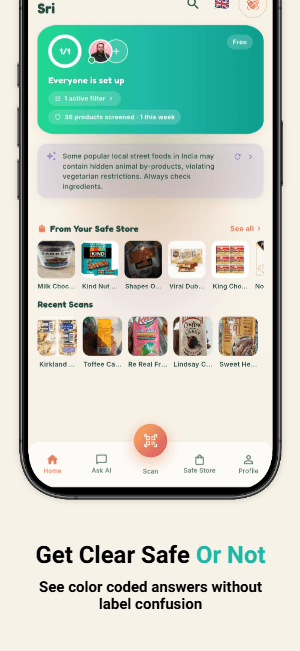
Instant Gluten-Free Audit Trail
7. Frequently Asked Questions (FAQ)
Is corn starch gluten free for people with celiac disease?
Yes. Pure corn starch comes from corn, which does not contain the gluten proteins of wheat, barley, or rye, so it is naturally gluten free. The caution is cross-contact during milling or packaging and blended products that include other ingredients. Food Scan Genius checks the full ingredient tree of a scanned barcode against your celiac profile, so you can see whether the starch is the only item in the product or one part of a more complicated recipe.
Do I need to buy corn starch that is labeled gluten free?
If you have celiac disease, a gluten-free label is the safest choice. In the US, that label means the product contains less than 20 ppm of gluten. Naturally gluten-free ingredients can still pick up traces from shared equipment, and a certified or clearly labeled product gives you extra assurance. Scanning the barcode in Food Scan Genius lets you see the ingredient breakdown and any gluten-related flags in seconds.
What is the difference between corn starch, modified food starch, and wheat starch?
Corn starch is extracted from corn kernels and is gluten free. Modified food starch is starch that has been altered for texture and can come from corn, potato, tapioca, or wheat, so you need to check the label. Wheat starch comes from wheat and may contain traces of gluten unless it has been specially processed. The NutriGraph Database in Food Scan Genius parses these terms within each product, so a vague starch entry is evaluated in context rather than ignored.
Can corn starch cause symptoms even if it is gluten free?
Corn starch does not contain gluten, so a celiac immune reaction from it is not expected. Symptoms after eating it more likely point to hidden cross-contact, another ingredient in the product, or a separate sensitivity. A small number of people report reacting to corn itself, but this is not well established in research. Talk to your doctor or dietitian if symptoms continue, and use Food Scan Genius custom sensitivities to track and flag any other ingredient you want to avoid.
Know What’s In Your Food Before You Buy — Scan Free Today
Never second-guess confusing grocery labels again. Download Food Scan Genius to uncover hidden additives, toxic dyes, and allergens for the whole household before you buy.