1. Why Choosing a Gluten-Free Cream Cheese Is Harder Than It Looks
Plain cream cheese is gluten free: cream + milk + cultures + salt = no gluten, though flavored, reduced-fat, and cross-contacted tubs can add it. That is the short answer to is cream cheese gluten free. The long answer matters if you live with celiac disease, non-celiac gluten sensitivity, or a wheat allergy, because “cream cheese” on a front label can mean very different products once the ingredient list gets longer.
If you have ever stood in the dairy case checking three tubs and still felt unsure, that frustration is reasonable. Cream cheese looks like the simplest food in the fridge, so most people never think to check it. Yet the category now includes whipped blends, light and fat-free versions, dessert flavors, savory vegetable spreads, and single-serve cups, each made with its own additives. For someone who has been sick after a “safe” food, that uncertainty takes a real emotional toll.
The clinical stakes are real. For people with celiac disease, repeated low-level exposure can keep the intestinal lining inflamed even without obvious symptoms. The Celiac Disease Foundation Threshold Requirements and guidance describe a strict gluten-free diet as the only treatment, with packaged foods labeled “gluten-free” needing to contain fewer than 20 parts per million (ppm) of gluten under U.S. FDA rules. Plain dairy rarely approaches that limit, but a thickener, flavoring, or shared production line can.
There is also a broader nutrition angle. Many reduced-fat and flavored spreads rely on more stabilizers, starches, and flavor systems than traditional cream cheese. Research such as PubMed Research on Ultra-Processed Foods & Gut Microbiome Disruption explores how heavily processed foods may affect gut health. That is a separate question from gluten, but it is a good reason to read the full ingredient list rather than only the allergen statement.
Scan Any Label for Hidden Additives and Allergens — Free
Never second-guess confusing grocery labels again. Download Food Scan Genius to uncover hidden additives, toxic dyes, and allergens for the whole household before you buy.


2. Where Hidden Gluten Hides in Cream Cheese
Traditional cream cheese is made from pasteurized milk and cream, bacterial cultures, salt, and often a gum such as carob bean gum or xanthan gum. None of those contain gluten. Trouble starts when manufacturers add ingredients for flavor, texture, or cost, or when the product is made in a shared facility. These are the six places to look:
- Modified food starch: Often used in light and fat-free cream cheese to replace body. In the U.S., wheat-derived starch must be declared as wheat on the label, but the source is not always obvious in the ingredient list itself. In other markets, rules differ, so check the allergen statement and the source.
- Dessert and bakery flavors: Cookie dough, cake batter, brownie, cinnamon-swirl, and similar varieties may contain actual flour, cookie pieces, or malt-based flavorings. These are the highest-risk tubs in the aisle.
- Malt and malt-derived flavorings: Barley malt extract can appear in sweetened or flavored spreads. Barley is a gluten grain, and malt flavoring is easy to miss.
- “Natural flavors” and seasoning blends: Savory spreads such as garden vegetable, onion and chive, or jalapeño may use seasoning mixes. In the U.S., wheat must be declared, but barley and rye are not covered by the same allergen rule. Only a “gluten-free” claim gives you reliable assurance.
- Cross-contact in manufacturing and food service: A plain product can pick up gluten from shared equipment. At bagel shops and delis, the shared knife or tub is a bigger problem than the cream cheese itself. Dedicated, sealed packaging is safer than a scoop from an open container.
- Cream cheese frostings and prepared dips: Products that share the “cream cheese” name, including frostings, dessert fillings, and ready-made dips, may include flour, thickeners, or cookie crumbs. They follow different formulations from block cream cheese.
Regulation also varies by region. Additives and processing aids are reviewed in the EU under the European Food Safety Authority (EFSA) Additive Safety Regulations, which cover safety evaluation, not gluten status. An additive can be approved as safe and still be derived from wheat. Finally, nutrition guidance such as the World Health Organization Guidelines on Healthy Diets & Saturated Fats is a reminder that full-fat cream cheese is energy-dense. Choosing gluten-free is about safety, not a health halo, and portion size still matters.
A practical rule: choose a product with a short ingredient list, no starch or malt of unclear source, and a clear “gluten-free” claim or certification if you have celiac disease. Contact the manufacturer when a label is ambiguous, because formulations and facilities change.
3. Label Reading vs. Scanning: Which Method Holds Up?
| Dimension | Food Scan Genius | Manual Label Reading | Fig | Spoonful |
|---|---|---|---|---|
| Cost | 100% free core features, no paywalls | Free, but time-consuming | $59/year | Limited scans |
| Ingredient depth | Recursive sub-ingredient parsing across 5,000,000+ verified barcodes (NutriGraph) | Only what you can decode on the label | Ingredient-level screening | Ingredient-level screening |
| Dietary profiles | 39 profiles plus custom sensitivities | Whatever you remember | Preset-based | Preset-based |
| Family screening | Whole household in one scan with named fail attribution | Re-check for each person | Varies by plan | Varies by plan |
| Languages | 11 languages with real-time in-app translation | Label language only | Limited | Limited |
The hard part of cream cheese is not the base recipe. It is the compound ingredients layered on top: a starch with an unstated source, a seasoning blend, or a flavor system. Food Scan Genius is powered by the NutriGraph Database, which holds more than 5,000,000 verified UPC/EAN barcodes and uses recursive AST parsing to break “spice blend” or “modified food starch” into their sub-ingredients. You scan the barcode and see the audit trail instead of guessing which line to trust. Set up a Gluten-Free profile from our 39 supported dietary profiles, or add your own custom sensitivity for something like a specific additive, a dye, or seed oils.
Where a simple pass/fail would leave you without context, ScanGenius AI Insight explains why a tub was flagged, whether the concern is an ingredient, a possible cross-contact statement, or an unclear source. It also shows a NOVA 1–4 processing classification and Nutri-Score so you can compare options without a simplistic moral score. For households with mixed needs, Multi-Household Family Profiles screen everyone in one scan and name the result, such as “Fails for Sri (Gluten),” so the person with celiac disease is protected while everyone else still sees their own results. Scanning supports your judgment; for celiac disease, still confirm a certified or clearly labeled gluten-free claim and contact the manufacturer when in doubt.
4. Related Food Safety & Dietary Guides
- Best Food Allergy Scanner App – Scan Food Labels Instantly — Food Allergy & Sensitivity Scanner Hub
- The 7 Best Free Food Scanner Apps of 2026 — best free food scanner apps
- Choosing the Best Barcode Scan App for Your Health — guide to choosing a barcode scanner app
- Food Scan Genius: World’s #1 Food Ingredient Scanner App — Food Scan Genius scanner app
5. Scientific & Health Authority References
- Celiac Disease Foundation Threshold Requirements
- European Food Safety Authority (EFSA) Additive Safety Regulations
- PubMed Research on Ultra-Processed Foods & Gut Microbiome Disruption
- World Health Organization Guidelines on Healthy Diets & Saturated Fats
6. How to Scan in 3 Simple Steps
- Download Food Scan Genius free on iOS or Android. Core features have no paywall and no scan cap.
- Create your profile: select the Gluten-Free profile (celiac disease, gluten sensitivity, or wheat allergy), add family members under Multi-Household Profiles, and add any custom sensitivities, such as malt or a specific additive.
- Scan the cream cheese barcode, which takes about 2 seconds. Review the instant audit trail, including flagged sub-ingredients, the named result for each family member, and ScanGenius AI Insight, then choose a tub with a clear gluten-free claim.
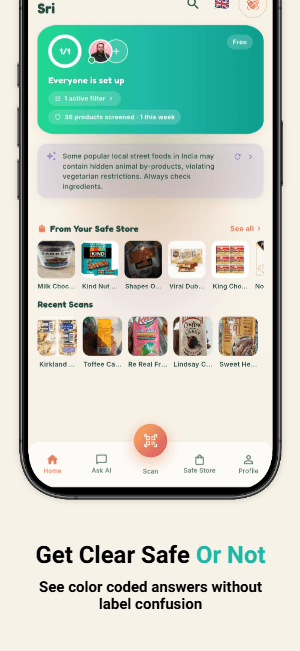
Instant Gluten-Free Audit Trail
7. Frequently Asked Questions (FAQ)
Is cream cheese gluten free?
Plain cream cheese is gluten free: it is made from milk, cream, cultures, and salt, often with a gum such as carob bean gum. The risk comes from flavored, light, or fat-free varieties that use modified starch, malt, or seasoning blends, and from cross-contact. Food Scan Genius scans the barcode and breaks compound ingredients into sub-ingredients so you can see what is actually in the tub.
Does cream cheese need a ‘gluten-free’ label to be safe for celiac disease?
Not always, but the label gives the most assurance. In the U.S., ‘gluten-free’ means under 20 ppm of gluten. A plain cream cheese with a short ingredient list is usually fine, but if you have celiac disease, a labeled or certified product is the safer choice, particularly for flavored varieties. Contact the manufacturer if the facility or ingredient source is unclear.
Is modified food starch in cream cheese a gluten problem?
It can be, depending on the source. In the U.S., wheat-based starch must be declared as wheat, but starches from corn, potato, or tapioca are gluten free. Because the label does not always make the source obvious, a Food Scan Genius scan flags the ingredient so you can check the allergen statement or ask the manufacturer.
Is cream cheese at a bagel shop or deli safe if I avoid gluten?
Often not. Even though plain cream cheese is naturally gluten free, shared knives, scoops, and containers can transfer crumbs. Ask for a sealed, unopened container and a clean utensil, or bring your own. At home, use a dedicated tub or squeeze portions out instead of double-dipping a knife that has touched bread.
Know What’s In Your Food Before You Buy — Scan Free Today
Never second-guess confusing grocery labels again. Download Food Scan Genius to uncover hidden additives, toxic dyes, and allergens for the whole household before you buy.