1. Why Reading a Sugar Free Energy Drink Label Is Harder Than It Looks in 2026
You pick up a slim silver-and-blue can, see the words “sugar free,” and assume the hard part is over. Then you flip it around and find a list of compounds that reads more like a chemistry quiz than a food label: taurine, acesulfame K, magnesium carbonate, pyridoxine HCl. If you have ever felt unsure whether you are drinking something that suits your body, your medication, your pregnancy, or your child’s diet, you are not being overly cautious. You are being a careful shopper in a market that does not make careful shopping easy.
The sugar free red bull ingredients list is short compared with many packaged foods, but each item plays a distinct role. Carbonated water is the base. Citric acid and sodium bicarbonate manage tartness and acidity. Caffeine (about 80 mg per 8.4 fl oz can in the U.S.) and taurine provide the signature energy profile. Aspartame and acesulfame potassium replace sugar. B-vitamins, xanthan gum, and flavors and colors round things out. Formulations differ by country and can change over time, so the can in your hand is always the source of truth.
Part of the stress comes from labeling rules that protect you in some ways and leave gaps in others. Under the FDA Food Allergen Labeling & Consumer Protection Act (FALCPA), the major allergens must be clearly declared, which is a real safeguard. But FALCPA was never designed to flag a phenylalanine warning for someone with PKU, a caffeine ceiling for someone with an arrhythmia, or a personal decision to avoid artificial sweeteners. Those concerns land back on you, standing in a store aisle with a phone at 12% battery.
Regulators outside the U.S. approach sweeteners and additives through their own frameworks. The European Food Safety Authority (EFSA) Additive Safety Regulations require periodic re-evaluation of approved additives, including intense sweeteners. That is one reason the same brand may list slightly different ingredients on a can bought in Berlin versus Boston. If you travel, shop internationally, or live in a multilingual household, even a trusted product deserves a fresh look every time.
Scan Any Label for Hidden Additives and Allergens — Free
Never second-guess confusing grocery labels again. Download Food Scan Genius to uncover hidden additives, toxic dyes, and allergens for the whole household before you buy.


2. Sugar Free Red Bull Ingredients: What Each One Does and Where to Pay Attention
Nothing here suggests a single can is dangerous for a healthy adult. Context matters, though: your health conditions, your daily caffeine total, and how often you drink it. Here are the items most worth understanding on the label:
- Aspartame: A low-calorie sweetener that must carry the warning “Phenylketonurics: contains phenylalanine.” This is essential for people with PKU. In 2023 the IARC classified aspartame as “possibly carcinogenic” (Group 2B), while the joint FAO/WHO expert committee on food additives (JECFA) left the acceptable daily intake unchanged at 40 mg/kg of body weight. Both statements can be true at once, and many shoppers simply prefer to avoid it.
- Acesulfame potassium (Ace-K): Often paired with aspartame so the two sweeteners mask each other’s aftertaste. Because it appears under a technical name, it is easy to miss if you are scanning for “artificial sweeteners” by eye.
- Caffeine: Roughly 80 mg per 8.4 oz can, similar to a small cup of coffee. The concern is stacking: larger can sizes, a morning coffee, and an afternoon tea add up. People who are pregnant, have anxiety, reflux, hypertension, or heart rhythm conditions often need a lower personal limit, and teens are advised to be especially cautious.
- Taurine: An amino-sulfonic acid that occurs naturally in meat and fish and is added here in synthetic form. For most people it is not a worry, but it surprises shoppers who believe they are avoiding animal-derived ingredients. It is typically produced synthetically, which is worth confirming with the manufacturer if you follow a strict vegan diet.
- “Natural and artificial flavors” and “colors”: A catch-all category. The label does not tell you which compounds are inside or which color is used, so shoppers avoiding specific dyes or flavor compounds cannot fully verify them from the can alone.
- Xanthan gum and magnesium carbonate: Thickener and acidity regulator. They are widely considered low-risk, but xanthan gum can bother some sensitive digestive systems, and it often triggers questions for people on low-FODMAP or elimination plans.
There is also a bigger-picture question: how processed is the product as a whole? Energy drinks fall at the far end of the processing spectrum, which is why they are classified as NOVA group 4. Observational research, including PubMed Research on Ultra-Processed Foods & Gut Microbiome Disruption, continues to explore how highly processed diets and additives may affect gut health and overall dietary quality. This research is evolving and does not prove that one can causes harm. It does suggest that frequency and overall dietary pattern are worth thinking about.
For general guidance, the World Health Organization Guidelines on Healthy Diets & Saturated Fats emphasize limiting free sugars and favoring whole, minimally processed foods. A sugar-free drink avoids free sugars, which is a genuine benefit for people managing blood glucose or calories. It does not make the drink a nutritional staple, and both of those things can be held in mind at once.
3. Food Scan Genius vs. Other Ways of Checking an Energy Drink
| Feature | Food Scan Genius | Fig | Spoonful | Reading the Label Manually |
|---|---|---|---|---|
| Cost | 100% free core features, zero paywalls | $59/year | Limited scans | Free, but time-consuming |
| Dietary Profiles | 39 profiles plus custom sensitivities (e.g., aspartame, specific dyes) | Preset diet and allergen profiles | Preset profiles | Depends entirely on your memory |
| Family Screening | Multi-household profiles, one scan, named fail attribution | Primarily individual-focused | Primarily individual-focused | Must cross-check each person by hand |
| Context & Classification | ScanGenius AI Insight, NOVA 1-4, Nutri-Score, no simplistic moral score | Ingredient flagging | Ingredient flagging | No classification or interpretation |
| Languages | 11 global languages with real-time in-app translation | Limited | Limited | Requires a separate translator |
Food Scan Genius is powered by the NutriGraph Database, which holds more than 5,000,000 verified UPC/EAN barcodes. Rather than treating an ingredient list as one flat string, it uses recursive AST parsing to break compound ingredients into their sub-ingredients. That matters for a label like “natural and artificial flavors” or “vitamins,” where the useful detail sits one level down. You can also add your own custom sensitivity, whether that is aspartame, acesulfame K, a particular dye, or something else you personally avoid, and every scan will check against it.
The ScanGenius AI Insight adds the nuance that a pass/fail grade cannot. For a sugar-free energy drink, it can explain that the product has no free sugars, is classified NOVA 4, contains intense sweeteners and caffeine, and what each of those might mean for your profile. It reports the Nutri-Score and NOVA classification without handing down a single moralizing number. If someone in your household is on a profile that does not fit the drink, the result names them directly, such as “Fails for Sri (Aspartame),” so the family decision becomes quick and kind instead of confusing.
4. Related Food Safety & Dietary Guides
- Best Food Allergy Scanner App – Scan Food Labels Instantly — Food Allergy & Sensitivity Scanner Hub
- The 7 Best Free Food Scanner Apps of 2026 — best free food scanner apps
- Choosing the Best Barcode Scan App for Your Health — guide to choosing a barcode scanner app
- Food Scan Genius: World’s #1 Food Ingredient Scanner App — Food Scan Genius scanner app
5. Scientific & Health Authority References
- FDA Food Allergen Labeling & Consumer Protection Act (FALCPA)
- European Food Safety Authority (EFSA) Additive Safety Regulations
- PubMed Research on Ultra-Processed Foods & Gut Microbiome Disruption
- World Health Organization Guidelines on Healthy Diets & Saturated Fats
6. How to Scan in 3 Simple Steps
- Download Food Scan Genius free on iOS or Android. There are no paywalls on core features, and you can choose from 11 languages with real-time in-app translation.
- Set up your profile: pick from 39 dietary profiles, add each family member to your household, and use “Add Your Own Custom Sensitivity” to flag aspartame, acesulfame K, added dyes, caffeine concerns, or anything else you want to avoid.
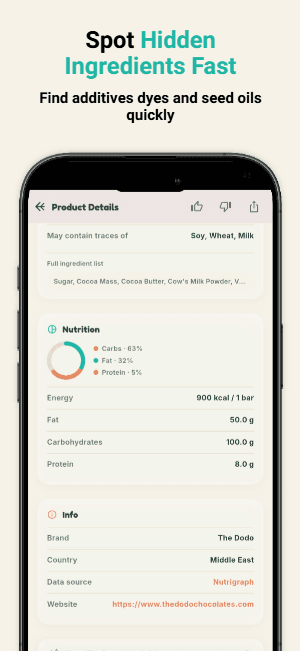
- Scan the barcode on the can. Within about two seconds you get an instant audit trail: the parsed ingredient list, named pass/fail results for each household member, NOVA 1-4 classification, Nutri-Score, and ScanGenius AI Insight context.
Personalized Match & AI Insight
7. Frequently Asked Questions (FAQ)
What are the main sugar free red bull ingredients?
In the U.S., the label lists carbonated water, citric acid, taurine, sodium bicarbonate, magnesium carbonate, caffeine, acesulfame potassium, aspartame, xanthan gum, B-vitamins (niacinamide, calcium pantothenate, pyridoxine HCl, vitamin B12), and natural and artificial flavors and colors. Formulas can differ by country and change over time, so scan the exact can you are holding. Food Scan Genius parses the barcode against the NutriGraph Database and shows the ingredient list for that specific product.
Is aspartame in Sugar Free Red Bull a concern for everyone?
No. People with phenylketonuria (PKU) must avoid it because it contains phenylalanine, and the can carries a warning for that reason. For others, regulators such as JECFA have maintained an acceptable daily intake of 40 mg/kg of body weight, even though the IARC listed aspartame as ‘possibly carcinogenic’ in 2023. Some people choose to avoid it as a personal preference. With Food Scan Genius you can add aspartame as a custom sensitivity so every scan flags it automatically.
How much caffeine is in Sugar Free Red Bull, and who should be careful?
An 8.4 fl oz can contains about 80 mg of caffeine, and larger cans contain proportionally more. People who are pregnant, have heart rhythm conditions, anxiety, high blood pressure, or caffeine sensitivity, and teenagers, should talk with a clinician about personal limits. The practical issue is total daily caffeine from all sources. Food Scan Genius lets you set a custom sensitivity and surfaces AI Insight context so you can make an informed choice. It does not replace medical advice.
Can Food Scan Genius check Sugar Free Red Bull for my whole family at once?
Yes. Using Multi-Household Family Profiles, one scan screens the product against every family member’s dietary profile and custom sensitivities. Results name who is affected, for example ‘Fails for Sri (Aspartame),’ so you know exactly who the issue involves. It also shows the NOVA classification and Nutri-Score, works in 11 languages, and is free with no paywalls on core features.
Know What’s In Your Food Before You Buy — Scan Free Today
Never second-guess confusing grocery labels again. Download Food Scan Genius to uncover hidden additives, toxic dyes, and allergens for the whole household before you buy.