You Searched for “Dairy Free Boursin.” Here’s the Real Question You Should Be Asking.
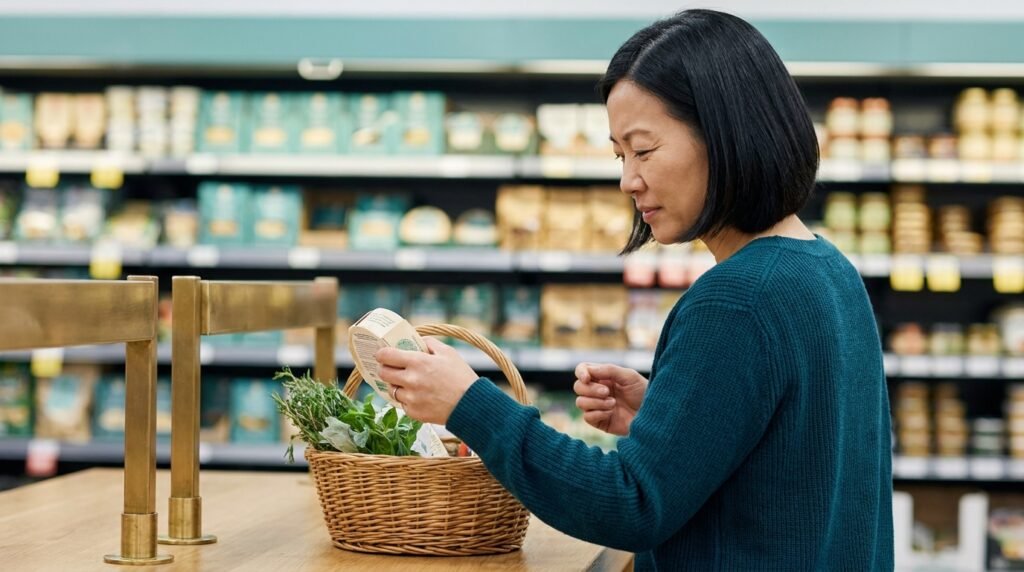
You’re standing in the refrigerated aisle, looking at Boursin Dairy Free Garlic & Fine Herbs. The label is a beacon of hope: “Dairy-Free” and “Plant-Based.” It seems like a safe, delicious choice. You’re ready to add it to your cart. Stop.
The fact that you’re searching for this confirms you’re a discerning shopper. But the label “dairy-free” is not the same as “vegan.” The modern food supply chain is a labyrinth of hidden animal derivatives, ambiguous additives, and processing agents that never appear on the ingredient list. Your initial search for a simple dairy alternative has led you to a much more critical moment of doubt: Is this product truly free of all animal products?
This isn’t about calories or a generic health score. This is about your personal, ethical, and dietary commitment. Before you can trust that label, you need to understand what could be hiding behind it. Let’s break down this specific product, not just as a cheese alternative, but as a case study in the vigilance required to be a vegan today.
The Threat: A Real-World Look at Boursin Dairy Free Garlic & Fine Herbs
On the surface, everything looks correct. It’s a popular product, specifically marketed to people like you. Let’s simulate looking at the back of the package and analyzing the ingredient list as a vegan shopper who has been burned before.
Stated Ingredients: Filtered Water, Coconut Oil, Modified Starch (Potato and Corn), Organic Expeller-Pressed Canola Oil, Salt, Natural Flavors, Calcium Phosphate, Potato Protein, Sugars (Organic Vegan Cane Sugar), Cultured Dextrose, Lactic Acid, Garlic Powder, Herbs (Parsley, Chives), Citric Acid, Xanthan Gum, Carob Bean Gum, Lemon Juice Concentrate.
A quick scan might give you a false sense of security. Coconut oil, potato starch, herbs—it all seems fine. But the experienced vegan eye knows the danger isn’t in the obvious ingredients; it’s in the ambiguous ones. Terms like “Natural Flavors,” “Sugars,” and “Lactic Acid” are potential red flags that require a much deeper level of scrutiny.
Ingredient Analysis: The Hidden Dangers in Plain Sight
This is where the real work begins. An ingredient list is a legal document, but it’s one written to protect the manufacturer, not your dietary principles. Let’s put these ambiguous terms under the microscope.
| Ingredient | Potential Vegan Conflict | Why It’s a Problem |
| Natural Flavors | High Risk | The FDA’s definition of “natural flavor” is notoriously broad. It can legally include derivatives from meat, seafood, poultry, eggs, and dairy. A classic example is castoreum, a secretion from beaver glands, used for vanilla or raspberry flavoring. Without explicit confirmation from the manufacturer, this term is a complete black box. |
| Sugars (Organic Vegan Cane Sugar) | Variable Risk | Boursin specifies “Vegan Cane Sugar,” which is a huge green flag. However, most products simply list “sugar.” Conventional refined cane sugar is often filtered and whitened using bone char—the charred bones of cattle. Unless specified as “vegan,” “unrefined,” or from beets, you cannot be certain it’s vegan. |
| Lactic Acid | Low Risk (but not zero) | Historically, lactic acid was derived from milk lactose (dairy). Today, it’s almost always produced through fermentation of plant-based sources like corn or beets. However, the possibility of dairy-based sourcing still exists, making it another point of uncertainty that requires verification. |
The Verdict on Dairy-Free Boursin
After a deep analysis and cross-referencing manufacturer data, we can issue a verdict. Boursin has taken care to specify “Vegan Cane Sugar” and their product is certified plant-based, which strongly suggests their “Natural Flavors” and “Lactic Acid” are also from non-animal sources.
✅ Vegan Safe
But here’s the critical takeaway: you shouldn’t have to do this level of detective work for every single item in your shopping cart. The fact that we had to question three separate ingredients on a product explicitly labeled “plant-based” proves the system is broken.
Yuka Gives You an Opinion. Food Scan Genius Gives You a Decision.
You might be tempted to use a generic health app like Yuka. Yuka will scan this Boursin and give you a generic score like 65/100, telling you it’s “Good.” This is useless information for a vegan. Food Scan Genius gives you a personalized, definitive yes/no answer based on your specific avoidance of dairy free boursin animal products.
The Anxiety of the Vegan Shopper: Beyond a Single Product
The Boursin example is just the tip of the iceberg. The real issue is the constant, draining mental load that comes with being a committed vegan in a world of opaque food manufacturing. It’s a psychological tax you pay every time you go to the grocery store.
The “Natural Flavors” Black Box
Let’s go deeper on this. The term “natural flavor” is governed by the Code of Federal Regulations, Title 21. This regulation allows for a substance’s essential oil, oleoresin, essence, or extractive to be derived from a vast array of sources, including meat and dairy, and still be called a “natural flavor.” This isn’t a rare occurrence; it’s a standard industry practice. That savory, umami flavor in your “vegan” chips? It could be from a meat derivative. That creamy note in a soup? It could be a dairy extract. The manufacturer has no legal obligation to disclose the source. They hide behind this single, two-word phrase, and you are left to guess. This ambiguity is a feature, not a bug, of the food labeling system. It provides flexibility for manufacturers to change suppliers and formulations without reprinting labels, but it leaves vegan consumers in a constant state of uncertainty.
The Pervasive Problem of Bone Char
The sugar issue is one of the most insidious. White sugar’s pristine color is often achieved by filtering raw sugar syrup through a column of bone char. While the char itself doesn’t end up in the final product, the intimate contact with a product of animal slaughter makes it a non-vegan processing aid. This isn’t just about table sugar. It’s about the sugar in your bread, your plant-based yogurt, your ketchup, your salad dressing, your morning cereal. Every time you see “sugar” on a label, a question mark should appear. Is it from beets (which don’t use bone char)? Is it unrefined? Is it certified vegan? The label won’t tell you. You are forced to either contact the company for every single product—an impossible task—or risk compromising your principles.
A Minefield of Hidden Additives
The list of potential animal-derived ingredients disguised by confusing names is staggering. This is the knowledge base a vegan is forced to build and maintain just to shop safely.
- Carmine (or Cochineal Extract): A vibrant red food coloring made from crushed female cochineal insects. It’s found in some red-colored yogurts, juices, and candies that otherwise appear vegetarian.
- Gelatin: A gelling agent derived from boiling the skin, tendons, ligaments, and bones of cows and pigs. It’s the key ingredient in Jell-O and marshmallows, but it also hides in frosted cereals, gummy vitamins, and even some beer and wine as a clarifying agent.
- Isinglass: A specific type of gelatin sourced from the swim bladders of fish. It is widely used in the brewing and winemaking industries to create a clearer final product. It is almost never listed on the label.
- Shellac (or Confectioner’s Glaze): A resin secreted by the female lac bug. It’s used to give a shiny, protective coating to everything from jelly beans and candy corn to waxed apples in the produce section.
- Casein and Whey: These are milk proteins. You’d expect them in dairy products, but they are frequently used as binders or texturizers in so-called “non-dairy” products, including some soy cheeses, vegetarian meat products, and protein bars. This is a primary reason why the search for dairy free boursin hidden dairy is so important—the danger is real across the store.
The Psychological Toll of Constant Vigilance
This isn’t just about ingredients. It’s about the exhaustion. It’s about the decision fatigue of standing in an aisle, phone in hand, trying to Google an obscure additive while other shoppers rush past. It’s the low-grade anxiety that you might have missed something. It’s the social friction of having to decline food at a friend’s house because you can’t be sure of the ingredients. It’s the frustration of finding a new favorite snack, only to discover later that it contains a hidden animal product.
This entire system forces you to become a part-time food scientist and supply chain investigator. But your goal isn’t to get a PhD in food manufacturing; it’s to eat a meal that aligns with your values. Understanding the complexities of what makes a food truly vegan is essential, which is why we’ve compiled a foundational resource in our Vegan Diet Guide to help you navigate these challenges on a broader scale.
Food Scan Genius was built to eliminate this burden. It’s not another blog post or a list you have to memorize. It’s a tool that absorbs this complexity for you. We maintain a massive, constantly updated database of ingredients, manufacturing processes, and company statements. We do the research so you don’t have to. Your job is to live your life. Our job is to give you a clear, instant, and personalized answer.
Stop Guessing. Start Scanning.
You spent the last few minutes reading a deep dive on a single product. How many other items are in your cart right now? How many more are on your shopping list for next week? Are you going to repeat this entire process for your crackers, your bread, your pasta sauce, your favorite snack bar?
The answer is no. You don’t have the time, and you shouldn’t have to carry the mental load.
The doubt you felt about this Boursin is valid. Now, apply that same healthy skepticism to everything else you buy. The uncertainty ends now.
Stop guessing. Scan this product with Food Scan Genius right now and get the definitive, personalized answer you deserve in less than a second.
Scan any product in two seconds
Check allergens, additives and 39 diets before you buy. Free on both stores.


Every scan is answered by NutriGraphAPI, our own catalogue of over 5 million barcode-indexed packaged products with allergen, additive and dietary data. Building a food or grocery app yourself? The same data is available as an API.
Related guides