1. Why Laffy Taffy and Gluten Are Harder to Sort Out Than They Look
Laffy Taffy contains no gluten ingredients in its standard U.S. formulas, but it is not certified gluten-free, so check the label on every package before you eat it. In short: no wheat, barley, or rye listed ≠ certified gluten-free. The first half of that equation is reassuring, and the second half is why careful shoppers still pause.
The typical ingredient list is built on sugar, corn syrup, and palm oil. It is rounded out with small amounts of acids (malic and citric), dextrose, salt, flavors, soy lecithin, and colors. None of these is a gluten grain. Corn syrup in the U.S. comes from corn, not wheat. On paper, that points toward a product most people avoiding gluten can eat. But a label is a snapshot of one factory run, and candy brands change suppliers, flavors, and co-packers more often than most shoppers realize. Always treat the package in your hand as the source of truth, not a blog post, including this one.
We understand why this question carries weight. If you have celiac disease, a “probably fine” answer is not comfortable, because even small repeated exposures can matter. The Celiac Disease Foundation Threshold Requirements explain that in the United States, a product labeled “gluten-free” must contain fewer than 20 parts per million of gluten. Laffy Taffy does not carry that claim on most packaging. So the honest answer is that it appears to be made without gluten ingredients, but the manufacturer does not formally promise a gluten-free outcome. That distinction matters most for parents of newly diagnosed children, who often meet this candy in Halloween bags, party favors, and classroom treat bins.
There is also a bigger picture. Laffy Taffy is a highly processed confection, and gluten is only one lens on it. Researchers continue to study how highly processed products may affect digestion, as summarized in PubMed Research on Ultra-Processed Foods & Gut Microbiome Disruption. For people with celiac disease or non-celiac gluten sensitivity who are already managing a sensitive gut, that context is worth knowing. It is not a reason for guilt over an occasional treat. The goal is clear information so you can decide calmly, not fear about a piece of candy.
Scan Any Label for Hidden Additives and Allergens — Free
Never second-guess confusing grocery labels again. Download Food Scan Genius to uncover hidden additives, toxic dyes, and allergens for the whole household before you buy.


2. Where the Gluten Question Gets Murky: Label Loopholes and Sneaky Sources
When shoppers ask “is laffy taffy gluten free,” they usually mean two things: do the ingredients contain gluten, and could gluten get in some other way? Here are the six places where the answer can get complicated. None of these means the candy is unsafe. They are the details to verify.
- “Natural and artificial flavors.” Flavor blends are a catch-all on the label. In the U.S., a flavor containing wheat must be disclosed under allergen rules. A flavor containing barley or rye is not covered by the same rule, although those cases are uncommon in candy. This is a reason to look for a manufacturer statement, not a reason to panic.
- Glucose syrup, dextrose, and starch of unspecified origin. In the U.S., corn is the usual source. In other countries, wheat-based glucose syrup is more common, and it is often highly refined enough to test below 20 ppm. Imported Laffy Taffy or look-alike taffy bought abroad may follow different rules than the U.S. product.
- Shared-facility and shared-line cross-contact. Many confectionery plants handle several products. Cross-contact does not appear in the ingredient list. It shows up, if at all, in an advisory such as “may contain” or “made in a facility with.” Those statements are voluntary in the U.S., so their absence is not a guarantee.
- Variety packs, mixed bags, and co-branded novelty items. Laffy Taffy appears in ropes, minis, bars, and seasonal assortments. Mixed bags may include other brands’ candies, such as cookie, wafer, or malt-based items that do contain gluten. The taffy may be fine while the bag is not.
- Formula changes without fanfare. Manufacturers can change an ingredient between production runs. An old photo of a wrapper or a copied ingredient list on a retail site can be outdated. Checking the actual barcode against a current database reduces that risk.
- Colors and additives that are not gluten but still matter. Some taffy formulas have listed titanium dioxide and synthetic dyes. These are not gluten sources, but regulators view them differently around the world. The European Food Safety Authority (EFSA) Additive Safety Regulations are a useful reference if you also screen for additives. Many families do, especially if a child has multiple sensitivities.
The practical takeaway is that “is laffy taffy gluten free” has a layered answer. The ingredient list is a strong first checkpoint. A certified gluten-free seal is stronger, and a direct response from the manufacturer about current manufacturing practices is stronger still. If your reaction history is severe, or you have celiac disease and want certainty, contact the manufacturer for the specific product and lot you are holding. Our guidance is informational and does not replace advice from your gastroenterologist or dietitian.
For balance, this is also candy: mostly sugar and fat by composition. The World Health Organization Guidelines on Healthy Diets & Saturated Fats recommend limiting free sugars and saturated fats, and palm oil adds some saturated fat. Gluten-free does not mean nutritious, and gluten-containing does not mean evil. It is simply one question among several.
3. Label Reading vs. Barcode Intelligence: Which Gets You a Reliable Answer?
| Dimension | Food Scan Genius | Fig | Spoonful | Manual Label Reading |
|---|---|---|---|---|
| Cost | 100% free core features, no paywalls | About $59/yr for full access | Limited free scans | Free, but time-consuming |
| Ingredient depth | NutriGraph database with 5M+ verified barcodes and recursive sub-ingredient parsing | Ingredient-level screening | Ingredient-level screening | Only what you can read and recognize |
| Diet profiles | 39 profiles plus custom sensitivities (dyes, seed oils, additives) | Fewer preset profiles | Fewer preset profiles | Depends on your memory |
| Family screening | Multi-household profiles, one scan, named results such as “Fails for Sri (Gluten)” | Typically one profile at a time | Typically one profile at a time | Mentally cross-checking each person |
| Languages and context | 11 languages with real-time translation, plus NOVA 1-4, Nutri-Score, and AI Insight | Limited | Limited | None; foreign labels are hard to read |
Candy labels are short, but they hide layers. A line like “flavors” or “dextrose” may point to sub-ingredients the wrapper never spells out. Food Scan Genius is powered by the NutriGraph Database, which holds more than five million verified UPC/EAN barcodes. It uses recursive parsing to follow compound ingredients down to their components and compare them against your profile. You choose from 39 dietary profiles, such as gluten-free or celiac, or add your own custom sensitivity for a dye, a seed oil, or a specific additive. Multi-household family profiles let you scan a single bag of Laffy Taffy and see results for everyone, with named results such as “Fails for Sri (Gluten).” That helps when one child is gluten-free, another avoids artificial dyes, and a parent is watching sugar. With 11 supported languages and real-time translation, the same scan also works for imported candy or for relatives who read a different language.
The ScanGenius AI Insight adds the nuance a pass/fail flag cannot. For Laffy Taffy, it can explain that the ingredient list shows no gluten grains, that the product is not certified gluten-free, and that cross-contact is a manufacturer-level question worth confirming if your sensitivity is high. It also places the product on the NOVA 1-4 scale, where candy lands as ultra-processed (NOVA 4), and gives a Nutri-Score for nutritional context. We do this without a moralizing “good or bad” number. The aim is to give you the information and let you and your care team decide, with the full audit trail visible in the app.
4. Related Food Safety & Dietary Guides
- Best Food Allergy Scanner App – Scan Food Labels Instantly — Food Allergy & Sensitivity Scanner Hub
- The 7 Best Free Food Scanner Apps of 2026 — best free food scanner apps
- Choosing the Best Barcode Scan App for Your Health — guide to choosing a barcode scanner app
- Food Scan Genius: World’s #1 Food Ingredient Scanner App — Food Scan Genius scanner app
5. Scientific & Health Authority References
- Celiac Disease Foundation Threshold Requirements
- European Food Safety Authority (EFSA) Additive Safety Regulations
- PubMed Research on Ultra-Processed Foods & Gut Microbiome Disruption
- World Health Organization Guidelines on Healthy Diets & Saturated Fats
6. How to Scan in 3 Simple Steps
- Download Food Scan Genius free on iOS or Android. The core features have no paywall and no scan cap.
- Set up your profile: choose Gluten-Free or Celiac from the 39 dietary profiles, add any custom sensitivities (such as artificial dyes or palm oil), and add family members so everyone is screened in one scan.
- Scan the Laffy Taffy barcode. In about two seconds you get an instant pass/fail result with named attribution, the ingredient audit trail, and ScanGenius AI Insight. Then compare the result with the physical label, since formulas can change.
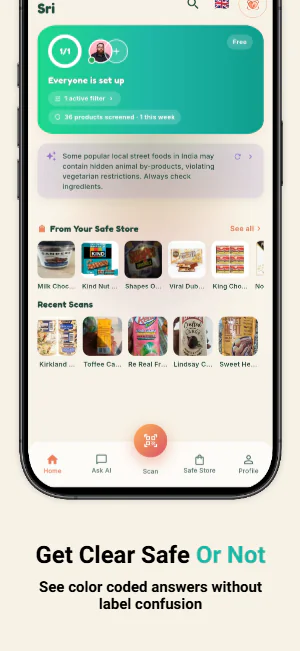
Instant Gluten-Free Audit Trail
7. Frequently Asked Questions (FAQ)
Is Laffy Taffy gluten free?
Standard U.S. Laffy Taffy lists no wheat, barley, rye, or oats among its ingredients, so it is generally considered free of gluten ingredients. It is not typically labeled or certified gluten-free, though, so cross-contact cannot be ruled out from the label alone. Scanning the barcode with Food Scan Genius shows the current ingredient audit for your exact package, and you can confirm with the manufacturer if you have celiac disease.
Is Laffy Taffy safe for people with celiac disease?
That depends on your personal sensitivity and your medical team’s advice. Laffy Taffy has no gluten-containing ingredients, but without a certified gluten-free seal there is no formal guarantee that it contains fewer than 20 ppm of gluten. If you are strictly gluten-free, look for the current label, contact the manufacturer about shared equipment, and consult your gastroenterologist or dietitian. Food Scan Genius can flag the product against a Celiac profile and explain the uncertainty.
Do all Laffy Taffy flavors and sizes have the same gluten status?
Not necessarily. Flavors, bar sizes, ropes, minis, and seasonal or mixed assortments can use different flavor systems, production lines, or co-packers. Variety bags may also include other candies that do contain gluten. The safest approach is to scan each package, since Food Scan Genius checks the specific UPC or EAN and its parsed ingredients rather than assuming one result applies to a whole brand.
Can Food Scan Genius check Laffy Taffy for more than gluten?
Yes. Beyond the 39 dietary profiles, you can add custom sensitivities for specific dyes, palm oil, or other additives, and screen your whole household in one scan. The result includes NOVA 1-4 classification, a Nutri-Score, and ScanGenius AI Insight that explains the findings in context, in any of 11 languages, with no paywall on core features.
Know What’s In Your Food Before You Buy — Scan Free Today
Never second-guess confusing grocery labels again. Download Food Scan Genius to uncover hidden additives, toxic dyes, and allergens for the whole household before you buy.