
1. Why ‘Is Peanut Butter Gluten Free?’ Has a Two-Part Answer in 2026
Is peanut butter gluten free? Yes: pure peanut butter (peanuts + salt) = naturally gluten-free, but any jar with added gluten ingredients or cross-contact above 20 parts per million is not safe for celiac disease. That equation is simple. The shelf is not, because most jars contain more than ground peanuts.
Peanuts are legumes, not grains, so they contain no wheat, barley, or rye. Problems begin once a recipe adds sweeteners, stabilizers, flavorings, or crunchy mix-ins, or once the jar is made on equipment shared with gluten-containing products. If you live with celiac disease, non-celiac gluten sensitivity, or wheat allergy, you may have felt the frustration of a pantry staple suddenly becoming a question mark. That frustration is reasonable, and it does not mean you are being overly cautious.
The clinical stakes are real. For people with celiac disease, repeated low-level exposure can keep the intestine inflamed even when there are no obvious symptoms. The Celiac Disease Foundation Threshold Requirements reflect the widely used standard that foods labeled gluten-free must contain less than 20 ppm of gluten. The standard exists because trace exposure matters, and it is why a jar’s ingredient list is only half of the story.
It also helps to know that modern peanut butter is often more processed than people assume. Many mainstream jars include added sugars, hydrogenated oils, and emulsifiers. The World Health Organization Guidelines on Healthy Diets & Saturated Fats encourage limiting added sugars and certain fats, so a thoughtful shopper may be checking for gluten and for overall quality at once. Food Scan Genius was built to make both checks possible in a single scan, without making you feel judged for what is in your cart.
Scan Any Label for Hidden Additives and Allergens — Free
Never second-guess confusing grocery labels again. Download Food Scan Genius to uncover hidden additives, toxic dyes, and allergens for the whole household before you buy.


2. Sneaky Ingredients and Label Loopholes Behind Peanut Butter and Gluten
A clean, five-ingredient jar is usually fine. The trouble comes from a handful of recurring loopholes. Here are the six most common ones to watch when you are deciding whether a specific peanut butter is gluten free:
- Shared equipment and facility cross-contact: A jar of plain peanut butter can be produced in a facility that also handles pretzels, granola, cookies, or wheat-based snack fillings. Advisory statements such as ‘may contain wheat’ are voluntary in many markets, so their absence does not guarantee a clean line.
- Malt, barley, and crisped-rice inclusions: Chocolate-peanut spreads, ‘crunchy cereal’ blends, and crisped rice pieces can include barley malt or malt extract. Barley is not a major allergen in the US, so it may appear only in the ingredient list rather than in a bold allergen statement.
- Flavored and mix-in varieties: Cookie dough, pretzel, granola, and cinnamon-raisin swirl peanut butters are far more likely to include gluten than the original recipe from the same brand. Brands often make one gluten-free product and several that are not.
- Vague flavorings, thickeners, and protein fillers: Powdered peanut butter, protein spreads, and ‘no-stir’ blends may contain hydrolyzed proteins, maltodextrin, or starches. In the US, wheat-derived ingredients must be declared, but sourcing varies globally. This is where sub-ingredient detail matters. The European Food Safety Authority (EFSA) Additive Safety Regulations are a helpful reference for how stabilizers and emulsifiers are evaluated.
- Voluntary ‘gluten-free’ claims: A missing gluten-free badge does not mean a product contains gluten, and a badge from an unfamiliar certifier is not equal to a tested 20 ppm result. Claims are also tied to a specific recipe and batch, and recipes change.
- Bulk grinders, squeeze packs, and shared utensils: Grind-your-own stations, café portion packs, and a household jar with a knife that has touched toast all introduce gluten that no label can account for.
Some shoppers also want to avoid ultra-processed products regardless of gluten status. If that is you, the PubMed Research on Ultra-Processed Foods & Gut Microbiome Disruption offers a starting point for understanding why processing level gets so much attention. A short ingredient list is usually a good sign on both counts, but it still needs to be verified.
3. Head-to-Head: Food Scan Genius vs. Other Ways to Check Peanut Butter
| Dimension | Food Scan Genius | Manual Label Reading | Fig | Spoonful |
|---|---|---|---|---|
| Cost | 100% free core features, zero paywalls | Free, but time-intensive | Around $59/year for full access | Limited scans |
| Ingredient depth | Recursive sub-ingredient parsing across 5,000,000+ verified barcodes (NutriGraph) | Depends on your own knowledge of hidden gluten terms | Ingredient-level screening | Ingredient-level screening |
| Dietary profiles | 39 profiles plus custom sensitivities (seed oils, dyes, additives) | Not applicable | Multiple profiles | Multiple profiles |
| Family screening | Whole household in one scan, with named results such as ‘Fails for Sri (Gluten)’ | Re-check the label for each person | Varies by plan | Varies by plan |
| Context and languages | ScanGenius AI Insight, NOVA 1-4, Nutri-Score, 11 languages with real-time translation | Only the language printed on the jar | Limited context | Limited context |
The biggest advantage of a barcode-based approach is how it reads the ingredient list. Peanut butter labels frequently include compound ingredients, such as a chocolate coating, a flavor blend, or a crisp inclusion, that carry their own sub-ingredients. The NutriGraph Database uses recursive parsing to open each of those layers, so a malt extract tucked inside a mix-in is surfaced instead of skimmed past. With more than 5,000,000 verified UPC/EAN barcodes, the jar in your hand is far more likely to be matched to its actual formulation than to a generic guess.
The ScanGenius AI Insight then explains the result in plain language instead of handing you a single moralizing score. It might note that a jar is clean on ingredients but made in a shared facility, or that a flavored variety contains barley malt while the original does not. Alongside that, you see the NOVA 1-4 classification and Nutri-Score, so you can weigh processing level and nutrition on your own terms. Because Food Scan Genius supports 11 languages with real-time translation, it also helps when you are shopping abroad or reading a label that is not in your first language. Remember that no app can detect trace cross-contact on a production line. It can only report what the manufacturer discloses, so certified gluten-free labels and a quick call to the brand remain valuable for high-sensitivity households.
4. Related Food Safety & Dietary Guides
- Best Food Allergy Scanner App – Scan Food Labels Instantly — Food Allergy & Sensitivity Scanner Hub
- The 7 Best Free Food Scanner Apps of 2026 — best free food scanner apps
- Choosing the Best Barcode Scan App for Your Health — guide to choosing a barcode scanner app
- Food Scan Genius: World’s #1 Food Ingredient Scanner App — Food Scan Genius scanner app
5. Scientific & Health Authority References
- Celiac Disease Foundation Threshold Requirements
- European Food Safety Authority (EFSA) Additive Safety Regulations
- PubMed Research on Ultra-Processed Foods & Gut Microbiome Disruption
- World Health Organization Guidelines on Healthy Diets & Saturated Fats
6. How to Scan in 3 Simple Steps
- Download Food Scan Genius free on iOS or Android. The core features have no paywall and no scan cap.
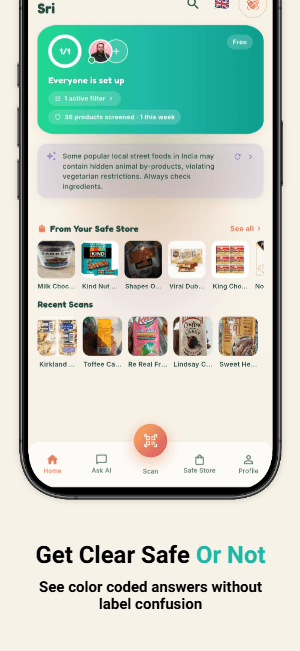
- Set up your profile: choose the Gluten-Free (Celiac) profile from the 39 supported dietary profiles, add any custom sensitivities such as seed oils or specific additives, and add family members so everyone is screened together.
- Scan the peanut butter barcode. In about two seconds you get an instant audit trail showing each ingredient and sub-ingredient, named pass or fail results for each family member, and ScanGenius AI Insight context on processing and cross-contact notes.
Instant Gluten-Free Audit Trail
7. Frequently Asked Questions (FAQ)
Is peanut butter gluten free if the label has no gluten ingredients?
Usually yes in terms of ingredients, since pure peanut butter (peanuts + salt) contains no gluten. But an ingredient list does not show cross-contact from shared equipment. For celiac disease, look for a certified or clearly labeled gluten-free product (under 20 ppm). Food Scan Genius parses the full ingredient list and sub-ingredients so you can confirm that nothing with wheat, barley, or rye is present.
Which peanut butter flavors are most likely to contain gluten?
Mix-in and dessert-style varieties carry the most risk: pretzel, granola, cookie dough, cookie butter, cereal-crunch, and chocolate blends that may contain barley malt or crisped rice. Original creamy and crunchy versions are generally lower risk, but they should still be checked. Scanning each variant individually matters, because one brand can sell both a gluten-free jar and one that is not.
Does ‘may contain wheat’ mean peanut butter is unsafe for celiac disease?
It signals a possible cross-contact risk, though these advisory statements are often voluntary and inconsistently applied. Many people with celiac disease choose to avoid products carrying such warnings, while others discuss this with their dietitian or doctor. Food Scan Genius flags advisory statements captured from the package so you can make an informed choice for your own sensitivity level.
Can Food Scan Genius check peanut butter for the whole family at once?
Yes. With Multi-Household Family Profiles, one scan screens every member of your household against their individual profile and names who is affected, for example ‘Fails for Sri (Gluten)’. This is useful when one person is gluten-free, another avoids seed oils, and a third has a different dietary profile. All of this is included in the free core features, and answers to ‘is peanut butter gluten free’ can be checked per person.
Know What’s In Your Food Before You Buy — Scan Free Today
Never second-guess confusing grocery labels again. Download Food Scan Genius to uncover hidden additives, toxic dyes, and allergens for the whole household before you buy.