1. Why the White Rice Gluten Question Is Trickier Than It Looks
Yes, plain white rice is naturally gluten free: rice grain + nothing added = 0 gluten, because rice contains no wheat, barley, or rye proteins. The grain itself is safe. The risk comes from what happens to it before it reaches your plate.
If you or someone you love has celiac disease or non-celiac gluten sensitivity, that distinction matters. A bag of plain long-grain rice is a very different product from a boxed ‘savory herb’ rice pilaf, a frozen fried rice bowl, or a scoop from a bulk bin. The word ‘rice’ on the front of the package tells you very little about what is inside. Many people on a gluten-free diet have eaten something they assumed was safe because ‘it’s just rice,’ and then spent the next two days feeling unwell. That frustration is valid, and it is not your fault.
Clinically, the goal is to stay below the level that triggers an immune response in people with celiac disease. In the United States, a product labeled ‘gluten-free’ must contain fewer than 20 parts per million of gluten, a benchmark discussed in the Celiac Disease Foundation Threshold Requirements resources. Plain white rice almost always meets that standard. A packaged product that merely contains rice does not automatically do so.
Rice also tends to be a staple for people who have cut out gluten, so it is eaten often and in large portions. That makes it worth getting right. Plain white rice is a refined grain, so it also helps to see where it fits in a balanced pattern, such as the one described in the World Health Organization Guidelines on Healthy Diets & Saturated Fats. This guide covers both questions: whether a given rice product is safe, and how to confirm it in seconds.
Scan Any Label for Hidden Additives and Allergens — Free
Never second-guess confusing grocery labels again. Download Food Scan Genius to uncover hidden additives, toxic dyes, and allergens for the whole household before you buy.


2. Six Ways Rice Becomes Unsafe: Hidden Gluten and Labeling Loopholes
The answer to ‘is white rice gluten free’ depends on the form it comes in. These are the most common ways a gluten-free grain picks up gluten, and the ones a quick glance at the front of the package will miss:
- Flavored rice mixes and pilafs: Many boxed blends include orzo, vermicelli, or other wheat pasta pieces mixed in with the rice. The pasta is often a small, easy-to-miss part of the ingredient list.
- Soy sauce and seasoning packets: Traditional soy sauce is brewed with wheat. Fried rice kits, teriyaki rice bowls, and seasoning sachets may use it, or hydrolyzed wheat protein, as a flavor base.
- Barley malt and malt extract: These show up in some puffed rice cereals, rice crisps, and snack bars. Barley contains gluten, and the malt can be listed far down the ingredient list.
- Shared milling, packing, and bulk bins: Rice can pick up stray wheat or barley from shared equipment or scoops. This risk is higher with loose bulk rice than with sealed, certified products.
- Precautionary ‘may contain’ statements: In many markets these are voluntary and not standardized. A missing warning does not guarantee a clean facility, and a present one does not tell you the actual level of risk.
- Restaurant and ready-meal preparation: Rice cooked in shared water or broth, stirred with shared utensils, or finished with sauces can be contaminated even though the grain started out safe.
Regulation helps, but it varies by region. Rules on how additives and allergens must be declared differ between countries, as outlined in the European Food Safety Authority (EFSA) Additive Safety Regulations overview. Gluten sources can also hide inside compound ingredients such as ‘natural flavors,’ modified starches, and seasoning blends, so a sub-ingredient has to be traced back to its source.
Highly processed rice products also tend to be heavy on additives. If you are curious about the wider picture, see the PubMed Research on Ultra-Processed Foods & Gut Microbiome Disruption. This is why a pantry staple like rice can be an easy yes in one form and a clear no in another.
3. Label Reading vs. Apps: How Food Scan Genius Compares
| Feature | Food Scan Genius | Fig | Spoonful | Manual Label Reading |
|---|---|---|---|---|
| Cost | 100% free core features, no paywalls | $59/yr | Limited scans | Free, but slow |
| Ingredient depth | Recursive sub-ingredient parsing across 5,000,000+ verified barcodes | Ingredient-list matching | Ingredient-list matching | Depends on your knowledge |
| Dietary profiles | 39 profiles plus custom sensitivities | Fixed profile list | Fixed profile list | Not applicable |
| Family screening | Multi-household profiles in one scan, with named fail attribution | Per-profile checking | Per-profile checking | One label at a time, per person |
| Languages | 11 languages with real-time in-app translation | Varies | Varies | Only as good as your fluency |
Food Scan Genius is built on the NutriGraph Database, which holds more than 5,000,000 verified UPC/EAN barcodes. Its recursive parsing breaks compound ingredients such as ‘seasoning blend’ or ‘natural flavor’ into their components, so a wheat-derived element buried several layers down in a rice product is far less likely to slip through. When you scan a rice pilaf, you get a verdict on the whole product, not just the first line of the label. You can also add a custom sensitivity, for example a specific additive or seed oil, so the scan reflects your own needs and not a generic template.
Each scan also includes a ScanGenius AI Insight, which explains why a product passed or failed and gives context without reducing food to a good-or-bad score. Alongside it you get a NOVA 1-4 classification and a Nutri-Score, so you can see how processed a rice product is as well as whether it contains gluten. For households, Multi-Household Family Profiles screen everyone at once and name who is affected, for example ‘Fails for Sri (Gluten)’, so nobody has to check each label by hand.
4. Related Food Safety & Dietary Guides
- Best Food Allergy Scanner App – Scan Food Labels Instantly — Food Allergy & Sensitivity Scanner Hub
- The 7 Best Free Food Scanner Apps of 2026 — best free food scanner apps
- Choosing the Best Barcode Scan App for Your Health — guide to choosing a barcode scanner app
- Food Scan Genius: World’s #1 Food Ingredient Scanner App — Food Scan Genius scanner app
5. Scientific & Health Authority References
- Celiac Disease Foundation Threshold Requirements
- European Food Safety Authority (EFSA) Additive Safety Regulations
- PubMed Research on Ultra-Processed Foods & Gut Microbiome Disruption
- World Health Organization Guidelines on Healthy Diets & Saturated Fats
6. How to Scan in 3 Simple Steps
- Download Food Scan Genius free on iOS or Android. Core features have no paywall and no scan cap.
- Set up your profile: choose the Gluten-Free profile from the 39 available, add family members under Multi-Household Profiles, and add any custom sensitivities, such as a specific additive or seasoning ingredient.
- Scan the rice barcode. In about 2 seconds you get an instant audit trail showing each flagged sub-ingredient, a plain-language AI Insight, the NOVA group, and the Nutri-Score.
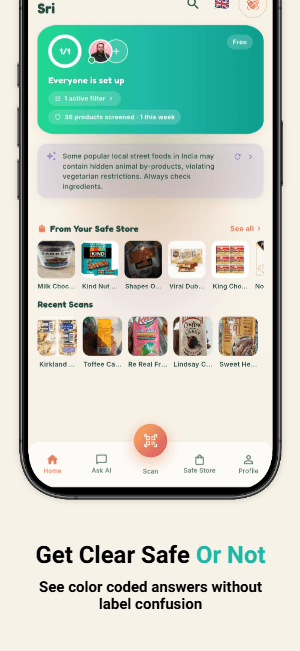
Instant Gluten-Free Audit Trail
7. Frequently Asked Questions (FAQ)
Is white rice gluten free if it is plain and uncooked?
Yes. Plain white rice is naturally gluten free because rice does not contain the gluten proteins found in wheat, barley, and rye. Rice that is sealed and labeled gluten-free is the safest choice. If you scan any rice product with Food Scan Genius, the app checks the barcode against the NutriGraph Database to confirm there are no gluten-containing ingredients and flags any that it finds.
Why do some people react to white rice even though it is gluten free?
The likeliest cause is cross-contact or an added ingredient, not the rice itself. Shared processing equipment, bulk bins, wheat pasta in pilaf mixes, and soy-sauce-based seasonings are the usual sources. Rice can also be a trigger for unrelated reasons, such as a separate food intolerance, so persistent symptoms are worth discussing with your doctor. Scanning the specific product helps rule out hidden gluten.
Is glutinous or sticky rice gluten free?
Yes. Despite the name, ‘glutinous’ rice describes the sticky, starchy texture of the cooked grain. It does not contain gluten. The same caution applies as with other rice: check any sauces, fillings, or seasonings served with it, since those are more likely to contain wheat.
Can Food Scan Genius check rice products for my whole family at once?
Yes. With Multi-Household Family Profiles, one scan screens the product against every person’s dietary profile and names who is affected, such as ‘Fails for Sri (Gluten)’. Combined with 39 supported dietary profiles, custom sensitivities, and 11 languages with in-app translation, it makes checking whether a rice product is gluten free faster and clearer for mixed-diet households.
Know What’s In Your Food Before You Buy — Scan Free Today
Never second-guess confusing grocery labels again. Download Food Scan Genius to uncover hidden additives, toxic dyes, and allergens for the whole household before you buy.