
1. Why Finding Keto Friendly Bread Is So Frustrating in 2026
If you have ever stood in a grocery aisle turning a loaf over in your hands, trying to work out whether a bag marked ‘keto’ really fits your day, you are not being picky. You are responding to a real problem. Bread is one of the hardest foods to reproduce without grain, and manufacturers have filled the gap with fiber isolates, wheat proteins, sugar alcohols, gums, and enzymes. The front of the package says ‘Zero Net Carbs’ or ‘Keto Certified.’ The back often tells a more complicated story.
The clinical context matters here. People follow ketogenic and low-carb patterns for many reasons: type 2 diabetes management under medical supervision, epilepsy protocols, PCOS, weight goals, or simply feeling better. For some of them, a few grams of hidden carbohydrate or an unexpected sweetener can disrupt glucose readings, ketone levels, or digestion. For others, the main concern is allergens or sensitivities. A loaf that is low in carbs may still contain wheat gluten, tree nuts, eggs, or soy. Under the FDA Food Allergen Labeling & Consumer Protection Act (FALCPA), major allergens must be declared in plain language. But ‘keto’ is a marketing term, not a regulated one, and it carries no promise about allergens, gluten, or additive load.
Many keto-friendly breads also sit in heavily processed territory. They are engineered products, and the engineering often means long ingredient lists. Researchers continue to study how highly processed formulations relate to diet quality and digestive health, and this PubMed Research on Ultra-Processed Foods & Gut Microbiome Disruption is a useful starting point for understanding why ingredient quality deserves a second look. That does not mean you should feel guilty for buying a convenient loaf. It means you deserve clear information to choose one on purpose.
The goal of this guide is to take the pressure off. We will walk through what to look for in a genuinely useful keto friendly bread, which label claims deserve skepticism, and how to check a loaf in seconds rather than minutes of squinting at fine print. Formulas change often, so we focus on how to evaluate a loaf instead of promising that any one brand is perfect. Always check the current package, and talk to your clinician if you manage a medical condition with diet.
Scan Any Label for Hidden Additives and Allergens — Free
Never second-guess confusing grocery labels again. Download Food Scan Genius to uncover hidden additives, toxic dyes, and allergens for the whole household before you buy.


2. Sneaky Label Tricks to Watch for on Keto Friendly Bread
Most keto bread labels are not illegal or even dishonest. They are just built to be read quickly, and the details that matter most tend to be the least visible. Here are the patterns we see most often when auditing low-carb loaves, along with how to read around them. Several of these ingredients are also reviewed in Europe, and the European Food Safety Authority (EFSA) Additive Safety Regulations are a helpful reference if you want to see how regulators evaluate preservatives, sweeteners, and texturizers.
- ‘Net carbs’ is not a defined term. There is no FDA definition of net carbs. Brands typically subtract fiber and sometimes sugar alcohols from total carbohydrates, but the math varies. Start with total carbohydrates, fiber, and sugar alcohols on the Nutrition Facts panel, then do your own subtraction using the rule your clinician or plan recommends.
- Isolated fibers doing heavy lifting. Oat fiber, inulin or chicory root fiber, resistant wheat starch, polydextrose, and soluble corn fiber help bring carb counts down. Individual responses vary. Some people tolerate them well, while others experience bloating or gas, especially with inulin. Fiber content can also read as impressively high while a portion behaves differently from the fiber in whole foods.
- Vital wheat gluten as the structural backbone. Many convincingly bread-like keto loaves rely on wheat protein. That is fine for some people, but it is a hard stop for anyone with celiac disease, wheat allergy, or non-celiac gluten sensitivity. ‘Low carb’ and ‘gluten free’ are separate claims, so confirm each one.
- Sugar alcohols and allulose. Maltitol can raise blood glucose more than people expect, and sugar alcohols in general can cause digestive upset in larger amounts. Allulose is often excluded from sugar counts on labels, which can make a product look sweeter-free than it is. Check the ingredient list, not just the sugar line.
- Small slices and flexible serving sizes. A slice of 25 to 30 grams may look like a bargain at 1 or 2 net carbs, but a sandwich uses two slices, and some brands list nutrition for a single thin slice or even half a roll. Compare the serving weight, not just the carb figure.
- Refined seed oils, preservatives, and ‘natural flavors.’ Low-carb loaves often use canola, sunflower, or soybean oil for moisture, along with calcium propionate, sorbic acid, or cellulose gum to extend shelf life. These are permitted, but plenty of shoppers want to avoid specific ones. Terms like ‘natural flavors’ and ‘spices’ can also mask sub-ingredients you would want to know about.
Fat quality is another conversation worth having. Nut-flour and seed-based loaves can be high in fat, and the type of fat matters for long-term health. The World Health Organization Guidelines on Healthy Diets & Saturated Fats offer population-level context on limiting saturated and trans fats, which is worth weighing alongside your own medical advice. And if almonds, eggs, soy, or coconut-derived ingredients are a concern, remember that keto breads lean on these heavily as flour and binder substitutes.
3. Food Scan Genius vs. Other Ways to Vet Keto Bread
| Dimension | Food Scan Genius | Manual Label Reading | Fig | Spoonful |
|---|---|---|---|---|
| Cost | 100% free core features, zero paywalls | Free, but costs time | $59/yr | Limited scans |
| Product database | NutriGraph: 5,000,000+ verified UPC/EAN barcodes | Whatever is printed on the package | Barcode-based lookup | Barcode-based lookup |
| Ingredient depth | Recursive AST parsing of sub-ingredients | Easy to miss sub-ingredients and aliases | Ingredient flagging by profile | Ingredient flagging by profile |
| Personalization | 39 dietary profiles plus custom sensitivities (seed oils, dyes, additives) | Entirely from memory | Preset restrictions | Preset restrictions |
| Family and language support | Multi-household profiles with named fail attribution; 11 languages with real-time translation | One person at a time; language-limited | Varies by plan | Varies by plan |
The real advantage in vetting keto friendly bread is depth. A loaf’s ingredient list often contains nested components: a seed blend that includes a flour that includes an additive, or a ‘natural flavor’ with its own carrier. Food Scan Genius is powered by the NutriGraph Database, which spans more than 5,000,000 verified UPC and EAN barcodes. Its recursive AST parsing breaks compound ingredients down into their sub-ingredients, so a profile you set up for wheat, tree nuts, soy, or a custom concern like sunflower oil is checked against what is actually in the bread, not just the first line of the list. With 39 supported dietary profiles and the option to add your own custom sensitivity, you can tailor the check to your exact needs, whether that is a particular sweetener, dye, or preservative.
Then there is context. ScanGenius AI Insight explains why an ingredient was flagged and what it means, rather than handing you a single moralizing score. It pairs that explanation with a NOVA 1 to 4 classification and a Nutri-Score, so you can see, for instance, that a loaf may be low in carbohydrates yet still sit in NOVA 4 because of its formulation. You decide how much that matters. If you shop for a household, Multi-Household Family Profiles screen everyone in one scan and name who is affected, such as ‘Fails for Sri (Gluten),’ so the keto eater, the celiac, and the nut-allergic child are all covered at once. Real-time translation across 11 languages means the same clarity works for family members and caregivers who read different languages.
4. Related Food Safety & Dietary Guides
- Best Food Allergy Scanner App – Scan Food Labels Instantly — Food Allergy & Sensitivity Scanner Hub
- The 7 Best Free Food Scanner Apps of 2026 — best free food scanner apps
- Choosing the Best Barcode Scan App for Your Health — guide to choosing a barcode scanner app
- Food Scan Genius: World’s #1 Food Ingredient Scanner App — Food Scan Genius scanner app
5. Scientific & Health Authority References
- FDA Food Allergen Labeling & Consumer Protection Act (FALCPA)
- European Food Safety Authority (EFSA) Additive Safety Regulations
- PubMed Research on Ultra-Processed Foods & Gut Microbiome Disruption
- World Health Organization Guidelines on Healthy Diets & Saturated Fats
6. How to Scan in 3 Simple Steps
- Download Food Scan Genius free on iOS or Android. Core features are fully free with no paywalls and no scan caps, so you can check as many loaves as you like.
- Set up your profile for keto and low-carb eating. Choose from 39 dietary profiles, then add custom sensitivities such as vital wheat gluten, sunflower or canola oil, specific sweeteners, or tree nuts. If you shop for others, add Multi-Household Family Profiles so everyone is screened together.
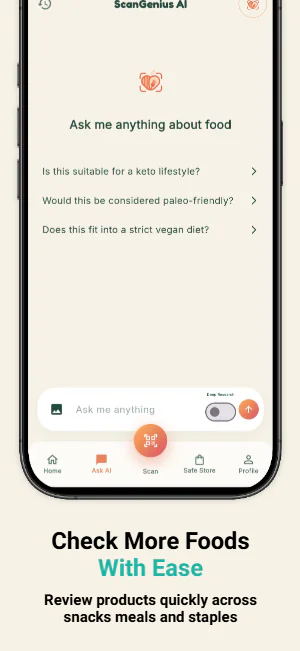
- Scan the bread’s barcode. In about two seconds you get an instant audit trail showing flagged sub-ingredients, named fail attribution for each family member, the NOVA group, the Nutri-Score, and ScanGenius AI Insight explaining what it all means.
Instant Keto & Sugar Audit Trail
7. Frequently Asked Questions (FAQ)
What should I look for first when choosing keto friendly bread?
Start with the Nutrition Facts panel rather than the front-of-pack claim. Check the serving weight, total carbohydrates, fiber, and sugar alcohols, and calculate net carbs yourself, because ‘net carbs’ has no official FDA definition. Then scan the ingredient list for wheat gluten, tree nuts, soy, eggs, and seed oils if those matter to you. Food Scan Genius speeds this up by scanning the barcode and checking sub-ingredients against your keto profile and any custom sensitivities.
Is keto friendly bread automatically gluten free?
No. Many low-carb loaves use vital wheat gluten to get a bread-like texture, which makes them unsuitable for celiac disease or wheat allergy. Low carb and gluten free are separate attributes. Under FALCPA, wheat must be declared on the label, but a keto claim says nothing about gluten. With Food Scan Genius, you can select a gluten-related profile alongside your keto preferences and see exactly which ingredient triggers a fail.
Can the fiber and sugar alcohols in keto bread affect blood sugar or digestion?
They can, and responses differ between people. Some sugar alcohols, such as maltitol, may raise blood glucose more than expected, and isolated fibers like inulin can cause gas or bloating in some individuals. Allulose is often excluded from sugar counts, which affects how a label reads. If you manage diabetes or a digestive condition, discuss specific ingredients with your clinician. Food Scan Genius can flag these ingredients through custom sensitivities, and ScanGenius AI Insight adds context without judging your choices.
Does a keto friendly bread count as healthy if it’s ultra-processed?
It depends on your goals. Many keto breads fall into NOVA group 4 because of isolated fibers, gums, and flavorings, and research continues to examine how ultra-processed foods relate to overall diet quality and gut health. A loaf can still be a practical tool for your carb target. Food Scan Genius shows the NOVA 1 to 4 classification and Nutri-Score without a simplistic good-or-bad verdict, so you can weigh convenience against ingredient quality yourself.
Know What’s In Your Food Before You Buy — Scan Free Today
Never second-guess confusing grocery labels again. Download Food Scan Genius to uncover hidden additives, toxic dyes, and allergens for the whole household before you buy.