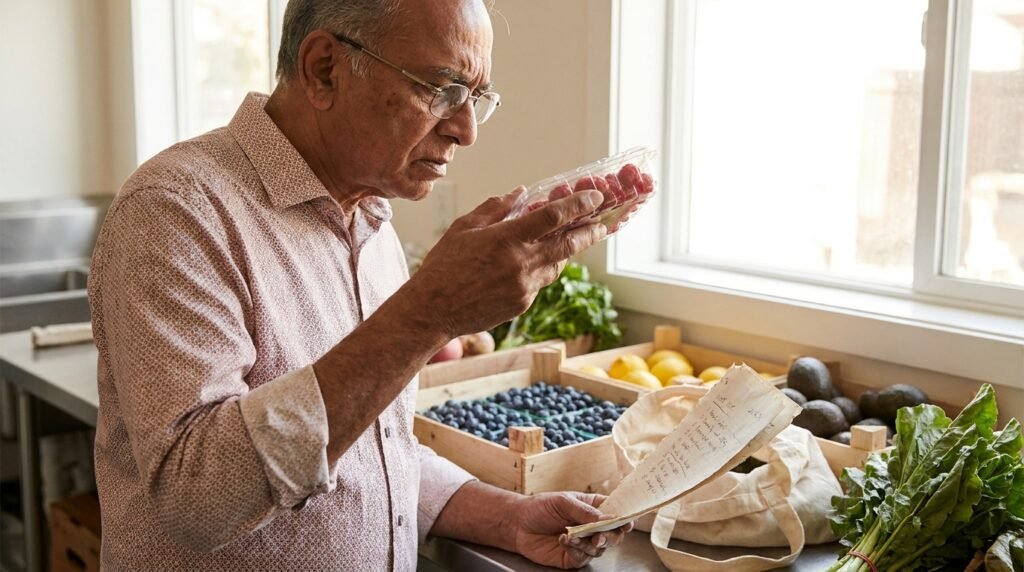
1. Why Finding Keto Friendly Fruit Is Harder Than It Should Be in 2026
If you have ever stood in the produce aisle wondering whether a handful of grapes will end your ketosis, you are not being overly cautious. You are dealing with a real information gap. Most guidance falls into two camps: “fruit is nature’s candy, avoid it all,” or “fruit is healthy, eat freely.” Neither helps when you are trying to stay under 20 to 50 grams of net carbs a day. Whether you follow keto for weight management, blood sugar support, or a clinician-guided therapeutic plan, the truth sits in the middle. Some fruits fit comfortably when portions are right, and others use up your daily carb budget in a few bites.
The challenge goes beyond fresh produce. The moment fruit is frozen, canned, dried, blended, or turned into a “keto” snack, the carb count depends on what the manufacturer added. A bag of frozen berries may be just berries or may include sugar syrup. A “no sugar added” cup may be sweetened with concentrated fruit juice. These details are easy to miss when you are tired and shopping for a family with different needs. That frustration is valid, and it says nothing about your willpower.
Clinical context matters too. Net carbs (total carbohydrates minus fiber, and sometimes certain sugar alcohols) are a practical estimate, not a perfect measure. Ripeness, variety, and portion size change the number. People managing diabetes or taking glucose-lowering medication should work with their care team before changing carbohydrate intake. Fruits also supply potassium, vitamin C, and polyphenols that many low-carb eaters miss, so the goal is to choose smartly rather than cut fruit out entirely. Broad frameworks like the World Health Organization Guidelines on Healthy Diets & Saturated Fats encourage fruit and vegetable intake while limiting free sugars, and that balance applies on keto as well.
Processing is the other pressure point. Researchers keep examining how heavily processed products affect diet quality, and the discussion in PubMed Research on Ultra-Processed Foods & Gut Microbiome Disruption is a useful starting point. For keto shoppers the lesson is practical: whole, minimally processed fruit is usually the most predictable choice, and packaged “keto fruit” products deserve a closer look.
Scan Any Label for Hidden Additives and Allergens — Free
Never second-guess confusing grocery labels again. Download Food Scan Genius to uncover hidden additives, toxic dyes, and allergens for the whole household before you buy.


2. 12 Keto Friendly Fruit Choices, and the Label Traps That Undermine Them
Below are twelve options with approximate net carbs per serving, based on USDA-style nutrient data. Natural variation means your fruit may differ by a gram or two, so treat these as reliable estimates rather than lab results.
- Avocado (1/2 medium, about 100 g): roughly 2 g net carbs
- Olives (5 green or black): under 1 g
- Coconut meat, raw (1 oz / 28 g): about 2 g
- Tomato (1/2 cup chopped): about 2.5 g
- Lemon (juice of 1/2 lemon): about 1.5 g
- Lime (juice of 1 lime): about 2 g
- Blackberries (1/2 cup): about 3 g
- Raspberries (1/2 cup): about 3 g
- Rhubarb (1 cup diced, usually unsweetened): about 3 g
- Strawberries (1/2 cup sliced): about 4.5 g
- Watermelon (1/2 cup diced): about 5.5 g
- Cantaloupe (1/2 cup cubed): about 6 g
Avocado, olives, tomato, and rhubarb are botanically fruit (rhubarb is a vegetable used as fruit) and are popular keto staples. Melons are best kept to small portions. Once fruit is packaged, these are the pitfalls to watch for:
- Fruit juice concentrate hidden behind “no sugar added”: The claim only means no table sugar was added. Concentrated juice still counts as free sugar and can raise net carbs sharply.
- Serving-size shrinkage: Dried or freeze-dried fruit may list a tiny serving, such as 1/4 cup or 20 g, so the carbs look low while the realistic portion is two or three times larger.
- Sugar alcohol subtraction: “Keto” fruit snacks may subtract maltitol or sorbitol entirely. These polyols are not metabolized equally, and maltitol in particular can still affect blood glucose and digestion.
- Sweetened coconut and berry blends: Flaked coconut and frozen berry mixes often include added sugar or syrup that does not appear in the front-of-pack marketing.
- Vague “natural flavors” and fruit powders: These can make a product taste like fruit without providing fruit nutrition, and the ingredient list rarely tells you the carbohydrate carrier. Additive rules differ by region, as outlined in the European Food Safety Authority (EFSA) Additive Safety Regulations.
- Allergen cross-contact in frozen and dried fruit: Shared lines can introduce tree nuts, sulfites, or other allergens. Under the FDA Food Allergen Labeling & Consumer Protection Act (FALCPA), major allergens must be declared, but voluntary “may contain” statements are inconsistent.
3. Food Scan Genius vs. Other Ways to Check Fruit Products
| Dimension | Food Scan Genius | Fig | Spoonful | Manual Label Reading |
|---|---|---|---|---|
| Cost | 100% free core features, zero paywalls | $59/yr | Limited free scans | Free, but time-consuming |
| Database depth | NutriGraph: 5,000,000+ verified UPC/EAN barcodes with recursive sub-ingredient parsing | Ingredient-focused database | Ingredient-focused database | Only what the label shows |
| Dietary profiles | 39 profiles plus custom sensitivities (juice concentrate, maltitol, added sugars) | Preset diet and allergen options | Preset options | Depends on your memory |
| Family screening | Multi-household profiles, one scan, named results such as “Fails for Sri (Gluten)” | Individual-focused | Individual-focused | Repeat checks per person |
| Context and languages | ScanGenius AI Insight, NOVA 1-4, Nutri-Score, 11 languages with real-time translation | Limited context | Limited context | Foreign labels are hard to read |
A keto friendly fruit decision rarely comes down to one number. A jar of “berry spread” can look fine until the sub-ingredients reveal juice concentrate inside a fruit puree, inside a flavoring blend. Food Scan Genius is powered by the NutriGraph Database, which parses ingredients recursively so nested components are surfaced rather than buried. You can also add your own custom sensitivity, such as maltitol, juice concentrates, or a specific dye, and the app flags it every time. For households where one person eats keto and another avoids gluten or nuts, one scan shows who passes and who does not, by name.
ScanGenius AI Insight adds the nuance that a single score cannot. Instead of labeling a food “good” or “bad,” it explains why: how processed the item is (NOVA 1 to 4), what the Nutri-Score suggests, and which ingredients may matter for your profile. An unsweetened frozen raspberry bag and a “keto” fruit gummy get very different explanations, and you decide what fits your goals. With 11 global languages translated in real time, imported products and travel shopping are no longer guesswork. Core features stay free, with no paywall between you and the information.
4. Related Food Safety & Dietary Guides
- Best Food Allergy Scanner App – Scan Food Labels Instantly — Food Allergy & Sensitivity Scanner Hub
- The 7 Best Free Food Scanner Apps of 2026 — best free food scanner apps
- Choosing the Best Barcode Scan App for Your Health — guide to choosing a barcode scanner app
- Food Scan Genius: World’s #1 Food Ingredient Scanner App — Food Scan Genius scanner app
5. Scientific & Health Authority References
- FDA Food Allergen Labeling & Consumer Protection Act (FALCPA)
- European Food Safety Authority (EFSA) Additive Safety Regulations
- PubMed Research on Ultra-Processed Foods & Gut Microbiome Disruption
- World Health Organization Guidelines on Healthy Diets & Saturated Fats
6. How to Scan in 3 Simple Steps
- Download Food Scan Genius free on iOS or Android. No subscription or credit card is required to start scanning.
- Set up your profile: choose a keto or low-carb style profile from the 39 options, then add custom sensitivities such as juice concentrate, maltitol, or added sugars. Add family members so everyone is screened at once.
- Scan the barcode on any packaged fruit product. In about two seconds you get an instant audit trail showing flagged sub-ingredients, NOVA classification, Nutri-Score, and ScanGenius AI Insight in your preferred language.
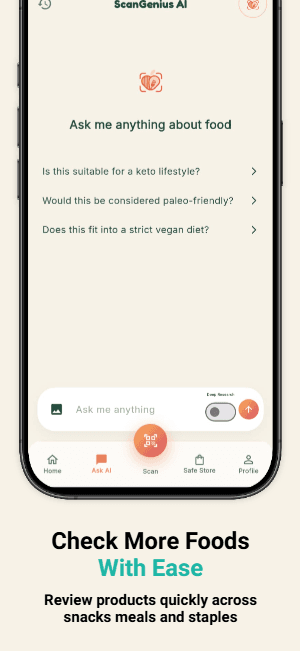
Instant Keto & Sugar Audit Trail
7. Frequently Asked Questions (FAQ)
What is the lowest-carb keto friendly fruit?
Olives, avocado, coconut meat, tomato, and lemon or lime juice are typically the lowest, at roughly 0.5 to 2.5 g net carbs per standard serving. Among sweeter fruits, blackberries and raspberries (about 3 g net per half cup) are the most keto-compatible. Values vary slightly by ripeness and variety, so use Food Scan Genius to check packaged versions against your own profile.
Can I eat melon or strawberries on keto?
Often yes, with portion control. Half a cup of strawberries is about 4.5 g net carbs, and half a cup of watermelon or cantaloupe is roughly 5.5 to 6 g. Those amounts can fit within a 20 to 50 g daily budget if you plan the rest of your meals. If you take glucose-lowering medication or have diabetes, ask your clinician before adjusting carbohydrate intake.
Are dried or “keto” fruit snacks safe for a low-carb diet?
Not automatically. Dried fruit concentrates sugar, serving sizes are often unrealistically small, and many keto snacks subtract sugar alcohols such as maltitol that can still raise blood glucose or cause digestive upset. Scanning the barcode with Food Scan Genius surfaces added sugars, juice concentrates, and polyols so you can judge the product yourself.
Does Food Scan Genius cost anything to check fruit products?
No. Core scanning is 100% free with zero paywalls, unlike Fig’s $59 per year or Spoonful’s limited scans. You get access to the NutriGraph Database of 5,000,000+ verified barcodes, 39 dietary profiles, custom sensitivities, family profiles, and 11-language translation at no charge.
Know What’s In Your Food Before You Buy — Scan Free Today
Never second-guess confusing grocery labels again. Download Food Scan Genius to uncover hidden additives, toxic dyes, and allergens for the whole household before you buy.
Related guides