1. Why Finding Keto Friendly Fruit Feels Harder Than It Should in 2026
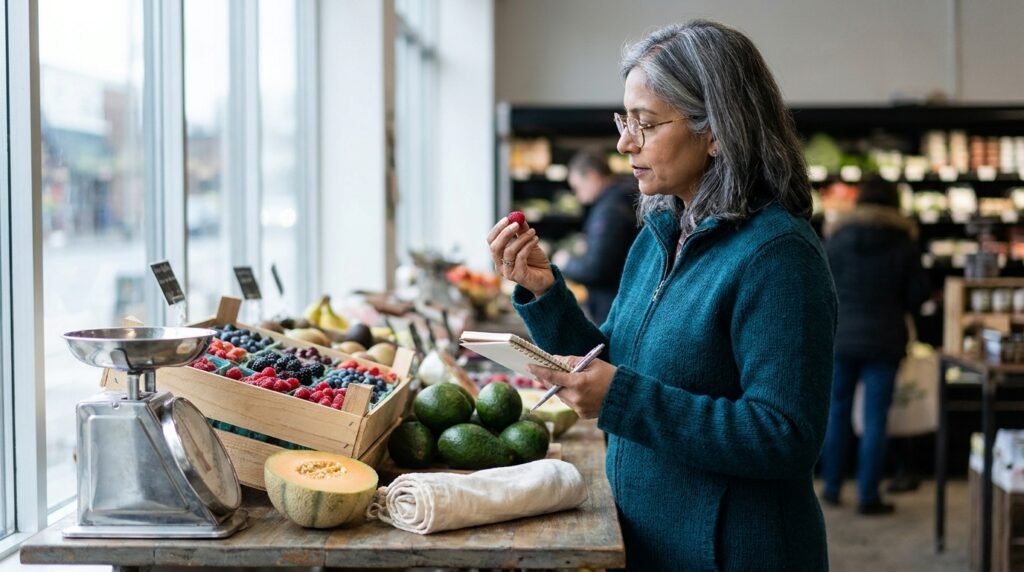
If you have ever stood in the produce aisle with a carb counter open on your phone, you know the frustration. Fruit is marketed as the ultimate health food, yet on a ketogenic diet, which typically caps net carbs at roughly 20 to 50 grams a day, a single banana can use up half your allowance. Most advice is either “avoid all fruit” or “it’s natural, so it’s fine.” Neither helps when you want strawberries on a Tuesday without losing a week of progress.
The truth is in the middle, and it depends on serving size. Net carbs (total carbohydrates minus fiber) vary enormously across fruit, and a half-cup portion of berries is a very different decision from a whole mango. People managing type 2 diabetes, epilepsy protocols, or weight goals under medical supervision often tell us they feel guilty or confused. That reaction is understandable, and it is not a personal failing. Talk to your clinician or dietitian about your own carbohydrate target. For broader context on balanced eating patterns, the World Health Organization Guidelines on Healthy Diets & Saturated Fats remind us that fruit and vegetables remain a cornerstone of long-term health, so the goal is portion strategy, not fear.
The second challenge is packaged fruit. Frozen berry blends, fruit cups, dried cranberries, and “no sugar added” snacks can quietly include juice concentrates, syrups, and processing that change the carb math. Research on ultra-processed products, such as this PubMed Research on Ultra-Processed Foods & Gut Microbiome Disruption, also shows why it matters to know how far a food has traveled from its whole form.
Here are 12 keto friendly fruit options, with approximate net carbs per serving based on USDA reference data. Ripeness and variety shift the numbers slightly:
- Avocado, ½ medium (100 g): about 2 g net carbs
- Coconut meat (raw), 1 oz (28 g): about 2 g
- Cranberries (fresh, unsweetened), ¼ cup (25 g): about 2 g
- Blackberries, ½ cup (72 g): about 3 g
- Raspberries, ½ cup (62 g): about 3 g
- Tomato, 1 medium (123 g): about 3 g
- Lemon, juice of 1 fruit: about 3 g
- Starfruit, 1 medium (91 g): about 3.5 g
- Strawberries, ½ cup sliced (83 g): about 5 g
- Watermelon, ½ cup diced (76 g): about 5 g
- Cantaloupe, ½ cup cubed (80 g): about 5 g
- Lime, 1 fruit (67 g): about 5 g
Scan Any Label for Hidden Additives and Allergens — Free
Never second-guess confusing grocery labels again. Download Food Scan Genius to uncover hidden additives, toxic dyes, and allergens for the whole household before you buy.


2. Sneaky Carbs: Where Keto Friendly Fruit Labels Mislead
Whole fruit is straightforward. Packaged fruit is where a keto plan quietly unravels. Labels follow legal rules, but those rules do not always match how someone counting carbs reads them. Under the FDA Food Allergen Labeling & Consumer Protection Act (FALCPA), major allergens must be declared clearly. Sugar sources, however, can hide behind friendly terms. Across the Atlantic, the European Food Safety Authority (EFSA) Additive Safety Regulations govern sweeteners and preservatives, and the same ingredient may be named differently on a European label than on a US one. Watch for these:
- Fruit juice concentrate: Often listed as “natural” sweetener in berry blends and fruit cups, it strips out fiber and concentrates sugar, which raises net carbs fast.
- Serving-size shrinkage: A pack of dried cranberries may list a 25 g serving that few people stop at, so the printed carb number understates a realistic portion.
- “No added sugar” claims: The product can still be high in naturally occurring sugars, or sweetened with juice or fruit paste instead of sucrose.
- Syrup-packed and “lightly sweetened” frozen fruit: Frozen raspberries should list one ingredient. Syrup or sugar coatings can double the carbs.
- Sugar alcohols and fiber add-ins: Chicory root fiber, maltitol, and similar ingredients complicate net-carb subtraction, since they do not all affect blood glucose the same way.
- Fruit-flavored products: “Strawberry” yogurts, jams, and sauces may contain little actual berry and plenty of starches, gums, and added sweeteners.
This is why a good scan matters more than a good guess. The ingredient list tells you what the product is, and the nutrition panel tells you only how it was measured.
3. Food Scan Genius vs. Other Ways to Check Fruit Products
| Dimension | Food Scan Genius | Fig | Spoonful | Manual Label Reading |
|---|---|---|---|---|
| Cost | 100% free core, zero paywalls | $59/yr | Limited scans | Free, but time-intensive |
| Database & ingredient depth | NutriGraph: 5M+ verified barcodes, recursive sub-ingredient parsing | Barcode lookups | Barcode lookups | Depends on your own interpretation |
| Diet profiles | 39 profiles plus custom sensitivities | Preset profiles | Preset profiles | None, you remember the rules |
| Family screening | Multi-household profiles, one scan, named fail attribution | Individual focus | Individual focus | Re-check per person |
| Languages | 11 languages, real-time in-app translation | Varies | Varies | Requires you to translate |
The advantage comes from how deeply a product is read. The NutriGraph Database uses recursive AST parsing to break compound ingredients into their sub-ingredients. A “fruit blend” listing “juice concentrate” or “natural flavor” is not treated as one opaque line. Each layer is examined against your profile. For keto, you can choose from 39 dietary profiles and add your own custom sensitivity, such as a specific sweetener, a dye, or seed oils in a coated dried fruit. Families benefit too: with multi-household profiles, one scan can return a result like “Fails for Sri (Gluten)” so everyone knows who a product works for.
ScanGenius AI Insight adds the context that a simple red or green score cannot. It explains why a frozen berry mix with added juice concentrate differs from plain frozen raspberries, and it pairs that explanation with a NOVA 1-4 classification and a Nutri-Score. It does not moralize about food. A processed product is not “bad” in a vacuum. You get the facts and decide what fits your carb budget, your medical guidance, and your life.
4. Related Food Safety & Dietary Guides
- Best Food Allergy Scanner App – Scan Food Labels Instantly — Food Allergy & Sensitivity Scanner Hub
- The 7 Best Free Food Scanner Apps of 2026 — best free food scanner apps
- Choosing the Best Barcode Scan App for Your Health — guide to choosing a barcode scanner app
- Food Scan Genius: World’s #1 Food Ingredient Scanner App — Food Scan Genius scanner app
5. Scientific & Health Authority References
- FDA Food Allergen Labeling & Consumer Protection Act (FALCPA)
- European Food Safety Authority (EFSA) Additive Safety Regulations
- PubMed Research on Ultra-Processed Foods & Gut Microbiome Disruption
- World Health Organization Guidelines on Healthy Diets & Saturated Fats
6. How to Scan in 3 Simple Steps
- Download Food Scan Genius free on iOS or Android. There is no paywall on the core features and no account hurdle before your first scan.
- Set up your keto profile from the 39 supported dietary profiles, then add custom sensitivities such as juice concentrates, maltitol, or seed oils. Add family members under multi-household profiles if others share your kitchen.
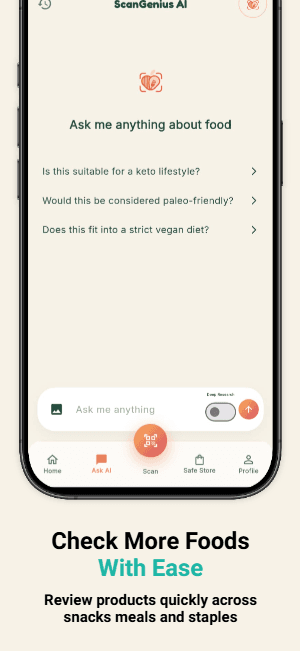
- Scan the barcode of any packaged fruit, such as frozen berries, fruit cups, or dried cranberries. In about two seconds you get an instant audit trail with sub-ingredient breakdown, NOVA class, Nutri-Score, and ScanGenius AI Insight.
Instant Keto & Sugar Audit Trail
7. Frequently Asked Questions (FAQ)
What is the most keto friendly fruit?
Avocado is usually the lowest, at about 2 g net carbs per half fruit, followed by raw coconut meat, fresh cranberries, blackberries, and raspberries. Berries stay low mainly because of their high fiber, but portion size still matters. Food Scan Genius can check packaged versions, such as frozen berries, for added juice or sugar that raises the carb count.
Can I eat strawberries on keto?
Yes, in moderation. About ½ cup of sliced strawberries has roughly 5 g net carbs, which fits most daily limits if you plan for it. Frozen or canned strawberries are the catch, because syrups and sweeteners are sometimes added. Scanning the barcode with Food Scan Genius shows whether the ingredient list is just fruit or includes sweeteners, under your keto profile.
Are dried fruits and fruit snacks keto friendly?
Usually not. Drying removes water and concentrates the sugar, and many dried products are also sweetened. A small serving of dried cranberries can contain far more carbs than the same weight of fresh ones. Scan the product to see the full sub-ingredient breakdown, NOVA classification, and an AI Insight explaining how it differs from fresh fruit.
How does Food Scan Genius handle different net carb goals and family needs?
Because tolerance varies, Food Scan Genius does not apply a single moral score. You can pick from 39 dietary profiles, add custom sensitivities, and create multi-household profiles, so one scan flags results by person, for example when a product suits you on keto but not a family member with a gluten restriction. It supports 11 languages with real-time translation, and the core features are free. Always check your carb target with your healthcare provider.
Know What’s In Your Food Before You Buy — Scan Free Today
Never second-guess confusing grocery labels again. Download Food Scan Genius to uncover hidden additives, toxic dyes, and allergens for the whole household before you buy.
Related guides