1. Why Finding a Truly Keto Friendly Snack Is So Hard in 2026
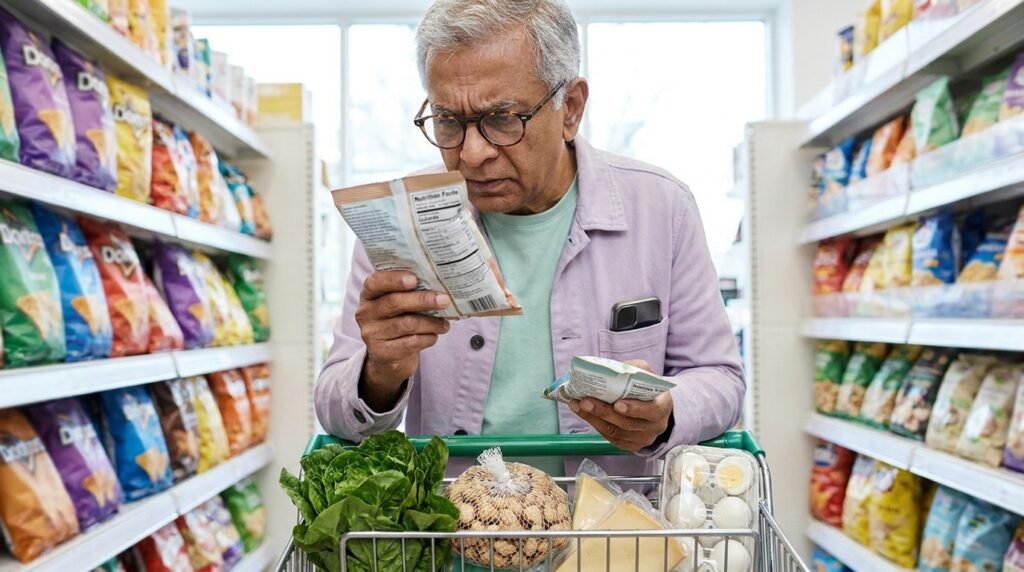
If you have ever grabbed a bar labeled “keto” and then watched your glucose meter or ketone strip tell a different story, you are not imagining things. The frustration is real, and it is not a failure of willpower. Shoppers following a ketogenic or low-carb plan, often for epilepsy management, type 2 diabetes, PCOS, or weight goals, face a snack aisle where the word “keto” is a marketing term, not a regulated one. The FDA has no legal definition of “keto,” and neither does “net carbs.” Any brand can print either on the front of a package.
That gap matters clinically. For many people, staying in nutritional ketosis means keeping total daily carbohydrates somewhere around 20 to 50 grams, depending on the individual and their clinician’s guidance. A single snack with 8 grams of poorly absorbed “net carbs” can quietly consume a fifth of that budget. Add a second snack, a sauce, and a coffee creamer, and the day’s math falls apart before dinner. It is exhausting to do forensic label reading every time you shop, and it is completely understandable to feel discouraged.
There is also a broader nutrition question. Many shelf-stable keto products are built from isolated proteins, refined fibers, sweeteners, and emulsifiers, which places them squarely in the ultra-processed category. Emerging PubMed Research on Ultra-Processed Foods & Gut Microbiome Disruption is a reminder that how a food is made can matter alongside its macronutrient numbers. Likewise, the World Health Organization Guidelines on Healthy Diets & Saturated Fats recommend keeping saturated fat below 10% of total energy intake, a useful check when your snacks lean heavily on cheese, coconut oil, and processed meats. Discuss your own targets with your physician or dietitian.
The good news: a reliable keto friendly snack does exist at ordinary grocery stores. These categories tend to hold up under scrutiny when the ingredient list is short:
- Whole-food basics: olives, hard-boiled eggs, string cheese, guacamole cups, and celery with unsweetened nut butter.
- Nuts and seeds: macadamias, pecans, Brazil nuts, and pumpkin seeds, with attention to portion size and to coatings or honey roasting.
- Savory crunch: plain pork rinds, baked cheese crisps made only from cheese, and roasted seaweed with minimal added sugar.
- Protein options: canned sardines or tuna, plus jerky with 1 gram of sugar or less per serving.
Scan Any Label for Hidden Additives and Allergens — Free
Never second-guess confusing grocery labels again. Download Food Scan Genius to uncover hidden additives, toxic dyes, and allergens for the whole household before you buy.


2. Hidden Carbs: The Labeling Loopholes Behind Many ‘Keto’ Snacks
Most carb surprises come from how the Nutrition Facts panel is calculated and how ingredients are named, not from outright deception. Learning where the gaps are lets you read any package with confidence. Here are the most common culprits that turn a promising keto friendly snack into a blood sugar spike:
- Sugar alcohols with a real glycemic impact: Erythritol and allulose tend to have minimal effect for most people, but maltitol, sorbitol, and isomalt are partially absorbed and can raise glucose noticeably. Products subtract all of them equally in “net carb” math. In the EU, polyols must carry a laxative-effect warning under European Food Safety Authority (EFSA) Additive Safety Regulations, a clue worth noticing even when shopping elsewhere.
- Isolated fibers that digest partially: Soluble corn fiber, isomaltooligosaccharides (IMO), and some resistant dextrins are counted as fully subtractable, yet individual responses vary. Chicory root inulin is gentler on glucose but can cause digestive distress.
- Rounding to zero: Labels may list under 0.5 g of sugar or carbohydrate per serving as zero. When the serving is tiny, such as a 15 g portion of seasoning-coated nuts, the carbs multiply quickly once you eat a realistic amount.
- Starch disguised as texture or seasoning: Maltodextrin, dextrose, modified food starch, tapioca syrup, and potato starch show up in jerky glazes, cheese crisps, flavored nuts, and spice blends. Maltodextrin has a glycemic index higher than table sugar.
- Sweetener names that hide sugar: Fruit juice concentrate, brown rice syrup, coconut sugar, and “evaporated cane juice” are all sugars, and they often appear low on the ingredient list of savory snacks.
- Allergen-driven substitutions: Low-carb crackers and protein crisps commonly rely on wheat gluten, soy, almonds, or milk proteins. Under the FDA Food Allergen Labeling & Consumer Protection Act (FALCPA), major allergens must be declared, but sub-ingredients and cross-contact warnings can still be easy to miss.
A practical rule: read the ingredient list first and the front of the package last. If a snack contains more than five or six ingredients you cannot picture in a kitchen, or if the “net carbs” figure depends on subtracting three different categories, treat it as a product to test rather than assume. Checking against total carbohydrate, not just the net figure, is the most conservative approach, and many people also confirm with a glucose or ketone meter.
3. Food Scan Genius vs. Traditional Ways to Vet a Keto Snack
| Dimension | Food Scan Genius | Manual Label Reading | Front-of-Pack “Keto” Claims | Paid-Subscription Diet Apps |
|---|---|---|---|---|
| Cost | 100% free core, zero paywalls | Free, but time-intensive | Free | Often about $59/yr or capped scans |
| Hidden-ingredient detection | Recursive sub-ingredient parsing across 5M+ verified barcodes | Depends on your knowledge of aliases | None; unregulated marketing term | Varies by database depth |
| Custom sensitivities | 39 dietary profiles plus your own custom flags (maltitol, seed oils, dyes) | Manual memory only | Not personalized | Usually limited presets |
| Family screening | Multi-household profiles with named fail attribution | One person at a time | Not applicable | Typically single profile or premium tier |
| Speed and language | About 2-second scan, 11 languages with real-time translation | Minutes per product | Instant but unreliable | Fast, fewer languages |
Food Scan Genius is powered by the NutriGraph Database, which holds more than 5,000,000 verified UPC/EAN barcodes. Instead of reading an ingredient list as a flat string, it uses recursive abstract syntax tree parsing to open compound ingredients such as “seasoning blend” or “natural flavors” and examine what sits inside. That matters for a keto friendly snack, where dextrose in a spice coating or maltitol inside a “sugar-free” chocolate chip is exactly the kind of detail a quick glance misses. You can choose from 39 supported dietary profiles, including low-carb approaches, and add your own custom sensitivity for things like maltitol, maltodextrin, seed oils, or specific dyes.
The ScanGenius AI Insight then explains the result in context rather than handing you a single judgmental number. You see a NOVA 1-4 classification and a Nutri-Score alongside plain-language notes, such as why an ingredient might matter for your carb budget and how it was flagged. There is no moralizing “good or bad” grade, because a snack that fits one person’s plan may not fit another’s. If you shop for a household, multi-household family profiles screen everyone in one scan and attribute failures by name, like “Fails for Sri (Gluten),” so the keto eater, the nut-allergic child, and the gluten-free partner each get a clear answer.
4. Related Food Safety & Dietary Guides
- Best Food Allergy Scanner App – Scan Food Labels Instantly — Food Allergy & Sensitivity Scanner Hub
- The 7 Best Free Food Scanner Apps of 2026 — best free food scanner apps
- Choosing the Best Barcode Scan App for Your Health — guide to choosing a barcode scanner app
- Food Scan Genius: World’s #1 Food Ingredient Scanner App — Food Scan Genius scanner app
5. Scientific & Health Authority References
- FDA Food Allergen Labeling & Consumer Protection Act (FALCPA)
- European Food Safety Authority (EFSA) Additive Safety Regulations
- PubMed Research on Ultra-Processed Foods & Gut Microbiome Disruption
- World Health Organization Guidelines on Healthy Diets & Saturated Fats
6. How to Scan in 3 Simple Steps
- Download Food Scan Genius free on iOS or Android. There is no paywall on core scanning, and you can switch the app into any of 11 languages with real-time in-app translation.
- Set up your profile for keto: choose a low-carb or ketogenic dietary profile from the 39 options, then add custom sensitivities such as maltitol, maltodextrin, seed oils, or an allergen. If you shop for others, add named family profiles.
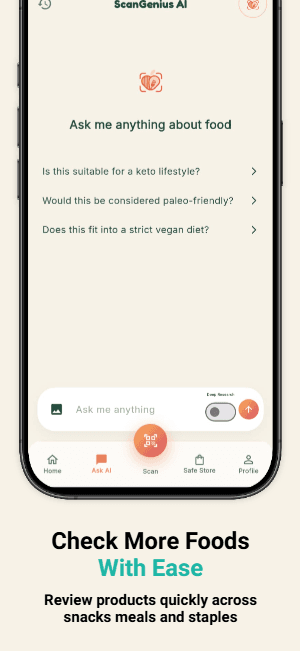
- Scan the barcode of any snack in about 2 seconds. Review the instant audit trail showing flagged sub-ingredients, the NOVA and Nutri-Score context, and any named profile failures, then decide whether it earns a spot in your cart.
Instant Keto & Sugar Audit Trail
7. Frequently Asked Questions (FAQ)
What makes a keto friendly snack truly keto friendly?
A keto friendly snack is one whose total carbohydrate content fits your personal daily limit, usually 20 to 50 grams for people in ketosis, and whose ingredients do not contain hidden starches or high-glycemic sweeteners. Because the FDA does not define “keto,” the front-of-pack claim is not proof. Food Scan Genius audits the full ingredient list through the NutriGraph Database and flags items like maltitol, dextrose, or maltodextrin that can undermine your goals.
Should I subtract sugar alcohols and fiber to calculate net carbs?
There is no official regulatory formula, so it depends on the ingredient. Erythritol and allulose are generally treated as near zero for most people, while maltitol and sorbitol are partially absorbed and can raise blood glucose. Isolated fibers also vary. The most conservative approach is to start from total carbohydrate and test your response. You can create a custom sensitivity in Food Scan Genius to flag any sweetener or fiber you want to avoid.
Are pork rinds, cheese crisps, and jerky always safe on keto?
Not always. Plain pork rinds and cheese-only crisps are typically very low in carbs, but some brands add starch anti-caking agents, sugar-based seasonings, or sweet glazes. Jerky frequently contains brown sugar, honey, or teriyaki sauce. Scanning the barcode with Food Scan Genius reveals sub-ingredients inside seasoning blends, and the AI Insight explains in context why a product was flagged without reducing it to a simplistic score.
Can I screen snacks for my whole family, not just my keto needs?
Yes. Food Scan Genius supports multi-household family profiles, so one scan checks the product against everyone’s dietary needs and names who it fails for, such as “Fails for Sri (Gluten).” With 39 dietary profiles and custom sensitivities, a keto adult, a child with a tree-nut allergy, and a gluten-free partner can all be screened at once. Core features are 100% free with zero paywalls.
Know What’s In Your Food Before You Buy — Scan Free Today
Never second-guess confusing grocery labels again. Download Food Scan Genius to uncover hidden additives, toxic dyes, and allergens for the whole household before you buy.