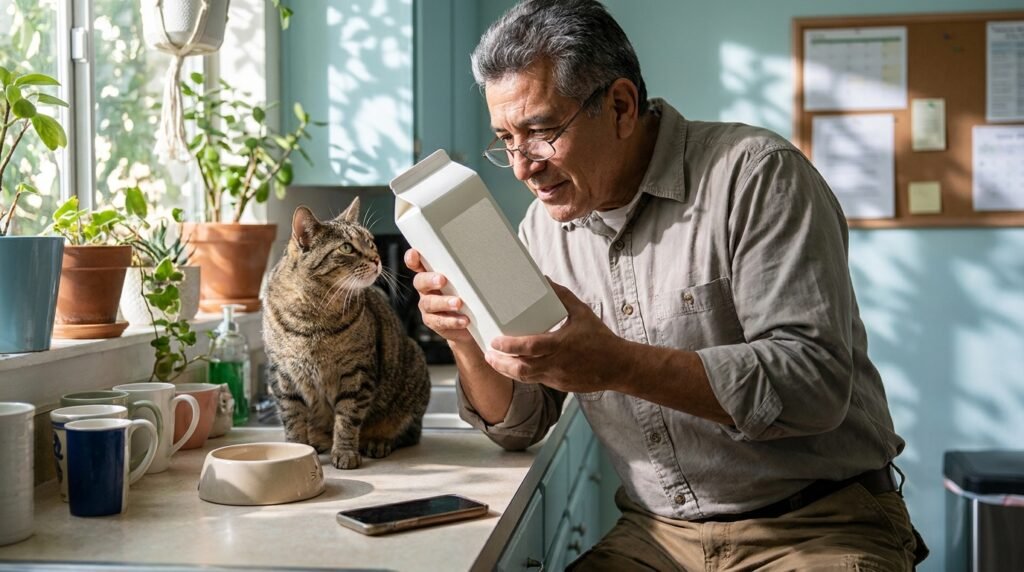
1. The Feline Dairy Dilemma: Why Serving Lactose-Free Milk Is Complicated
For generations, popular culture has etched a charming yet biologically flawed image into our collective consciousness: a purring kitten happily lapping up a saucer of rich cream. As loving pet guardians, our instinct is to share comfort foods with our companion animals, particularly when they gaze up at our morning cereal or coffee with unmistakable curiosity. However, when pet parents transition away from standard cow’s dairy due to gastrointestinal issues, a modern question frequently arises: is lactose free milk for cats a truly safe, digestive-friendly alternative, or does it merely swap one physiological risk for another?
Biologically, the vast majority of adult felines experience natural hypolactasia. As kittens wean off queen’s milk around eight to ten weeks of age, their bodies downregulate the expression of the brush-border enzyme lactase. Without adequate lactase in the small intestine, any unhydrolyzed lactose passes directly into the colon, drawing water through osmotic pressure and undergoing rapid microbial fermentation. The clinical outcome is predictable and distressing: acute diarrhea, painful abdominal cramping, meteorism, and secondary dehydration. While reaching for human-grade lactose-free milk (such as Lactaid or ultra-filtered dairy) seems like a scientifically sound workaround to bypass this enzyme deficiency, feline nutritional physiology is far more complex than simple carbohydrate malabsorption.
Even when milk has undergone enzymatic pre-treatment with synthetic lactase to cleave lactose into glucose and galactose, it remains bovine dairy. Under the FDA Food Allergen Labeling & Consumer Protection Act (FALCPA), milk is classified as a major mammalian allergen—and veterinary immunology confirms that cow’s milk proteins (specifically bovine serum albumin, alpha-s1-casein, and beta-lactoglobulin) are among the top three triggers for feline cutaneous adverse food reactions and inflammatory bowel disease (IBD). Eliminating the sugar molecule does not neutralize the immunogenic protein structure that can provoke chronic gut inflammation.
Furthermore, human-grade lactose-free products frequently introduce stabilizer gums, industrial processing aids, and flavor modifiers that alter gut homeostasis. Recent scientific literature, including PubMed Research on Ultra-Processed Foods & Gut Microbiome Disruption, underscores how industrial emulsifiers can alter mucosal barrier integrity, drive bacterial translocation, and inflame the delicate gastrointestinal tract of obligate carnivores. Navigating these hidden variables requires pet parents to look beyond simplistic marketing claims on the carton and investigate the molecular makeup of what enters their cat’s bowl.
Scan Any Label for Hidden Additives and Allergens — Free
Never second-guess confusing grocery labels again. Download Food Scan Genius to uncover hidden additives, toxic dyes, and allergens for the whole household before you buy.


2. Deceptive Labels and Hidden Pitfalls: What Is Really Inside ‘Lactose-Free’ Formulations?
When scanning supermarket shelves for a treat, pet parents encounter two distinct product categories: human-grade lactose-free dairy and commercially manufactured ‘cat milk’ treats. Both categories are fraught with regulatory loopholes, deceptive ingredient nomenclature, and nutritional imbalances that can compromise feline health. A feline is an obligate carnivore whose ancestral diet derives over 70% of moisture from fresh animal prey, with less than 2% of total caloric intake originating from carbohydrates. Introducing treated bovine milk disrupts this evolutionary blueprint in several distinct ways:
- Immunogenic Casein and Whey Fractions: Lactose-removal technology (whether enzymatic cleavage or ultra-filtration) targets only disaccharides. The dairy proteins remain intact. In sensitized felines, intact beta-lactoglobulin and alpha-casein stimulate mast cell degranulation, precipitating severe pruritus (itching around the head and neck), chronic soft stools, vomiting, and secondary bacterial skin infections.
- Carrageenan and Synthetic Hydrocolloids: To replicate the rich mouthfeel stripped away during delactosing processes, commercial manufacturers often introduce texturizers. While evaluated under the European Food Safety Authority (EFSA) Additive Safety Regulations for baseline human toxicity thresholds, degraded carrageenan (poligeenan) and high concentrations of food-grade gums can induce cellular micro-ulcerations, disrupt tight junctions, and aggravate feline chronic enteropathy.
- Excessive Saturated Fat and Caloric Density: Whole or 2% lactose-free milk delivers a dense concentration of bovine lipid molecules. In accordance with clinical warnings echoed in the World Health Organization Guidelines on Healthy Diets & Saturated Fats, unregulated consumption of heavy saturated fats poses severe metabolic burdens. For an eight-pound indoor cat, just two tablespoons of full-fat lactose-free milk can represent up to 25% of their total daily caloric requirement (approx. 200 kcal/day), dramatically increasing the risk of acute necrotizing pancreatitis and progressive hepatic lipidosis.
- Inverted Calcium-to-Phosphorus Ratios: Feline renal physiology is notoriously delicate. Healthy adult cats require a tightly regulated calcium-to-phosphorus (Ca:P) ratio between 1.1:1 and 1.4:1. Liquid dairy products disrupt this balance, flooding the feline bloodstream with bioavailable phosphorus that accelerates the progression of subclinical Chronic Kidney Disease (CKD), the leading cause of mortality in aging cats.
- Preservatives and Unlabeled Sweeteners: Commercial ‘cat-safe’ milk substitutes sold in pouches frequently contain synthetic preservation systems, added malt extracts, or sugar alcohols to entice finicky palates. Certain human specialty milks also incorporate flavorings like vanilla extract, sweetening botanicals, or trace xylitol (birch sugar), the latter being acutely hepatotoxic to household pets.
- Free Monosaccharide Glycemic Spikes: Enzymatically hydrolyzed milk transforms lactose into equal parts glucose and galactose. Because cats possess minimal glucokinase activity in the liver, these free simple sugars are absorbed rapidly, triggering prolonged postprandial hyperglycemia that stresses pancreatic beta cells and contributes to feline diabetes mellitus.
3. Food Scan Genius: Advanced Precision Label Auditing for Every Household Member
| Feature / Capability | Food Scan Genius | Fig App | Spoonful | Manual Label Reading |
|---|---|---|---|---|
| Pricing Model | 100% Free Core Engine (Zero Paywalls) | $59.99/year subscription | Limited free scans / $3.99/mo | Free (High human error) |
| Database Depth & Sub-Ingredient AST | NutriGraph (5M+ Barcodes, Recursive AST) | Proprietary list (Limited recursive parsing) | Moderate retailer catalog | None (Unparsed package text) |
| Multi-Profile Household Screening | Yes (Single scan audits humans & pets) | Single-user focused | Single-profile only | Manual multi-diet cross-checking |
| Dietary Profiles & Custom Additives | 39 Profiles + Infinite Custom Sensitivities | Fixed dietary templates | Low FODMAP emphasis | Subject to ingredient literacy |
| Nutritional Processing Context | NOVA 1-4 + Nutri-Score + ScanGenius AI | Pass/Fail flags only | Traffic light system | None |
Deciphering grocery labels to protect your animal companions should never be obstructed by an expensive paywall or rudimentary scanning technology. While legacy grocery tools lock multi-diet support behind steep paywalls like Fig’s $59/year model or throttle utility through Spoonful’s scan limits, Food Scan Genius democratizes clinical food safety. Powered by the enterprise NutriGraph Database—spanning more than 5,000,000 verified UPC/EAN barcodes across North America and Europe—our engine deploys recursive Abstract Syntax Tree (AST) parsing to evaluate parent ingredients and their microscopic sub-derivatives. When evaluating dairy and milk alternatives, this technology catches masked carrageenan derivatives, obscure dairy solids, and novel emulsifiers that other scanners miss completely.
Food Scan Genius bridges the gap between complex human dietary restrictions and species-specific safety through its Multi-Household Profile engine. In a single two-second barcode scan, the app cross-examines ingredients against 39 clinical profiles simultaneously while honoring individual custom triggers—such as carrageenan, industrial seed oils, or specific gums. Instead of arbitrary moralizing health scores, pet owners receive transparent ScanGenius AI Insight that pairs objective NOVA 1-4 ultra-processing tiers with Nutri-Score metrics. Supported by real-time translation across 11 global languages, Food Scan Genius provides clear, scientifically backed clarity to ensure every sip and bite shared in your home is truly risk-free.
4. Related Food Safety & Dietary Guides
- Best Food Allergy Scanner App – Scan Food Labels Instantly — Food Allergy & Sensitivity Scanner Hub
- The 7 Best Free Food Scanner Apps of 2026 — best free food scanner apps
- Choosing the Best Barcode Scan App for Your Health — guide to choosing a barcode scanner app
- Food Scan Genius: World’s #1 Food Ingredient Scanner App — Food Scan Genius scanner app
5. Scientific & Health Authority References
- FDA Food Allergen Labeling & Consumer Protection Act (FALCPA)
- European Food Safety Authority (EFSA) Additive Safety Regulations
- PubMed Research on Ultra-Processed Foods & Gut Microbiome Disruption
- World Health Organization Guidelines on Healthy Diets & Saturated Fats
6. How to Scan in 3 Simple Steps
- Download Food Scan Genius for free on iOS or Android—unlocking enterprise-grade scanning with zero hidden paywalls or subscription limits.
- Configure your Multi-Household Profiles by setting your personal dietary preferences alongside custom feline sensitivity alerts (e.g., carrageenan, dairy proteins, artificial sweeteners, and phosphorus additives).
- Scan any milk, plant beverage, or commercial pet treat barcode in under two seconds to receive instant recursive sub-ingredient audits, NOVA classification, and ScanGenius AI contextual insights.
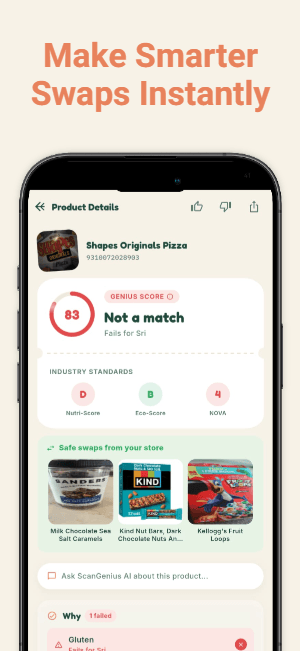
Instant Lactose-Free Audit Trail
7. Frequently Asked Questions (FAQ)
Can I give my cat Lactaid or human lactose-free milk as a treat?
Veterinarians generally advise against it. Although lactose-free milk lacks the disaccharide sugar that causes osmotic diarrhea, it still contains intact bovine proteins (casein and whey) that can trigger feline allergic reactions, vomiting, and inflammatory bowel disease. Additionally, whole and low-fat human milks are calorically dense and heavy in saturated fats, predisposing your cat to weight gain and acute pancreatitis. Scanning the carton with Food Scan Genius can immediately reveal whether thickeners, gums, or high-glycemic free sugars are present.
What about commercial ‘cat milk’ sold in pet stores?
Specially formulated cat milks (like CatSip) are modified cow’s milk products that have had lactose enzymatically removed and occasionally contain added taurine. While safer than grocery-store milk, they are non-essential treats high in calories and fat. They should never replace fresh water, which felines require for proper renal and urinary clearance. Many cat milk pouches also contain stabilizers; running them through Food Scan Genius helps you verify their NOVA processing level and inspect hidden hydrocolloids before purchasing.
Are plant-based milks like almond, soy, or oat milk safe for cats?
No. Plant-based milks are physiologically inappropriate for obligate carnivores. Almond milk can cause gastrointestinal upset due to unabsorbed tree nut lipids; soy milk contains phytoestrogens and oligosaccharides that cats cannot digest; and oat milk is rich in carbohydrates that cause blood sugar spikes. Furthermore, many commercial plant milks contain thickeners (like carrageenan) or artificial sweeteners (such as xylitol), which can be life-threatening. Food Scan Genius flags these plant-derived anti-nutrients instantly during a scan.
What should I do if my cat accidentally drank lactose-free milk?
If your cat consumed a few licks of plain, unsweetened lactose-free milk, monitor them closely over the next 24 to 48 hours for gastrointestinal distress, such as soft stools, vomiting, lethargy, or facial scratching. Ensure they have access to abundant fresh water. If the milk contained flavorings, chocolate, vanilla extract, or artificial sweeteners like xylitol, contact your veterinarian or an emergency animal poison control line immediately. For future grocery purchases, use Food Scan Genius to detect potentially harmful hidden additives before opening the container.
Know What’s In Your Food Before You Buy — Scan Free Today
Never second-guess confusing grocery labels again. Download Food Scan Genius to uncover hidden additives, toxic dyes, and allergens for the whole household before you buy.