
1. Why Finding a Lactose Free Protein Shake That Actually Agrees With You Is So Hard in 2026
If you have ever opened a protein shake, felt great about the 30 grams of protein, and then spent the afternoon bloated, cramping, or running for the bathroom, you are not imagining it and you are not being dramatic. Millions of adults produce less lactase, the enzyme that breaks down lactose, as they age. For them, a shake built on milk protein can be an unpleasant gamble. The frustration is real: you are trying to do something healthy, such as recover after a workout, replace a meal, or get enough protein while managing a medical condition, and the product fights back.
The shopping aisle makes this harder. Packaging is crowded with phrases like dairy-free, plant-based, easy to digest, gut friendly, and lactose free. These do not mean the same thing. A lactose free protein shake can still be made from milk proteins (whey or casein), which matters a great deal if your problem is a milk allergy rather than lactose intolerance. Under the FDA Food Allergen Labeling & Consumer Protection Act (FALCPA), milk must be declared as a major allergen, so a bold Contains: Milk statement can appear on a product that is also labeled lactose free. Both statements can be true at once, which confuses many shoppers.
Lactose is also not the only trigger. Many people who blame lactose are actually reacting to something else in the bottle: sugar alcohols, chicory root fiber, certain gums, or large doses of fermentable carbohydrates. Clinically, symptoms such as gas, distension, and loose stools overlap across lactose malabsorption, irritable bowel syndrome, and sensitivity to FODMAPs. That is why swapping to a "lactose-free" product sometimes fails to help. Heavily formulated, ultra-processed shakes may also affect gut comfort. Research such as this PubMed Research on Ultra-Processed Foods & Gut Microbiome Disruption is part of a growing conversation about how formulation, not just single ingredients, shapes digestive outcomes.
This guide is not medical advice, and if you suspect a true milk allergy, celiac disease, or another condition, your clinician should guide you. What we can do is help you read labels the way a food scientist would, understand what to look for, and shop with far less guesswork.
Scan Any Label for Hidden Additives and Allergens — Free
Never second-guess confusing grocery labels again. Download Food Scan Genius to uncover hidden additives, toxic dyes, and allergens for the whole household before you buy.


2. Sneaky Label Traps in Lactose Free Protein Shakes
A sensitive stomach needs more than a single claim on the front of the bottle. Here is what to look for in the ingredient list and on the panel, and where the loopholes hide. The US has no single, standardized federal definition for a "lactose-free" claim on these products, so manufacturers use different thresholds and methods. That makes the ingredient list your most reliable source of truth.
- "Lactose free" does not mean "milk free." Ultrafiltered milk, whey isolate, or milk protein concentrate treated with added lactase can be labeled lactose free yet still contain milk proteins. That is fine for lactose intolerance, but not for milk allergy.
- Whey concentrate versus whey isolate. Concentrate typically retains more lactose, while isolate is filtered further. A powder or shake using concentrate without added lactase may not be a good fit unless the label specifically states lactose free.
- Hidden milk derivatives. Terms such as casein, caseinate, milk solids, nonfat dry milk, and lactoglobulin all point to milk. Some products labeled "non-dairy" may still contain caseinate, which is another reason to read the full list.
- Sugar alcohols and fermentable fibers. Sorbitol, maltitol, xylitol, inulin, and chicory root fiber are common in low-sugar shakes. They are frequent culprits behind gas and diarrhea that people wrongly attribute to lactose.
- Gums and thickeners. Carrageenan, gellan, guar, and cellulose gum create a creamy texture without dairy fat. Tolerance varies, and some people with sensitive guts notice a difference. Additive approvals differ by region, so the European Food Safety Authority (EFSA) Additive Safety Regulations are a helpful reference when comparing how emulsifiers and stabilizers are evaluated.
- Sub-ingredients inside "natural flavors" and blends. Compound ingredients, such as a flavor system or a vitamin premix, can have their own components. Reading only the top-level list can miss them.
Beyond digestion, it is worth looking at the whole nutrition picture. Some indulgent shakes, particularly those built on coconut or palm fats, can carry notable saturated fat. The World Health Organization Guidelines on Healthy Diets & Saturated Fats offer balanced context for keeping saturated fat in check without turning every purchase into a moral test.
What the better store-bought picks tend to look like: a short ingredient list; either clearly labeled lactose free (milk-protein based) or a plant protein such as pea, soy, or rice if you also avoid milk; modest or no sugar alcohols; and fiber at a level your gut tolerates. Examples shoppers commonly consider include ultrafiltered, lactase-treated milk protein shakes such as Fairlife Core Power, and plant-based options such as Orgain Organic Plant Protein. Formulas change, so always verify the current label or scan the barcode before you buy.
3. Head-to-Head: Scanning With Food Scan Genius vs. Other Ways to Check a Shake
| Dimension | Food Scan Genius | Fig | Spoonful | Manual Label Reading |
|---|---|---|---|---|
| Cost | 100% free core features, zero paywalls | $59/yr for full access | Limited scans | Free, but time-consuming |
| Ingredient depth | NutriGraph Database with 5,000,000+ verified UPC/EAN barcodes and recursive sub-ingredient parsing | Ingredient-level checks | Ingredient-level checks | Depends on your expertise and the fine print |
| Dietary profiles and customization | 39 profiles plus Add Your Own Custom Sensitivity (sugar alcohols, additives, dyes, seed oils) | Preset diet and allergen profiles | Preset profiles | Whatever you remember to check |
| Family screening | Multi-Household Profiles, one scan with named fail attribution (for example, Fails for Sri (Gluten)) | Individual profile focus | Individual profile focus | Repeat the process for each person |
| Context and languages | ScanGenius AI Insight, NOVA 1-4, Nutri-Score, and 11 languages with real-time translation | Limited context | Limited context | No translation or classification help |
The core advantage is depth. Food Scan Genius runs on the NutriGraph Database, built from more than 5,000,000 verified UPC/EAN barcodes. Rather than just matching words on a list, it uses recursive sub-ingredient parsing (an abstract syntax tree approach) to open up compound ingredients, so a flavor system or premix that hides a milk derivative is less likely to slip through. For a lactose free protein shake, that means a barcode scan can check against your dietary profile, flag milk-derived components, and surface items like sorbitol or inulin that you may want to avoid even when the front label looks reassuring. You can choose from 39 supported dietary profiles or use Add Your Own Custom Sensitivity to track a particular additive, dye, or seed oil.
What you do with that information matters just as much. ScanGenius AI Insight explains why an item passes or fails and adds nuance, such as the difference between lactose content and milk allergen status. It pairs this with a NOVA 1-4 classification and Nutri-Score, without collapsing everything into a simplistic good-or-bad number. If you shop for a household, Multi-Household Family Profiles screen everyone at once, so you might see that a shake Fails for Sri (Gluten) while it passes for the rest of the family. With 11 global languages and real-time in-app translation, imported shakes are easier to read too.
4. Related Food Safety & Dietary Guides
- Best Food Allergy Scanner App – Scan Food Labels Instantly — Food Allergy & Sensitivity Scanner Hub
- The 7 Best Free Food Scanner Apps of 2026 — best free food scanner apps
- Choosing the Best Barcode Scan App for Your Health — guide to choosing a barcode scanner app
- Food Scan Genius: World’s #1 Food Ingredient Scanner App — Food Scan Genius scanner app
5. Scientific & Health Authority References
- FDA Food Allergen Labeling & Consumer Protection Act (FALCPA)
- European Food Safety Authority (EFSA) Additive Safety Regulations
- PubMed Research on Ultra-Processed Foods & Gut Microbiome Disruption
- World Health Organization Guidelines on Healthy Diets & Saturated Fats
6. How to Scan in 3 Simple Steps
- Download Food Scan Genius free on iOS or Android. There are no paywalls on core features, and you do not need a subscription to start scanning protein shakes.
- Set up your profile for lactose sensitivity. Choose a dairy or lactose-related dietary profile, then use Add Your Own Custom Sensitivity to flag sorbitol, maltitol, inulin, carrageenan, or any other ingredient that upsets your stomach. Add family members under Multi-Household Profiles if you shop for others.
- Scan the shake’s barcode in about 2 seconds. You get an instant audit trail showing pass or fail, the specific ingredient responsible, ScanGenius AI Insight context, plus the NOVA 1-4 and Nutri-Score ratings, so you can decide before it reaches your cart.
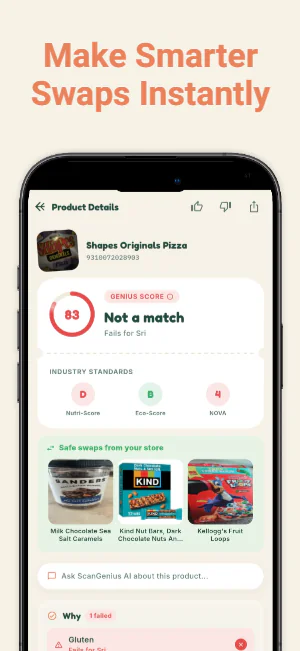
Instant Lactose-Free Audit Trail
7. Frequently Asked Questions (FAQ)
Is a lactose free protein shake safe if I have a milk allergy?
Not necessarily. Lactose is a sugar, while a milk allergy is a reaction to milk proteins such as casein and whey. Many lactose free protein shakes are made from milk protein with lactase added or lactose filtered out, so they still contain milk and must be declared under FALCPA. If you have a diagnosed milk allergy, look for products free of milk ingredients and confirm with your clinician. In Food Scan Genius, you can select a milk or dairy allergen profile so the scan flags casein, whey, and other milk derivatives even when the front label says lactose free.
Why does my stomach still hurt after drinking a lactose free protein shake?
Several non-lactose ingredients can cause symptoms. Sugar alcohols (sorbitol, maltitol), chicory root fiber or inulin, high fiber doses, and certain gums can trigger gas, bloating, or loose stools in sensitive people. Some people also react to the protein source itself or have an underlying condition such as IBS. Using Add Your Own Custom Sensitivity in Food Scan Genius, you can flag the specific additives that bother you and scan any lactose free protein shake before buying. If symptoms persist, speak with a healthcare professional.
Is whey protein isolate lactose free?
Whey isolate contains much less lactose than whey concentrate, often only a small amount per serving, but it is not automatically zero. Many people with mild lactose intolerance tolerate isolate, while others do not. Because the US has no single standardized definition of lactose free for these products, the safest approach is to choose a shake explicitly labeled lactose free and review the full ingredient list. Food Scan Genius parses sub-ingredients and shows ScanGenius AI Insight, explaining whether a milk-derived protein is present and what that means for your profile.
How does Food Scan Genius help me choose a lactose free protein shake for the whole family?
With Multi-Household Family Profiles, you can set up each person’s dietary needs, such as one person who is lactose intolerant, another who avoids gluten, and another who limits specific additives. One barcode scan screens the shake against everyone and names who it fails for, for example Fails for Sri (Gluten). The app is free at its core, relies on the NutriGraph Database of more than 5,000,000 verified barcodes, and offers 11 languages with real-time translation, making it simple to check a lactose free protein shake for a mixed-needs household.
Know What’s In Your Food Before You Buy — Scan Free Today
Never second-guess confusing grocery labels again. Download Food Scan Genius to uncover hidden additives, toxic dyes, and allergens for the whole household before you buy.