
1. Why Choosing a Lactose Free Protein Shake Is Harder Than It Looks in 2026
If you have ever finished a “gentle” protein shake and spent the next two hours bloated, cramping, or searching for the nearest bathroom, you know how frustrating this category can be. You buy a shake for a workout, a busy morning, or recovery from illness, and it leaves you feeling worse. The frustration is justified. Protein shakes are among the most formulated products in the grocery store, and the front of the package tells you very little about how your digestive system will handle what is inside.
Lactose intolerance is common. It happens when the body makes too little lactase, the enzyme that breaks down lactose, the sugar in milk. Symptoms usually include gas, bloating, abdominal pain, and loose stools, and they vary from person to person. A lactose free protein shake should solve this, but the term is often misunderstood. “Lactose-free” does not mean “dairy-free,” and it does not mean “milk-free.” Many lactose-free shakes are made from real milk that has been filtered or treated with added lactase, so they still contain milk proteins such as casein and whey. That is fine for lactose intolerance. It is not safe for a true milk allergy, which involves the immune system. Under the FDA Food Allergen Labeling & Consumer Protection Act (FALCPA), milk must be declared on labels as a major allergen. The law covers allergen disclosure, though, not whether a product is gentle on a sensitive gut.
The second problem is that lactose is rarely the only trigger. Many people with a sensitive stomach also react to sugar alcohols, certain fibers, thickeners, and sweeteners that shakes use to improve taste, texture, and shelf life. A product can pass the lactose test and still cause the symptoms you were trying to avoid. Research on ultra-processed foods is still developing, but the PubMed Research on Ultra-Processed Foods & Gut Microbiome Disruption is one reason many shoppers now look at how processed a product is as well as its macros.
We want you to know that you are not being picky and your symptoms are not imaginary. The goal of this guide is to give you a clear method for evaluating any store-bought shake, so you can stop gambling with your digestion.
Scan Any Label for Hidden Additives and Allergens — Free
Never second-guess confusing grocery labels again. Download Food Scan Genius to uncover hidden additives, toxic dyes, and allergens for the whole household before you buy.


2. Sneaky Ingredients and Label Loopholes in Lactose-Free Shakes
Reading a shake label takes some decoding. The “lactose-free” badge on the front tells you one thing, and the ingredient list on the back often tells you something quite different. These are the most common surprises for sensitive stomachs:
- Milk proteins in a “lactose-free” product: Whey protein concentrate, milk protein isolate, and calcium caseinate can all appear in a lactose-free shake. Ultra-filtered milk is a common base. Lactose is removed or broken down, but the milk proteins remain, so anyone with a milk allergy must treat these shakes as unsafe. Check the “Contains: Milk” statement required under FALCPA.
- Whey protein concentrate versus isolate: Concentrates generally retain more residual lactose than isolates. A shake can have a low lactose content and still affect someone who is very sensitive. “Lactose-free” claims depend on the manufacturer and local regulations, so thresholds are not identical everywhere.
- Sugar alcohols (sorbitol, maltitol, xylitol, erythritol): These are used to cut sugar and are poorly absorbed by many people. They can pull water into the intestine and cause gas and diarrhea, especially in larger amounts, even though they contain no lactose.
- Added fibers such as inulin and chicory root extract: These boost fiber counts and creaminess, but they are fermentable and a frequent trigger for people with IBS or other FODMAP sensitivities.
- Gums and thickeners (carrageenan, guar gum, gellan gum, cellulose gum): These give shakes a smooth body and keep them from separating. Tolerance varies, and some sensitive people report bloating with certain thickeners. Additive approvals are reviewed under frameworks like the European Food Safety Authority (EFSA) Additive Safety Regulations, but regulatory approval is not a promise of personal tolerance.
- Hidden sub-ingredients and “natural flavors”: A compound ingredient like a “creamer base” or “flavor system” can carry components that never appear on the front of the pack. Also consider the fat profile: some shakes use coconut or palm oils that add saturated fat, which is worth comparing against the World Health Organization Guidelines on Healthy Diets & Saturated Fats.
What to look for when shopping: Decide first whether you need lactose-free (an intolerance) or fully milk-free (an allergy). Both categories exist, and they are not interchangeable. For intolerance, ultra-filtered, lactase-treated milk shakes can work well, and many people also do well with pea, soy, or other plant-based shakes. Plant-based options carry their own variables, such as added fibers, gums, and sweeteners, so the same ingredient scrutiny applies. Formulas change often, so always check the current package rather than relying on memory or an old review.
3. Why a Barcode Scan Beats Squinting at Ingredient Lists
| Dimension | Food Scan Genius | Fig | Spoonful | Manual Label Reading |
|---|---|---|---|---|
| Cost | 100% free core features, no paywalls | $59/year | Limited scans | Free, but time-consuming |
| Database & Ingredient Depth | NutriGraph: 5M+ verified UPC/EAN barcodes with recursive sub-ingredient parsing | Ingredient-level screening | Ingredient-level screening | Depends on your own expertise |
| Custom Sensitivities | 39 dietary profiles plus custom sensitivities (sugar alcohols, additives, dyes, seed oils) | Preset profiles | Preset profiles | Manual memory only |
| Family Screening | Multi-household profiles, one scan, named results (“Fails for Sri (Gluten)”) | Limited | Limited | Repeat the process per person |
| Context & Languages | ScanGenius AI Insight, NOVA 1-4, Nutri-Score, 11 languages with real-time translation | Primarily pass/fail | Primarily pass/fail | No translation or classification |
The core challenge with any lactose free protein shake is that the trigger might sit several layers deep in the formula. Food Scan Genius is powered by the NutriGraph Database, which holds more than 5,000,000 verified UPC and EAN barcodes and uses recursive sub-ingredient parsing to break compound ingredients into their components. A “milk protein blend” or “flavor system” gets unpacked instead of being taken at face value. Combined with 39 supported dietary profiles and the option to add your own custom sensitivity, such as sorbitol, inulin, carrageenan, or a specific dye, you can build a screen that reflects your actual gut rather than a generic diet label. Every core feature is free, with no scan caps and no subscription.
Flags alone do not help if you do not understand them. That is why ScanGenius AI Insight explains why an ingredient was flagged, in plain language and without moralizing. It reports NOVA 1-4 processing classification and Nutri-Score as context, not as a verdict on whether you are a good or bad shopper. If you are shopping for a household, family profiles check everyone in one scan and name who is affected, so a shake that works for you but fails for a milk-allergic child is clearly identified. With 11 supported languages and real-time in-app translation, labels from imported products or a relative’s pantry are easier to read too.
4. Related Food Safety & Dietary Guides
- Best Food Allergy Scanner App – Scan Food Labels Instantly — Food Allergy & Sensitivity Scanner Hub
- The 7 Best Free Food Scanner Apps of 2026 — best free food scanner apps
- Choosing the Best Barcode Scan App for Your Health — guide to choosing a barcode scanner app
- Food Scan Genius: World’s #1 Food Ingredient Scanner App — Food Scan Genius scanner app
5. Scientific & Health Authority References
- FDA Food Allergen Labeling & Consumer Protection Act (FALCPA)
- European Food Safety Authority (EFSA) Additive Safety Regulations
- PubMed Research on Ultra-Processed Foods & Gut Microbiome Disruption
- World Health Organization Guidelines on Healthy Diets & Saturated Fats
6. How to Scan in 3 Simple Steps
- Download Food Scan Genius free on iOS or Android. There is no paywall on core features and no scan limit, so you can check as many shakes as you like.
- Set up your profile for your needs: choose lactose intolerance or a dairy-free profile, then add custom sensitivities such as sugar alcohols, inulin, carrageenan, or sweeteners that bother you. Add family members under household profiles if you shop for others.
- Scan the shake’s barcode in about two seconds. You get an instant audit trail showing which ingredients passed or failed, ScanGenius AI Insight context, the NOVA group, and the Nutri-Score, so you can decide before it reaches your cart.
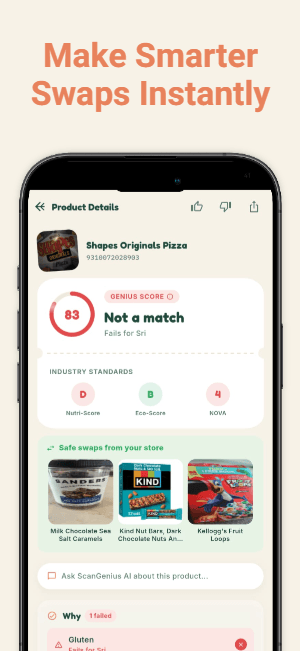
Instant Lactose-Free Audit Trail
7. Frequently Asked Questions (FAQ)
Is a lactose free protein shake safe if I have a milk allergy?
Not necessarily. Lactose-free means the milk sugar has been removed or broken down, but many lactose-free shakes still contain milk proteins such as casein and whey, which trigger allergic reactions. Under FALCPA, milk must be declared on the label. In Food Scan Genius, choose a milk or dairy allergy profile instead of only a lactose profile, and the app will flag milk-derived ingredients and sub-ingredients. If you have a diagnosed allergy, confirm any product with your allergist.
Why does a lactose-free shake still upset my stomach?
Lactose is only one possible trigger. Sugar alcohols such as sorbitol and maltitol, fermentable fibers such as inulin and chicory root, gums, and some sweeteners can all cause gas, bloating, or loose stools in sensitive people. With Food Scan Genius you can add these as custom sensitivities, and a scan will show which ingredient in a particular shake matches. Persistent symptoms deserve a conversation with a healthcare provider.
Are plant-based shakes always better than lactose-free milk shakes?
No. Plant-based shakes avoid milk entirely, which helps with allergies, but they often rely on added fibers, gums, and sweeteners that can bother sensitive stomachs. Lactose-free milk-based shakes may be well tolerated by people with simple lactose intolerance. Food Scan Genius shows NOVA classification and Nutri-Score as context, and ScanGenius AI Insight explains what is in each product so you can compare based on your own tolerance.
How do I check a lactose free protein shake while shopping?
Scan the barcode with Food Scan Genius. The app looks the product up in the NutriGraph Database of over 5 million verified barcodes, parses the ingredients down to sub-ingredient level, and checks them against your profile in about two seconds. If you shop for a family, household profiles show who the shake fails for by name. It is free, works in 11 languages, and formulas change often, so rescan products you buy regularly.
Know What’s In Your Food Before You Buy — Scan Free Today
Never second-guess confusing grocery labels again. Download Food Scan Genius to uncover hidden additives, toxic dyes, and allergens for the whole household before you buy.