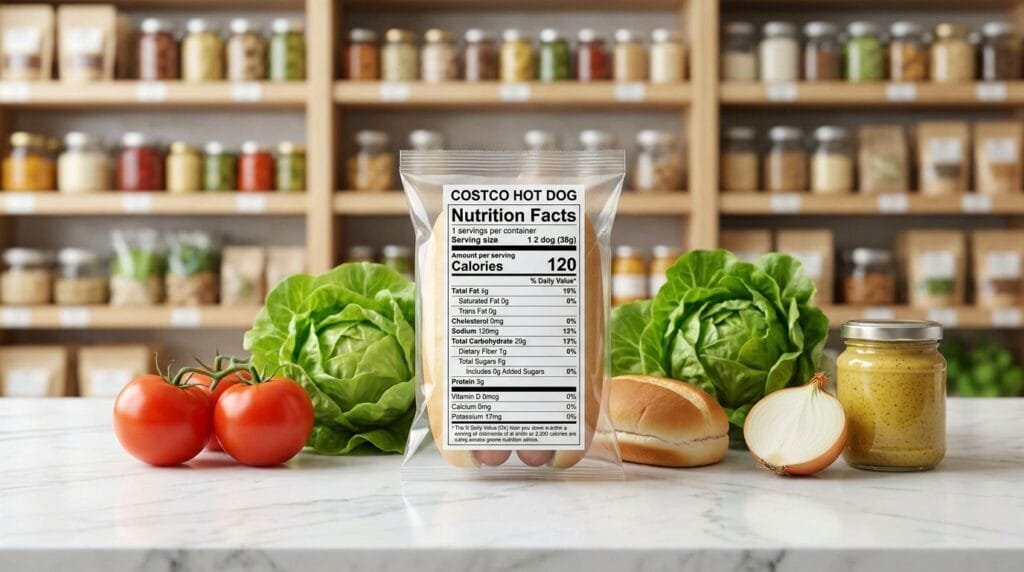
A standard Costco food court beef hot dog with bun contains 570 calories, 33 grams of fat (12 grams saturated), 1,290 milligrams of sodium, 46 grams of carbohydrates, and 24 grams of protein, before adding condiments like mustard, ketchup, or relish.
Breaking Down the Costco Hot Dog: Calories, Fat, and Sodium
Costco’s famous 1.50 dollar hot dog combo is legendary for its price, but knowing what is actually in it helps you fit it into your normal weekly meals without stress. The quarter-pound all-beef frank served at the food court delivers 570 calories when eaten with its standard white bun. The beef frank itself makes up about 350 to 360 of those calories, while the soft, bakery-style bun adds roughly 210 to 220 calories. If you skip the bun, you drop about 40 grams of simple carbohydrates, but you still get most of the energy and nearly all of the fat.
Fat and sodium are the two biggest numbers on the Costco food court nutrition sheet. One complete hot dog has 33 grams of total fat, with 12 grams coming from saturated fat. That saturated fat level accounts for over half of the recommended daily limit under the World Health Organization Guidelines on Healthy Diets & Saturated Fats. The sodium count is also substantial at 1,290 milligrams. For a healthy adult, the daily sodium ceiling recommended by health organizations is 2,300 milligrams, meaning a single lunch at the warehouse counter provides more than 55 percent of your entire day’s salt allowance before you even touch a bag of chips or refill your soda cup.
Beyond basic macros, many shoppers want to know about ingredients and additives. Kirkland Signature beef franks are made with 100 percent beef, water, and seasonings like salt, spice extracts, paprika, and garlic. However, like nearly all commercial cured meats, they also contain sodium nitrite and sodium erythorbate to preserve color, maintain freshness, and prevent dangerous bacterial growth. Emerging science, such as ongoing PubMed Research on Ultra-Processed Foods & Gut Microbiome Disruption, suggests that eating heavily cured meats on a daily basis can be tough on digestive balance. Having a Costco dog as an occasional quick treat during a busy weekend shopping run is vastly different from eating cured franks every single day, so context matters.
Condiments can also shift these numbers surprisingly fast. Yellow mustard adds virtually zero calories and only about 55 milligrams of sodium per tablespoon. Sweet pickle relish adds about 20 calories and 4 grams of sugar per tablespoon. Ketchup adds about 15 to 20 calories and 4 grams of high fructose corn syrup or cane sugar per pump. If you load up on two pumps of ketchup and a heavy swirl of relish, you are easily tacking on 50 extra calories and nearly 10 grams of added sugar.
Costco Food Court vs. The Grocery Aisle: Reading the Real Labels
Standing in the warehouse refrigerated section with a packed shopping cart can be overwhelming. Just a few aisles away from the food court counter, Costco sells their Kirkland Signature Beef Dinner Franks in multi-packs, but reading these labels can easily throw you off. In the grocery refrigerated case, Kirkland sells two different sizes of all-beef hot dogs: the standard retail-size franks (about 68 grams each) and the massive ‘Dinner Franks’ (114 grams or a quarter-pound each). The food court uses the larger 114-gram Dinner Frank. If you look at the standard pack thinking it is identical to what you just ate at the counter, you might mistakenly think the food court frank only has 210 calories instead of 350 calories simply because the serving size on the smaller pack is nearly half the weight.
How the package is printed makes a massive difference in real life. In the United States, hot dogs are labeled per serving (which is almost always defined as a single frank). In the United Kingdom and across Europe, food law mandates that values appear per 100 grams. Because a quarter-pound Costco frank weighs approximately 114 grams, an American nutrition panel lists the full 350-calorie punch of that single link, while a European label will show roughly 307 calories per 100 grams. If you travel or buy imported specialty goods, comparing a 100-gram figure to an American per-serving label can make the imported hot dog look significantly lighter when it is actually identical in density and fat content. Furthermore, international packaging must comply with strict additive standards set by agencies like the European Food Safety Authority (EFSA) Additive Safety Regulations, where curing salts and smoke flavorings carry specific E-number identifiers (such as E250 for sodium nitrite) that look unfamiliar to American shoppers.
Allergen statements on hot dog packaging also catch parents off guard. While all-beef franks rarely contain gluten or dairy in their meat formulation, cross-contact during meat processing can occur. More importantly, the hot dog bun almost always contains enriched wheat flour and may be made on lines shared with sesame or soy. Checking these items against the Food Allergy Research & Education (FARE) Clinical Standards is vital if you are feeding a child with severe wheat or gluten sensitivities, as a ‘bunless’ hot dog ordered from a busy food court kitchen may still have touched bun crumbs on the prep cutting board.
Why Shopping for Hot Dogs Shouldn’t Be This Hard: Grocery aisles are filled with confusing claims like ‘Uncured,’ ‘No Added Nitrates,’ and ‘Natural.’ In reality, ‘uncured’ hot dogs often use cultured celery powder, which converts to dietary nitrates during curing just like standard sodium nitrite does. When you are rushing down Aisle 4 on a Tuesday evening trying to feed your family, you do not have ten minutes to decode tiny ingredient fonts or do serving-size math between brands like Hebrew National, Ball Park, and Kirkland. This is where Food Scan Genius fits right into your routine. Instead of acting like a food cop or telling you what you can never eat, Food Scan Genius gives you an instant, two-second sanity check. You simply scan the barcode on any hot dog pack while walking down the aisle, and it cleanly displays the actual sodium per link, hidden sugars, and real additive information so you can make a calm, informed choice and get on with your day.
| Item / Component | Serving Size | Calories | Total Fat | Sat. Fat | Sodium | Carbs | Protein |
|---|---|---|---|---|---|---|---|
| Costco Food Court Hot Dog (Frank + Bun) | 1 complete dog (~185g) | 570 kcal | 33g | 12g | 1,290mg | 46g | 24g |
| Costco Food Court Beef Frank (No Bun) | 1 frank (114g / 1/4 lb) | 350 kcal | 31g | 12g | 1,060mg | 4g | 15g |
| Standard Food Court White Bun | 1 bun (~71g) | 220 kcal | 2g | 0g | 230mg | 42g | 9g |
| Kirkland Packaged Dinner Frank (Store Aisle) | 1 frank (114g) | 350 kcal | 31g | 12g | 1,060mg | 4g | 15g |
| Kirkland Packaged Regular Beef Frank | 1 frank (68g) | 210 kcal | 19g | 7g | 630mg | 2g | 9g |
| Hebrew National Jumbo Beef Frank | 1 frank (92g) | 280 kcal | 25g | 10g | 730mg | 3g | 11g |
| Ball Park Classic Beef Frank | 1 frank (57g) | 170 kcal | 15g | 6g | 480mg | 3g | 6g |
| Yellow Mustard (Average) | 1 tbsp (15g) | 5 kcal | 0g | 0g | 55mg | 1g | 0g |
| Tomato Ketchup (Average) | 1 tbsp (17g) | 20 kcal | 0g | 0g | 160mg | 5g | 0g |
| Sweet Pickle Relish (Average) | 1 tbsp (15g) | 20 kcal | 0g | 0g | 120mg | 4g | 0g |
Common Mistakes and Confusions About the Costco Hot Dog
One widespread misconception is that the bundled 20-ounce fountain drink is factored into the 570-calorie official listing. The 570 calories cover strictly the hot dog and its white bun. If you fill your included fountain cup with regular sugary cola, you add approximately 240 to 290 extra calories and up to 70 grams of liquid sugar. Grabbing a lemonade or sweet tea adds a similar amount. If you are keeping an eye on your overall energy intake, opting for water, unsweetened iced tea, or a diet soda leaves your meal at the baseline 570 calories.
Another common mistake is believing that leaving the bun behind makes the Costco hot dog a low-sodium health food. While taking off the bun drops your carbohydrates from 46 grams down to just 4 grams, it only removes about 230 milligrams of sodium. The beef frank itself holds 1,060 milligrams of sodium and 31 grams of fat. While going bunless fits neatly into a strict ketogenic or very low-carb lifestyle, it still delivers almost half of your daily sodium allowance in a single link.
Finally, many shoppers remember when Costco offered both a Hebrew National Polish sausage and a turkey dog option. Those have been discontinued in almost all locations across the United States. Today, the standard food court menu item is solely the all-beef Kirkland Signature frank. Assuming you can order a ‘lighter’ poultry version at the food court counter will lead to disappointment, though you can still find turkey franks from other commercial brands in the refrigerated aisles of standard grocery supermarkets.
Frequently asked questions
How many calories are in a Costco hot dog without the bun?
A Costco food court beef frank eaten without the bun contains roughly 350 calories, 31 grams of fat, 4 grams of carbohydrates, and 1,060 milligrams of sodium.
How much sodium is in a Costco hot dog combo?
The hot dog and bun contain 1,290 milligrams of sodium combined. Condiments like mustard and relish add another 50 to 180 milligrams depending on how much you pump.
Is the Costco hot dog gluten-free?
The Kirkland Signature beef frank itself is made without gluten-containing ingredients, but the bun contains wheat flour. Cross-contact is also possible in the busy food court prep environment.
How much protein is in a Costco hot dog?
A complete Costco hot dog with bun provides 24 grams of protein, with about 15 grams coming from the beef frank and 9 grams coming from the bun.
Can you buy the exact food court hot dogs in the Costco grocery section?
Yes. Costco sells the exact 1/4-pound franks used at the food court in their refrigerated meat section under the name Kirkland Signature Beef Dinner Franks.
References
- Food Allergy Research & Education (FARE) Clinical Standards
- European Food Safety Authority (EFSA) Additive Safety Regulations
- PubMed Research on Ultra-Processed Foods & Gut Microbiome Disruption
- World Health Organization Guidelines on Healthy Diets & Saturated Fats
Related guides
- Best Food Allergy Scanner App – Scan Food Labels Instantly — Food Allergy & Sensitivity Scanner Hub
- The 7 Best Free Food Scanner Apps of 2026 — best free food scanner apps
- Choosing the Best Barcode Scan App for Your Health — guide to choosing a barcode scanner app
- Food Scan Genius: World’s #1 Food Ingredient Scanner App — Food Scan Genius scanner app
Check Any Label Against 5 Million Products — Free
Never second-guess confusing grocery labels again. Download Food Scan Genius to uncover hidden additives, toxic dyes, and allergens for the whole household before you buy.