
1. Why Shopping Pescatarian Is Harder Than It Looks in 2026
On paper, the pescatarian plan sounds simple: vegetables, fruit, legumes, whole grains, eggs, dairy, fish, and shellfish, with no poultry, beef, or pork. In the grocery aisle it rarely feels that simple. You pick up a jar of pasta sauce, a box of crackers, or a bag of seasoned rice and turn it over, squinting at a 40-word ingredient panel. Is that “natural flavor” plant-based? Is the gelatin in this yogurt from a fish or a pig? If you have ever put something back on the shelf because you could not be sure, you are not being overcautious. You are reacting reasonably to a food system that does not label for your diet.
The frustration is compounded because people choose this way of eating for different reasons: heart health, environmental concerns, ethics, religious practice, or a doctor’s guidance to eat more omega-3-rich foods. Whatever your reason, you want your cart to match your values without spending an hour decoding labels. The World Health Organization Guidelines on Healthy Diets & Saturated Fats note that diets built around vegetables, legumes, whole grains, and unsaturated fats, such as those found in fish, support long-term health. A well-planned pescatarian pattern fits that profile, but only if the packaged foods around the edges of your plan do not undermine it.
That is the second challenge. Modern grocery shelves are dominated by ultra-processed products, and “meatless” or “seafood-flavored” does not mean nutritionally sound. Emerging work, including PubMed Research on Ultra-Processed Foods & Gut Microbiome Disruption, suggests heavily processed diets may affect the gut microbiome in ways researchers are still working to understand. A breaded fish stick and a fresh wild salmon fillet are both “pescatarian,” yet they are very different foods. You deserve a shopping approach that sees both the diet fit and the processing level.
Here is a practical foundation for your list. Seafood: salmon, sardines, trout, cod, shrimp, mussels, and canned light tuna in moderation. Plant proteins: lentils, chickpeas, black beans, tofu, tempeh, edamame. Produce: leafy greens, cruciferous vegetables, berries, citrus, avocados. Grains and seeds: oats, quinoa, brown rice, chia, flax, walnuts. Dairy and eggs: plain yogurt, kefir, eggs, and cheeses made with vegetarian or microbial rennet. Fresh and minimally processed foods are easy to verify. The packaged items around them are where things get tricky.
Scan Any Label for Hidden Additives and Allergens — Free
Never second-guess confusing grocery labels again. Download Food Scan Genius to uncover hidden additives, toxic dyes, and allergens for the whole household before you buy.


2. Hidden Ingredients and Labeling Gaps That Trip Up Pescatarians
Food labels are built around safety and allergen rules, not dietary identity. Under the FDA Food Allergen Labeling & Consumer Protection Act (FALCPA), fish and crustacean shellfish must be declared in plain language. That helps if you are allergic, but the law does not require manufacturers to disclose whether an ingredient came from a cow, pig, or chicken. Here are the most common places land-animal ingredients hide in products that look pescatarian-friendly:
- Gelatin: Found in yogurts, marshmallows, gummies, and some capsules. It is usually derived from pork or beef, and the label rarely says which.
- Animal rennet in cheese: Many traditional cheeses use enzymes from calf stomach. Labels often say only “enzymes,” so a dairy product that looks vegetarian may not be.
- Lard and tallow: Refried beans, flour tortillas, pie crusts, and some baked goods use rendered pork or beef fat as a shortening.
- Meat-based broths and flavorings: “Vegetable” soups, bouillon cubes, rice mixes, and seasoning packets may contain chicken or beef stock, or “natural flavors” derived from meat.
- Worcestershire sauce and Caesar dressing: Anchovies are common and fine for pescatarians, but these products can also appear in sauces with other animal-derived additions, so the full ingredient list matters.
- The mollusk gap and cross-contact: FALCPA covers fish and crustacean shellfish, but not mollusks such as clams, oysters, and mussels. Shoppers managing a shellfish sensitivity must read beyond the standard allergen statement.
Additive rules also vary globally. The European Food Safety Authority (EFSA) Additive Safety Regulations evaluate and number additives differently from US practice, which means an imported product may list an E-number whose source is not obvious. Some E-numbers, such as certain emulsifiers (E471) and glazing agents, may be plant- or animal-derived depending on the manufacturer. Add fish-related concerns such as mercury in large predatory species, and the real-world pescatarian diet food list needs both a source check and a smart-selection check. Favor smaller fish such as sardines, anchovies, and trout, and vary your choices rather than relying on one species.
3. Food Scan Genius vs. Other Ways of Checking Labels
| Feature | Food Scan Genius | Fig | Spoonful | Manual Label Reading |
|---|---|---|---|---|
| Cost | 100% free core features, zero paywalls | About $59/year | Limited scans | Free, but time-intensive |
| Product Database | NutriGraph: 5,000,000+ verified UPC/EAN barcodes | Proprietary database | Proprietary database | Whatever is printed on the package |
| Sub-Ingredient Analysis | Recursive AST parsing of nested sub-ingredients | Ingredient-level matching | Ingredient-level matching | Depends on your own knowledge |
| Diet Profiles & Customization | 39 profiles plus custom sensitivities (seed oils, dyes, additives) | Allergen and diet focus | Diet-focused filters | Entirely manual |
| Family & Language Support | Multi-household profiles with named fail attribution; 11 languages with real-time translation | Varies by plan | Varies by plan | Only languages you read |
The technological difference lies in how ingredients are read. Many tools check a flat ingredient list against a keyword list. The NutriGraph Database behind Food Scan Genius uses recursive abstract-syntax-tree (AST) parsing, so a compound ingredient like “seasoning (maltodextrin, yeast extract, natural flavor, gelatin)” is unpacked into its sub-ingredients and each one is evaluated. For a pescatarian, that is the difference between catching a buried gelatin or lard and missing it. Because the database covers more than 5,000,000 verified UPC/EAN barcodes, a scan is usually answered in about two seconds in the aisle.
The ScanGenius AI Insight then adds context instead of a blunt verdict. Rather than a simplistic moral score, you see a NOVA 1-4 classification, a Nutri-Score, and a plain-language explanation. For example, it might note that a smoked salmon spread fits your pescatarian profile but is NOVA 4 because of emulsifiers and flavor additives, or that a cheese contains an ambiguous enzyme source worth confirming with the manufacturer. If you shop for a household with mixed needs, Multi-Household Family Profiles screen everyone at once and name the issue, such as “Fails for Sri (Gluten)”. You decide what matters to you, with better information.
4. Related Food Safety & Dietary Guides
- Best Food Allergy Scanner App – Scan Food Labels Instantly — Food Allergy & Sensitivity Scanner Hub
- The 7 Best Free Food Scanner Apps of 2026 — best free food scanner apps
- Choosing the Best Barcode Scan App for Your Health — guide to choosing a barcode scanner app
- Food Scan Genius: World’s #1 Food Ingredient Scanner App — Food Scan Genius scanner app
5. Scientific & Health Authority References
- FDA Food Allergen Labeling & Consumer Protection Act (FALCPA)
- European Food Safety Authority (EFSA) Additive Safety Regulations
- PubMed Research on Ultra-Processed Foods & Gut Microbiome Disruption
- World Health Organization Guidelines on Healthy Diets & Saturated Fats
6. How to Scan in 3 Simple Steps
- Download Food Scan Genius free on iOS or Android. There is no paywall on core features and no scan limit to worry about at checkout.
- Choose the Pescatarian profile from the 39 supported dietary profiles, then use Add Your Own Custom Sensitivity to flag anything else you avoid, such as seed oils, specific dyes, or additives. Add family members to their own named profiles, and pick your preferred language from the 11 available.
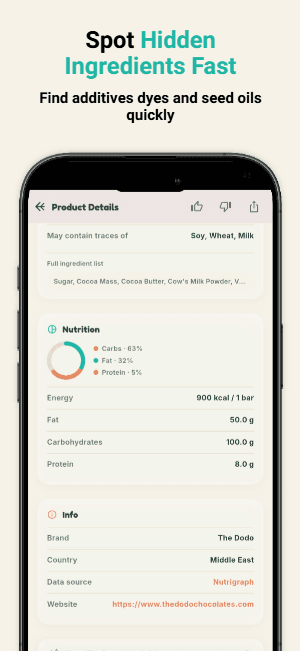
- Scan any product’s barcode in about two seconds. You instantly get a pass or fail with the exact ingredient responsible, plus the NOVA 1-4 class, Nutri-Score, and ScanGenius AI Insight, so you can decide with confidence and keep an audit trail of what you checked.
Personalized Match & AI Insight
7. Frequently Asked Questions (FAQ)
What should be on a basic pescatarian diet food list?
A solid pescatarian diet food list is built around vegetables, fruits, legumes, whole grains, nuts, and seeds, plus fish and shellfish, eggs, and dairy. Good seafood staples include salmon, sardines, trout, cod, shrimp, and mussels. Plant proteins such as lentils, chickpeas, tofu, and tempeh round out the plan. Scan packaged items with Food Scan Genius’s Pescatarian profile to confirm that sauces, soups, and baked goods do not include hidden land-animal ingredients.
Is cheese pescatarian-friendly?
Not always. Many traditional cheeses use animal rennet from calf stomach, though labels often list only “enzymes.” Cheeses made with microbial or vegetable rennet are usually fine. Food Scan Genius parses ingredient text through the NutriGraph Database and flags ambiguous or animal-derived enzymes when the label provides enough information. If a source is unclear, the ScanGenius AI Insight notes it so you can check with the manufacturer.
How can I spot gelatin, lard, or meat broth in packaged foods?
These ingredients hide in compound lists, such as seasoning blends, bouillons, and flavorings. Food Scan Genius uses recursive AST parsing to unpack nested sub-ingredients, so a buried gelatin or lard is evaluated rather than skipped. Your scan result shows which ingredient triggered the fail, which is much faster than reading every line by hand. Because labels do not always state the animal source, some items may still require a manufacturer check.
Does Food Scan Genius cost money, and can it handle my whole family?
The core features are 100% free with zero paywalls, unlike Fig’s roughly $59 per year or Spoonful’s limited scans. You can create Multi-Household Family Profiles, so one scan screens everyone in your home and reports named results such as “Fails for Sri (Gluten)”. The app also supports 39 dietary profiles, custom sensitivities, and 11 languages with real-time translation, which helps if family members read labels in different languages.
Know What’s In Your Food Before You Buy — Scan Free Today
Never second-guess confusing grocery labels again. Download Food Scan Genius to uncover hidden additives, toxic dyes, and allergens for the whole household before you buy.