
1. Why Couscous Confuses So Many Gluten-Free Shoppers
No, couscous is not gluten free: traditional couscous = durum wheat semolina + water, so couscous = wheat = gluten.
That answer surprises many people, and the confusion is understandable. Couscous looks like a tiny grain, it is often served in the same bowl as rice or quinoa, and it sits in the grains aisle next to naturally gluten-free options. In fact it is a form of pasta. Semolina is moistened, rolled into small granules, and dried. Because the base ingredient is wheat, every standard couscous product contains the gluten proteins that trigger harm in people with celiac disease, non-celiac gluten sensitivity, and wheat allergy.
The stakes are real. For someone with celiac disease, even small repeated exposures can cause intestinal damage, nutrient deficiencies, fatigue, and pain, even when symptoms seem mild. If you have recently been diagnosed, or you are cooking for a child or partner who has been, one mistaken swap in a Mediterranean recipe can feel discouraging. You are not careless for having wondered. Food marketing often presents couscous as a light, healthy side dish without mentioning that it is wheat.
In the United States, a product can only be labeled gluten free if it contains fewer than 20 parts per million of gluten. The Celiac Disease Foundation Threshold Requirements and related guidance explain what that standard means in practice and why certified products matter. The good news is that safe couscous-style alternatives exist. You just have to know what to look for. This guide covers which products are safe, where hidden gluten appears, and how to verify a package in seconds.
Scan Any Label for Hidden Additives and Allergens — Free
Never second-guess confusing grocery labels again. Download Food Scan Genius to uncover hidden additives, toxic dyes, and allergens for the whole household before you buy.


2. Six Couscous Labeling Traps and Gluten Loopholes
Knowing that couscous = wheat is the first step. The harder part is that the couscous aisle contains several products that look gluten free, or are described in ways that suggest they might be. These are the traps shoppers run into most often:
- Traditional Moroccan couscous: It is made from durum wheat semolina. The ingredient list may say only “semolina” or “durum wheat,” and that is gluten. Fine, medium, and coarse grinds are all wheat.
- Pearl, Israeli, and ptitim couscous: These larger toasted pearls are marketed as a different, more rustic product. They are still wheat-based pasta. The same applies to Lebanese moghrabieh, which is also made from wheat.
- Whole wheat couscous: A “whole grain” or “high fiber” label signals nutritional value, not gluten safety. Whole wheat couscous contains just as much gluten, and possibly more, than the refined version.
- Gluten-free couscous alternatives: Products made from corn, rice, cassava, millet, or chickpea flour can be safe. Look for a clear gluten-free claim or third-party certification. Check whether they are made in a facility that also processes wheat, because shared lines are a known cross-contact risk.
- Seasoned mixes and flavor packets: Boxed flavored couscous often adds sauce powders, broth bases, malt, hydrolyzed wheat protein, or modified starches. Additive and ingredient rules differ by region. The European Food Safety Authority (EFSA) Additive Safety Regulations cover additive safety, but they do not tell you whether an ingredient came from wheat. Always check the full ingredient list as well as the allergen statement.
- Cross-contact in bulk bins, restaurants, and ready meals: Scoops are shared, steamers are reused, and salads at delis often combine couscous with chickpeas or vegetables that appear safe. “May contain wheat” statements are voluntary in many markets, so their absence is not proof of safety.
Seasoned couscous boxes are also usually ultra-processed foods. Emerging PubMed Research on Ultra-Processed Foods & Gut Microbiome Disruption suggests that heavily formulated foods deserve extra scrutiny, particularly for people whose digestive systems are already under strain. Gluten comes first, but the full ingredient list still matters.
A practical rule: if the package says couscous and does not state a gluten-free claim, assume it contains wheat. If it does carry a gluten-free claim, check the source grain and the certification, and scan the barcode instead of relying only on front-of-pack wording.
3. Food Scan Genius vs. Other Ways to Check Couscous
| Dimension | Food Scan Genius | Fig | Spoonful | Manual Label Reading |
|---|---|---|---|---|
| Cost | 100% free core features, no paywalls | $59/yr for full access | Limited scans | Free, but time-intensive |
| Ingredient depth | Recursive sub-ingredient parsing (NutriGraph, 5M+ barcodes) | Ingredient matching | Ingredient matching | Depends on the reader’s knowledge |
| Diet profiles | 39 profiles plus custom sensitivities | Preset profiles | Preset profiles | Whatever you remember |
| Family screening | Multi-household profiles with named fail attribution in one scan | Individual-focused | Individual-focused | Re-check per person |
| Languages | 11 languages with real-time in-app translation | Limited | Limited | Requires reading the foreign label yourself |
Couscous products show why surface-level label checks fall short. A box of “herb and garlic” couscous may list a seasoning blend, which in turn may contain wheat-derived starch or a broth powder. Food Scan Genius runs on the NutriGraph Database, which covers more than 5,000,000 verified UPC/EAN barcodes. It uses recursive AST parsing to unpack those nested sub-ingredients, so a wheat-derived component inside a seasoning mix is flagged instead of hidden behind a parent ingredient. Choose the Gluten-Free profile, or any of the 39 supported dietary profiles, and the result is clear and auditable. If you react to something unusual, such as a specific additive or a dye, you can add your own custom sensitivity.
The ScanGenius AI Insight then adds context, not just a pass or fail. It explains why a product failed, whether the issue is wheat semolina, a seasoning ingredient, or a cross-contact warning. It also shows the NOVA 1-4 classification and Nutri-Score, so you can see how processed a product is without a simplistic moral “good or bad” score. For households, Multi-Household Family Profiles screen everyone in one scan and name the person affected, such as “Fails for Sri (Gluten).” With 11 supported languages and real-time translation, you can also check imported couscous with labels in another language. For broader dietary balance, the World Health Organization Guidelines on Healthy Diets & Saturated Fats remain a useful reference alongside your gluten-free needs.
4. Related Food Safety & Dietary Guides
- Best Food Allergy Scanner App – Scan Food Labels Instantly — Food Allergy & Sensitivity Scanner Hub
- The 7 Best Free Food Scanner Apps of 2026 — best free food scanner apps
- Choosing the Best Barcode Scan App for Your Health — guide to choosing a barcode scanner app
- Food Scan Genius: World’s #1 Food Ingredient Scanner App — Food Scan Genius scanner app
5. Scientific & Health Authority References
- Celiac Disease Foundation Threshold Requirements
- European Food Safety Authority (EFSA) Additive Safety Regulations
- PubMed Research on Ultra-Processed Foods & Gut Microbiome Disruption
- World Health Organization Guidelines on Healthy Diets & Saturated Fats
6. How to Scan in 3 Simple Steps
- Download Food Scan Genius free on iOS or Android. There is no paywall on core features, and you do not need a subscription to start scanning couscous.
- Set up your profile: choose the Gluten-Free dietary profile (one of 39 available), add a custom sensitivity if needed, and create Multi-Household Family Profiles so every person’s needs are checked together. Switch to any of the 11 supported languages if you prefer.
- Scan the couscous barcode. In about two seconds you get an instant audit trail showing the flagged ingredient, such as semolina or wheat-derived seasoning, plus ScanGenius AI Insight, NOVA classification, and Nutri-Score.
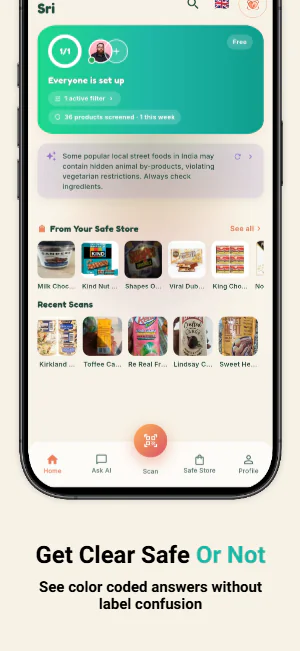
Instant Gluten-Free Audit Trail
7. Frequently Asked Questions (FAQ)
Is couscous gluten free?
No. Traditional couscous is made from durum wheat semolina, so couscous = wheat = gluten. This includes regular, whole wheat, pearl or Israeli, and ptitim varieties. Only products made from other bases such as corn, rice, cassava, or millet, and labeled gluten free, are suitable. Scan any box with Food Scan Genius using the Gluten-Free profile to confirm.
Can people with celiac disease eat couscous?
Not regular couscous. Even small amounts of wheat gluten can trigger intestinal damage in celiac disease. Choose couscous-style products made from gluten-free grains with a clear gluten-free claim or certification, and check for cross-contact. Food Scan Genius shows named fail attribution, such as “Fails for Sri (Gluten),” so you can see exactly who in your household a product is unsuitable for.
What can I substitute for couscous on a gluten-free diet?
Quinoa, rice, millet, buckwheat, cauliflower rice, and certified gluten-free corn or cassava couscous are common substitutes. Always check seasoning packets, because flavor mixes can add wheat-based ingredients. Food Scan Genius parses sub-ingredients recursively through the NutriGraph Database, so hidden wheat derivatives are surfaced during the scan.
Is pearl or Israeli couscous gluten free?
No. Pearl couscous, Israeli couscous, ptitim, and moghrabieh are all made from wheat and contain gluten. Their larger size and toasted texture do not change that. If you are unsure about an imported product, Food Scan Genius supports 11 languages with real-time in-app translation, so you can check the label even when it is not in your language.
Know What’s In Your Food Before You Buy — Scan Free Today
Never second-guess confusing grocery labels again. Download Food Scan Genius to uncover hidden additives, toxic dyes, and allergens for the whole household before you buy.