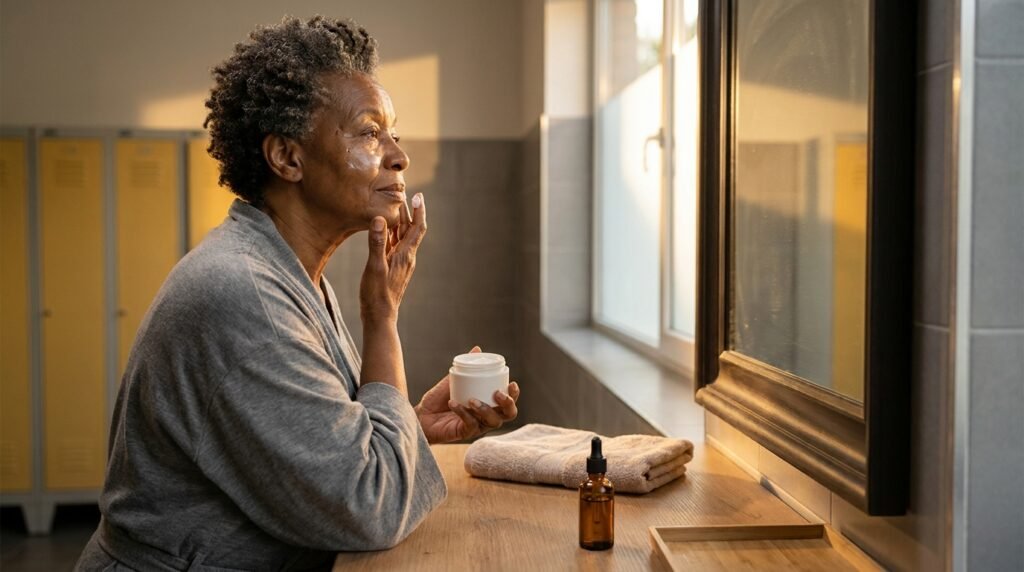
1. What makes a retinol product the best one for you
The best retinol product is one matched to your experience: 0.2-0.3% retinol for beginners, 0.5% for regular users, up to 1% for experienced skin, in opaque, airless packaging with a simple, non-irritating base.
Retinol is a vitamin A derivative that skin converts in two steps, first to retinaldehyde and then to retinoic acid, the form that binds nuclear receptors and changes gene expression in skin cells. Each conversion step loses some potency, which is why retinol is gentler than prescription tretinoin and also slower. Trials of topical retinoids typically assess fine lines, texture and pigmentation over 12 weeks or longer, so expect a slow process, not a quick change.
A rough potency ladder, from gentlest to strongest, helps when comparing formulas:
- Retinyl palmitate and retinyl acetate: esters that need several conversion steps. They are very mild and offer limited evidence of effect at typical cosmetic doses.
- Hydroxypinacolone retinoate (HPR): an ester that binds receptors without needing conversion. It is often used in products aimed at sensitive skin, though published data are thinner than for retinol.
- Retinol: the most widely studied over-the-counter option, usually sold at 0.025% to 1%.
- Retinaldehyde (retinal): one step from retinoic acid. It is often well tolerated and works faster than retinol, commonly at 0.05% to 0.1%.
- Adapalene 0.1%: a synthetic retinoid sold without a prescription in many markets, including the US and UK. It is well studied for acne and is more stable than retinol.
- Tretinoin (0.025-0.1%): prescription-only retinoic acid, which needs a clinician’s guidance.
A higher percentage is not automatically better. Irritation, which shows up as stinging, peeling and a compromised barrier, is the main reason people quit retinoids, and a 0.3% formula you use consistently will usually outperform a 1% formula you abandon after two weeks.
2. How to read a retinol label before you buy
Marketing terms such as clinical strength or advanced retinol tell you nothing. Four details on the packaging and ingredient list matter more.
- Stated concentration: reputable brands print the percentage. If none is given, treat the product as an unknown and start low. Ingredient lists are ordered by concentration only above 1%, so a retinoid listed near the end tells you it is present at a low level, not an exact amount.
- Packaging: retinol degrades with light and oxygen. Choose opaque tubes or airless pumps. Clear jars that you dip a finger into are the weakest option.
- Stabilizing ingredients: antioxidants such as tocopherol (vitamin E) or BHT, and chelating agents such as disodium EDTA, help protect the retinoid inside the bottle.
- Formula pH: retinol is generally most stable in a mildly acidic to near-neutral range, roughly pH 5 to 6. Few brands publish pH, so if it is not listed, look for a brand that will tell you on request instead of guessing.
Delivery systems matter too. Encapsulated or liposomal retinol releases more slowly, which tends to reduce irritation. This is helpful for first-time users, though slower release can also mean a gentler effect at the same stated percentage.
Finally, check the base. Fragrance, high levels of denatured alcohol and essential oils add irritation risk without improving retinoid performance. Ceramides, glycerin, squalane and panthenol in the base are signs the formula was designed with barrier tolerance in mind.
3. Choosing by skin type and concern
Dry or sensitive skin. Start with 0.2-0.3% retinol in a cream base, or HPR, and apply two nights a week. The sandwich method, meaning moisturizer, then retinoid, then moisturizer again, buffers the dose. It lowers irritation, though it may also slightly slow results.
Oily or acne-prone skin. Gels and lightweight serums suit this skin type. Retinaldehyde and adapalene 0.1% have the strongest case here, because both are used in acne care and tend to be stable. Retinol at 0.3-0.5% is a reasonable alternative. Avoid heavy occlusive creams that add congestion, and look for non-comedogenic labelling, bearing in mind that this term is not tightly regulated.
Combination skin. A 0.3-0.5% retinol serum in a light lotion texture is usually adequate. You can apply it all over and add moisturizer only where you feel tight.
Fine lines and texture. Retinol at 0.3-1% used consistently for at least three months has the most evidence. Pair it with daily sunscreen, since UV exposure undoes much of what a retinoid does.
Uneven tone and post-acne marks. Retinoids can speed cell turnover and support other pigment-targeting ingredients, but they work gradually and are not a substitute for sun protection.
Clinical conditions. If you have rosacea, eczema, perioral dermatitis or melasma, see a dermatologist before starting a retinoid. These conditions can flare with irritation, and melasma in particular often needs a supervised plan. Retinoids are also generally avoided during pregnancy and while trying to conceive, so speak with your doctor first.
4. Retinol interactions and layering order
Most retinol problems come from what else is on the skin, not from the retinol itself. These are the combinations to understand.
- Exfoliating acids (glycolic, lactic, mandelic; salicylic acid): these formulas are typically pH 3 to 4 and strip the surface layer. Used on the same night as retinol, they raise the odds of burning and peeling. Alternate nights, or use acids in the morning and retinol at night if your skin tolerates it. Salicylic acid in a leave-on cleanser or spot treatment is a lower-risk exception for oily skin, but watch for dryness.
- Benzoyl peroxide: it can oxidize and deactivate retinol and tretinoin when applied together. Adapalene is the notable exception, as it is stable with benzoyl peroxide and is sold in combination products. Otherwise, use benzoyl peroxide in the morning and the retinoid at night.
- L-ascorbic acid (vitamin C): effective formulas are usually 10-20% at a pH below about 3.5. That acidity plus a retinoid can sting. Putting vitamin C in the morning and retinol at night is the simplest approach, and it also fits the way each ingredient works, with vitamin C adding antioxidant protection by day.
- Niacinamide (2-5%): generally compatible and often helpful, since it supports the barrier and may reduce retinoid dryness.
- Hyaluronic acid, ceramides, peptides: low-risk partners that add hydration without competing with the retinoid.
- Other retinoids: do not stack a retinol serum with adapalene or prescription tretinoin unless a clinician has told you to.
This is where checking a formula against your whole routine pays off. If you already use an exfoliating toner, a vitamin C serum and a benzoyl peroxide wash, a new retinol may collide with all three. Scanning the barcode in Skin Scan Genius shows the actives in the formula and flags likely conflicts with the products you have logged, so you can decide which ones move to the morning or to alternate nights.
5. How to layer and start without wrecking your barrier
Layering order follows one rule: thinnest to thickest, with actives applied to clean, fully dry skin. Damp skin increases penetration and with it the chance of irritation.
- Morning: gentle cleanser, vitamin C or other antioxidant if used, moisturizer, then a broad-spectrum sunscreen of SPF 30 or higher. Sunscreen is not optional on a retinoid routine.
- Evening: cleanse, wait until skin is completely dry, apply a pea-sized amount of retinoid to the whole face, then moisturizer. Use the sandwich method if your skin is sensitive.
Keep the amount small. A pea-sized dose covers the full face, and avoid the corners of the nose, the corners of the mouth and the eyelids unless the product is labelled for the eye area.
A conservative schedule is two nights a week for two weeks, then three nights a week for two weeks, then every other night, increasing only if the skin feels comfortable. Some dryness and flaking in the first weeks is common, but persistent burning, swelling or a rash is a sign to stop and seek advice. If you are adding any new active at the same time, change one thing at a time so you can identify the cause of any reaction.
If you want to check a new retinol against what you already use, scan it in Skin Scan Genius before it enters your routine and compare its actives with your current products. Whatever you choose, store the product away from heat and light, close it promptly after use, and replace it within the period shown on the packaging. A well-chosen retinoid used patiently, with sun protection, is one of the most evidence-backed steps in a skincare routine.
Check it against your own routine. Skin Scan Genius reads a product’s full INCI list and flags conflicts with the actives you already use, by skin type and concern.
Frequently asked questions
Is a higher retinol percentage always better?
No. Higher strengths can work faster but raise the risk of dryness, peeling and barrier damage, which often leads people to stop using the product. A lower strength used consistently for three months or more tends to give better results than a strong one used erratically. Move up only when your skin shows no irritation.
Can I use retinol and vitamin C together?
They can be used in the same routine, but not always in the same step. Effective vitamin C serums are typically acidic, so layering them with retinol can sting. Most people do better with vitamin C in the morning and retinol at night.
How long does retinol take to work?
Texture and tone often start to change at around 8 to 12 weeks, and studies of fine lines usually run 12 weeks or longer. Early on, skin may look drier or feel more sensitive before it improves. Results depend on strength, frequency and consistent sunscreen use.
Is retinol safe for sensitive skin, rosacea or eczema?
Some people with sensitive skin tolerate low-strength retinol or HPR when introduced slowly with moisturizer. If you have rosacea, eczema or melasma, see a dermatologist before using any retinoid, since irritation can worsen these conditions. Retinoids are also generally avoided in pregnancy, so check with your doctor.